
How often should a dog be dewormed?
Many pet owners don't know when to vaccinate their dogs after deworming. Deworming is one of the most important procedures that should be performed regularly, not just before vaccinations. It's performed two to four times a year to protect the health of not only the dog but also the rest of the family. So, in this article, we'll explain how often to deworm your dog.

Content
Symptoms of parasitic infections
Before deworming your dog at home, you should be aware of the symptoms of infection. These depend on the type of parasite, the severity of the infection, the animal's age, and its overall health. The most common signs are:
- apathy:
- itching around the anus:
- flatulence;
- nausea and vomiting;
- diarrhea of varying degrees;
- cough and shortness of breath;
- deterioration of the coat condition;
- skin pathologies;
- weight loss;
- poor development of newly born puppies;
- neurological symptoms;
- reduced immunity.
Sometimes owners notice the presence of parasites or their fragments in the feces, but if such traces are absent, this does not mean that worms the dog doesn't have it.
Many people wonder why dogs need to be dewormed before vaccination. This is necessary to ensure the proper development of a protective response to the disease being vaccinated. If the immune system is weakened, a direct consequence of helminth infestation, the vaccine will lead to infection with the very virus being vaccinated against.
Antihelminthic drugs
Drugs are tablets, pastes, gels or any other form of any medication that is produced in commercial pharmaceutical companies that give them a specific trade name (Cestal Plus, Pratel, Drontal Junior, Dolpac, Milbemax). Each of them contains at least one substance (for example, Panacur contains an active ingredient called fenbendazole).
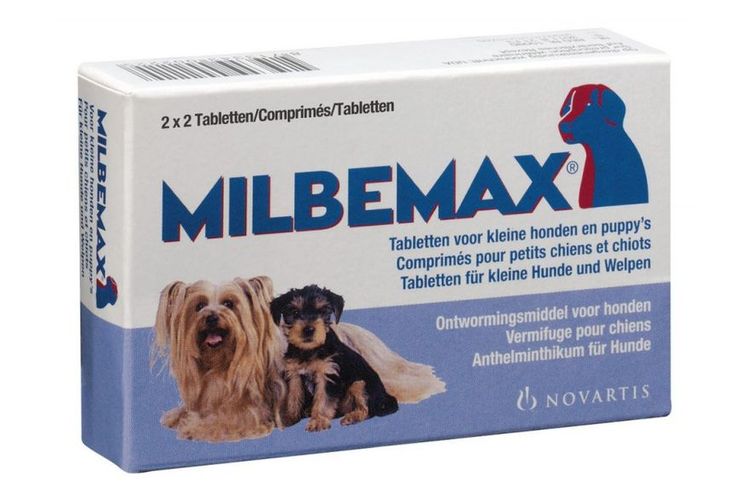
Most antiparasitic medications contain up to three active ingredients—these are complex medications (for example, Cestal Plus, which consists of the active ingredients pyrantel, fenbendazole, and praziquantel). Each has a different spectrum of action and affects different types of parasites.
After all, before deworming a dog for vaccination, a stool sample isn't always performed, making it difficult to determine what type of parasite is present. Therefore, it's necessary to administer a medication that kills all types of worms. Instead of using three different medications, a single, broad-spectrum medication is often administered.
Protection against parasites
Before properly deworming your dog before vaccination, it's also necessary to protect it from ticks, which act as intermediate carriers of worms. Various forms of these medications are available at veterinary pharmacies:
- Spot-ons (Advantix, Fiprex 75, etc.) are typically packaged in a dropper containing a dose of medication calculated for the animal's specific weight. During application, the entire contents of the dropper are used, spreading it over the animal's back. Avoid bathing the dog for two days before and two days after application. One treatment protects the pet from ticks for four weeks and fleas for up to eight weeks. Advocate also protects dogs from internal parasites, such as hookworms and grain mites.
- Sprays (Fiprex, Sabunol) are packaged in containers with a pump and dispenser. They are applied to pets' fur by spraying. The dosage depends on the dog's weight and is adjusted by pressing the dispenser. These products are typically effective for four weeks against ticks and eight weeks against fleas.
- Collars (ForestoKiltix) are removed from the sealed package and attached to the dog's neck so that the surface has maximum contact with the skin. They are effective for eight months, providing active protection against fleas and ticks, which carry many worms.
- Chewable tablets (eg, Bravecto And NexGard) look and smell delicious and are readily consumed by dogs. They provide protection against fleas and ticks for 12 weeks.
A few words about the dosage of antihelminthic drugs
When asked whether it's necessary to deworm a dog before vaccination, the answer is yes, but the required dosage must be observed. "Dose" refers to the number of milligrams of a substance per kilogram of the animal's body weight. For example, the dose of Praziquantel for a dog is 5 mg per kilogram, so a 10-kilogram animal would require 50 mg of Praziquantel. Manufacturers provide full information on the dosage to administer to a dog in the package insert.
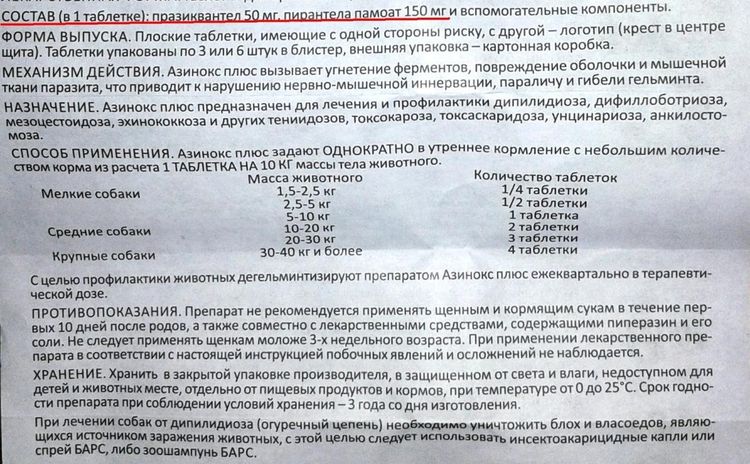
Most of the active ingredients anthelmintic drugs They have a fairly significant safety margin, meaning that overdosing should not cause side effects. Therefore, manufacturers often recommend rounding up the milligram amount to the nearest full volume (e.g., a tablet, half a tablet). Excessive dosages can cause diarrhea in dogs after deworming. Therefore, dosage should be carefully monitored, following the recommendations in the medication's package insert.
First deworming
For first deworming You need to choose a gentle product, meaning one with a simple formula (usually a single-component one). This will both reduce the burden on your pet's body and provide an effective treatment for internal parasites that the puppy could contract from its mother. A strong, complex product that kills all worms should not be used for the first deworming.
Most worms reside in the duodenum, a relatively short section of the small intestine. There can be up to several hundred worms present. Destroying them all at once would result in the dead bodies completely blocking the intestine, leading to undesirable consequences.

Furthermore, severe poisoning from the breakdown of these organisms can occur. Therefore, it's best to choose a medication administered in small doses for several days in a row. This kills the worms slowly but surely. Veterinarians have found that this method is quite safe for first-time deworming, with mild and minor side effects, often nonexistent.
Deworming of bitches
Veterinarians receive many questions about whether it's possible to deworm a dog during heat and whether it's possible to deworm a pregnant dog. There are no contraindications to deworming female dogs during heat. They undergo the same procedure as male dogs of their age and weight.
Female dogs reach maturity between 6 and 12 months of age, and later in some large breeds. Pregnancy is possible after the first heat cycle, but it is recommended to breed a dog only after the third cycle. A veterinarian confirms this period through palpation, testing, and ultrasound.
Vaccinations should be administered before pregnancy, as this ensures high levels of antibodies that the mother will pass on to her puppies during lactation. For deworming, use a medication suitable for pregnant females. One such medication is fenbendazole, which is effective against roundworms, hookworms, tapeworms, and tapeworms. A combination of pyrantel and praziquantel can also be used.

The dosage regimen depends on the chosen product. Carefully follow the instructions, and it's best to consult a veterinarian if in doubt. Deworming during pregnancy will help prevent the transmission of worms to puppies, and should be performed according to your veterinarian's recommendations.
Why should the first deworming treatments be done every 2 weeks?
Because two weeks is the time it takes for the larvae of roundworms—the main parasite that inhabits the digestive tract of puppies—to complete their maturation cycle. Often, most deworming medications are ineffective or only work poorly against the larval roundworms; these medications only kill adult worms. The remaining parasites are given two weeks to mature and be killed by the next round of deworming medication. Below, we'll discuss how often to deworm a dog.
How often should I deworm my dog?
Many people wonder how often to deworm their dogs. The first deworming should be performed on puppies between 2 and 4 weeks of age, and subsequent treatments depend on the vaccination schedule. Dog owners also want to know how long before vaccinations they should deworm their dogs. This should be done seven days before the vaccine is administered.
This means that vaccinations are typically administered at 6, 9, and 12 weeks of age, followed by deworming at 5, 8, and 11 weeks. Subsequently, dogs are typically dewormed monthly before vaccinations until they reach six months of age. Adult animals are treated with deworming medications every three to six months, and external parasite treatments are administered throughout the period of tick and flea activity.

Veterinarians are increasingly advising against blind deworming of dogs, replacing this procedure with periodic worm testing. This helps avoid unnecessary medication use and select the best anti-parasite medication at the optimal dosage. If deworming is ineffective, this can be easily identified through laboratory testing, allowing for appropriate medication adjustments.
It is also necessary to deworm all animals in the house or apartment to avoid the transmission of worms from one dog to another.
You can also ask our website's staff veterinarian a question, who will answer them as quickly as possible in the comments box below.
Read also:
- Dironet for cats
- When and what vaccinations should puppies receive?
- Dog Vaccination: Vaccination Schedule


37 comments
Lena
How to properly use Prazicid Plus Suspension for dogs and at what interval to deworm before vaccination
Daria is a veterinarian
Hello!
Your question was asked a long time ago, but for many it is always relevant.
All medications should be used according to the instructions. Deworming medications are generally given by weight, so weigh your pet before administering. This can be done at your nearest veterinary clinic or on your own scale (if your strength and dog's weight allow).
If you regularly deworm your pet throughout the year (the key word is "regularly")—either every three months or every month, depending on your lifestyle—then there's no need to deworm your pet before vaccination. However, if you only deworm before vaccination, administer the medication 7-10 days before the scheduled vaccination.
If no helminths are observed in the stool after administering the medication, then you can safely proceed with the vaccination. However, if you notice suspicious inclusions resembling helminths in the stool, repeat treatment is recommended every 10 days until the stool is clear.
Health to your tails.
Evgeniya
Hello. Today, May 21st, we bought a Chihuahua puppy born on April 11, 2019. The owners dewormed him two weeks ago. Please let me know when he can get his first vaccination and whether he needs another deworming beforehand. Thank you.
Daria is a veterinarian
Hello! I don't know where you live, because it was only yesterday that May 21st was celebrated. You got a puppy that's too young! He's only 1.5 months old, which is incredibly young. How did the previous owners treat a month-old puppy for parasites? My advice: don't trust the words of "breeders" who give away almost-month-old puppies and deworm them. Deworm them yourself (choose a broad-spectrum product suitable for a single dose). The first vaccination is given at 8 weeks of age, provided that deworming was performed 10-14 days prior (although the absence of deworming is not an absolute contraindication for vaccination).
Catherine
Hello! We've been feeding our puppy fresh meat for three days now (we abruptly switched him from dry food), and yesterday he had diarrhea and black stool. Is it possible for worms to develop in such a short period of time, and what should we do? Should we observe him or should we sound the alarm?
Daria is a veterinarian
Hello! Was the black stool runny or formed (since you're talking about a 50/50 chance)? Does your pet have diarrhea (when it can't hold it in and passes stool more than 5 times a day) or loose stool (when it's able to control its bowel movements and the stool is simply runny/unformed)? How long has it been since they treated for parasites? If you're worried that your puppy has parasites from raw meat and is having diarrhea, then no. It's too early; no intestinal parasite reaches sexual maturity that quickly. What kind of meat was it (pork, beef, poultry, rabbit)? Was it too fatty? Are you giving it anything else (cereals, vegetables)? It's only after these details that it becomes clear how urgently you need to see a doctor.
Valentina
My nine-year-old German Shepherd is always giving him Azinax Plus tablets four times a year, but I had such a hard time feeding him that I got fed up. I bought Ivermectin and gave him an injection—1 cc. He's a large dog, about 50-60 kg. He's been lying down for two days, not eating, not active. He's not drinking. How can I help him? Should I buy Essentiale?
Daria is a veterinarian
Hello! Ivermectin should be used with extreme caution. Some breeds have a heightened sensitivity to the drug (genetic intolerance). Furthermore, it is quite difficult to tolerate. Inspect the mucous membranes (they should be normal in color, not yellowish, pale, or blue), as well as the injection site (for swelling or any other signs of an allergic reaction). Take the temperature. For the liver, it's best to use medications with B vitamins (they're excellent for liver restoration). Give half a dose of Suprastin (for 1-2 days); there may be a reaction to the medication, so give an antihistamine. Essentiale is essentially homeopathy, so you can give it for your own peace of mind, but the liver tends to recover as soon as the harmful factor ceases.
Natalia
Hello. Could you please tell me if my dog needs to be dewormed before taking Bravecto? My dog is seven months old and was dewormed two months ago.
Daria is a veterinarian
Hello! You don't have to administer Bravecto before; you can do it throughout the month. There are no contraindications for combining it with anthelmintics. This means you can administer it on the same day, or even deworm it before or after Bravecto. Anthelmintics target internal parasites, while Bravecto targets external parasites (ticks and fleas). Therefore, for more complete protection, use a good anthelmintic (twice, 10-14 days apart, with the exception of those products that require a single anthelmintic dose). Bravecto should be administered once every 3 months, and can even be used in conjunction with a flea collar. Just be sure to check for any contraindications (health, weight, etc.).
Lyudmila
Hello! My puppy is 5 months old. I dewormed him two months ago before his vaccinations, twice, 14 days apart. He had a lot of worms after the first deworming, but after the second, there were none. He's now starting to lose weight and occasionally scoots on the carpet. He's alert, happy, and has a good appetite. His stool is unnoticeable. I suspect this is a sign of worms! Could you tell me if he should be dewormed? I gave him Api-san.
Daria is a veterinarian
Hello! Api-san is the manufacturer. What specific product is it? There are plenty of them. Get a broad-spectrum anthelmintic to kill both tapeworms and roundworms. Drontal, Milbamax, Caniquantel/Caniquantel Plus. Don't let your puppy eat or sniff dirt, feces, garbage, or even other animals outside. Put away indoor shoes. Disinfect your home; your puppy may have become re-infected, so deworm again. And try to provide proper preventative care.
Svetlana
Good afternoon. My puppy is about 3 months old. The breeder dewormed him twice a month with Prazitel suspension. We'll deworm him on January 30 and vaccinate him on February 9. Should we continue this schedule?
Daria is a veterinarian
Hello! Twice a month is the initial and repeat doses of the anthelmintic, separated by 10-14 days. Therefore, the frequency of administration of the anthelmintic is quarterly. You can choose higher-quality, broad-spectrum medications that are sufficient for a single dose (Drontal, Milbemax, Caniquantel). It's better to choose tablets; they are more effective than suspensions. However, you need to select them based on the animal's weight, as the tablets are not divided. If you choose Prazicide, Pyrantel, or other "narrow" anthelmintics, then administer them twice, separated by 10-14 days. However, in principle, parasite control should be performed once every three months.
Irina
Hello! I have a question. My puppy was dewormed before his first vaccination. The first vaccination was given at 3 months. Three weeks later, he received a booster shot and a rabies shot. The vet said that after the puppy's teeth change (around 6 months), a booster shot will be needed. How often should he be dewormed? The second vaccination was on December 16th.
Daria is a veterinarian
Hello! Of course, deworm. Deworming should be done QUARTERLY, that is, every 3 months, regardless of whether you vaccinate or not. Remember to deworm every 3 months and treat monthly for skin pests (fleas, lice, and biting lice). With the onset of warm weather (+5-+10°C ambient temperature), deworm ticks, which can carry piroplasmosis. These little buggers begin to "wake up" at above-zero temperatures and crawl out of the ground hungry. And only fire will stop a hungry female—oh, that desire to have a litter and the need to feed them. Vaccinate your pet annually against rabies and other infectious diseases (distemper, enteritis, hepatitis, and others). To make it easier to keep track of dates, get a dog passport and record ALL treatments (vaccinations, deworming, flea and tick treatments).
Xenia
I caught my first tick last year in a thawed patch at the end of February (in the Trans-Urals). It hadn't been above freezing yet, except for some localized daytime sun. Heating mains thaw even earlier, and ticks can be found there too. That's why I give Bravecto no later than February 15th.
Alena
Hello, my 4-month-old German Shepherd puppy has a phosphorus deficiency. He was prescribed 100 grams of fish daily (we generally feed him dry food). I gave him boiled flounder for two days. His stool has become slightly mucus-y. Today I noticed some white specks in it. Could you please tell me what this is?
Daria is a veterinarian
Hello! What kind of food should you feed your puppy? Did your doctor explain that calcium is needed along with phosphorus to maintain the calcium-phosphorus balance in the body? Is vitamin D3 necessary for calcium absorption? Or is the puppy overfed with calcium, causing the imbalance and low phosphorus levels? The puppy isn't used to this kind of food, so the intestines are reacting, possibly leading to loose stools. You need to choose a food specifically for large-breed puppies, making sure it has a high phosphorus content. What was the diagnosis? Did they do a blood test?
Eleanor
Good evening, my Toy puppy will be 3 months old on November 6, 2018. We dewormed him on September 26. His stool has become runny and streaked with blood. We went to the vet, got an enema, some injections, and a day has passed, but the same thing is happening again. I'm thinking maybe we should deworm him again. Our dog likes to put everything in his mouth. They say you can deworm him monthly until he's 6 months old. We use Prazitel.
Daria is a veterinarian
Hello! Did you administer the medication once? Or should I say twice? Replace Prazitel with a more potent one (I don't know why, but I haven't been particularly happy with prazitels and prazicides lately. I prefer the performance of Drontal, Caniquantel, Dironet, Milbemax, and Febtal). These are broad-spectrum medications that combat not only nematodes but also cestodes, and some even target the dirofilariasis pathogen. It would be a good idea to eliminate protozoa altogether (at least give metronidazole, but the vet will calculate the dosage based on the animal's weight). There's no need to deworm monthly! Anthelmintics also affect the liver, so why add unnecessary strain? Just find a good medication and deworm according to the instructions (once or twice, 10-14 days apart, every 3 months). What are you feeding?
Zinaida
Hello, I had a Chow Chow puppy dewormed on June 15, 2018, before his first and second vaccinations. Yesterday, September 5th, he received his second vaccination. The vet said to deworm him every two weeks until he's 6 months old. He was given Endoguard before the second vaccination and was also given these tablets until he's 6 months old. Thank you.
Dasha is a veterinarian
Hello! What nonsense is this? Why give extra pills? Perhaps you misunderstood. It's given quarterly (!), meaning every three months, but two weeks apart. So, you give it once, wait 10-14 days, and then give it again (from the same manufacturer, so the active ingredients match). But giving a dewormer every two weeks—that would be pretty damaging to the puppy's liver, wouldn't it? It's also a bit confusing. How did you deworm so well that you also dewormed the dog, but already vaccinated him? You should have given the dewormer before the first vaccination (give it twice, wait 10-14 days), and that's it! Wait three months, not give it a second time before the booster. Your doctors are doing something wrong...
Julia
Hello, I have a question. My puppy will be three months old on August 10th. We dewormed him on July 10th and then again 10 days later, but we couldn't vaccinate him due to personal circumstances, and now we want to do it again. What's the best course of action? Can we deworm him again? Or is it unnecessary? And if so, what's the best way?
Dasha is a veterinarian
Hello! There's no need to deworm your pet a second time; it's okay. You've already "cleansed" the system. If your pet did manage to pick up parasites, they haven't had time to develop in the body yet. And, in general, the lack of deworming isn't a clear contraindication to vaccination. It's recommended, but not required. The immune response is best after deworming. But if you deworm again, you'll waste precious time. Vaccinate now according to age and stay healthy.
Natalia
Hello! My Yorkie puppies are 25 days old and are steadily gaining weight. Two females were born, each weighing 114 grams. They now weigh 700 and 550 grams. Are they obese? How should I deworm them properly, today and then again 10 days before their first vaccination? Should I also deworm the mother (her last worming was on April 10, 2018)?
Dasha is a veterinarian
Hello! Deworming should be done according to body weight (a medication for small breeds). We're following this schedule: the first deworming is done 10-14 days later, followed by the second vaccination 10-14 days later. Deworm the mother too (she's been three months already). 700g is too much for a one-month-old Yorkie. Review her diet (the food may be high in carbohydrates or fats; check the ingredients).
Victoria
Hello! I dewormed my dog (an 8-year-old Belgian Griffon) a month ago. Now it's time for his vaccination. Should he be dewormed again before the vaccination?
Dasha is a veterinarian
Hello! A month ago is normal. You can vaccinate, don't worry. Generally, deworming is not a requirement for vaccination. It is recommended, yes, to help the body respond better to the vaccine. But it's not necessary. Although many doctors still require deworming and follow-up visits in two weeks. Just don't wait until three months =) If you go now, it will be fine.
Victoria
Hello, how often should a French bulldog puppy be dewormed?
Dasha is a veterinarian
Hello! Like any other animal, regardless of age or breed, it should be given quarterly, that is, once every three months. The medication is selected strictly based on the animal's weight. Some medications only require one dose, while others require two doses, separated by 10-14 days.
Maria
Hello, could you please tell me? I dewormed my puppy with Dironet Junior on April 23rd. Can I deworm him again now, or how many days later can I wait? He's got a rash on his bottom and has started itching, so I think it's from worms.
Daria is a veterinarian
Hello! The deworming session is scheduled for 10-14 days. Did you calculate the dosage correctly (weigh the pet or estimate the weight and dosage by eye)? Did you administer everything according to the instructions? Did the puppy start worming before or after the deworming?
Olga
My puppy was diagnosed with worms. I gave him Drontal+ 1 tablet. The vet prescribed a regimen of three tablets every 10-15 days, but now he's prescribed one tablet for two days in a row, then another three tablets every 10 days. The medication is quite toxic, and they didn't recommend anything for his liver, and I don't want to poison the puppy either. Can I continue to give him the same regimen, every 10 days?
Thank you!
Dasha is a veterinarian
What parasite was found? For common infestations, two doses with a 10-14 day interval are sufficient for therapeutic deworming (during this time, the worms transition from the larval stage to the adult stage, but are not yet capable of reproducing, so their destruction will lead to a complete 'cleansing' of the body). So what's the point of administering the anthelmintic a third time?Hello! Is this a regimen with Drontal??? Drontal is already so good because it "kills" virtually all parasites, and at all stages of development. A single dose is enough for prevention, but two days in a row, and then three times after that... What's the point? Does the puppy have such a severe infestation? What parasite was found? For common infestations, two doses, separated by 10-14 days, are sufficient for therapeutic deworming (during this time, the larval worms transition to adulthood, but are not yet capable of reproducing, so their destruction will completely "cleanse" the body). So what's the point of administering the anthelmintic a third time?
Elena
Good afternoon. I have a Chihuahua who will be 6 months old next week. He was dewormed only during the first month, before his first vaccination. That's all. Is it time to deworm him yet? And with what? He weighs 3 kg. Thank you.
Dasha is a veterinarian
Hello! Of course, it's time. If you dewormed your dog at one month, then they should have been dewormed for the third time at seven months. Anthelmintics are given every three months. Choose the medication based on your budget. Personally, I use Drontal for my pets. You can also use Advocate, Inspector, or Frontline Nexgard (they treat skin and intestinal parasites, and they also deworm ticks). It all depends on what your veterinary pharmacy stocks. Bars, Prazicid, and other cheap medications are less effective. I don't like them, and I rarely use them in practice (unless the owners have the money).
Add a comment