
Kai (Kai-inu, Taro, Kai-ken, Japanese brindle dog)
The Kai, also known as the Kai Inu, Taro, Kai Ken, or Japanese Tiger Dog, is a very rare Japanese hunting dog breed that developed over centuries in an isolated area and has preserved its primitive features as much as possible. The Kai has an independent, strong character and a pronounced pack and hunting instinct. Despite its many advantages, this breed is not suitable for everyone.
Content
History of origin
The breed developed from medium-sized dogs native to the Kai region of Yamanashi Prefecture since ancient times. The region's mountainous surroundings and the local dogs' well-developed pack instinct allowed them to develop in isolation and maintain their purity. In 1931, cynologist Dasuke Odachi of Kofu, the capital of Yamanashi, impressed by the dogs' unusual coloring, began work to preserve the breed. That same year, the Kai Preservation Society was founded, which remains the breed's primary registration organization.
Since 1934, the breed has been protected by the state and prefecture. It is recognized as a national treasure of Japan, along with five others: Akita, kisyu, Shiba, Shikoku And HokkaidoEven for Japan, the breed is considered rare. Only about 1,000 puppies are registered annually. In 1982, the breed was officially recognized by the Fédération Cynologique Internationale.
Purpose and hunting with kai-ken
In Japan, Taro brindle dogs have always been prized for their innate hunting talents. Owners in Yamanashi Prefecture still use them to hunt goat antelope. It's worth noting that kai are versatile and can be trained to hunt any medium- or large-sized game, even birds. They are passionate, resilient, agile, and courageous, and won't back down from a wild boar or bear. They work as hunter's assistants, tracking and holding their prey, but they can also hunt independently, in which case they kill their prey immediately. They have an excellent sense of smell.
Very rarely, kai are used for other work: as shepherd dogs, guarding flocks, as fishermen's assistants (for driving fish into nets), and in search and rescue services.
Video about the Kai (Kai-Ken) dog breed:
Appearance
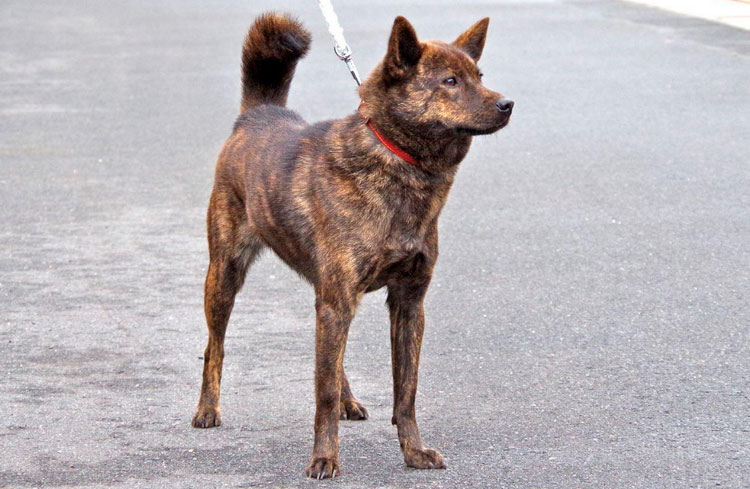
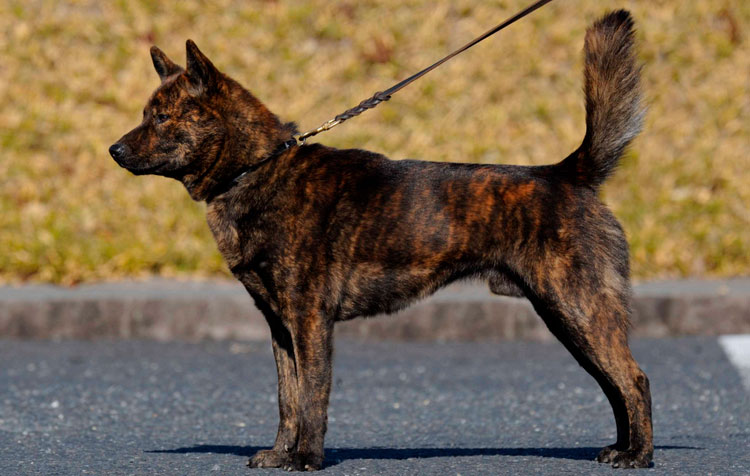
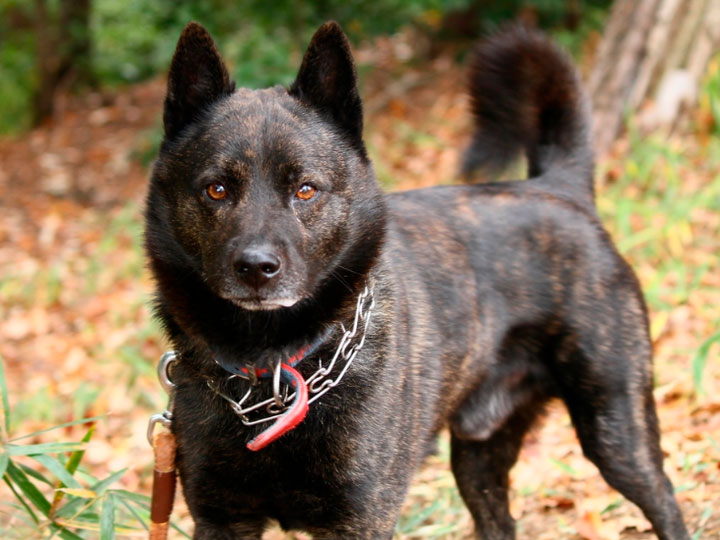
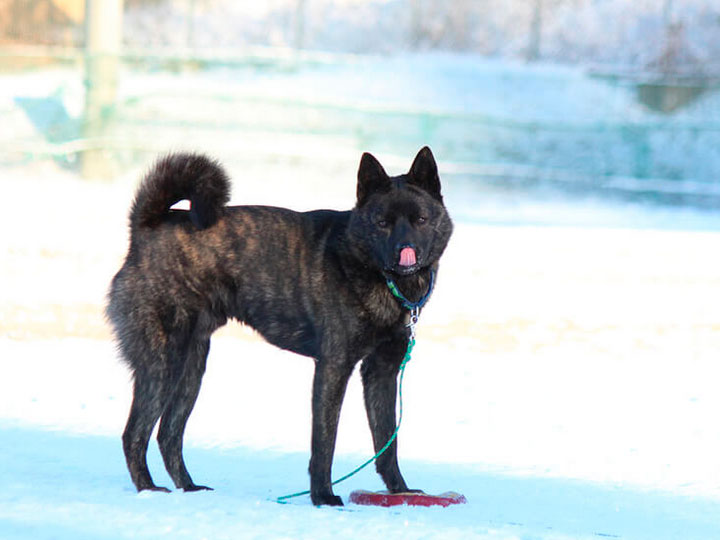
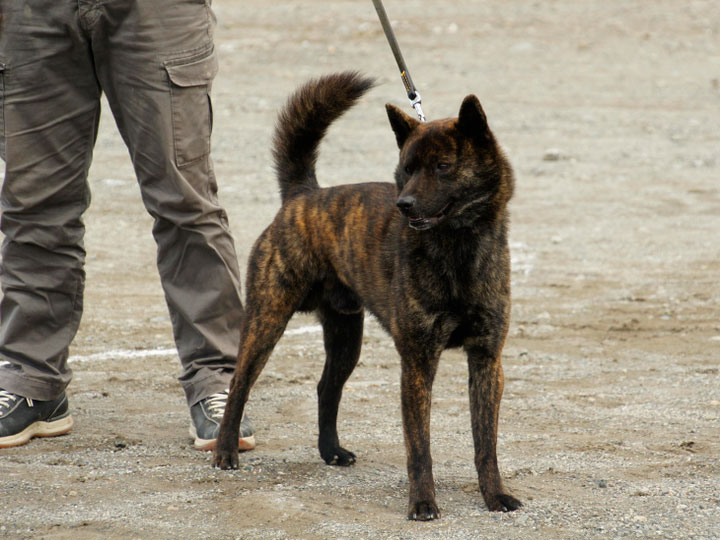
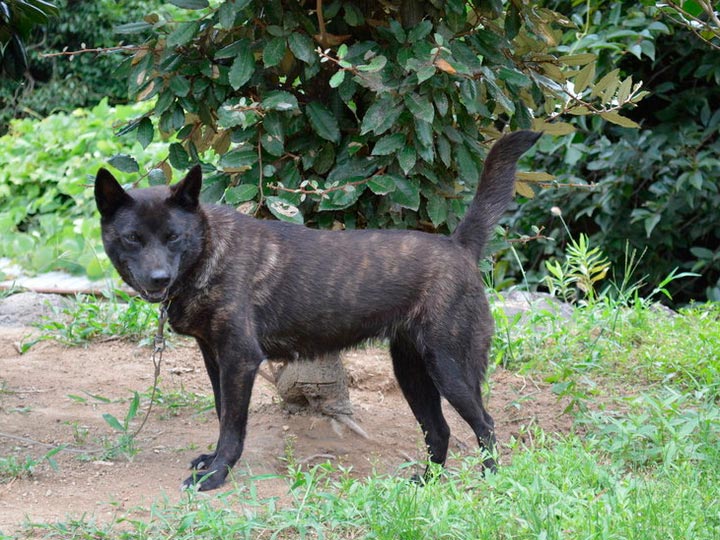
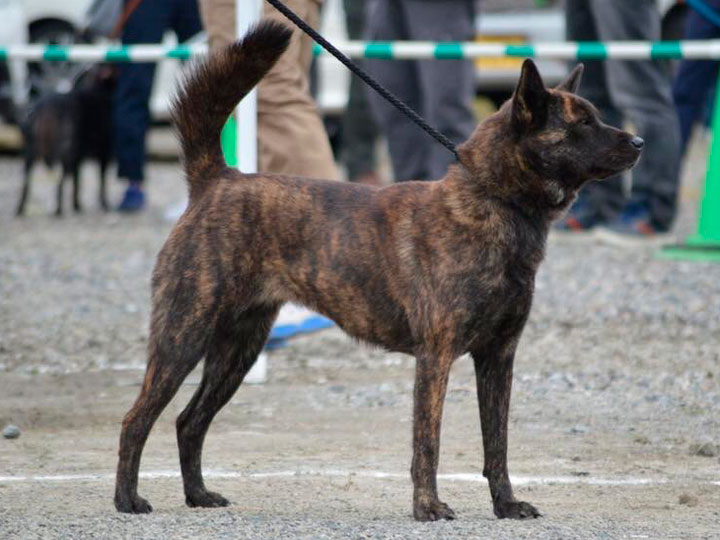
The Kai is medium-sized, well-balanced, and strongly built, with well-developed muscles and strong legs. The height-to-length ratio is approximately 10 to 11. Females may have a slightly longer body. The height at the withers for males is 47-53 cm (18-21 in), weighing 16-25 kg (35-55 lb); for females, it is 42-48 cm (16-19 in), weighing 11-20 kg (25-45 lb).
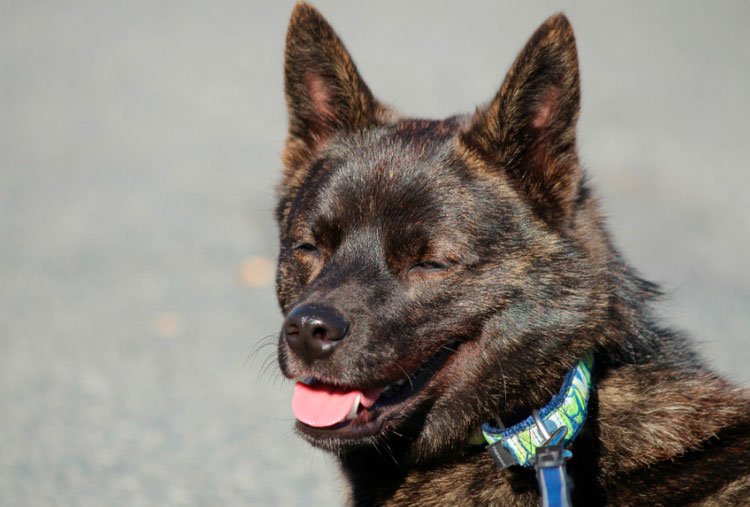
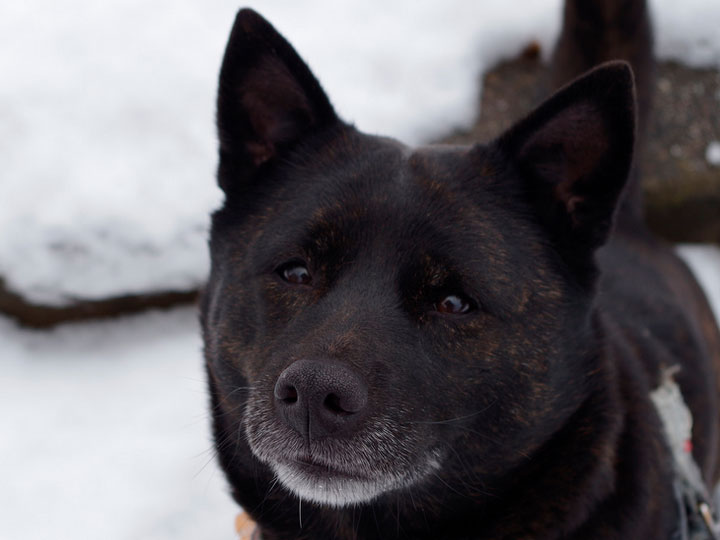
The head is proportionate. The forehead is broad, the stop is distinct with a slight furrow. The muzzle is rounded, moderately thick, and not very long. The nose is black. The lips are tight, the jaws are strong, and the bite is scissor-like. Many dogs have dark spots on the tongue. The cheeks are well developed, and the eyes are dark brown, triangular, with slightly drooping outer corners. The ears are fairly large, triangular, and erect, with a strong base, tilting slightly forward.
Previously, the breed was divided into two types: those with a fox-like head and a more slender body (seka-inu-gata) and those with a bear-like head and a stockier body (shishi-inu-gata). Today, only the round or long muzzle is recognized, and neither type is considered preferable to the other.
The neck is strong and thick. The withers are well defined. The back is short and straight. The loin is broad. The chest is deep. The ribs are moderately sprung. The belly is well tucked up. The tail is set high, tightly curled or carried in a sickle over the back. It reaches the hocks in length. The legs are straight, parallel, muscular, and slightly dry. The thighs are long. The paws are well knit with thick, elastic pads and strong nails, preferably black.
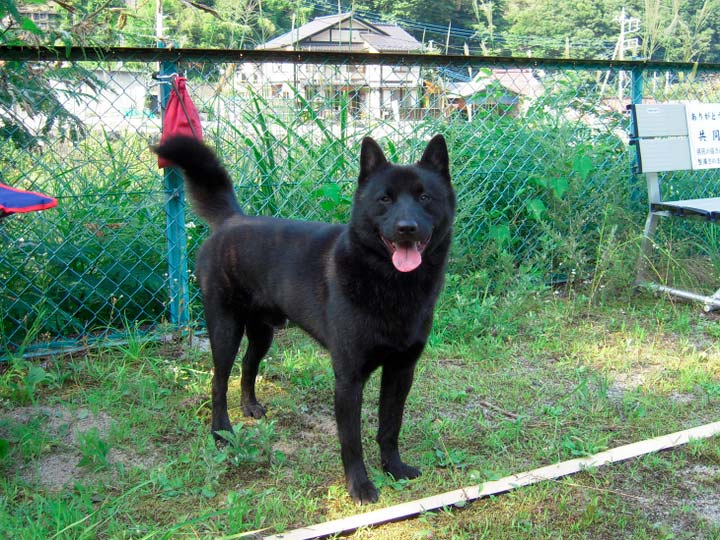
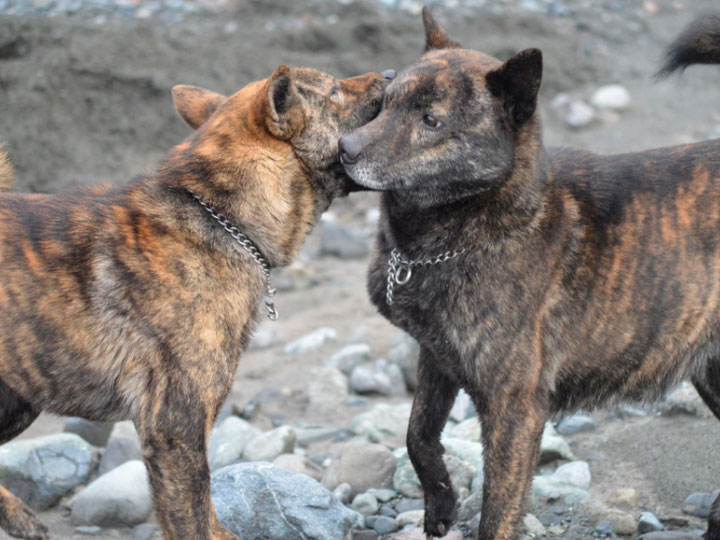
The double coat consists of a coarse, straight topcoat and a soft, dense undercoat. The tail hair is long, erect, and straight. Colors include red brindle, black brindle, and a transitional brindle.
Character and behavior
The Kai's personality is similar to that of other Japanese breeds. It is temperamental, independent, very active, possesses a strong sense of self-worth, is fearless, and is extremely devoted to its owner, whom it usually sees in only one person. It is reserved with strangers. Rarely aggressive, but this doesn't mean it will hesitate if it, its owner, or its property are in danger. Kais are very territorial and strive to be part of a pack. Understanding its role in the pack is equally important. If the dog doesn't see its owner as the pack leader, it will try to assume a dominant position. This is especially true in males. The Kai is the only Japanese dog not prone to aggressive behavior.
The main qualities of kai-ken are: resourcefulness, dexterity, tenacity, strength, endurance, independence, persistence, courage, curiosity and vigilance.
Tiger dogs are natural hunters, eagerly chasing and killing all kinds of small animals, including cats, rabbits, and guinea pigs. Only growing up with them can temper their hunting instincts toward domestic animals, but they retain a high degree of enthusiasm for stray and wild animals. They get along extremely well with other dogs, especially if raised in the company of other dogs.
With other family members, the Kai is affectionate and friendly, but doesn't strive to please everyone. It maintains a certain independence in relationships. It's generally indifferent to children. It won't offend or snap if it's well-socialized, but it won't tolerate an intrusive child and will prefer to leave.
Education and training
Kais are highly intelligent dogs, but they can be difficult to train and discipline. The main challenges stem from their pride, stubbornness, and unwillingness to obey. Of all Japanese dogs, Kais are among the least obedient. This breed is strongly discouraged. as the first dogEven experienced dog owners often seek help from professional dog trainers who are experts in Japanese dog temperament. Training should be consistent, playful, and incorporate positive reinforcement. A Kai-Ken will only become obedient and well-behaved if it respects its owner and considers them a leader.
Kai is primitive in every way. He requires very good, comprehensive socialization, which should begin literally from the first weeks of life.
Content Features
The ideal environment for a Kai is a spacious enclosure, with the owner devoting at least an hour of attention daily. This time is best spent on walks, training, and playing together. This breed is not the best choice for sedentary people or city dwellers, even though the dog is clean and has no distinctive odor. Kai will not thrive in in the confined space of an apartmentHe is active and energetic, and only daily exercise and relaxation will help him stay healthy physically and psychologically. Due to his curiosity, love of freedom, and hunting instinct, he is prone to escapes and wandering, so the yard should be well-fenced. To avoid crating the dog too much, but at the same time avoid
Care
They don't require any special grooming. Grooming includes brushing the coat as needed and occasional bathing. Ears should be cleaned periodically to remove wax buildup, and nails should be trimmed to an appropriate length if they don't wear down on their own. They shed heavily in spring and fall, and moderately the rest of the year.
Nutrition
In Japan, dogs are fed exclusively dry food. Naturally, all dogs, even those with the most ancient breeds, have adapted to this type of diet. Premium-class foods are suitable for medium-sized dogs with active lifestyles. If desired, they can be introduced to a natural diet from an early age. They eat relatively little, provided the diet is balanced and includes approximately 75% meat, fish, poultry, and offal. The remainder consists of grains, vegetables, and fruits.
Health and life expectancy
The natural origin has given the breed robust health. Life expectancy is usually 12-15 years. There are only a few hereditary diseases that are rare:
- Elbow and hip dysplasia;
- Progressive retinal atrophy;
- Hypothyroidism;
- Gastrointestinal disorders (often caused by nutritional errors).
Choosing a Kai puppy
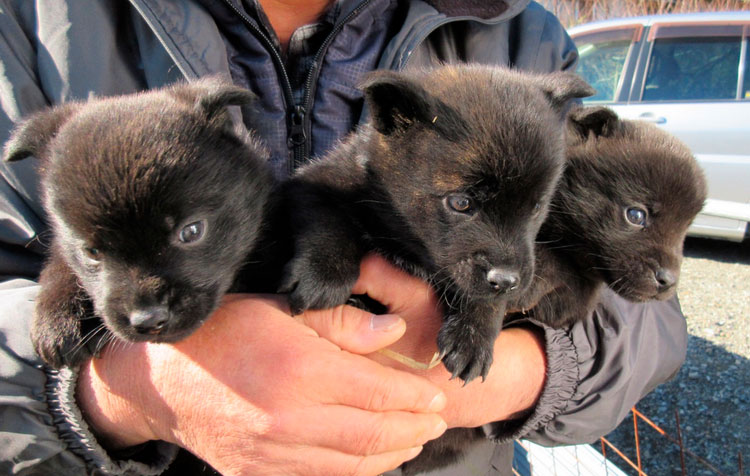
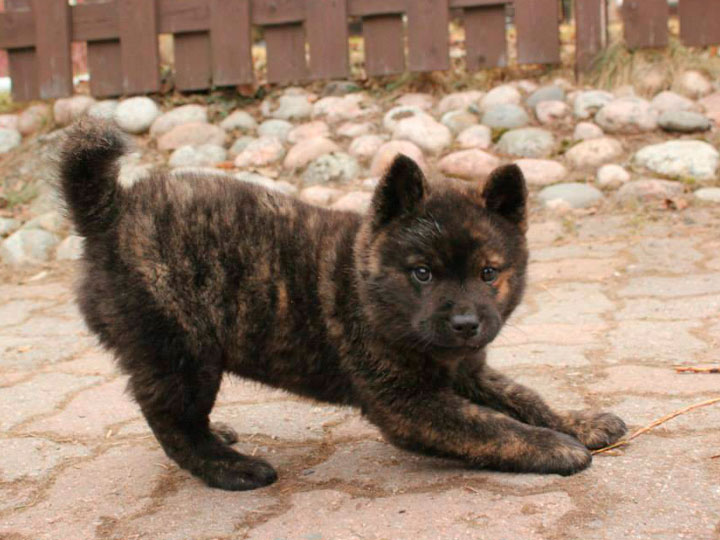
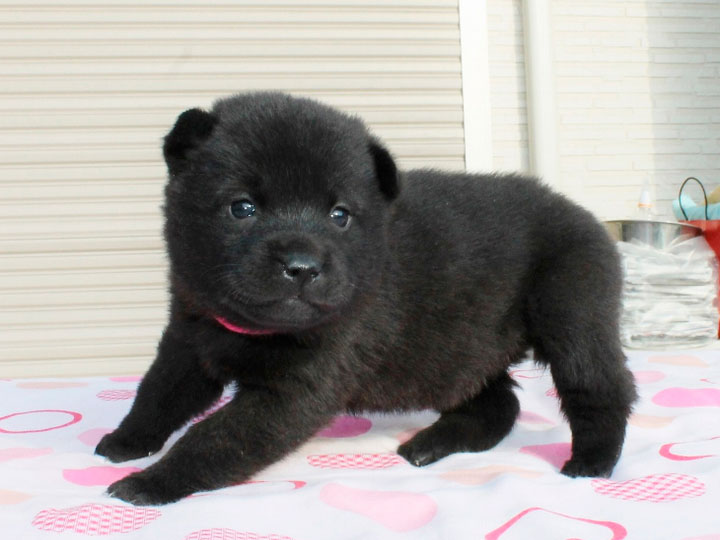
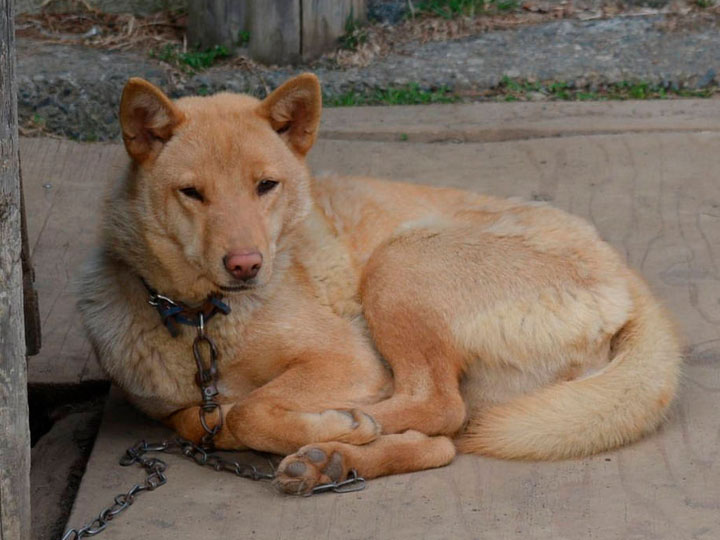
Kai puppies are born solid-colored. Their brindle coloring develops as they mature. Additionally, due to a recessive gene, puppies with unusual cream or white colors are sometimes born. A photo of one such dog can be seen in the gallery below.
Purchasing a Kai outside of Japan can be very difficult. Furthermore, there aren't many professional breeders in Japan. Purchasing a puppy from a professional breeder ensures you get a dog with a pure pedigree, a pleasant personality, socialized with other dogs, and guaranteed health.
Price
The average price of a Kai puppy in Japan is 10,000-15,000 yen, which is approximately 85,000 rubles. Documentation and shipping to Russia or the CIS will cost about the same, if not more.
Photos
The gallery contains photographs of a rare Japanese breed of dog with a brindle color - kai (kai-ken, kai-inu, taro).
Read also:
- Japanese Dog Names: Boys and Girls
- Japanese Terrier (Mikado Terrier, Japanese Fox Terrier, Kobe Terrier)
- Coonhound


Add a comment