
Ivermectin for dogs
Ivermectin is a broad-spectrum antiparasitic agent. It effectively combats both external and internal parasites. It can be used for the prevention and treatment of ticks, fleas, hookworms, worms, and lice. Before using Ivermectin on dogs, carefully read the instructions and consult your veterinarian, as improper use can cause serious side effects.
Content
Composition and release form
Available in three forms:
- injection solution;
- gel;
- spray.
The main active ingredient is Ivermectin, which has a detrimental effect on adult parasites, destroys their larvae, and inactivates their eggs. Depending on the formulation, other active ingredients are also included.
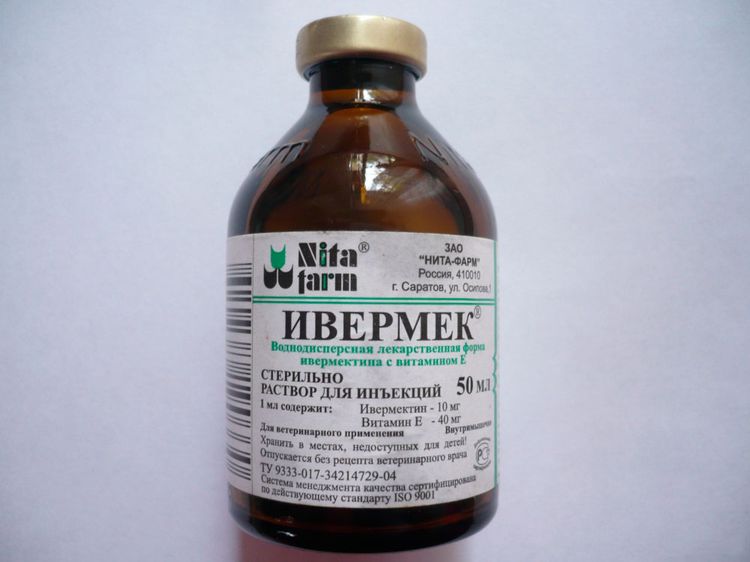
Injection solution
Each 1 ml of injection solution contains 10 mg of Ivermectin and 40 mg of tocopherol (vitamin E). The composition also contains excipients, including benzyl alcohol and water for injection.
The solution is a clear liquid, sometimes with a slight yellow tint. It is packaged in glass vials of varying volumes (from 1 ml to 500 ml). It is sealed with rubber stoppers and sealed with aluminum foil. Once opened, the solution can be used within 42 days, after which it should be discarded.
Gel
In addition to Ivermectin, the gel contains panthenol and lidocaine, as well as auxiliary substances:
- citric acid;
- alcohol;
- castor oil;
- purified water;
- glycerin, etc.
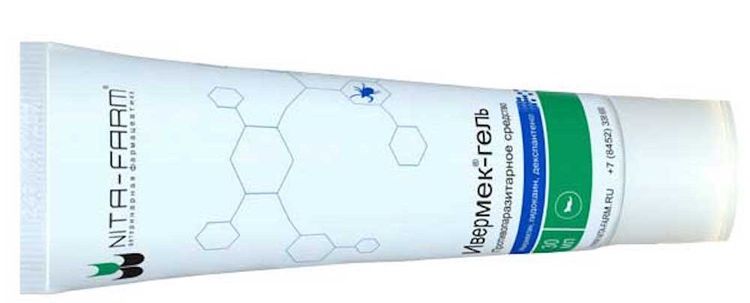
Since the concentration of the active substance is significantly lower than in the solution (1.0 mg Ivermectin per 1 ml of gel), the product is considered less toxic and safer for dogs.
The medication appears as a hydrophilic, transparent gel, sometimes with a light yellow tint. It is packaged in 15 and 30 ml tubes or disposable syringes with capacities ranging from 2 to 50 ml. Once opened, the product can be used within 60 days.
Spray
The spray contains the following active ingredients:
- Ivermectin (concentration 2.5 mg per 1 ml of drug);
- chlorhexidine;
- panthenol;
- lidocaine.
The auxiliary components are water for injection and cremophor.
It is packaged in glass or polymer bottles equipped with special spray caps. Bottle volumes range from 25 to 350 ml.
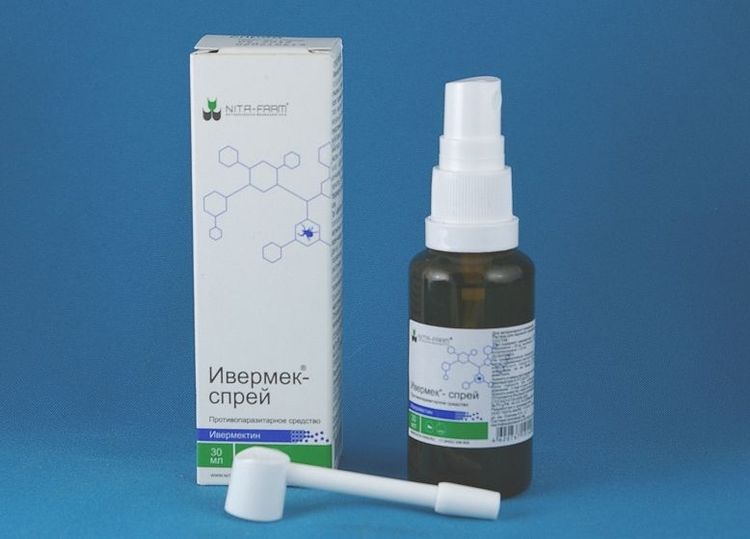
Regardless of the release form, each unit of Ivermectin comes with instructions for use; be sure to read them before use.
Pharmacological properties
The main active ingredient has a strong antiparasitic effect on the ear, eye, stomach, intestinal, skin and other parasitesIts effect extends to both adult and larval parasites, making it effective for treating nematodes, worms, ticks, fleas, and lice.
Ivermectin acts on GABA receptors and glutamate-sensitive chloride channels in insects. This disrupts nerve impulse transmission, leading to paralysis and death of the parasites. When administered by injection, the active ingredient quickly enters the bloodstream and is distributed throughout all systems and organs. Its concentration reaches its maximum in just one hour, and its effects last for 12-14 days. It is eliminated from the body through urine and bile.

The spray and gel also contain panthenol, which stimulates regeneration processes, and lidocaine, which provides analgesia and helps relieve itching and other unpleasant symptoms. Chlorhexidine has a strong antibacterial effect, preventing the spread of infection and the development of complications such as suppuration and inflammation.
Indications for use
In veterinary medicine, Ivermectin is prescribed in the form of injections to dogs to treat the following diseases:
- otodectosis;
- sarcoptosis;
- demodicosis;
- psoroptosis;
- toxocariasis;
- hookworm;
- Uncinaria blight;
- other diseases caused by nematodes, worms or external parasites.
A special feature of the gel and spray intended for external use is that the active ingredient remains on the skin's surface and does not penetrate the bloodstream. For this reason, they are not used to combat internal parasites (tapeworms and worms that inhabit the gastrointestinal tract and other organs).

Although the medication is safe for animals when used at recommended doses, Ivermectin is highly toxic. It should only be used to treat or prevent parasitic diseases after consultation with a veterinarian.
Price
The cost of Ivermectin for dogs depends on the form of release and the packaging volume:
- injection solution – from 60 rubles (1 ml) to 2400-2700 rubles (500 ml);
- gel – about 400-500 rubles for a 30 ml tube;
- spray – 380-440 rubles per 30 ml bottle.
Instructions for use
Use of the drug directly from the release form.
Injection solution
When administering Ivermectin injections to dogs, it's important not to exceed the recommended dosage: 0.2 ml of the drug per 10 kg of body weight. Exceeding the recommended dosage is strictly prohibited. Measuring the required amount of medication for small breeds is quite difficult, so less concentrated forms are preferred. If a solution needs to be administered, it is diluted 10-fold with water for injection to avoid exceeding the recommended dosage.
When using the solution, you should follow these recommendations:
- The injection is administered intramuscularly once. For severe parasite infestations, the procedure is repeated after 8-10 days. Testing is mandatory.
- Injections are used together with medications that support liver function, since it experiences great stress.
- To administer the medication, it is better to use an insulin syringe with a thin needle.
- Ivermectin injections should be given to dogs in the upper thigh. The injection can also be administered into the crease at the withers.
- All aseptic precautions must be observed during the procedure. Use only sterile syringes.
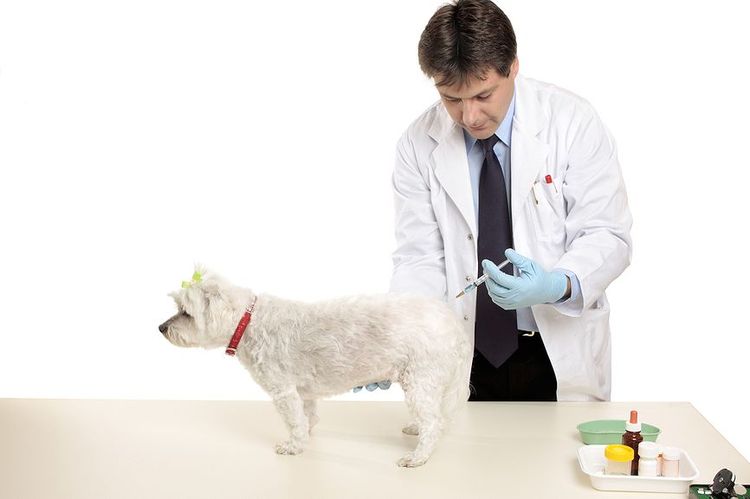
During treatment with Ivermectin (injectable), the animal must be under the supervision of a doctor. Due to the high concentration of the active ingredient, the manufacturer does not recommend using the injectable solution for dogs and cats. It was originally intended for pigs, horses, sheep, and cattle.
Gel
For scabies, ticks, fleas, or lice, apply a thin layer of gel to the affected areas. When using the medication, do not exceed the recommended dose of 0.2-0.3 ml per 1 kg of animal weight.
Before applying the gel, the affected area should be cleaned of any scabs. Place a muzzle or collar on the dog to prevent it from licking the medication. The collar can be removed after 20-30 minutes.

The procedure is performed 2-4 times at intervals of 5-7 days, depending on the severity of the parasite infestation and the animal's condition. A doctor should determine the exact dosage and duration of treatment.
Spray
Apply to areas affected by parasites. Follow these guidelines:
- The dose of the drug should not exceed 0.2 ml per 1 kg of pet.
- The procedure should be performed outdoors or in a well-ventilated area. Spraying should not be done in a room with an aquarium, as the product is lethal to fish.
- Prevent the dog from licking the medication. To do this, put on a collar or muzzle and remove it only after it has dried.
- The medicine should be sprayed from a distance of 10-20 cm, using gloves and other personal protective equipment.
- The treatment is carried out 2 to 4 times with an interval of 3-5 days until the pet is completely recovered.
Contraindications and side effects
The instructions state that Ivermectin should not be used for dogs in the following cases:
- until reaching 3 months of age;
- during pregnancy;
- during lactation;
- in case of exhaustion;
- in case of exacerbation of chronic diseases;
- during the recovery period (when the animal’s body is not yet strong).
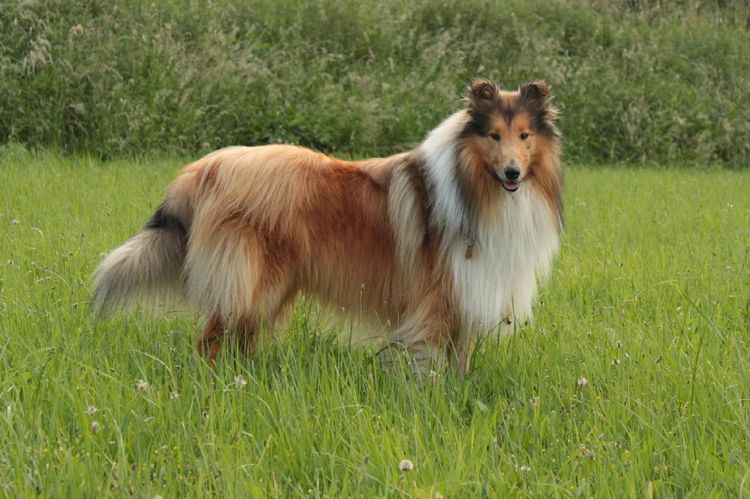
It is not recommended to use the medicine for collies, shelties and other dog breeds that are sensitive to macrocyclic lactones.
In case of overdose, the following side effects may occur:
- vomit;
- increased frequency of bowel movements and urination;
- increased salivation;
- apathy;
- tremor;
- convulsions;
- impaired coordination of movements.
If side effects are detected, use of the drug should be stopped and measures should be taken to remove it from the body.
It is prohibited to use the medicine with other antiparasitic agents.
Owner reviews
Irina, owner of a 6-year-old chow chow:
"After our dog was diagnosed with demodicosis, the vet prescribed Ivermectin injections. We administered four injections in total. Our pet tolerated the medication well, but the vet warned that the medication is toxic and that the dose should never be exceeded."
Ekaterina, the owner of a bull terrier:
"When demodicosis was detected, my dog was prescribed Ivermectin injections. We also took immune-boosting medications. The treatment didn't help, so we had to go to another clinic. I don't know whether the medication wasn't effective or whether they prescribed the wrong dosage, but it didn't solve our problem."
Veterinarian Reviews
Anastasia, veterinarian:
"I do not recommend using Ivermectin injections for dogs. Due to the high concentration of the active ingredient (designed for large animals), it is highly toxic to domestic furry pets. It can cause serious side effects."
Marina, a veterinarian at a capital clinic:
"Ivermectin is effectively used to treat demodicosis and other parasitic infections. The main problem is that the drug is highly toxic, and overdosing can have dire consequences, including death. If I prescribe Ivermectin, I always prescribe Essentiale, as the liver is under significant strain. I always give clear instructions to owners and warn them that the medication is toxic."
Read also:




11 comments
Svetlana
Good afternoon! I have a shepherd dog weighing 32 kg. She was diagnosed with dropsy, blood tests showed worms in her heart, she was prescribed Ivermectin... I want to ask how many injections she needs at 32 kg? Will it help her?
Alina Veterinarian
Hello! If you have been diagnosed with heartworm disease, the first step is to stabilize your dog's condition while simultaneously treating it for these parasites.
In addition to ivermectin, you should have been prescribed antibiotics and glucocorticosteroids.
For prevention, the following drugs are suitable: Dironet, Nexgard, etc.
Nizhad
It works really well. I've been injecting my dogs with Ivermectin for a while now, and it's always a lifesaver. It works against subcutaneous and ear mites, and overall, it's very effective. I inject 1 mg per 50 kg of weight, and my dogs are Alabai, and they tolerate it well.
Semen
I pierced rabbits for ear mites, it helped get rid of the rabbit in a short time.
Alena
I gave my alobaya an Ivermectin injection, and he started scratching his ear a lot, whining! I don't understand what's going on! Please help!
Daria is a veterinarian
Hello! What was the injection dosage and where? What illness was diagnosed? Was the diagnosis made independently or at a veterinary clinic? Did you choose the treatment yourself based on information on the internet or advice from friends/neighbors/forums, or was it prescribed by a veterinarian? Without medical and health information, it will be extremely difficult to determine the cause of this behavior. An allergic reaction after the injection (individual intolerance, overdose) or excessive ear mite activity (if the treatment was aimed at eradicating them) are suspected.
Margarita
Hello, how is your American Bulldog tolerating the medication? We've been diagnosed with sarcoptic mange.
Daria is a veterinarian
Hello!
You've probably already cured this problem, but given the unreasonable popularity of this drug, we're answering.
All animals, regardless of breed, tolerate this injection differently. This is a medication, and, like all medications, individual sensitivity may occur.
But I'm not the same veterinarian, Daria, who previously answered your questions, so I can confidently say that there are now many good sarcoptic mange medications on the market that are safer and more effective. A veterinary dermatologist will recommend the right medications during a consultation, after assessing the skin condition.
Healthy skin to your furry friend!
gadzila
After the very first injection, my old Frenchie simply came alive. He stopped scratching and clawing himself. All previous treatments with "proven medications" hadn't produced such results. Only significant financial losses.
Maria
What is the dosage of Evermek for Russian spaniels (3 years old)? Please tell me if you have experience!
Olga
Ivermectin has been saving me for years now. We live in a village and have rabbits, cats, and a dog. We give all the animals a minimal dose of Ivermectin every six months. The results are excellent—no one has fleas, ear mites, or worms.
Use the drug correctly and no problems will arise!
Add a comment