
Istrian Hound
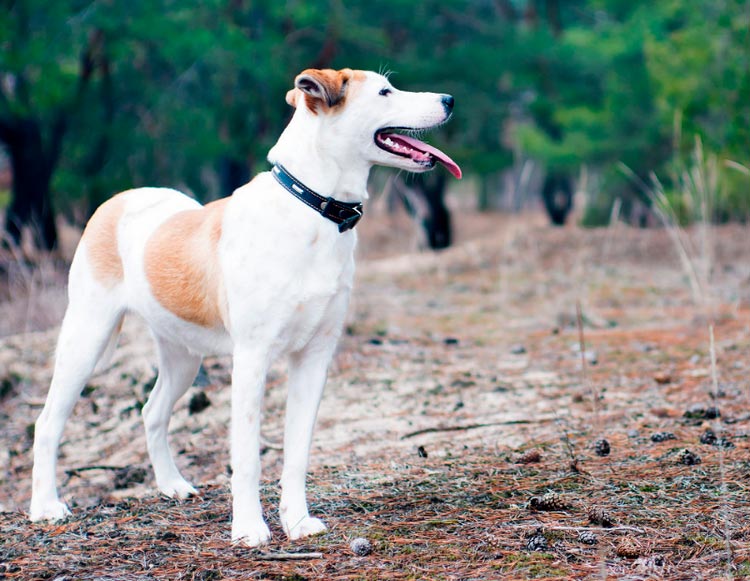
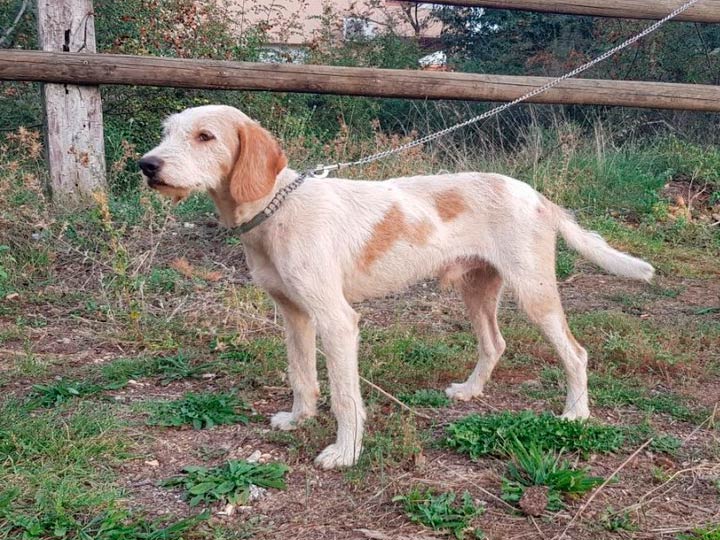
The Istrian Hound is a Croatian hunting dog breed used primarily for hunting hare and fox. It has a resonant, medium- to coarse-toned voice, a balanced and docile nature, and is relatively easy to train. There are two varieties of Istrian Hounds: smooth-coated and wire-coated, each recognized as a distinct breed with its own standard. Essentially, the main difference between them is the quality and length of their coat.
Content
History of origin
The Istrian Hound (Croatian: Istarski Gonič) is considered the oldest Croatian breed. Its ancestors were among the first to appear on the Balkan Peninsula. According to some sources, organized breeding of these dogs dates back to the 14th century. However, some cynologists believe the breed began to develop much later. Paintings from the 18th century depict dogs that closely resemble modern representatives of the breed.
The histories of the smooth-haired and wire-haired Istrian Hounds are inextricably linked. Written references and art objects featuring the latter variety are much rarer. Wire-haired dogs were described in the early 20th century. At that time, they were very popular in the Croatian towns of Pazin and Buzet, where they were called Barbini. After World War I, they virtually disappeared.
Veterinary research indicates a relationship between Istrian hounds and Dalmatians
In the 1920s, standards were developed for the smooth-haired and wire-haired varieties. Dogs began to be registered in the Croatian Stud Book. After the 1950s, both breeds were recognized by the FCI.
After the collapse of Yugoslavia, Croatia and Slovenia competed for the right to be called the birthplace of the Istrian Hound. In 1999, at an FCI meeting, the breed was recognized as Croatian.
Appearance
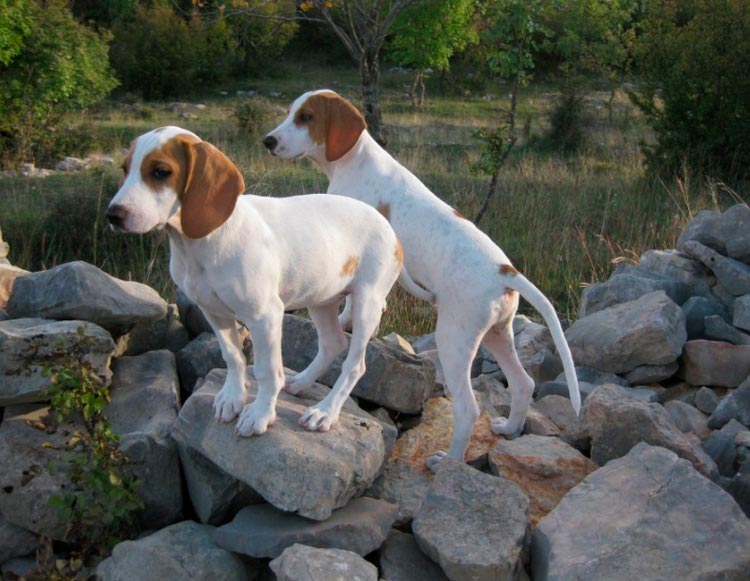
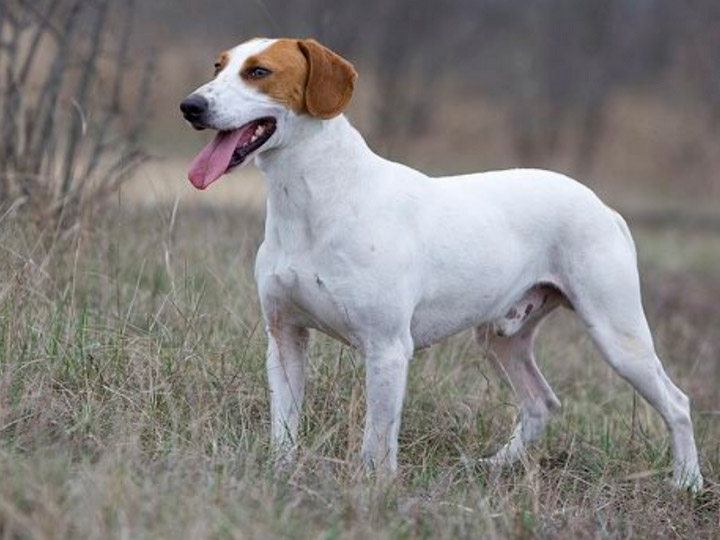
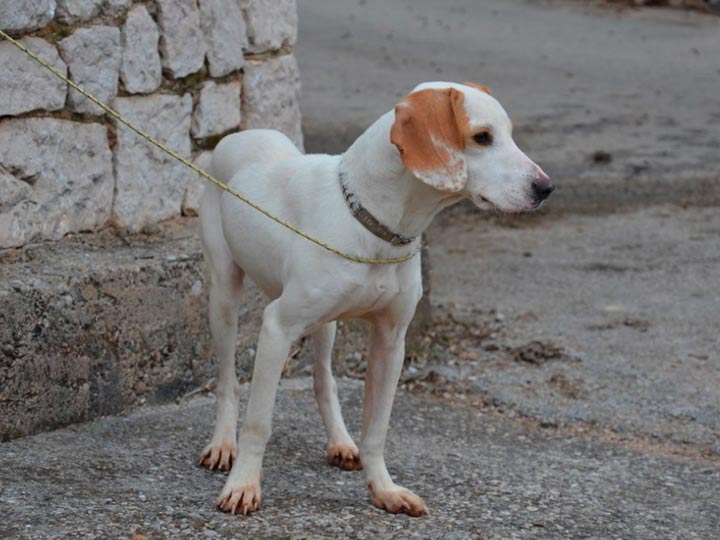
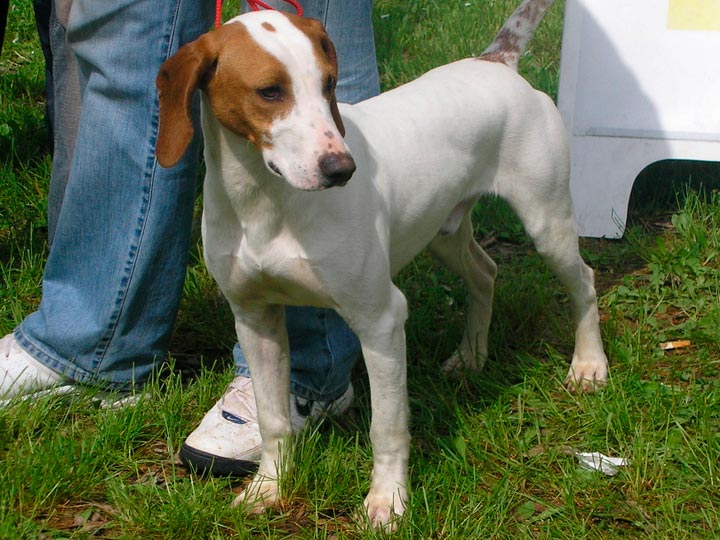
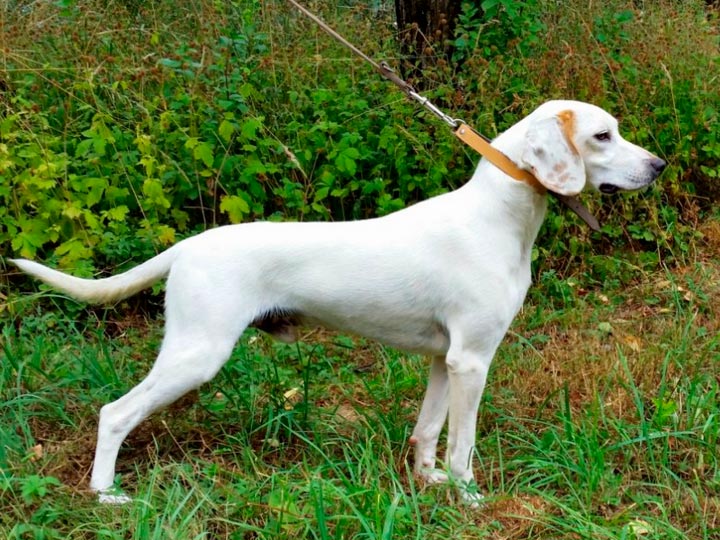
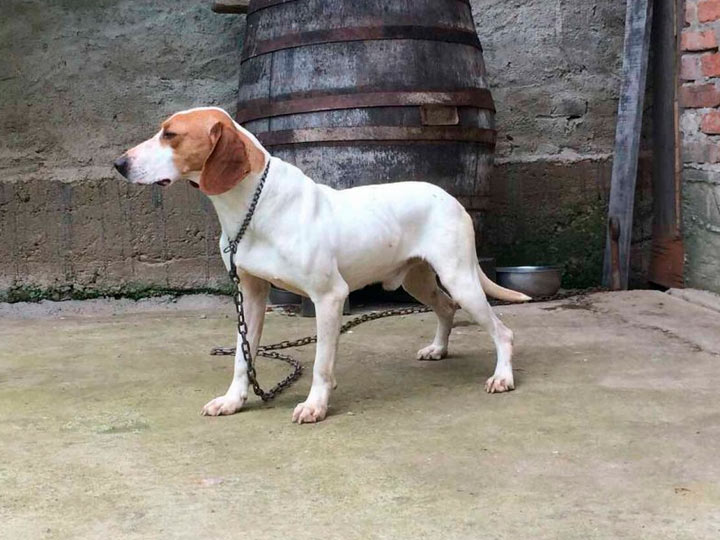
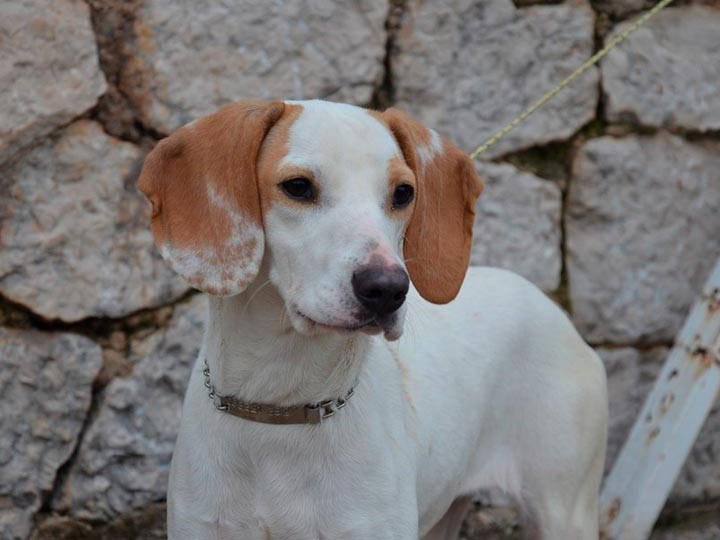
The Istrian Hound is a strong, powerful, medium-sized dog with well-developed bone and muscles, snow-white in color with lemon-orange markings. Its body length exceeds its height by approximately 10%. Sexual dimorphism is pronounced.
- Height at withers: 46-58 cm;
- Weight: 16-24 kg.
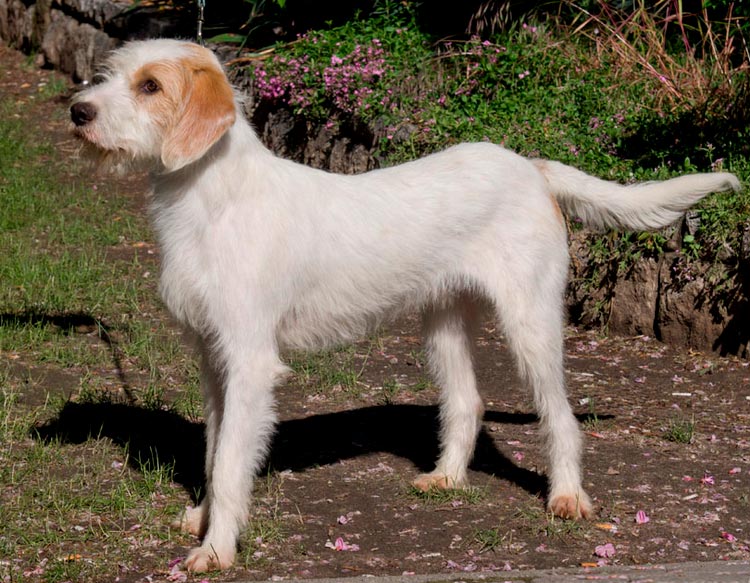
Each variety of Istrian Hound has its own Standard (No. 151 and No. 152), but the descriptions and requirements are virtually identical. The exception is the coat.
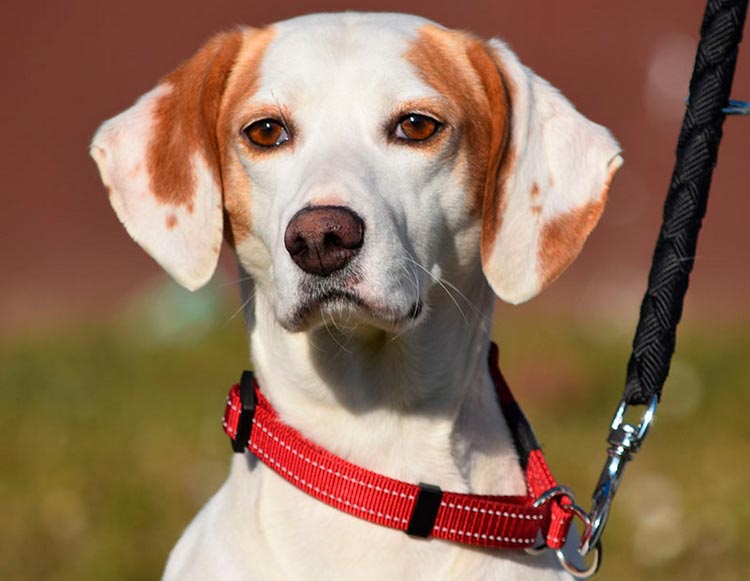
The head is harmonious, 20-24 cm long, without folds or wrinkles. The muzzle is long, wide at the base, and tapers toward the nose. The bridge of the nose is straight. The nose leather is black or dark brown. The teeth are strong, with a scissor bite. The eyes are oval, with dark eyelids. The ears are thin, set slightly above eye level, tapering toward the tips, and elongated, reaching the canines. The neck is slightly arched, approximately 15-20 cm long.
The body is moderately elongated. The topline slopes downward toward the croup. The back is straight. The loin is short and wide. The croup is long. The chest is deep and wide. The girth of the chest is 12-15 cm greater than the height. The belly is slightly tucked up. The tail is saber-shaped and set high. The limbs are well muscled and strong. The paws are cat-like, with elastic pads and strong claws.
The skin is elastic, pink in color. Wool:
- In smooth-haired breeds, the coat is dense, fine, and glossy. It can sometimes be slightly longer on the back of the thighs and underside of the tail, but this is undesirable.
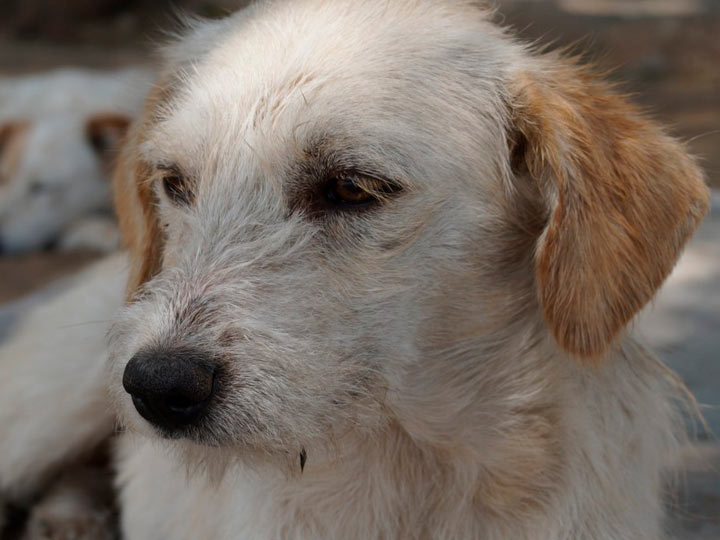
- Wirehaired dogs have a bristly, matte coat, 5-10 cm long. It does not lie flat against the body and stands upright. The undercoat is short and dense. The length and density of the topcoat varies across the body.
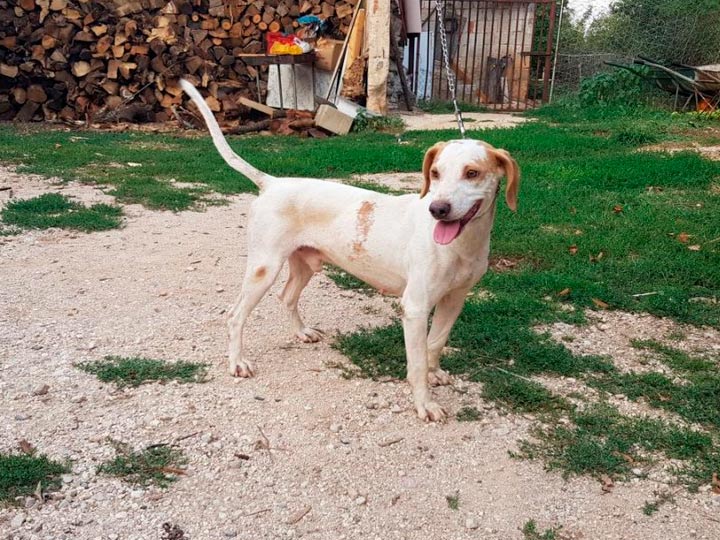
The coat is snow-white with orange markings, usually located on the ears, under the tail, and on the body. Speckling on the body is permitted.
Character and behavior
Istrian Hounds are active, lively, and loyal dogs, intelligent, curious, and quite independent, yet easily trained. This allows owners to engage in a variety of sports with them outside of hunting season.coursing, agility, trekking). Gets along well with other pets with appropriate training.
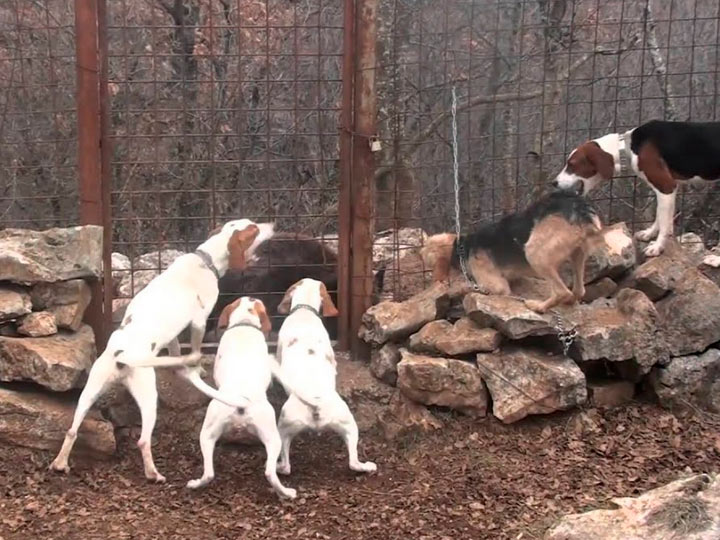
The Istrian Hound has a balanced character. Its attitude toward strangers is reserved, with no signs of aggression or shyness. It has a guarding instinct. In everyday life, it is playful, friendly, affectionate with all family members, sociable, and outgoing. It is quiet both indoors and in the yard. At the same time, the Istrian Hound is a passionate hunter with a keen sense of smell and a pronounced ferocity toward animals. It chases game with a strong, ringing voice.
The Istrian hound is used to hunt hares, foxes, wild boars and birds.
Content Features
The Istrian Hound is suitable for keeping in a spacious enclosure or in a private yard, but can become cold in severe frosts. It's not a good choice for an apartment. In Croatia, dogs are often kept leashed near a kennel in the yard. Hounds can easily jump over small fences and are good diggers.
Istra hounds aren't particularly picky eaters and will eat whatever their owner offers. This can be natural food or prepared dry food. They require a lot of exercise. This is essential for maintaining their vitality and mental well-being.
Health and life expectancy
Istrian Hounds are robust and hardy dogs. They have no known health problems or predisposition to any particular diseases. Life expectancy is 10-13 years.
Where to buy a puppy
Istrian Hounds are most common in Croatia, particularly in the Istria region and surrounding areas. They are also quite popular in northern Italy and Slovenia. They are rare in other European countries.
Price
Buying an Istrian Hound puppy in Croatia is relatively inexpensive. Prices range from 150 to 1,000 kuna (approximately $10 to $150). Ads for puppies are rare, but there are plenty of adult dogs for sale.
Photos and videos
You can see more photos of Istrian Hound dogs in the gallery.
Video about the Istrian Hound dog breed
Read also:


Add a comment