
History of cat domestication
Of the five thousand animal species inhabiting our planet, fewer than fifty have been domesticated. Most of them are a source of material wealth, providing meat, milk, leather, and wool, and perform working or guard functions. The history of cat domestication is somewhat atypical: the descendants of individuals tamed by humans as rodent control aids quickly "changed professions" and serve as companion animals, while maintaining a remarkable self-sufficiency and independence.
Content
What is a pet?
Almost any animal can be tamed, but this doesn't mean making it domestic. A prerequisite for domestication is that individuals kept in captivity reproduce for a sufficiently long period, and that these offspring retain traits valuable to humans.
Born and raised in captivity, domesticated animals can differ significantly from their wild ancestors. They are typically larger in size but less resilient and, in most cases, unable to survive in harsh natural conditions. Of all domesticated carnivorous mammals, the dog and cat are the most common worldwide.
The cat as a biological species
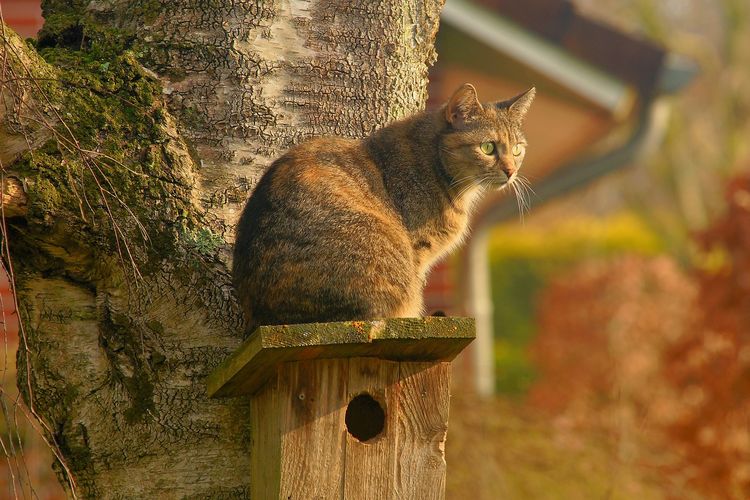
The cat (Felis) belongs to the order Carnivora. Although a solitary hunter, it is still considered a social animal, using body movements, vocalizations, and pheromones to communicate with other members of its species.
The adult cat's weight varies by breed and ranges from 2 to 8 kg, with a typical lifespan of 10 to 15 years. Cat coat colors vary widely. The main types are tabby, tortoiseshell, solid, and with a darker muzzle, legs, or tail.
The family of wild progenitors Felis catus is represented by several species:
- Felis bieti (Chinese mountain),
- Felis cafra (African forest),
- Felis lybica (spotted steppe),
- Felis ornate (desert),
- Felis. silvestris (European forest).
Wild cats lived near human settlements even after their relatives were domesticated, so the chromosome sets of wild and domestic breeds differ only slightly. Felis silvestris catus genotypes evolved depending on the wild animal subspecies inhabiting a given region. A study of this gene led to the conclusion that Felis silvestris can be considered the ancestor of most European domestic cats, Felis bieti in Chinese cats, and Felis ornate in Indian cats.
About the uniqueness of cats
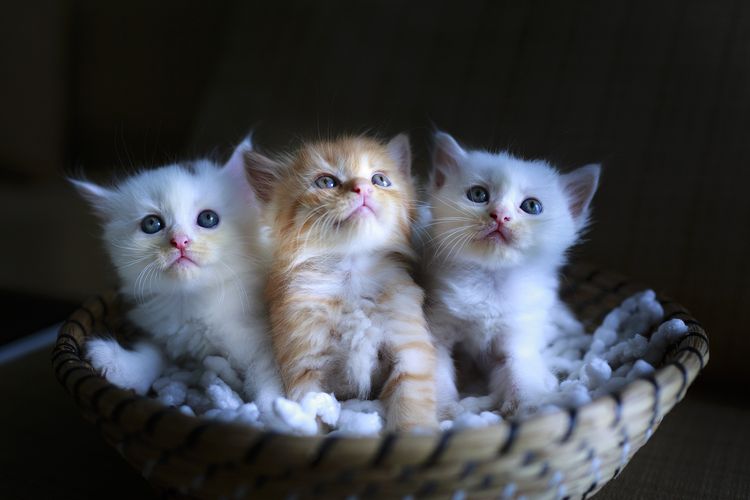
All feline species have flexible bodies, and their shoulder bones can rotate at the joint. This allows cats to squeeze through narrow spaces and land on their feet when falling from heights. These animals move quickly and silently—the claws on their toes, located around the soles and pads, can retract. Thanks to the presence of special photosensitive cells in their retinas that perceive dim light, these predators can see in the dark.
Read also on our website about: Where did cats come from and how did they appear?.
Cats have excellent spatial memory, and their bodies are equipped with a kind of "biological navigator": taken thousands of kilometers from home, they unerringly find their way back. Despite centuries of living alongside humans, domestic cats remain independent creatures—they "walk on their own." Renowned cat trainer Kuklachev says his "professional actors" will never work under duress.
Many scientists believe that cats are able to sense energy flows and can cleanse and protect a home from negative energy. These animals are natural healers. It has been established that cat owners tend to suffer less from hypertension and nervous disorders, and recover more easily from illness. Scientists at the University of South Carolina have found that the frequency of a cat's purr, approximately 22-44 hertz, matches the oscillation frequency of cell regeneration, which is why it has a calming effect, relieves pain, and improves overall well-being.

Felinotherapy is currently one of the most developed areas of animal-assisted treatment, including PET therapy. In Russia, some clinics offer "therapeutic cat" rental services, and in England, they are even sold in pharmacies.
Many countries have superstitions associated with cats. Here are a few of them.
- Cats cannot be killed, as they are the first to meet their owner in the afterlife.
- If you hit a cat, you will become seriously ill.
- When moving into a new home, the cat is the first to be let into the house. Wherever it lies down, a positive bioenergetic zone is located.
- Acting on an intuitive level, these animals are aggressive towards people who pose a danger to their owner, and benevolent towards kind and sincere people.
- A black cat living in the house protects against thieves and the evil eye.
- A ginger cat brings health and prosperity into the home.
- A tricolor cat is a living talisman for good luck and prosperity.
When and how cats conquered the world
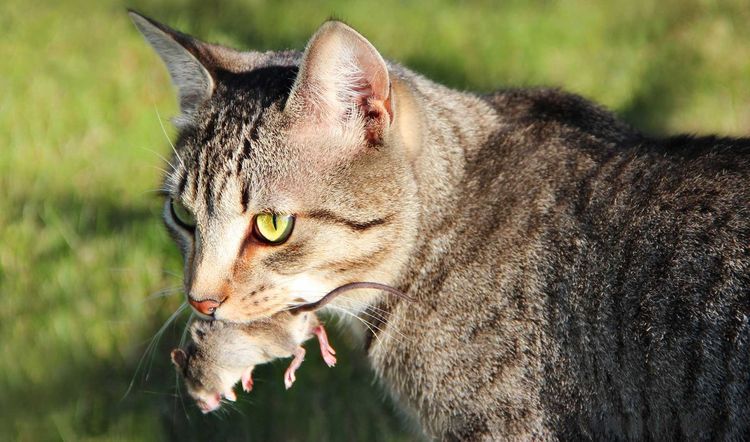
Today, members of the Felis genus inhabit every continent except Antarctica. It's difficult to say exactly how cats became domesticated; most likely, they took the initiative themselves. Ancient humans had food reserves, and naturally, rodents would infest those pantries. For wild cats, this was a good, and constant, source of food, and they quickly realized that living close to humans was beneficial.
Archaeological excavations indicate that the domestication of cats occurred approximately 6,000-7,000 years ago. Figurines of these animals, dating back to the 6th millennium BC, have been discovered during excavations in Egypt and Turkey. These mammals spread from the Middle East. to other countries:
- by 500 BC – to Greece,
- by 300 BC – to India,
- by 200 BC – to China,
- by 100 AD – to Italy,
- by 400 AD – to Britain.
Cats didn't appear in Rus' until the 14th century. But they soon became so highly prized that, according to the laws of the time, stealing a "mouse killer" carried a fine equal to that for stealing cattle.
At all times, many different myths, beliefs and legends have been associated with the domestic cat.
- In ancient Egypt, these animals were considered sacred and were under state protection, and after death they were mummified.
- The Egyptian goddess of fertility Bastet was depicted with the head of a cat.
- In Ancient Rome, Felis was considered the companion of the goddess of freedom, Libertas.
- There is a legend according to which the Arab prophet Muhammad cut off the sleeve of his robe so as not to disturb the cat sleeping on it.
Today, these miniature relatives of tigers and panthers—furry, graceful, playful, affectionate, and incredibly independent—have become some of humanity's most beloved companions. According to statistics, 35 million cats currently live in Western Europe, 60 to 70 million in the United States and Canada, and about 7 million in the United Kingdom. Feline experts count up to 200 different breeds of these domestic cats, from hairless Sphynxes and Elf cats to long-haired Persians, Angoras, and Maine Coons.
The world's first cat show was held in London in 1871, and in 1987, a similar exhibition was held in Moscow. Since 2002, at the initiative of the International Animal Welfare Foundation, August 8th has been celebrated as World Cat Day.
Read also:


Add a comment