
Spanish Water Dog
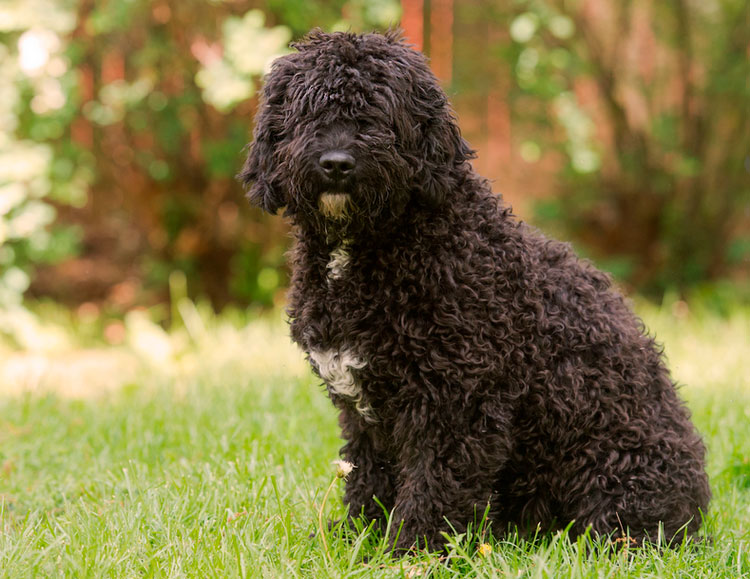
The Spanish Water Dog is a very ancient breed that was revived in the late 20th century. The word "rural" is often used to describe it: strong, hardy, efficient, and versatile. The Spanish Water Dog has proven itself as a family dog and companion for active people. Its curly coat requires regular clipping; as it grows, it curls into cords.
Content
History of origin
The Spanish Water Dog was one of the first dogs to appear on the Iberian Peninsula. For many centuries, it was known as the "Turkish dog." Its ancestors likely descended from general-purpose Turkish shepherds, capable of guarding and herding. Subsequently, it crossed with other breeds, both local and from neighboring regions. Genetically, a connection can be traced to barbette, Irish Water Spaniel, Portuguese Water Dog and some others.
Until recently, Spanish Water Dogs lived primarily in rural areas of Spain, almost completely isolated. In 1975, Santiago Montesinos and Antonio García Pérez, while traveling in southern Spain, purchased several dogs in remote villages of Andalusia. They believed these were the very dogs of the old type that could form the basis of a breeding program. In 1980, the Spanish Water Dog Club was founded. In 1985, the breed received official status in Spain and the name Spanish Water Dog (Spanish: Perro de agua español). The Fédération Cynologique Internationale (FCI) finally recognized the breed in 1999.
Usage
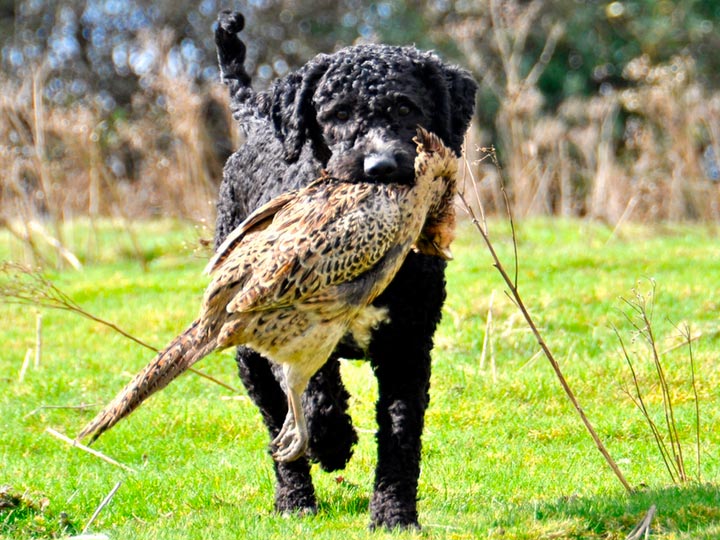
The Spanish Water Dog is versatile, suitable for a wide range of tasks, intelligent, obedient, and easy to train. Fishermen used it for communication between boats and land, retrieving fishing tackle, and other tasks. Hunters saw it as a companion and a good retriever for waterfowl. For Andalusian farmers, it was primarily a shepherd and guard dog.
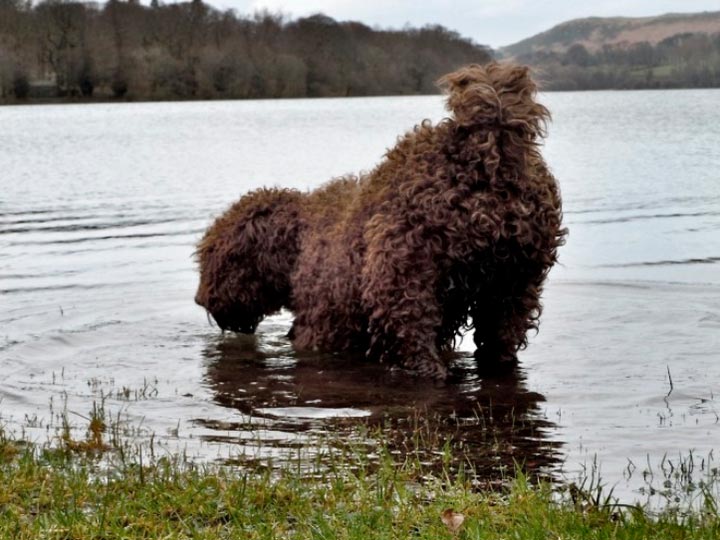
The Spanish Water Dog is known for its ability to dive deep underwater and remain there for extended periods. The deepest recorded depth is 6 m.
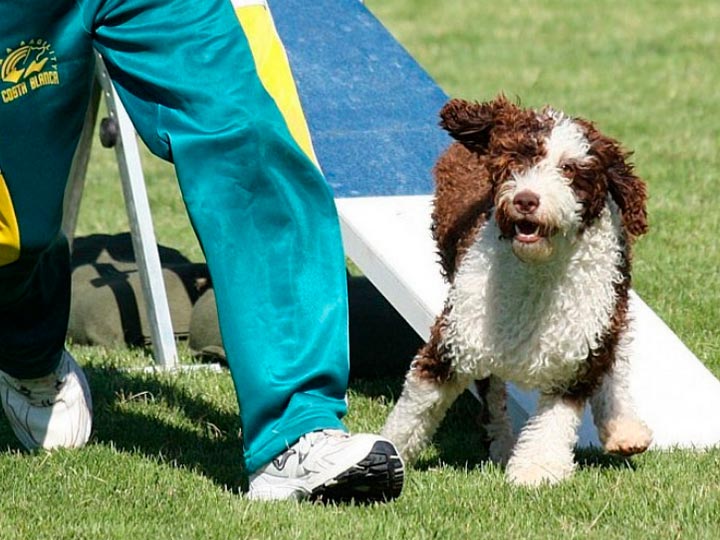
Even today, Spanish Water Dogs are no couch potatoes. They are trained for a variety of disciplines, including pointing, search and rescue, and herding. They excel in obedience, agility, obedience, and other competitions.
Appearance
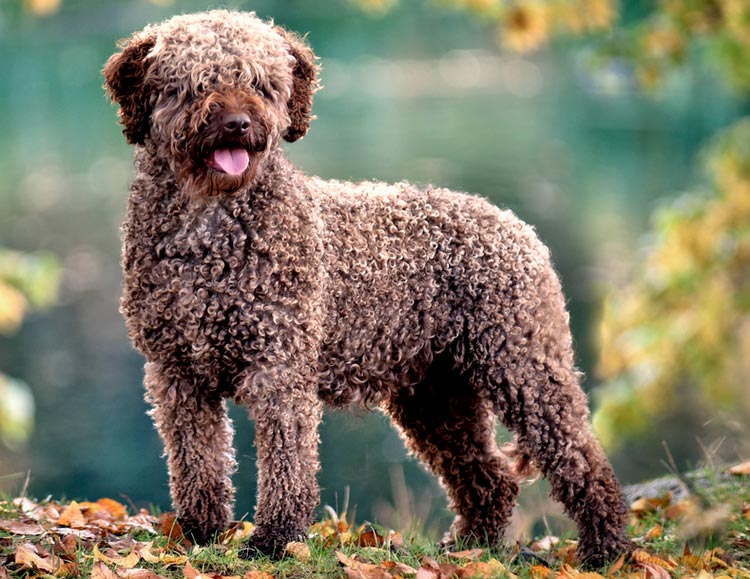
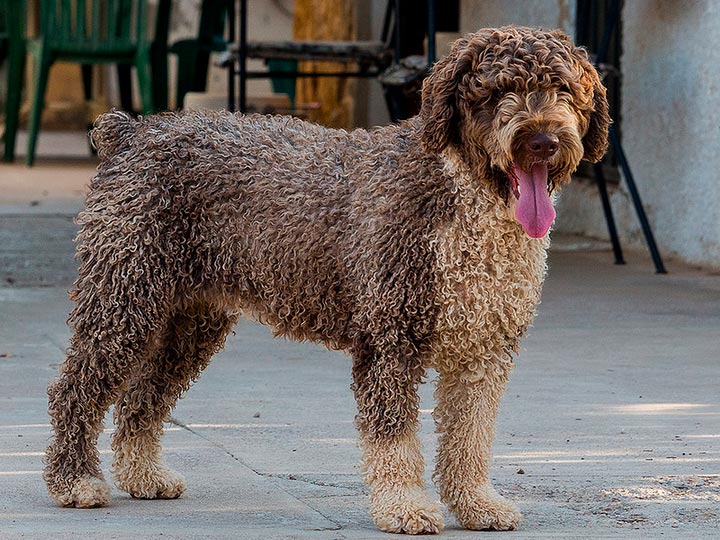
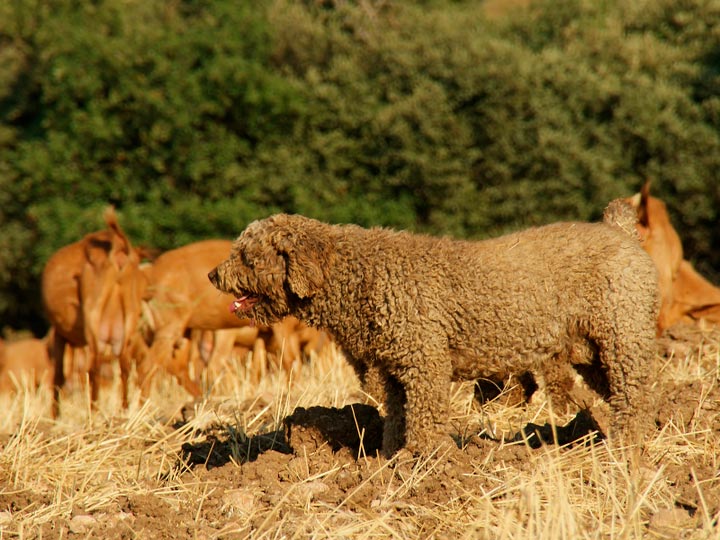
The Spanish Water Dog is medium-sized, proportionately built, and moderately elongated. Muscles are well developed. The coat is curly, growing out to form cords. Sexual dimorphism is well-defined.
- Height of males is 44-50 cm; weight is 18-22 kg.;
- The height of females is 40-46 cm, weight is 14-18 kg.
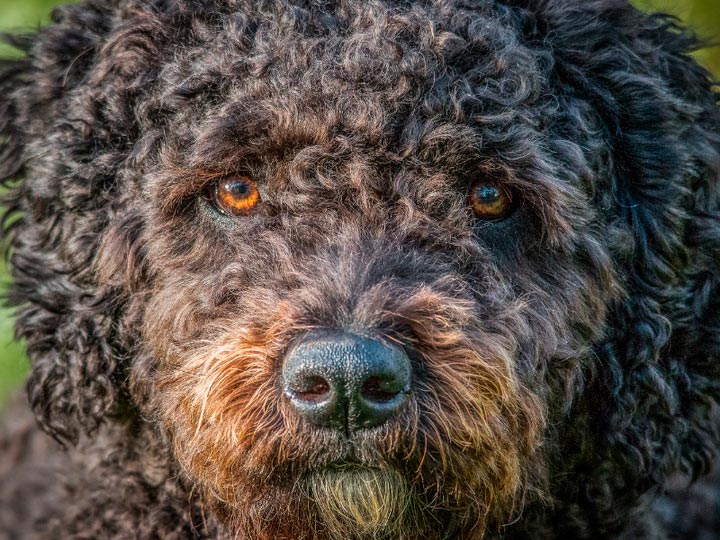
The skull is flat, with a smooth stop. The muzzle is slightly shorter than the cranial portion, with a straight nasal bridge. The nose, with well-developed nostrils, is the same color as the coat or slightly darker. The lips are tightly fitting, with well-defined corners. The teeth are large and white. The eyes are slightly slanted, expressive, and varying shades of brown, with no visible whites. The ears are triangular, drooping, and set at a medium height.
The neck is short and well-muscled, without dewlap. The body is strong and fairly elongated. The topline is straight. The withers are slightly defined. The back is strong and straight. The croup is slightly sloping. The chest is deep, wide, and fairly full, with well-arched ribs. The belly is slightly tucked up. The tail is long, saber-shaped, slightly curved at the tip, and carried high when excited. In countries where this is not prohibited, it is copied at the level of the 2nd to 4th vertebrae. A congenital bobtail is possible. The limbs are straight, strong, with well-developed muscles and medium bone structure. The paws are rounded with tightly knit toes and hard pads.
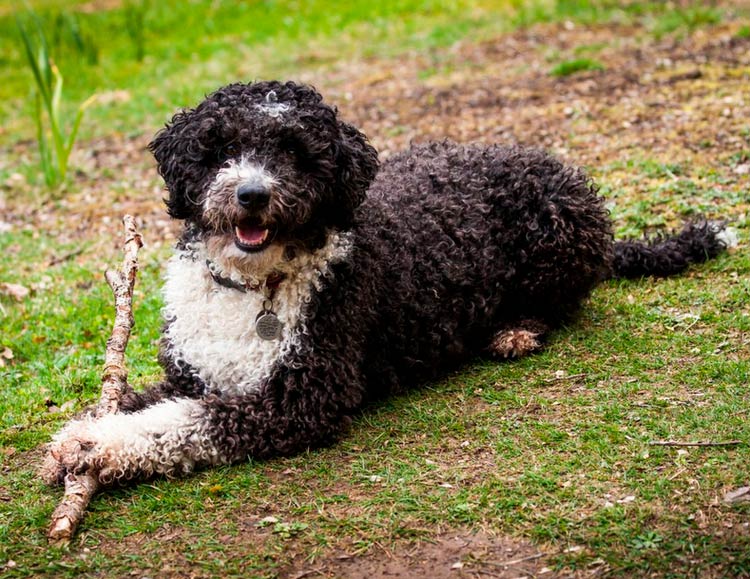
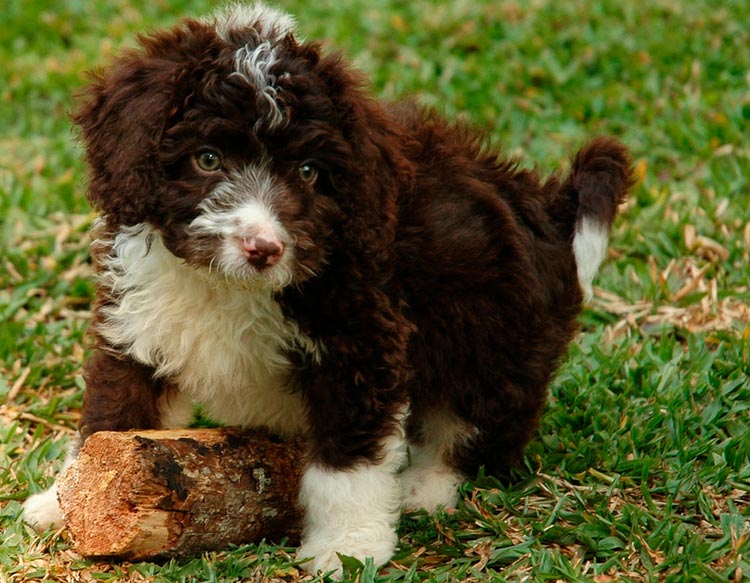
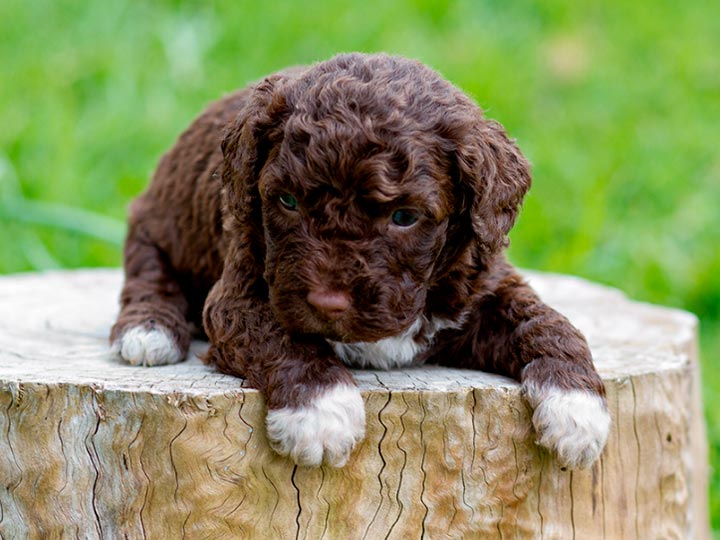
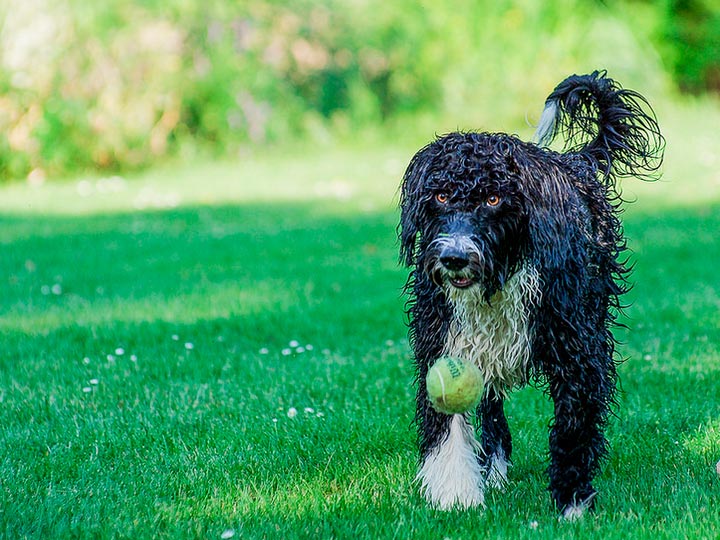
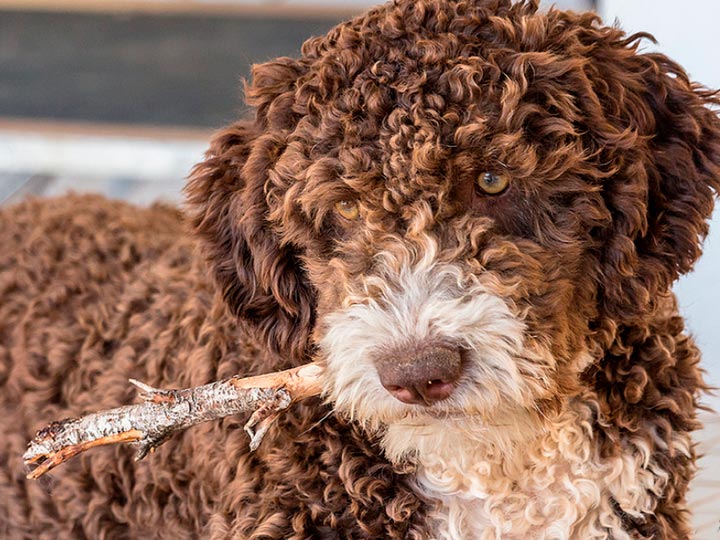
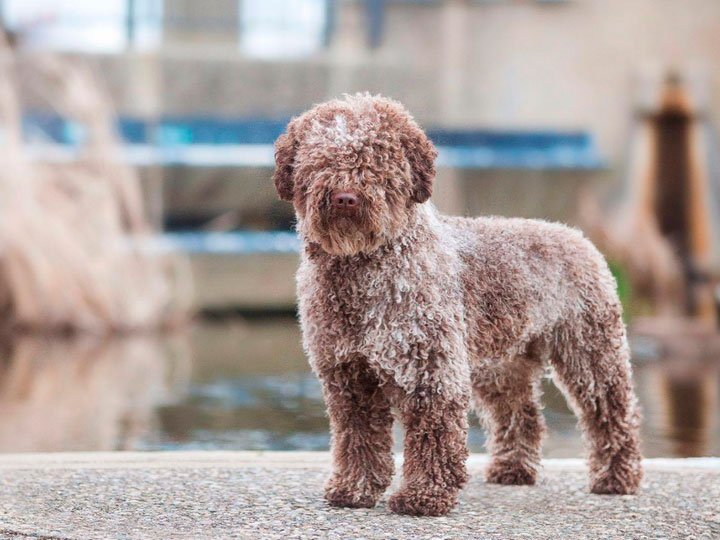
The skin is thin and elastic. The coat is shaggy and always curly. If it's short, it's curly; if it's long, it's corded. Puppies have curly fur at birth. Colors:
- Solid (black, white, brown in different shades);
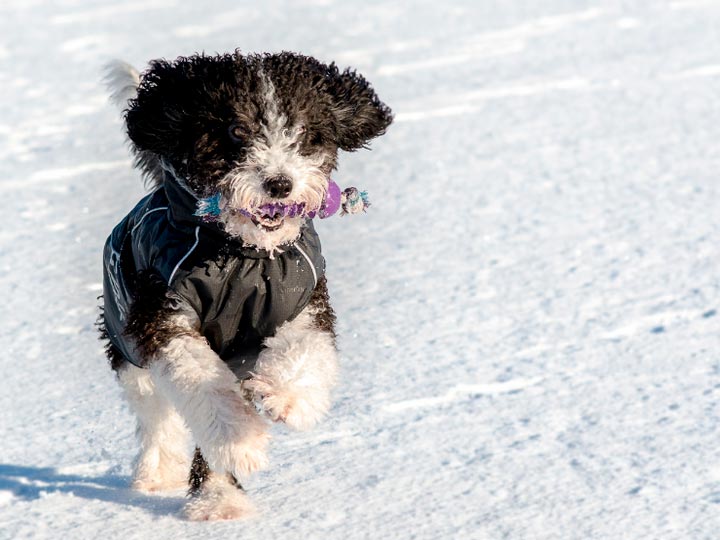
- Two-color (black and white or white and brown in different shades).
Character and behavior
The Spanish Water Dog has a balanced personality. It is cheerful, observant, devoted to its family, obedient, and highly trainable. It loves playing outdoors and suffers from lack of work. It dislikes being left alone for long periods of time and will try to share any of its owner's interests. Although the modern Spanish Water Dog is considered a companion, it possesses a well-developed hunting instinct, excellent vision, hearing, and sense of smell. These traits should be taken into account when training it. Its exceptional intelligence and ability to adapt to its environment make it a wonderful companion and family dog.
The Spanish Water Dog is an intelligent, versatile, and gifted individual who, depending on his upbringing and the demands of his owner, can become a shepherd, a gundog, a diver, an athlete, a show star, or simply a companion.
When socialized early, the Spanish Water Dog gets along well with children of all ages; it is patient and playful. Its attitude toward strangers depends on its upbringing; it is usually reserved and wary. Its protective instincts are well-developed, making it a vigilant and courageous guardian of its home, but without excessive aggression. It gets along well with other animals, including dogs, cats, and small animals, which is essential for a working dog.
Content Features
The Spanish Water Dog is suitable for both indoor and outdoor living. Provided it receives ample exercise, it will thrive in a city apartment. A more suitable option is living in a private home with ample time in the yard and regular walks with its owner outside. The Spanish Water Dog is highly trainable and responds best to positive training methods. delicacy and praise. If treated poorly, he may become withdrawn.
While not overly energetic or fussy, this breed does require ample exercise. Once fully mature, it can become a companion for its owner on jogs and long hikes. Swimming and water retrieving (diving training is possible) are excellent pastimes for this diver.
Care
Caring for a Spanish Water Dog is not difficult, but you just need to follow a few rules:
- The Spanish Water Dog's coat is never brushed;
- Curls should be checked regularly by hand and, if necessary, carefully separated, preventing tangling;
- If a lot of tangles have formed, the wool is cut off;
- Puppies are first clipped at around 4 months of age. Subsequently, they are clipped 2-3 times a year;
The Spanish Water Dog requires regular grooming. The standard calls for uniform coat length throughout. Model haircuts are not permitted at shows. The maximum hair length for shows is 12 cm (with the curls uncurled, no more than 15 cm), and the minimum is 3 cm (this length allows the quality of the curl to be seen).
- Bathe only when extremely dirty in warm water with a neutral shampoo. Allow the coat to air dry;
- Ears should be cleaned regularly to remove accumulated wax and dirt. Curly hair inside the ear canal interferes with normal self-cleaning;
- The eyes must be wiped daily, and care must be taken to ensure that hairs do not fall on the cornea;
- As the nails grow, they should be trimmed;
- Recommended regular brushing of teeth.
Health and life expectancy
Spanish Water Dogs are very hardy and adapt easily to various climatic conditions. With good care and nutrition, the life expectancy is 12-14 years. It is worth noting that the breed has hereditary diseases that occur with varying frequencies in different lines:
- hip dysplasia;
- diseases of the endocrine system (congenital hypothyroidism with goiter, hypothyroidism, hypocorticism);
- ophthalmological diseases (cataract, progressive retinal atrophy, districhiasis, cherry eye);
- allergy;
- pancreatic insufficiency;
- neuroaxanal dystrophy.
Where to buy a Spanish Water Dog puppy
The Spanish Water Dog is becoming increasingly popular beyond its native land. Large breeders exist in the CIS countries, particularly Russia and Ukraine. However, the majority of breeders are concentrated in Southern Europe.
When choosing a dog, it's important to remember that the breeder is the person who will support the dog from the early stages of its life onward. They should be knowledgeable about breeding, training, and feeding Spanish Water Dogs. Tests confirming the parents' health (at a minimum, a genetic eye evaluation and dysplasia screening) are welcome. The parents and puppies should meet the breed standard in appearance and character. The puppies should be picked up no earlier than 2.5-3 months of age.
Price
The average price of a Spanish Water Dog puppy in Russia is 60,000 rubles. In Europe, a high-quality puppy costs around 2,000 euros. The price of promising youngsters can reach 3,500 euros. Purebred dogs cost about the same in the US.
Photos and videos
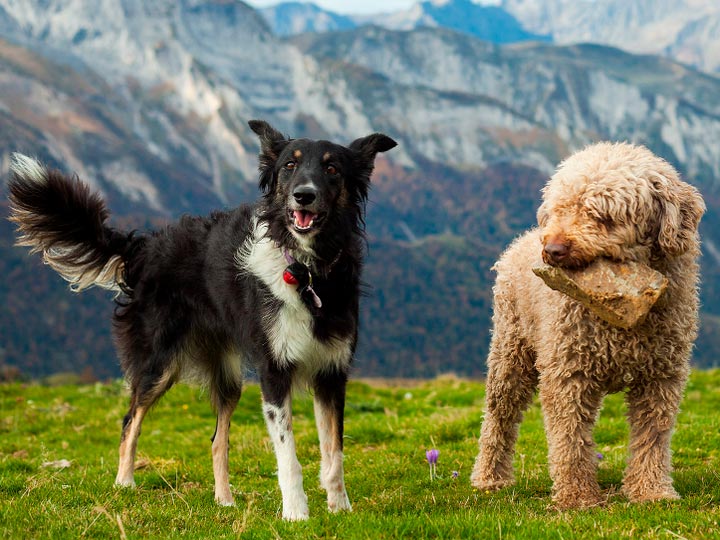
This gallery is dedicated to the Spanish Water Dog breed. It features photographs of dogs of different sexes, ages, and colors.
Video about the Spanish Water Dog breed
https://youtu.be/VnJIvc75vBk
Read also:


Add a comment