
Spanish Greyhound (Galgo Español)
The Spanish Greyhound is an ancient dog breed developed in Spain. It is very popular in its homeland and quite numerous abroad. Unfortunately, the breed is known to many around the world not for its outstanding hunting abilities or pleasant disposition, but for the tragic fate of thousands of its specimens. Other names for the breed include the Spanish Galgo or the Spanish Greyhound.
Content
History of origin
The Spanish Greyhound is an indigenous Spanish breed, descended from ancient Asian sighthounds. Its current characteristics were achieved through selective breeding, not by crossing different breeds. Many written references and descriptions of the Galgo and hunting with it date back to Ancient Roman times, but it is believed that they appeared on the Iberian Peninsula much earlier. Since then, Galgos have remained very popular in Spain, forming an integral part of the country's history, folklore, and art.
Greyhounds are very popular in Spain, and their images and photos are found everywhere, just like the galgos themselves.
Usage
In Spain, greyhounds are used to hunt hares in open fields. The dog hunts by sight, chasing the game, catching and killing it without human intervention after the chase. They can also hunt rabbits, foxes, and wild boar. Hunting with galgos is often a sport and a way to show who has the best dog. Spanish greyhounds also participate in coursing competitions and dog racing.
Every year, about 3,500 galgos are prepared for the start of the hunting season in the country.
The tragic fate of greyhounds in Spain
The Galgo's "prime" as a hunter occurs over a short period of time, from 8 months to 2 years. After this, many dogs no longer want to hunt or don't perform as expected. Furthermore, many Spanish greyhound handlers (galgonieros) view their dogs as tools. If the tool stops working, it's discarded.
At the end of the hunting season in Spain, thousands of dogs are killed, often using the most brutal methods.
According to some estimates, approximately 20,000 greyhounds are killed annually in the country. Many dogs are not simply euthanized, but abandoned to die of starvation, tied up in the woods, hanged, shot, buried, and burned alive. The problem of cruelty to Spanish greyhounds has long been an international one. Charities and shelters are being established to save at least a small portion of the dogs. Most resources and people willing to adopt adult dogs come from abroad (the UK, Belgium, France, Denmark, the USA, the Netherlands, and Germany).
Appearance
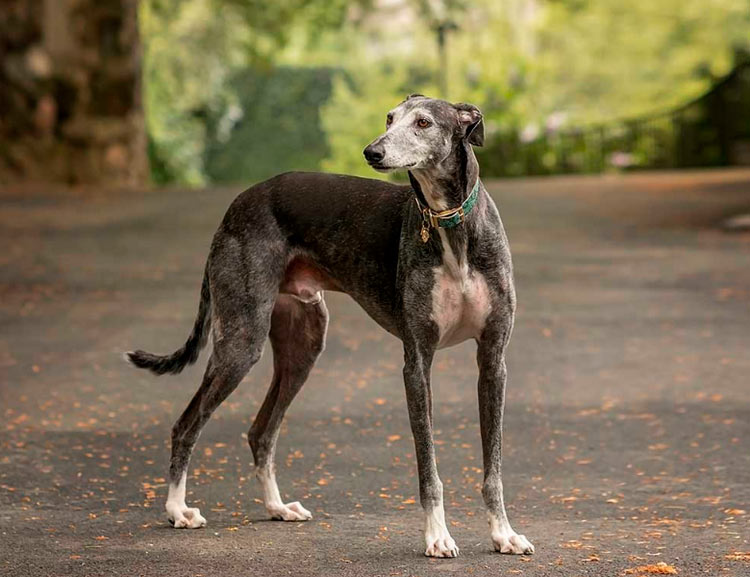
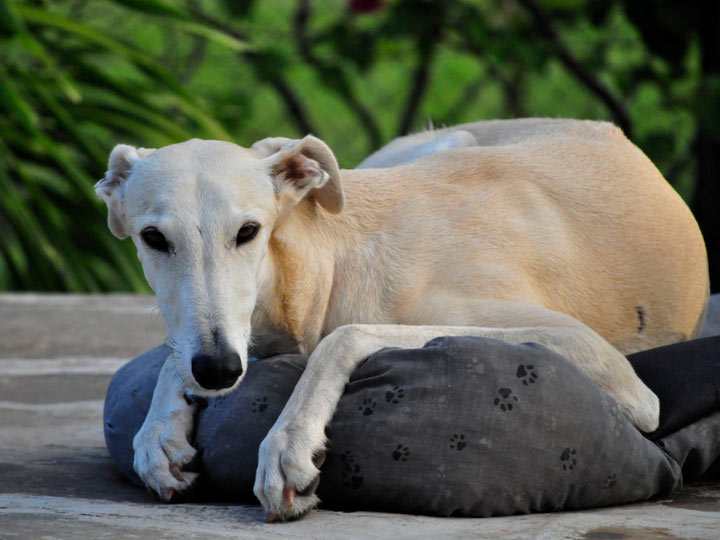
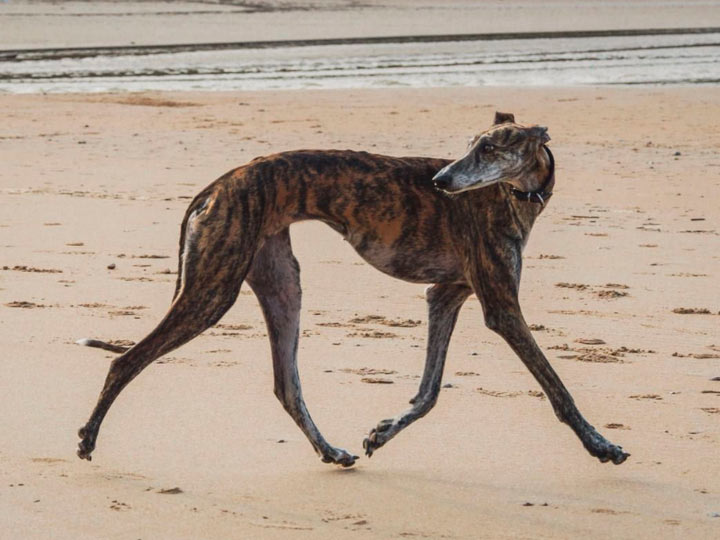
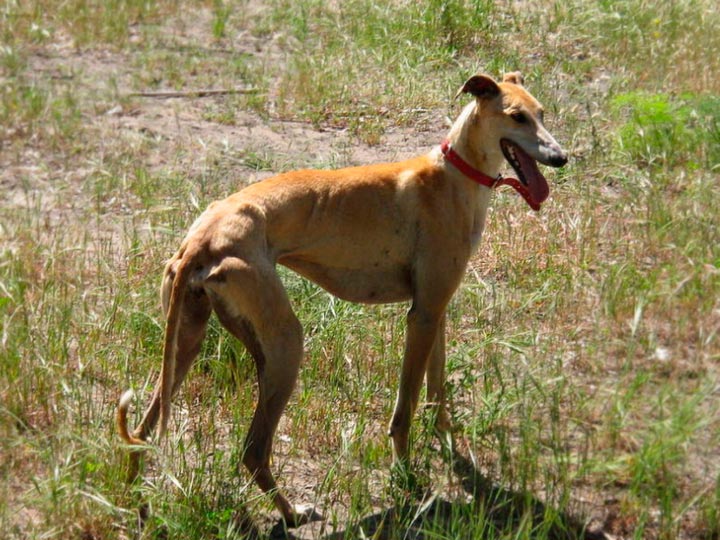
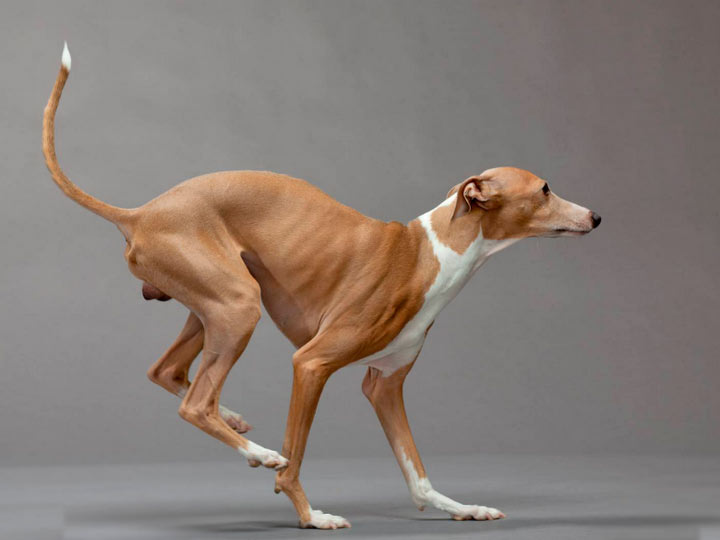
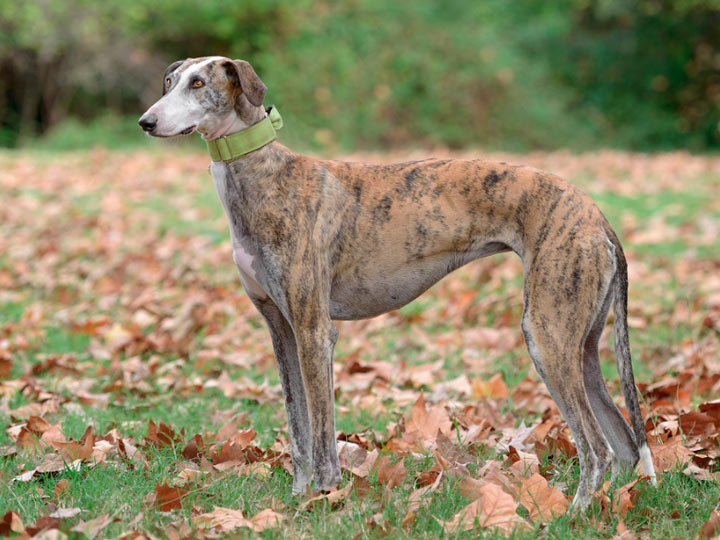
The Spanish Greyhound is a large, well-balanced dog with strong bones. Its lines are elongated, and its body is somewhat elongated. Proportions and functionality are assessed both in motion and in stance.
- Cable height: 62-70 cm; weight: 22-29 kg.
- The height of females is 60-68 cm; weight is 20-25 kg.
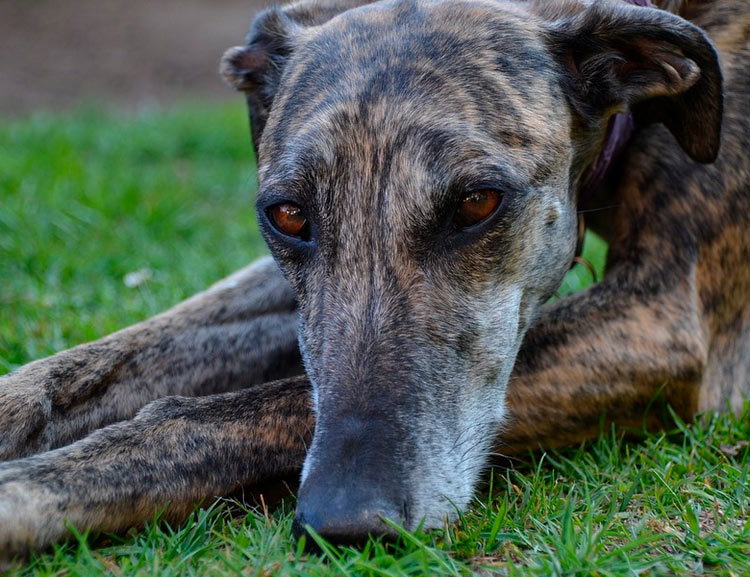
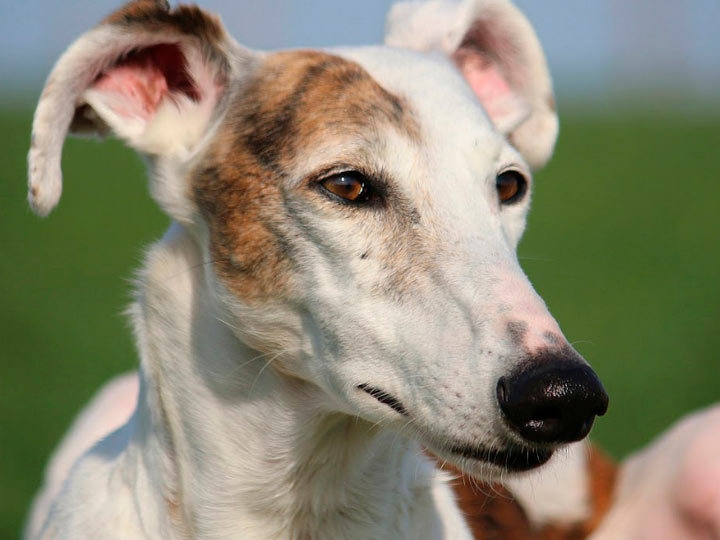
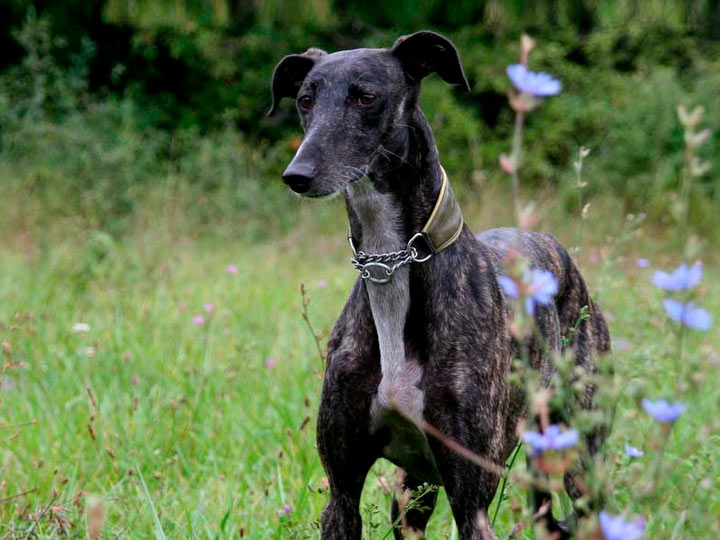
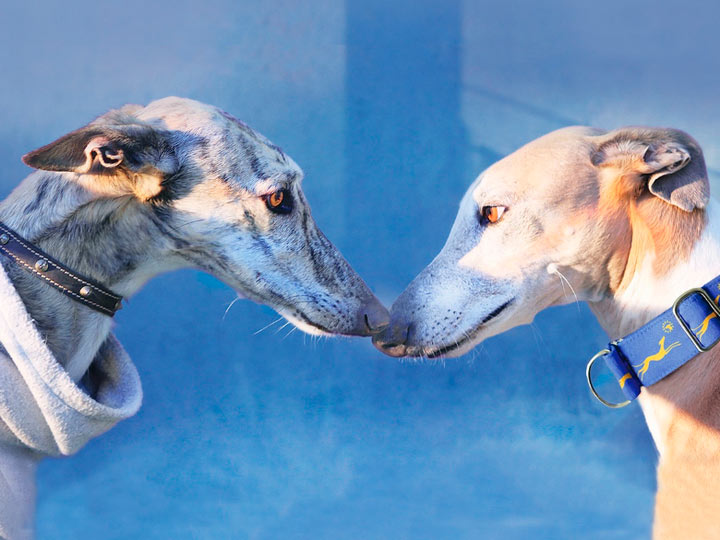
The head is narrow, long, and well-defined. The skull tapers smoothly from the occiput to the stop, and is convex in profile. The muzzle is long and narrow. The bridge of the nose is slightly convex. The tip of the nose is small and black. The lips are thin, with the upper lip slightly overlapping the lower lip. The bite is scissor-like. The eyes are small, almond-shaped, and dark in color. The ears are triangular, wide at the base, tapering toward the tips, and set high. When relaxed, they are pulled back in a rose-shaped fashion; when alert, they are raised on cartilage.
The body is strong, flexible, and rectangular. The ribcage is well developed. The abdomen is well tucked up. The loin is long and arched. The croup is powerful and sloping. The chest is deep, gradually widening toward the false ribs. The tail is set high, almost touching the ground, and carried between the legs. The forelimbs are perfectly vertical, dry, straight, and parallel. The hindquarters are powerful, with strong bone, long, and when viewed from the rear, straight and vertical. The feet are "hare-footed."
The skin is thin, elastic, and pink. There are two varieties of the breed based on coat type:
- smooth-haired - the coat evenly covers the entire body and limbs, is very thin, smooth, thick, short;
- Wirehaired - the hair is slightly longer, stiffer, evenly covers the body, forms a small beard, moustache, eyebrows and a crest on the head.
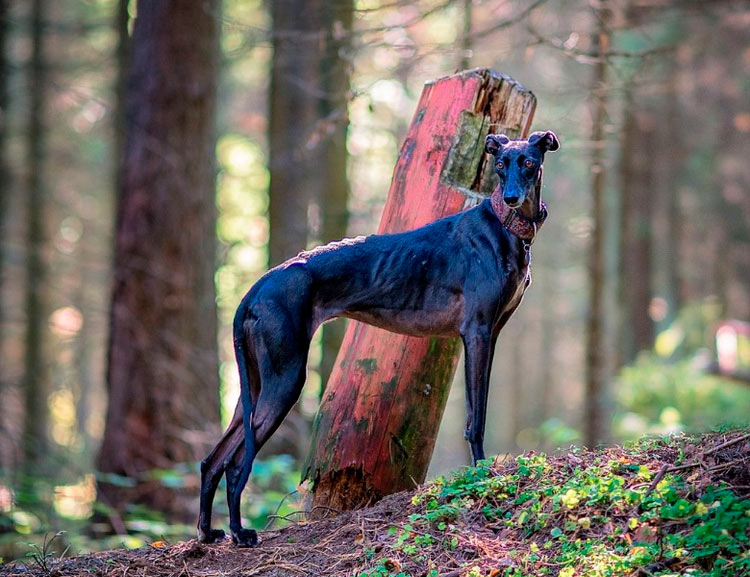
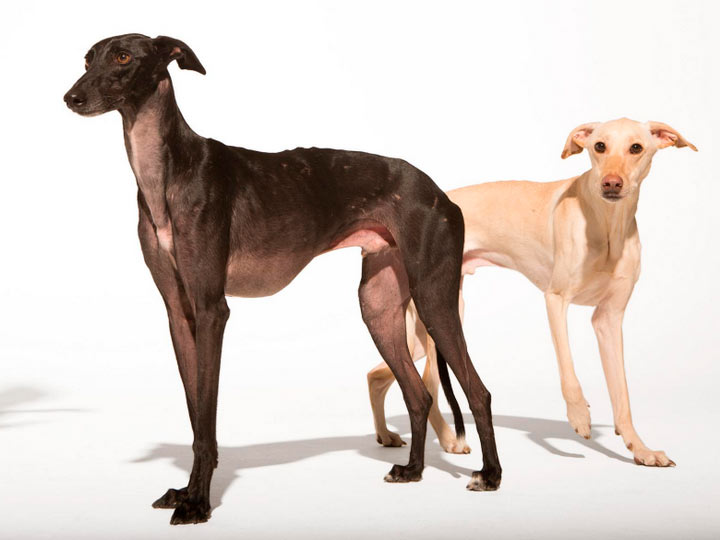
Colors can vary. The most typical are:
- fawn with brindle markings;
- black;
- blackened;
- yellow;
- red;
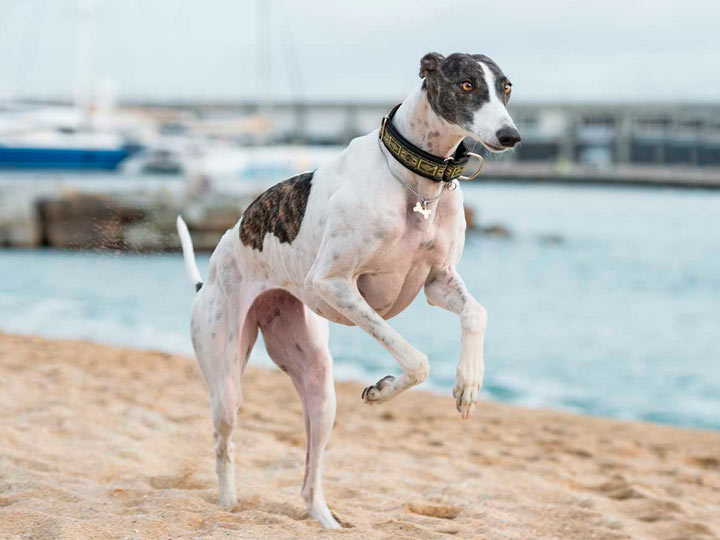
- white.
Character and behavior
The Spanish Greyhound has a calm, serious nature. It's quite reserved in everyday life, and only when hunting does it reveal its energy and passion. Most Galgos are peaceful with other dogs, including small breeds. They get along well with small pets, even cats and rabbits. However, this is unlikely for greyhounds with hunting experience. They are cautious and suspicious of strangers. They form strong bonds with their owners and appreciate the comforts of home, but are also prone to escape.
By nature, Spanish greyhounds are gentle, friendly, reserved, and often even shy. They are quite patient with children. Early, comprehensive socialization is essential. Galgos are curious, intelligent, and highly trainable for a greyhound. They respond well to positive training methods. They are very sensitive to pressure and discipline.
Content Features
In recent years, Spanish greyhounds have become increasingly popular as pets. They have earned a reputation as noble, timid, and calm pets who thrive on comfort and adapt well to apartment life. But this isn't what the greyhound was bred for. To maintain their working qualities—the galgo's main strength—they require running, space, and the opportunity to realize their natural potential.
Most of the time the greyhound rests quietly and behaves quite passively until it finds itself in a field.
Working dogs must train almost every day and run about 15 km. This takes a lot of time. True greyhound enthusiasts train their dogs themselves, while busy and wealthy Spaniards hire someone to do this.
Care
Spanish greyhounds don't require extensive grooming. Their coat should be brushed periodically and wiped with a damp cloth to remove any remaining hair and dust. Frequent bathing is not recommended. Owners should also monitor the length of their nails and the condition of their eyes, ears, and teeth.
Health and life expectancy
The Spanish Greyhound is a healthy breed with no hereditary health problems. Thanks to its anatomy, it is not prone to hip dysplasia. Regular jogging in the field, long walks, and timely veterinary and preventative care are essential to maintaining good health and fitness.
Many Spanish Greyhounds are sensitive to anesthesia.
Where to buy a puppy
In Spain, finding a Galgo puppy of any color, gender, and quality is easy. Charities are also actively helping find new homes for adult dogs. Furthermore, in virtually every European country, including Ukraine and Russia, there are professional kennels that breed Spanish Galgos for hunting, show dogs, and for the hobby.
Price
The average price of a Galgo puppy in Spain is 500 euros. After the hunting season, many adult dogs are sold for a nominal fee of 1-10 euros.
Photos and videos
You can see more photos of Spanish Greyhounds (Galgo) in the gallery.
Video about the Spanish Greyhound dog breed
Read also:


Add a comment