
Irish Wolfhound
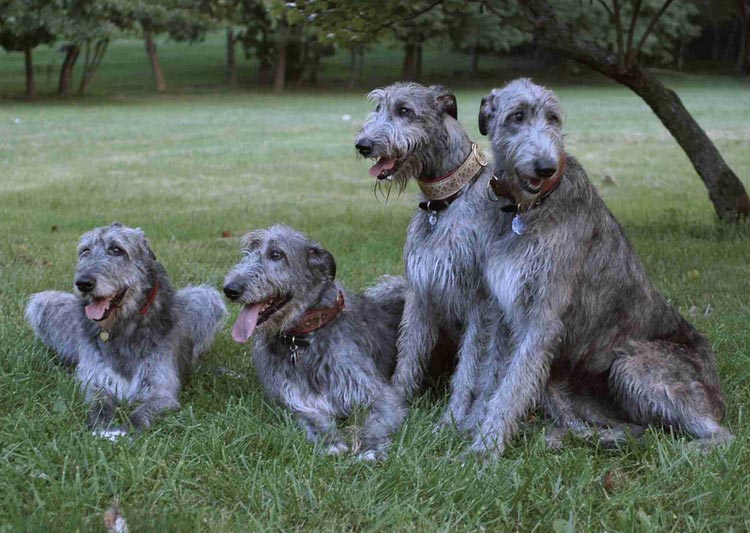
The name "Irish Wolfhound" alone inspires respect and fear, further reinforced by the dog's impressive size and menacing appearance. But don't jump to conclusions: the Irish Wolfhound is a kind and gentle giant of the sighthound family.
Content
History of the Irish Wolfhound breed
The ancestors of Irish wolfhounds are believed to have arrived in the British Isles with the Celts over 2,000 years ago. The history of the country and the breed are inextricably linked. It is said that the Romans brought these huge bearded dogs from Ireland, so enamored were they of them. The chronicle of the priest Edmund Hogan describes Irish dogs used for hunting large game. There is also mention of the "Great Hunt" of 1561, when about 200 wolfhounds were released upon a herd of deer.
Irish wolfhounds were sometimes sent as gifts to the rulers of other countries. In 1641, Cardinal Richelieu of France received such a gift, and in 1646, a dog was sent to the Duke of Tuscany in Italy. In the 16th and 17th centuries, dogs were actively traded to England and other countries, until Cromwell banned the export of the national breed in 1652. By the end of the 18th century, no wolves remained in the British Isles. The legendary breed was on the brink of extinction.
Captain George Augustus Graham played a key role in the history of the Irish Wolfhound. In 1885, he founded a club for Irish wolfhound enthusiasts and began its revival. The captain brought blood to the breed. deerhound, Russian Borzoi And dogsAs a result, he developed the desired type, which was preserved in each generation. In 1879, the Irish Kennel Club created a separate class for wolfhounds.
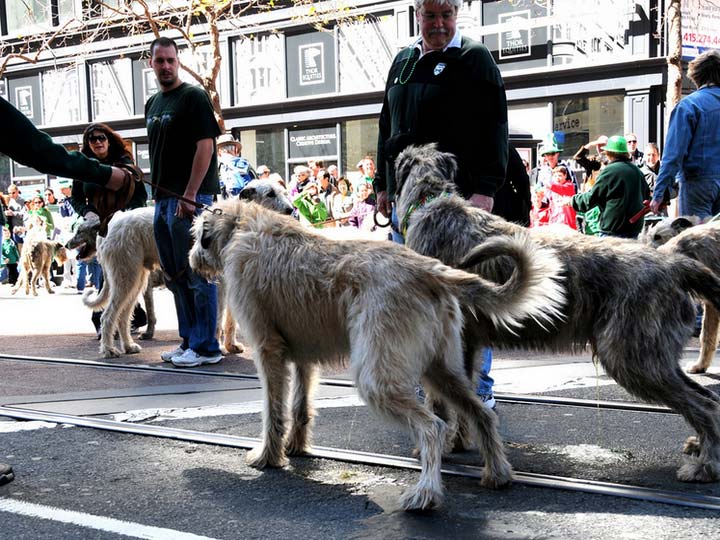
The Irish Wolfhound has become a living symbol of the country. Its image is engraved on the silver sixpence coin, appears on postage stamps, porcelain, and the emblem of Tullamore Dew whisky. Since 1908, the Irish Clover Leaf Guards have traditionally been staffed exclusively by Irish Wolfhound males.
In Russia, the Irish Wolfhound remains a little-known breed. This is largely due to stereotypes that large dogs are only suitable for guarding. Even when purchasing a puppy, breeders are often asked at what age they can be "hounded."
Video review of the Irish Wolfhound dog breed:
Appearance and standards
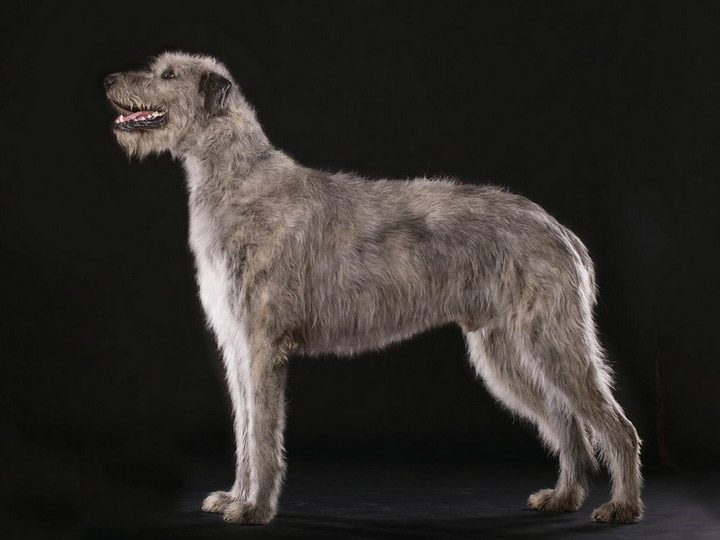
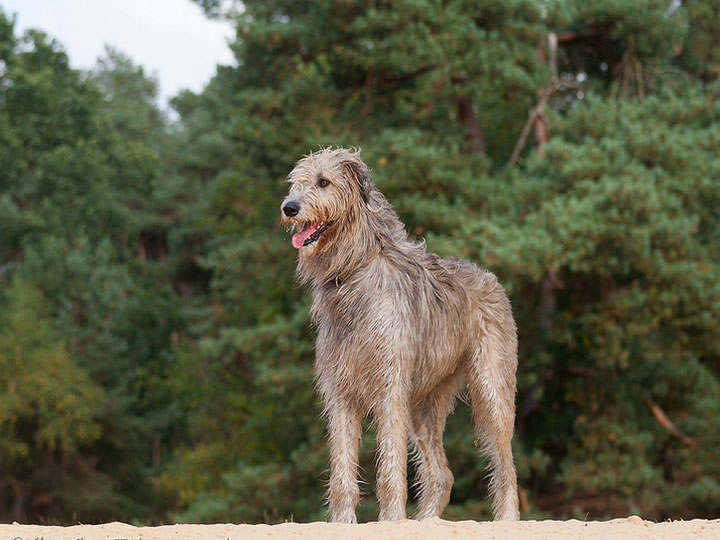
The Irish Wolfhound isn't as strong or heavy in appearance as the Great Dane, but it lacks the grace and agility of other sighthounds. This is a large, powerfully built dog with well-developed muscles, free, energetic movements, and a high-carrying head. The minimum height at the withers is 79 cm (30 in) for males and 70 cm (28 in) for females; weight is 54 kg (121 lb) and 41 kg (98 lb), respectively.
The head is carried high, level, and long. There is a slight depression between the eyes. The muzzle is moderately tapering and long. The eyes are dark. The ears are small and rose-shaped (like a Greyhound's). The teeth are complete and meet in a scissor bite, but a level bite is also acceptable.
The neck is well-extended. There is no loose skin or dewlap. The body is well-developed and elongated. The back is level and broad. The loin is slightly arched. The chest is wide and deep. The belly is tucked up. The tail is slightly curved and long. The limbs are tall, straight, and strong. The toes are well-knit.
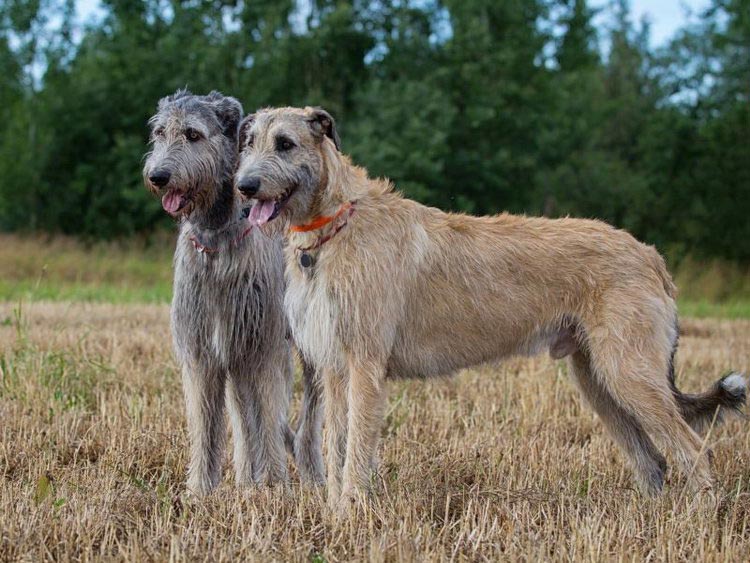
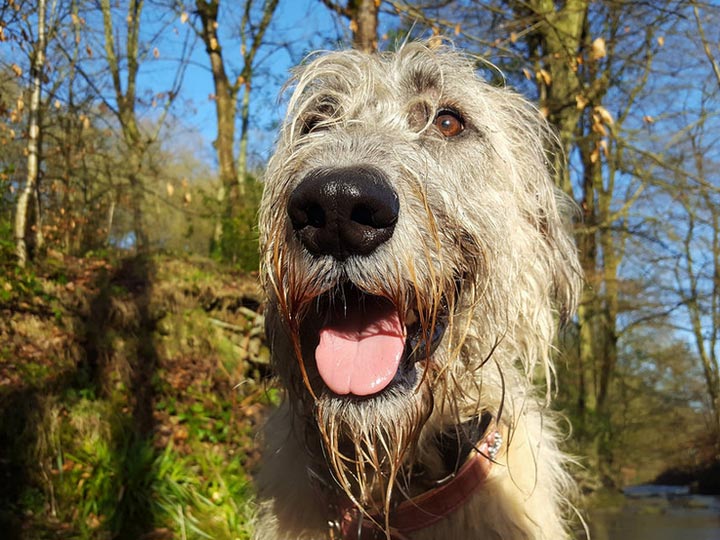
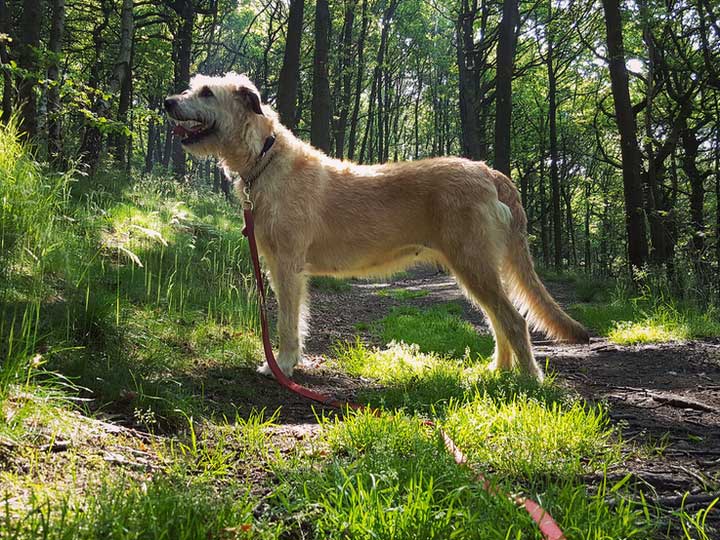
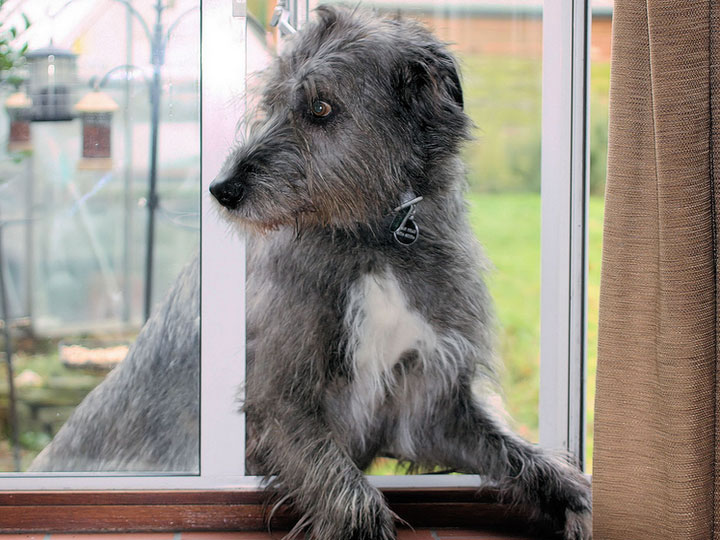
The coat is wiry and rough to the touch, especially over the eyes and on the lower jaw. Colors: red, gray, white, black, fawn, brindle.
Character and psychological portrait
The Irish Wolfhound is a kind and gentle giant. Their stern exterior conceals a gentle, docile nature. They are very friendly and affectionate, calm and even-tempered. Their temperament is not aggressive or prone to conflict. Only an aggressive attack directed at them or their owners can anger them, and then their peaceful, phlegmatic demeanor can instantly dissolve. After frightening off the attacker, the dog will immediately return to its good mood. Irish Wolfhounds are free of unnecessary ambitions and are not jealous, but they can be stubborn. They are highly independent and self-sufficient, and they know their own worth. They mature late, fully developing physically and psychologically by 2-3 years of age.
The Irish Wolfhound is not a guard dog, a service dog, or a fighting dog. It is a sighthound for hunting large game and is loyal to people. Modern Irish Wolfhounds participate in racing.
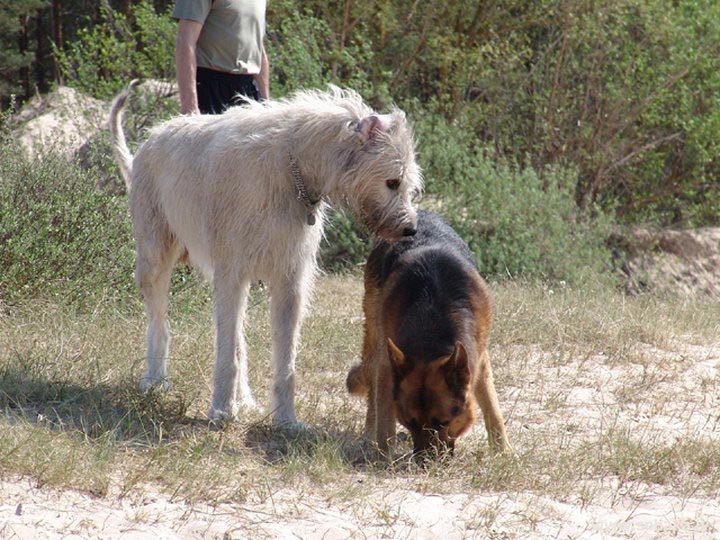
Wolfhounds get along with children Any age. They get along well with other animals. On walks, they may chase smaller dogs and cats, which can cause problems. They are neutral, indifferent, or friendly toward strangers.
Training and exercise
Training this breed requires a firm but fair hand. Everything must be achieved calmly; Irish Wolfhounds do not tolerate shouting, jerking, or physical abuse. Young dogs are insecure in unfamiliar surroundings, are wary of anything unfamiliar, and take a long time to get used to. Irish Wolfhounds are highly intelligent and easy to train, but dislike monotony and lengthy repetitions. Before practicing a command, the dog must be engaged; otherwise, all efforts will be in vain.
Obedience will require intensive work. Trying to turn him into a guard dog, a watchdog, or a show dog with perfect command performance would be a huge mistake.
A wolfhound is a self-sufficient individual who will remain so even with all the love and respect for their owner. Rewarding a wolfhound puppy for good behavior will achieve more than punishing them for bad behavior.
Physical activity should be adequate, especially during the growth period, when the muscles and tendons of the legs are developing. The dog should be walked on a hard, rough surface, and galloping through fields and meadows is ideal. Walking on sand and swimming are good exercise. A dog needs plenty of exercise, but sometimes it needs to be forced.
Maintenance and care
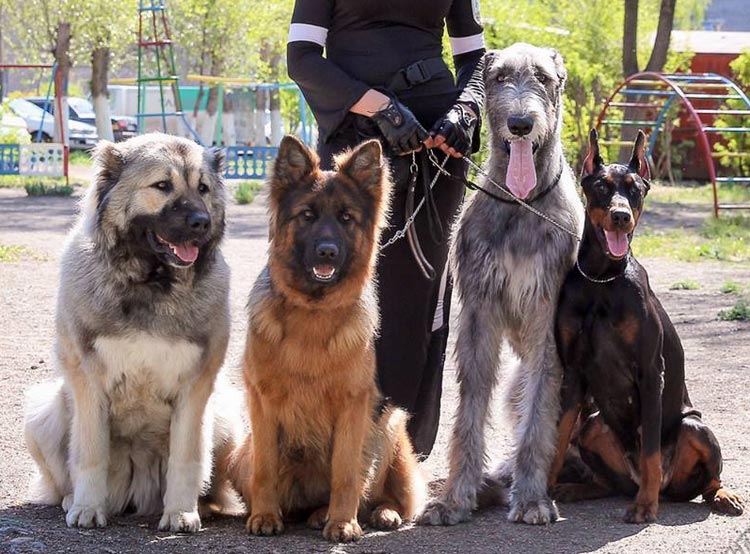
The Irish Wolfhound adapts to any living environment, whether a private home with a large yard or a city apartment where it can quietly play bedside rug. This enormous wolfhound is surprisingly compact and unobtrusive, devoid of fuss and unnecessary activity. However, living in the city can be challenging; people are terrified by its size and leave with their small pets, leaving little room for play and social interaction.
Dogs that live indoors have shorter and smoother coats than those that live in a kennel.
Grooming is simple. The wiry coat should be brushed regularly to maintain a neat appearance. Frequent bathing is not recommended. A full shampoo bath is recommended two to three times a year. Regularly clean the dog's eyes and ears. The hair inside the ears can be plucked to prevent wax and dirt from accumulating. If the dog eats a natural diet, the fur around the mouth should be kept clean.
Diet
Irish wolfhounds eat a lot and are very picky about their diet. A natural diet should include meat and by-products, cereals, vegetables, dairy, eggs, and fish. If desired, you can transition your dog to commercially prepared food, which should be selected based on their size, age, physiological condition, and taste preferences.
Diet can affect coat quality. Breeders have long observed that puppies with developmental delays have softer coats that can remain soft even into adulthood. Dry and brittle coats can also be caused by internal diseases or an inadequate diet, such as a lack of fat.
Health and life expectancy
There is a whole list of diseases that Irish wolfhounds are particularly prone to.
- Bloating and intestinal bloating.
- Skin diseases (pyoderma, Malassezia dermatitis).
- Von Willebrand disease (blood clotting disorder).
- Entropion (inversion of the eyelid).
- Wobbler syndrome (spinal problems resulting in lameness and paralysis).
- Joint diseases (hip dysplasia, patellar dislocation, osteochondrosis) are common.
- In old age, the development of cataracts and tumors, in particular osteosarcoma, is possible.
Many other illnesses can be caused by poor nutrition and management, as well as lack of adequate exercise. Dogs must receive routine vaccinations and be treated for external and internal parasites. The average lifespan is 10-12 years.
Choosing a puppy and price
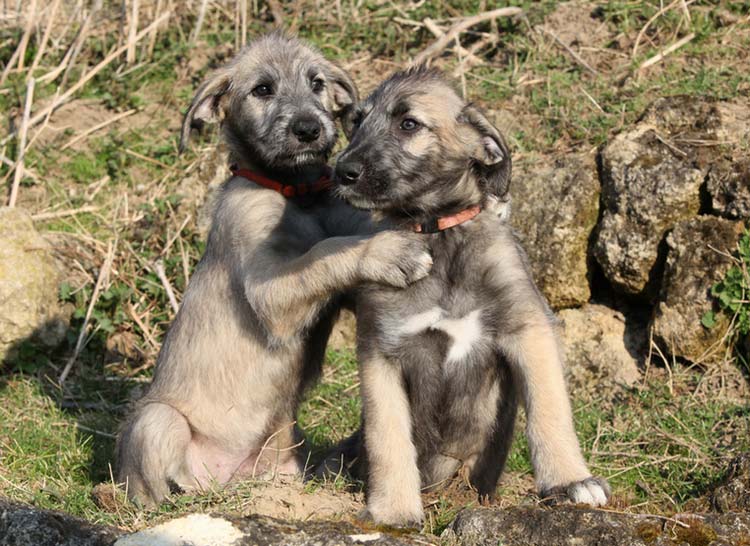
Before purchasing an Irish Wolfhound, you should decide what you want the dog for: breeding, show ring, or as a companion. The next step is choosing a suitable kennel and breeder who currently has puppies for sale or plans to breed. It's important to assess the parents' mental and physical health, their compliance with the breeding standard, and inquire about their achievements and pedigree.
When choosing a puppy, it's important to consider the living conditions and the mother and breeder's attitude toward the puppies. They were the first to help shape the puppies' habits and character. Puppies should be healthy, have a good appetite, sleep soundly, and be playful, non-aggressive, and not shy. Their coat quality and color, as well as other visible characteristics, should meet the standard.
Sometimes newborn puppies have a small white spot on their muzzle, which usually disappears by 2 months.
The cost of an Irish wolfhound puppy is quite high. Pet-class dogs average $700-$800, while promising puppies can reach up to $1,500. Be wary of offers to buy a wolfhound puppy without papers, especially at a low price. There's a risk of scammers passing off mixed-breed puppies as purebreds.
Photos
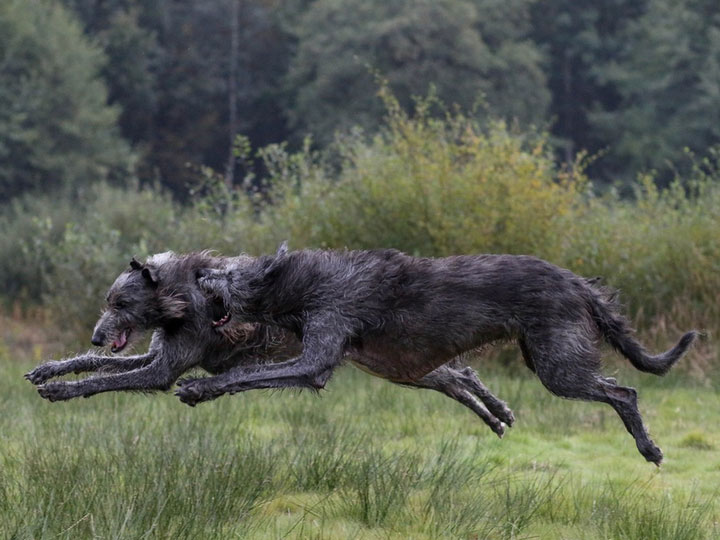
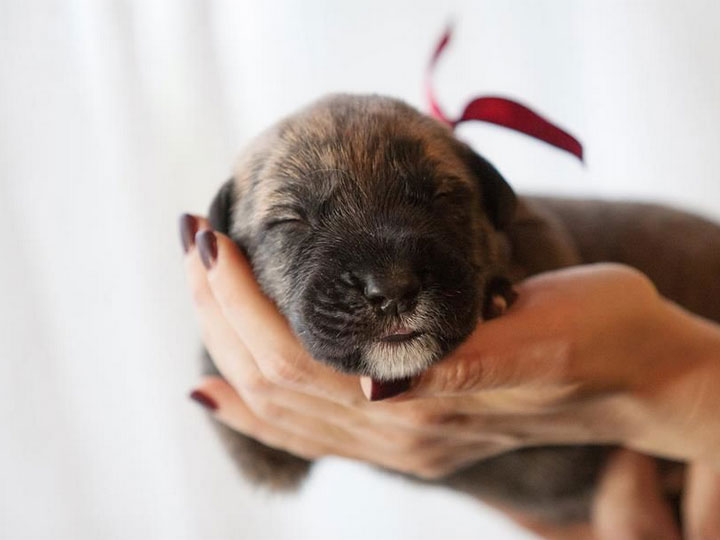
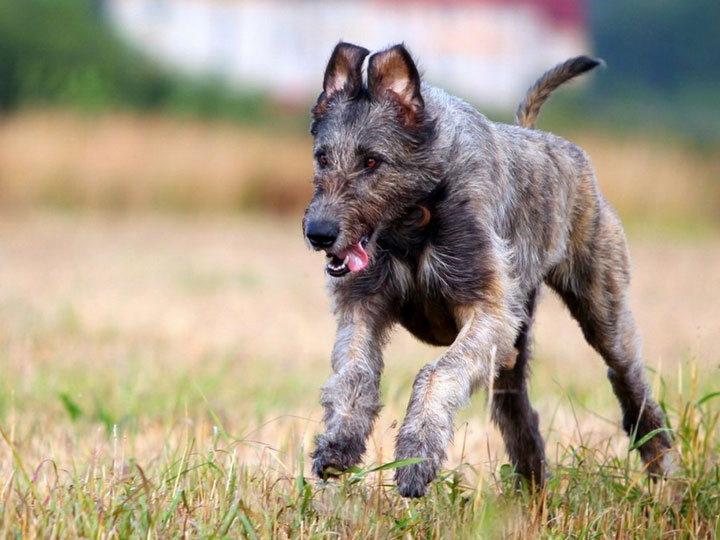
Photos of Irish Wolfhound puppies, adolescents, and adults:
Read also:
- Wheaten Terrier (Irish Soft Coated Wheaten Terrier)
- Scottish Deerhound
- Podenco Ibizanco (Ibizan Hound, Ibizan Hound)


Add a comment