
Interesting facts about cats
Cats are beloved pets by many people. But how much do we really know about them? Surely everyone has heard the story of how one cat helped discover iodine, a substance widely used today. The animal knocked over flasks containing various materials, which, after mixing them, led to the discovery of this useful substance. Below are some interesting facts about cats that will surprise anyone.

Content
- 1 A selection of the most interesting facts about cats
- 1.1 The first cats
- 1.2 Neural density and intelligence
- 1.3 Cats can "remember" a person's face
- 1.4 Domestic cats retain hunting behavior even when they are not hungry.
- 1.5 Cats' whiskers help them judge the width of a space.
- 1.6 Cats are able to adapt to human daily routines.
- 1.7 Cats' paws "remember" surface temperature
- 1.8 The mechanics of drinking are a small miracle of nature.
- 1.9 Emotional sensitivity and "understanding" of a person
- 1.10 Sound richness dictates meaning
- 1.11 Object permanence and learning
- 1.12 Social learning and memory
- 1.13 The special bond of "purring"
- 1.14 The landing reflex and body structure
- 1.15 Variegated genetics and "rare" phenomena
- 1.16 Impressive longevity and record-breaking longevity
- 1.17 Inventor of the cat flap
- 1.18 Sniffing food
- 1.19 Love lies on paper
- 1.20 Claustrophobia
- 1.21 Socialization
- 1.22 Feeding multiple cats
- 1.23 Cats are leaders
- 1.24 Rough tongue
- 1.25 One cat can make almost a hundred different sounds!
- 1.26 Cats have extremely poor close-up vision.
- 1.27 Why does the cat rub?
- 2 The most interesting facts about cats and record-breaking cats
- 3 Traveling cats
- 4 Animal health
- 5 The animal's appearance
- 6 Cat nutrition
- 7 Rest and sleep
- 8 Favorite colors
- 9 Animals in service
A selection of the most interesting facts about cats
The first cats
The earliest ancestors of cats appeared 50 million years ago. They were very small and lived in trees. Perhaps that's why today's domestic cats love to climb them? However, scientists have determined that animals that looked similar to modern cats appeared only 12 million years ago.
Neural density and intelligence
Cats and dogs have long been rivals in intelligence. Recent studies have shown that cats have approximately 300 million neurons in their cerebral cortex—almost as many as a large wild predator, despite their brain volume being tens of times smaller. Despite their smaller overall brain size (roughly the size of a human finger), the structure of their brain folds is similar to that of humans, reflecting their complex cognitive abilities.
Cats can "remember" a person's face
Studies show that cats are able to recognize and differentiate human faces. Although they rely more on voice, scent, and behavior, experiments have shown that cats show more attention to a photograph of their owner than to an unfamiliar face. This confirms their visual memory and long-term retention.
Domestic cats retain hunting behavior even when they are not hungry.
Unlike dogs, which often hunt for food, cats retain their "killer instinct" regardless of their satiation. Even with a full stomach, they can catch small animals or insects simply because it's an innate reflex. This explains why domestic cats bring back "gifts" of caught flies, mice, or lizards.
Cats' whiskers help them judge the width of a space.
Vibrissae (whiskers) are more than just decoration. They penetrate deep into the skin and are connected to the nervous system. They help cats assess whether they can fit into a tight space, especially in the dark. If the whiskers reach the edges of the passage, the cat will likely refuse to enter. Interestingly, the whiskers are almost as wide as the cat's body.
Cats are able to adapt to human daily routines.
Although cats are naturally crepuscular (most active at dawn and dusk), they can adjust their activity patterns to suit their owner's schedule. If their owner wakes up late and goes to bed late, the cat will often adjust and stay awake during the same hours. This demonstrates their high adaptability and affection.
Cats' paws "remember" surface temperature
Cats' paws are sensitive instruments not only for touch but also for thermoregulation. They can "remember" which surfaces were too hot or cold and avoid them in the future. For example, if a rug near a radiator was once scalding hot, a cat may avoid it even weeks later. This helps them avoid danger by not stepping on the same spot twice.
The mechanics of drinking are a small miracle of nature.
MIT scientists, observing a cat named Cutta Cutta, confirmed a unique drinking method: cats don't scoop water like dogs, but rather "stick" it to the tip of their tongue, creating a stream that is drawn into the mouth faster than gravity can release it. This complex physical technique allows for efficient and clean drinking—even with minimal water loss.
Emotional sensitivity and "understanding" of a person
Cats can sense their owner's emotional state. They often approach, express support—especially in moments of sadness or stress—by touching their paws and purring—a form of feline empathy. This isn't just intuition—researchers confirm the presence of well-developed social-emotional responses in cats, especially those raised near humans.
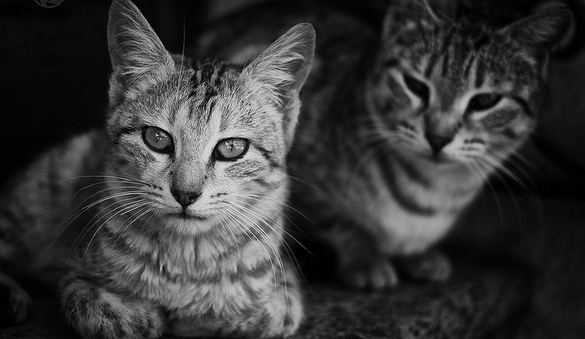
Sound richness dictates meaning
Much more vocal than dogs, cats produce up to 100 different sounds: meowing, purring, snorting, chirping, and cooing. Each sound serves a specific function—communication with people, an alarm signal, or a call for food. Moreover, adult cats make most of these sounds in the presence of humans.
Object permanence and learning
Cats have the ability to understand that an object exists even when it's out of sight—the so-called "object permanence," which develops in infants around eight months. They use this ability in hunting and play: if a toy is hidden under a cup, a cat will search for it—even after a while.
Social learning and memory
Cats observe the behavior of others—both cats and humans—and learn. Examples include their ability to open doors, cabinets, and retrieve toys. In experiments, they remembered the location of treats for up to 16 hours after first encountering them during training. They perceive cause and effect, noticing the connection between their owner's actions and the outcome.
The special bond of "purring"
Cats' purring isn't just a way to communicate—it has a therapeutic effect. Veterinary research suggests that frequencies of 25–150 Hz promote bone strengthening, tissue repair, and stress reduction in cats. Their purring not only expresses pleasure but also supports their overall health.
The landing reflex and body structure
Cats have a unique "grounding reflex." As early as three weeks old, kittens begin to twist their bodies in the air to land on their feet. A soft spine and high flexibility enable this remarkable ability, complemented by sensitive whiskers and a keen sense of direction.
Variegated genetics and "rare" phenomena
-
Polydactyly (extra toes) - Cats can have up to nine toes on one paw due to a hereditary disorder.
-
Orange cats: Almost 80% of red-haired individuals are males, because the color gene is linked to the X chromosome.
Impressive longevity and record-breaking longevity
The average lifespan of a cat is 12–15 years, but the records are impressive. The oldest cat on record lived a whopping 38 years! Elusive factors—nutrition, veterinary care, and a stress-free environment—ensure these pets live long lives.
Inventor of the cat flap
Do you know who came up with it? door For cats? Isaac Newton! The physicist's discovery made life easier for many. Now cats can go out and return whenever they want, and owners don't have to worry about their pet's litter.
Sniffing food
Have you ever noticed how a cat sniffs the food that was just placed in its bowl? You probably thought your pet was just being picky, choosing the tastiest thing. But that's not the case. In fact, this is how cats determine the temperature of the food. No one wants to get burned. Some touch it cautiously with their paw, while others sniff it. It's instinct.

Love lies on paper
Many people have noticed that as soon as they lie down on the bed and start reading a book or newspaper, their cat appears and settles down on the pages. What's the reason for this? Is it a coincidence or is the pet being naughty? In fact, it's because pets perceive paper as the most comfortable material to lie on. They find it soft and warm.
Claustrophobia
If you don't want your cat to scream, don't close the doors or lock them in a room. They're claustrophobic, so the space needs to be open. The same goes for windows, but make sure they're secured to prevent them from falling out and injuring themselves. Cats love fresh air—who doesn't?
Important fact: cats should not be given aspirin (or any medications containing acetylsalicylic acid). It can be fatal. Caution should also be exercised with paracetamol!
Socialization
The more people in the family, the more socialized the kittens will be. It will be much easier for them to transition to a new home and they will adjust to their new owners more quickly.
Feeding multiple cats
If there are multiple cats in the house, each should have its own separate bowl, preferably out of sight of each other. Otherwise, they'll rush, choke, and digest food poorly. This is because pets are predators who compete not only for territory but also for food. Even in "hothouse" conditions, where there's enough food for a pride of lions. If you feed them from the same bowl, wrestling and fighting are inevitable.
Cats are leaders
Think of a pride of lions. One male and a bunch of females. In domestic cats, males still need space. They need ten times more space than females.
Rough tongue
Have you ever noticed how rough your cat's tongue is? It feels like sandpaper on your skin. Why is that? Cats have special hooked papillae on their tongues, which they use like a comb when grooming their fur. This is why it's rare to see a shaggy cat. These pets always strive to maintain their appearance, licking and combing themselves with their tongue several times a day. However, a little help from their owner is always welcome. Fortunately, there are plenty of combs, slicker brushes, and other accessories available to help you groom any type of cat.

One cat can make almost a hundred different sounds!
Compared to a dog, it's only ten, a little more. Purrs, on the other hand, create real melodies at different pitches and frequencies. Like purring. Did you know that a minute of such strumming involves almost 1,500 vibrations of the vocal cords? In fact, there are dozens of theories about why cats purr.
Cats have extremely poor close-up vision.
Therefore, don't put your face or hand too close to their face. Without seeing what's in front of their nose, the animal will begin to defend itself using its weapons—claws and teeth. The optimal distance at which a cat can see an object is 75 centimeters. However, beyond 6 meters, domestic cats have poor vision.
Why does the cat rub?
Almost everyone thinks that a cat rubs against your legs or other parts of your body out of affection and love. But no! It's a clever ploy to mask the other cat's scent with its own. Cats have special glands that secrete a secretion. These glands are located under the tail and between the eyes (at ear level). That's why cats rub, marking you so other cats (and even dogs) know you're already someone's "property."
The most interesting facts about cats and record-breaking cats
History is replete with record-breaking cats who have become famous for various achievements. Recently, the world's loudest cat was discovered. The animal's purr is 932 decibels, equivalent to the noise of a landing airplane. The 12-year-old cat lives with the Adams family, who complain that his purring disrupts their quality of life, preventing them from watching TV, talking on the phone, or sleeping in peace. Smokey's purr is four times louder than any other cat.

It's no secret that cats use their whiskers for touch. On average, their length doesn't exceed 7 centimeters, but one animal has been found with whiskers that are about 20 centimeters long. Missy lives in Finland.
Typically, cats don't give birth to just one kitten; their litters consist of 2-4 animals. However, Antigone, who lives in the United States, gave birth to 19 kittens in one litter in 1970. And Dusty, a cat, managed to carry and give birth to 420 kittens in her lifetime.
Cats are also famous for their records. One Scottish fold cat managed to catch 28,899 mice during his lifetime. He died at the age of 21. He caught an average of four mice a day.
Traveling cats
It's long been proven that cats can find their home and their owner if they get lost. There are numerous cases of animals taken into the woods, only to be returned to their owners. One story caused quite a stir when a New York City cat traveled over 3.5 kilometers and found its owner. The story goes that the owner had forgotten the cat when he moved, and the cat arrived at the new home five months later, curled up in its usual spot in the corner of the room.
A Japanese cat found its owners after traveling over 1,000 kilometers. The animal was given to a farming family, but when one of their daughters moved, she decided to take the pet with her. Upon arriving at the new home, she discovered the cat was nowhere to be found, but a year later, the cat returned to its former owners.
Animal health
Cats frequently lick themselves for more than just cleaning themselves. They also lick substances containing vitamin B, which is essential for mental health. If the animal doesn't lick itself, it will become very nervous and may even die.
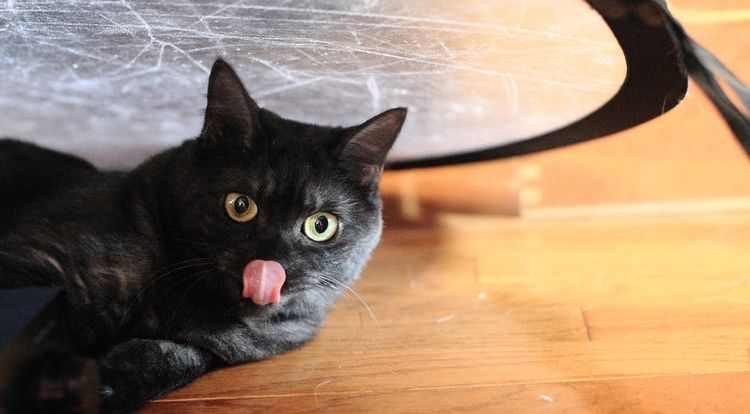
Few people know that the pattern on an animal's nose is unique, just like human fingerprints.
A normal body temperature ranges from 38 to 39.5 degrees Celsius. When at rest, a cat's heart rate does not exceed 110 beats per minute. For a cat to enjoy its food, it should be the same temperature as the cat itself. A picky pet may refuse hot or cold food, no matter how hungry it is.
Animals, like humans, have different blood types: A, B, and AB. Experience shows that oriental and Russian breeds have type O blood. Type B can also be common. However, AB is very rare in nature. If a male cat has type B, he can be mated with any female cat, but if he has type A, he can only be mated with a female of the same type.
The average lifespan of an animal is 18 years, but there has been a recorded case in history where a pet lived for 36 years.
Cats are unique domestic animals that can fly to a height 5 times their own height and make up to 100 sounds, while dogs can only make 10.
According to facts about cats, females are most often right-handed, while males are left-handed. Only 25% of cats use both front paws.
Don't assume that all cats love valerian. There are even some animals that don't react to the plant's scent. Only animals with a special gene will sniff and lick the substance. However, don't overindulge your pet with the plant, as an overdose can kill them.
If a cat is sick, never treat it with human medications, as even aspirin can be fatal, let alone stronger medications. If your pet is feeling unwell, take them to the veterinarian.
The animal's appearance
Few people know this, but most animals lack eyelashes. Cats have the largest eyes of any animal relative to their height and weight. If an animal has green eyes, their flashing lights can be seen from up to 80 meters away.
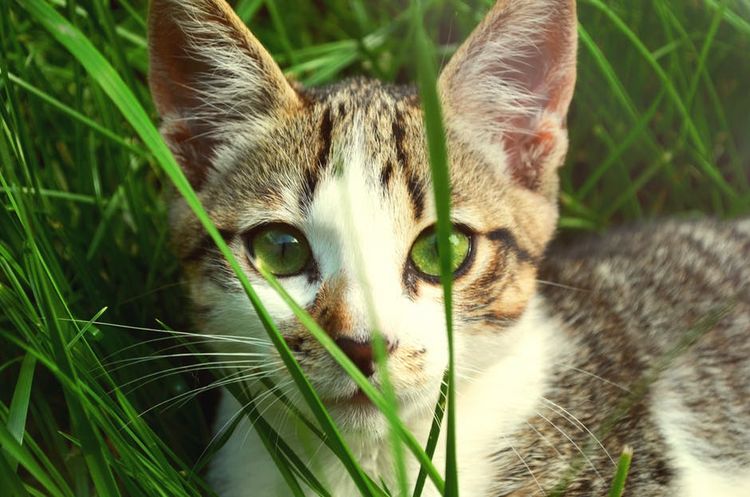
Tail wagging indicates an upcoming decision. For example, if an animal is debating whether to go outside while standing in front of an open door, its tail will wag. Once it makes a decision, the tail will gradually stop.
It's very rare, but it's possible to encounter a red-and-black cat in the wild. And if such a cat is born, it will be sterile. This is because such an animal has only a female set of chromosomes.
Cat nutrition
To feed your cat, you need to know a few facts about their nutrition. Many owners, seeing their pet sniffing their food, assume they're being picky and trying to figure out whether they should eat it or not. This isn't actually the case. This is also a way for cats to test the temperature of the food to avoid getting burned. It's important to know that cats can't see what's under their nose, which is why they don't immediately eat the food you put in front of them.
It's known that not all cats hunt mice. But those that do save up to 10 tons of grain per year. The rodent's pelt is the most valuable, as it is rich in trace elements, primarily sulfur. This is essential for the health and beauty of the animals' fur.
Other characteristics of animals regarding food include the following:
- animals cannot stand the smell of citrus fruits;
- sweets are tasteless for cats;
- There is no need to feed cats dog food, as their protein requirements are 5 times higher.
Rest and sleep
Cats love to sleep, and it's hard not to notice if you have a four-legged friend in your home. The average sleep time for a cat is 18 hours, similar to that of a newborn baby. Don't wake your cat; let her sleep as long as she wants.
A favorite material for cats is crinkly paper, which they can sleep on. You've probably seen your pet fall asleep among the crumpled sheets after playing. This material is soft and warm to the touch. Animals really don't like enclosed spaces, so it's important to keep all the doors in the house open.
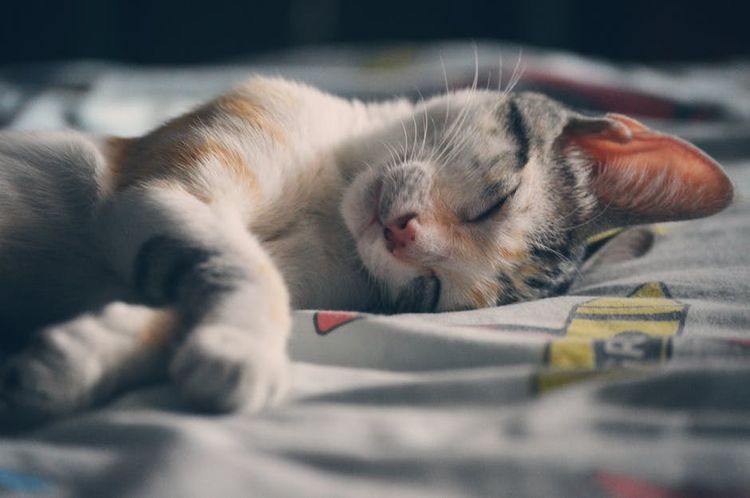
Animals choose their sleeping spots based on their personality traits. If the animal is sociable and enjoys human touch, the back of a chair or sofa is considered a comfortable place. If the owner doesn't mind, they can sleep on their lap or in slippers.
Like humans, cats dream, as evidenced by the fact that they twitch their whiskers and ears while sleeping. However, scientists have yet to determine what these animals dream about. A male cat requires a resting area 10 times larger than a female.
Favorite colors
For a long time, scientists believed that cats can't distinguish colorsHowever, after numerous studies, it was possible to prove that animals, like humans, are capable of distinguishing shades. Their favorite colors include the following:
- crimson;
- burgundy;
- red;
- cherry.
This is easily explained: these are all shades of cats' favorite treat—meat. Research has shown that cats prefer brown and yellow. However, orange and blue shades trigger panic in cats—perhaps due to their fear of water and fire. It has been established that cats of different shades react differently to different colors, suggesting that each animal has its own favorite.
Animals in service
If you've never heard of pets serving in the military, these facts about cats will surprise you. These animals can detect odors better than dogs. During World War I, a unit of animals was created to detect toxic gases in the air.
In London, there's a post office staffed entirely by cats, who even receive a salary. Their main job is to protect parcels from rodents. These animals have been doing this for 130 years.
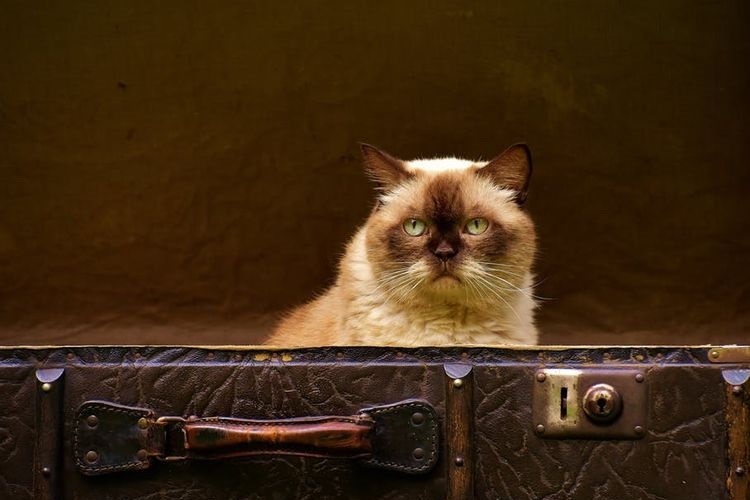
Cats are intelligent animals, and even a newborn can survive without its mother. Of course, initially, it will have difficulty navigating its surroundings, but over time, the animal will adapt and develop the skills of an adult. Don't think that cats are afraid of water. If necessary, they will even enter a body of water to find prey. And when owners try to wash them or force them into the water, cats sense danger and may become aggressive.
These are not all the interesting facts about cats, but only the most outstanding and memorable ones.
Read also:


Add a comment