
Interesting facts about raccoons
Raccoons have recently become popular pets. They are furry, curious, and very active animals with a luxurious striped tail and dark "spectacles" around their eyes. Besides their irresistible charm, they possess a number of qualities unusual for most mammals. Here are some interesting facts about raccoons.
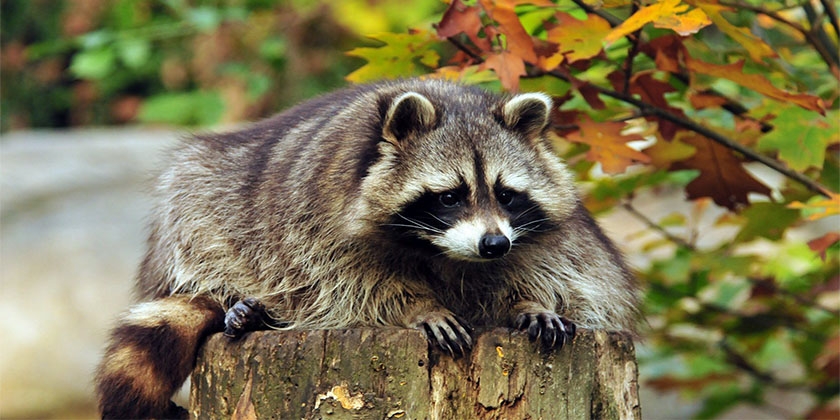
Features of anatomy
The most unique feature of raccoons' bodies, unique to them, is their paws. The toes of their front paws are very similar to those of humans, and their prints are unique to each individual. The palms of their paws contain a huge number of receptors that transmit information to the brain, allowing these animals to accurately determine the size and properties of objects without using their eyesight, and they can easily pick up small objects and open locks with keys. A trained raccoon can expertly give a relaxing massage.
The hind legs of these mammals are also unusually designed; they can rotate 180 degrees. Their claws are sharp and tenacious, curved downward. This allows raccoons to climb almost any surface and descend headfirst (unlike cats, which can only climb down trees backwards).
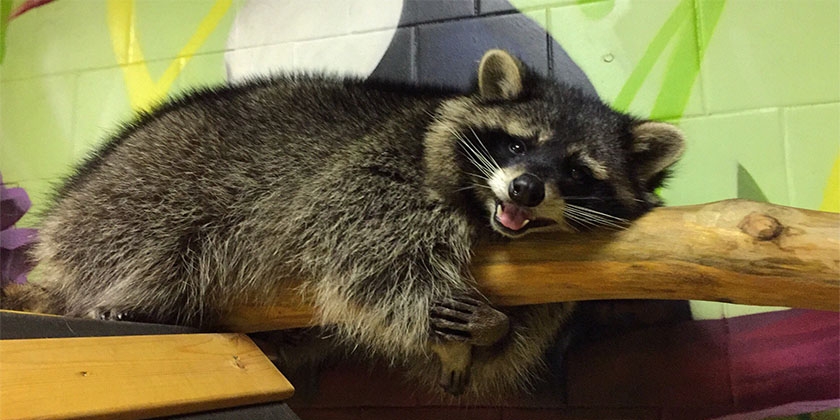
Other interesting facts about raccoons regarding their physiology include:
- Like many mammals, Procyon has whiskers—long, stiff hairs that serve a tactile function. Nerve impulses from the whiskers travel to the brain, creating a picture of the surrounding world. However, in raccoons, these specialized sensory organs are located not only near the nose and eyes, but also on both jaws, paws, and the lower abdomen.
- The striped tail, one of the main symbols of Procyon, is used by the animal as additional support when moving on its hind legs.
- Raccoons' fur is very thick, and 90% of it is made up of waterproof underfur. This allows the animal to stay warm in water, even in winter.
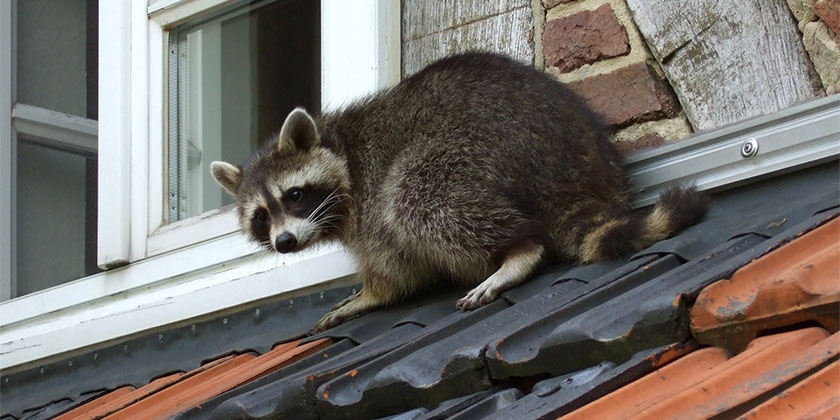
- These animals are capable of reaching speeds of up to 24 km/h and jumping from heights of up to 6-8 meters.
- Raccoons begin to see and hear early. While puppies and kittens gain their sight and hearing no earlier than 10-12 days after birth, baby raccoons begin to see and hear as early as three days after birth.
- Raccoons can make up to 50 different sounds: purring, growling like dogs, hissing, and making trills similar to birdsong. Young raccoons are usually the most vocal when interacting with their mothers, while adults are more silent.
- Before hibernation, raccoons "fill out" their bodies, gaining 30-50% of their weight and becoming truly overweight. In the spring, their weight returns to normal.
- The average lifespan of a wild raccoon differs significantly from that of a domestic raccoon. In the wild, they live no more than 5 years, while in captivity, they live 15-20 years (the Guinness Book of World Records lists a raccoon that lived 31 years in captivity). This is due to the lack of natural predators and their good nutrition, which is independent of the season and environmental conditions.
Behavioral features
Raccoons' entire lives revolve around water; in the wild, they live near bodies of water. In shallow water, they hunt fish, crustaceans, frogs, and mussels. They find their prey primarily by touch: they grope along the bottom with their paws, dig up mud, and turn over pebbles.
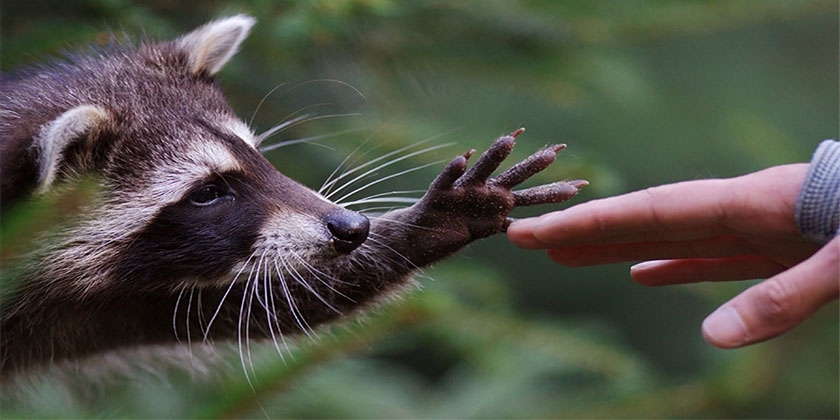
Their paws become even more sensitive in water and can easily assess the edibility of an object.
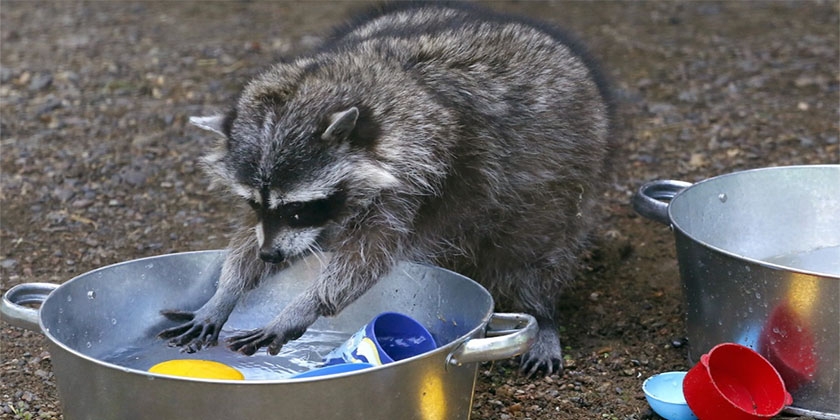
Having spotted worthy prey, the animal rinses it in water, even if it was caught on dry land. This serves two purposes: to clean the "dish" of dirt and mud, and to check whether the prey is alive. Often, a found or captured rodent or frog will feign carrion, but when submerged in water, it immediately "comes to life" and tries to fight back.
Raccoons' reflexive habit of rinsing their food in water is so strong that it persists even in captivity, when there's no need to wash. Domestic raccoons will rinse anything they can snatch: laundry soaked for washing, their owner's slippers, a TV remote, or a smartphone. Even the animal's name (raccoon (in Latin Procyon lotor - washing bear) reflects this behavioral feature.
Interesting facts about raccoons regarding their lifestyle include:
- Although raccoons are considered carnivores, they are actually myxophages, meaning they are omnivores.
- Procyons possess high intelligence and a good memory. Their IQ is higher than that of cats and only slightly lower than that of monkeys. They are capable of forming logical chains of actions, and their speed in completing tests outpaces that of primates and even five-year-old children. Raccoons can retain these acquired skills for three years.
- These animals love to live in burrows, but they don't know how to dig them themselves, so they "in battle" capture the homes of badgers and other animals.
- Raccoons have a strict matriarchy, with female leaders. Males are usually few in the pack, and by human standards, they are clearly discriminated against: females may punish them by biting off their whiskers, pulling out their claws, and prohibiting them from using the ladies' room.
- Female raccoons take great care of their young, feeding them every hour, allowing them to live near their mother for up to a year, and setting up up to a dozen "spare" burrows for resettlement in case of danger.
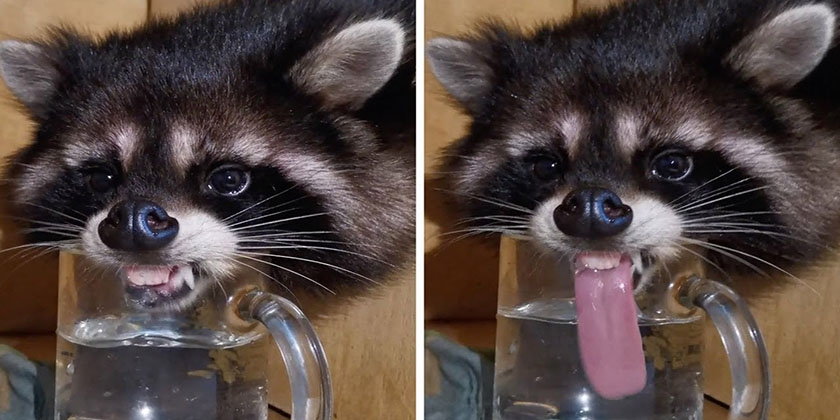
- An interesting characteristic of raccoons is that they are potential alcoholics. There have been cases of these animals breaking into other people's homes in search of alcohol. They are especially fond of beer and are adept at opening tin cans. Often, after drinking alcohol, the thief falls asleep at the scene of the crime.
If you have a raccoon, remember that while training it is possible and necessary, using physical force is unsafe. These animals are very sensitive to how they are treated and can hold grudges for a long time.
Read also:


Add a comment