
Stroke in Dogs: Symptoms and Treatment
Vascular diseases in dogs are uncommon, but they still pose a serious risk. One of the most serious conditions is apoplexy—an acute cerebrovascular accident, also known as a stroke. Statistics show that this condition is more common in older animals, dogs with low physical activity, and pets with increased nervous excitability.
From a medical perspective, a stroke is considered a medical emergency. A disruption to the blood supply to the brain quickly leads to neurological disorders, which can sometimes be life-threatening. Experts note that providing assistance within the first three hours after the onset of a stroke significantly increases the chances of a successful recovery. Therefore, it is important for dog owners to know the signs of a stroke, its causes, the course of action if symptoms are detected, and the specific treatments prescribed by a veterinarian.
Content
First aid for a stroke in a dog
Even if the neurological symptoms subside over time, it's crucial to take your pet to the veterinarian. Without addressing the underlying cause, there's a risk of recurrent strokes.
If you experience symptoms of a stroke:
-
Ensure your pet's safety. Remove the collar and place the dog in a comfortable position—on its side or stomach.
-
Make sure the airway remains clear.
-
Provide a safe place for the dog to lie down, without elevated surfaces or objects that could injure the dog.
-
If you have sedatives for dogs (for example, Express Uspokoin, Relaxivet and others), you can carefully give them to your pet.
It is important to remember that these measures are temporary, and only a veterinarian can prescribe the main treatment.
Caution! Some dog owners recommend applying cold to the animal's head while waiting for the doctor to prevent the formation of a large hematoma. This should not be done, as it is not certain that the stroke is hemorrhagic or that blood has accumulated at the site of the stroke. Such actions can worsen the already impaired blood circulation in the affected area of the brain and cause harm rather than benefit.
What not to do if your dog has a stroke
-
Do not give your pet any medications on your own - only as prescribed by a veterinarian.
-
Do not feed or water the animal to prevent liquid or food from accidentally entering the respiratory tract.
-
Monitor your body temperature: do not allow yourself to become too cold or too hot.
-
Don't shout at the dog, don't shake it, or disturb it—at this moment, your pet needs peace and quiet.
Types and causes of stroke
Just as in humans, in animals there are two types of stroke: ischemic and hemorrhagic.
Ischemia is a reduction in blood supply to tissues. Ischemic stroke occurs when a portion of the brain's blood vessels becomes blocked. Causes include:
- blockage of the lumen of a blood vessel by a thrombus;
- head injuries;
- exfoliated tumor;
- vascular diseases;
- action of toxins;
- migration of worms into the brain;
- obesity;
- diabetes mellitus.
Hemorrhage is the leakage of blood from blood vessels due to damage to their integrity. A hemorrhagic stroke, therefore, is a cerebral hemorrhage. This condition in dogs can be caused by:
- loss of vascular elasticity associated with old age or low activity;
- inflammatory diseases of the circulatory system that lead to thinning of the vessel walls;
- severe stress or overexertion causing a sharp change in blood pressure;
- poor quality feeding, in which the dog's diet does not contain enough substances necessary to ensure normal vascular turgor.
Symptoms
The first signs of a major stroke are quite obvious, and even an inexperienced dog handler can spot them. The animal appears frightened, agitated, and wanders aimlessly. You may also notice that the dog's movements are impaired, as if its limbs are unresponsive.
Important to know! With mini-strokes, symptoms are often mild and may be limited to loss of appetite, apathy, loss of interest in play, and reluctance to follow commands. Only a veterinarian can diagnose a stroke in a dog. However, since the success of treatment for cerebrovascular accidents depends directly on its timeliness, any sudden changes in the animal's well-being or behavior should not be ignored.
In severe cases, the following may develop:
- disorientation;
- loss of conditioned reflexes;
- paralysis of one or more legs;
- asymmetry of the muscles of the eyelids or lips;
- violations of the synchronicity of pupillary reactions;
- breathing difficulties;
- arrhythmia or tachycardia;
- convulsions;
- comatose state (lack of reaction to the environment).
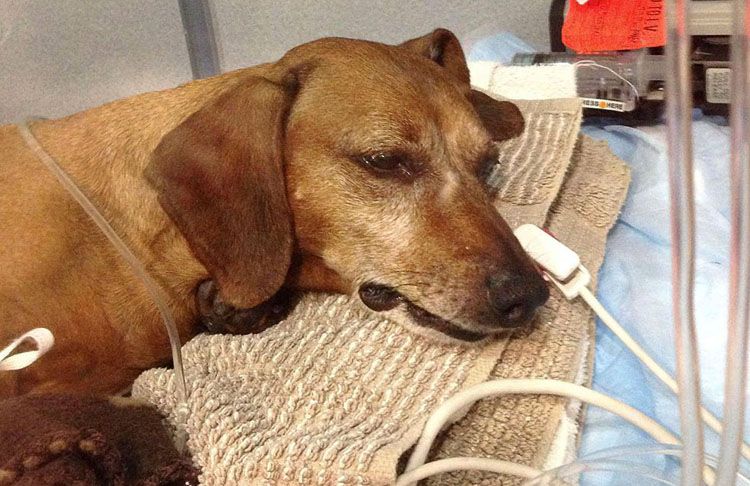
Diagnostics
A primary diagnosis can be made based on a neurological examination and identification of symptoms, while a definitive diagnosis can be made after blood and urine tests, as well as imaging studies. Magnetic resonance imaging (MRI) or electroencephalography (EEG) may be prescribed to examine the animal's brain.
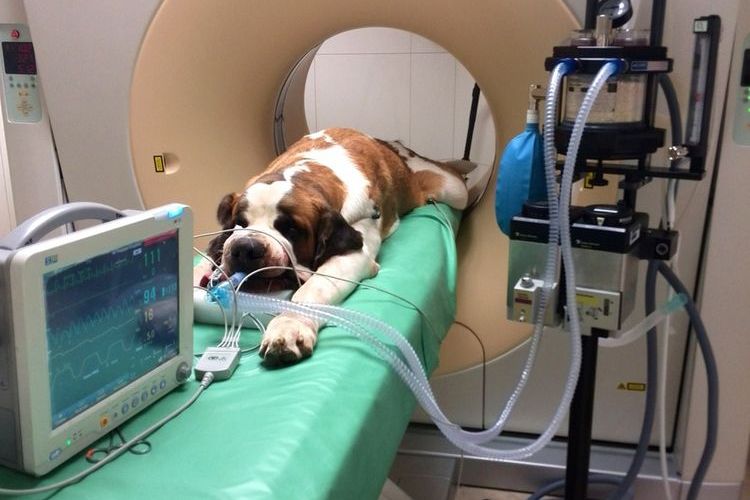
Abdominal ultrasound or lung X-ray may be used as differential diagnostic methods. Cerebrospinal fluid (CSF) analysis can help clarify the nature of the stroke, allowing for clear differentiation between hemorrhagic and ischemic strokes.
Treatment
If a stroke diagnosis is confirmed, the doctor, based on the findings from the examination, determines treatment. This primarily involves drug therapy, which includes:
- painkillers;
- antispasmodics, which have the ability to dilate blood vessels and help restore cerebral blood flow;
- diuretics (to reduce pressure in the blood vessels of the brain);
- neurometabolic stimulants (nootropic drugs);
- drugs that support and improve heart function;
- Antioxidants - to eliminate oxidative stress and systemic inflammation.
If a dog exhibits symptoms of arrhythmia, cardiac tranquilizers are used to control them. If necessary, anticonvulsants (medications that prevent seizures) may be used for treatment. A maintenance course of vitamin therapy is usually also prescribed.
Rehabilitation
Treatment for a stroke in a dog typically takes from 10 days (for mild ischemic stroke) to 4-6 weeks. The length of the recovery period depends on many factors: the type of stroke, the size of the brain lesion, the timeliness of treatment, and the animal's age and general condition.
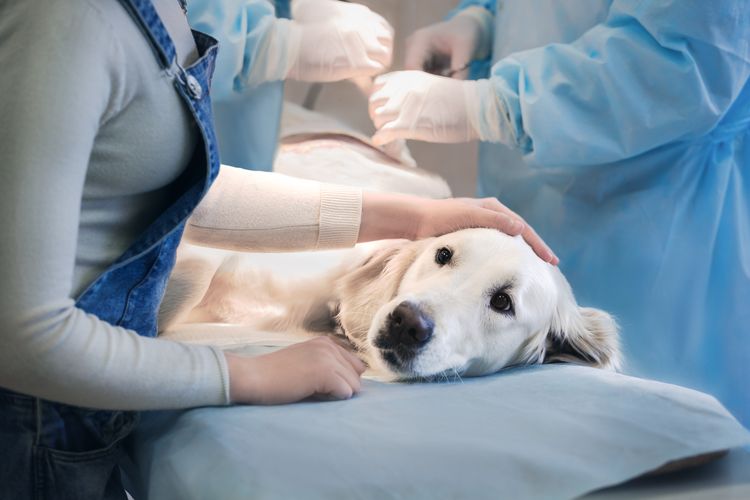
If your dog doesn't have any chronic illnesses, and the blood supply disruption was ischemic and affected a small area of the brain, there's a chance they'll fully recover their vitality and activity within a couple of weeks. In severe cases, if the pathology has resulted in motor impairments, paralysis of the limbs Whether it's a neurological or neurophysical problem, rehabilitation can be lengthy and labor-intensive, and not always 100% effective. In such situations, it's important to understand that animals cope psychologically with physical disabilities much better than humans. A dog's owner, together with a competent veterinarian, can help their dog adapt to life with impaired vision, hearing, or even a lame leg.
Restorative therapies that may be used for a dog that has suffered a stroke include:
- general or local massage, which the owner can learn to do for the animal themselves;
- electrophoresis (ionotherapy) is a physiotherapeutic method of simultaneous exposure to weak currents and medications;
- magnetic therapy - treatment with a static magnetic field;
- Reflexology (acupressure, thermopuncture, acupuncture and others) - impact on bioactive points of the skin, reflexively connected with the organs and systems of the body.
One of the essential conditions for post-stroke rehabilitation for dogs is a special, gentle diet. Feedings should be small. To ensure your pet remains hydrated, offer them their favorite foods during this period. The food should be semi-liquid, smooth, contain maximum nutrients, and be easily digestible.
Read also:


Add a comment