
Stroke in Cats: Symptoms and Treatment
Just a few years ago, it was believed that animals didn't suffer from strokes. However, modern veterinary medicine has proven otherwise. Thanks to new diagnostic methods, specialists have determined that approximately1 in 50 catsis susceptible to ischemic encephalopathy—that's what stroke in cats is called in the professional community.
Content
Types and causes of strokes
The brain of most mammals can only function properly with normal blood flow. If a blood vessel ruptures or becomes blocked by a clot, the volume of blood flow is sharply reduced. This results in damage to brain tissue. This pathological process is calledfeline ischemic encephalopathy.
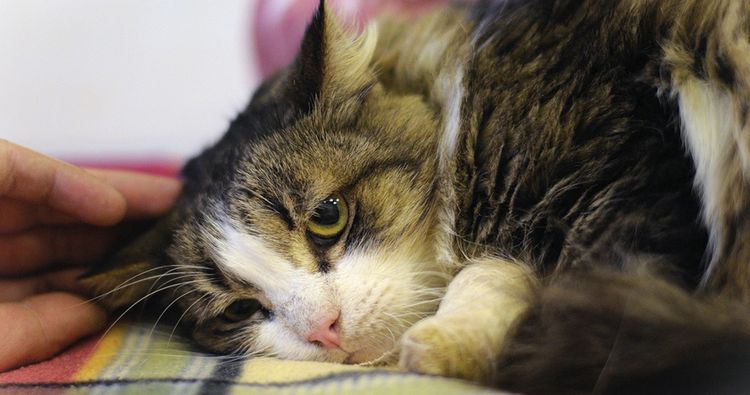
There are several types of stroke:
- Ischemic.
It occurs due to a clot within a blood vessel in the brain. Thrombi can form directly in the brain vessels (a condition called thrombosis) or elsewhere in the body, then break off and travel to the head (an embolism).
- Hemorrhagic.
It occurs due to a ruptured blood vessel in the brain. Bleeding from the ruptured vessel leads to blood accumulation in nearby brain tissue, which further worsens the animal's condition.
- Transient ischemic attack.
Characterized by a temporary disruption of cerebral circulation (symptoms disappear completely in less than 24 hours).
Regardless of the type of disease, a cat's brain tissue may be damaged so severely that euthanasia may be necessary.
Unfortunately, the exact causes of this condition are unknown. It is mistakenly believed that this condition only affects older animals. However, statistics show that the average age of cats who suffer a stroke is 7-9 years. The presence of certain other medical conditions can significantly increase the risk of cerebrovascular accident. Diabetes, parasitic infections, hyperadrenocorticism, hyperthyroidism, and physical trauma are particularly dangerous.
Symptoms of a stroke
Detecting stroke symptoms in cats without specialized equipment is quite difficult. The problem is that the animal will try to curl up into a ball or hide away from people. It all depends on the owner's attentiveness.
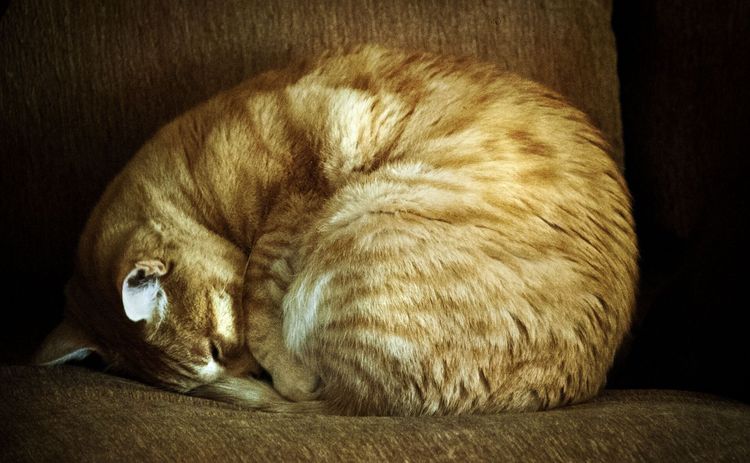
The following changes should raise concern:
- disturbances in the animal’s behavior (avoidance of people, timidity);
- constant twitching of the limbs;
- involuntary bowel movements;
- tilting the head at a certain angle;
- complete paralysis of the legs (often only on one side of the body);
- eye twitching, different pupil sizes;
- loss of balance, disorientation while walking;
- loss of consciousness;
- temporary blindness.
Each of these symptoms, when observed individually, could indicate any other illness. But a characteristic feature of stroke in cats is that all symptoms develop rapidly and simultaneously. A pet may appear completely normal and healthy, but within a minute, its behavior may completely change.
In hemorrhagic or ischemic strokes, an animal's condition may worsen within 24 hours if it doesn't receive adequate medical care (sometimes leading to coma or death). The symptoms of a mini-stroke usually resolve completely within 24 hours. However, this doesn't mean the animal doesn't need veterinary care. Signs of a mini-stroke are compelling evidence that there's a circulatory problem requiring professional medical intervention. Otherwise, the pet could suffer a full-blown stroke in the very near future.
Diagnostics
If you suspect that your pet is having a stroke, you should immediately take the animal to a veterinary clinic.
Caution! Do not provide any first aid yourself. Firstly, it is impossible to determine that your pet is developing ischemic encephalopathy without an examination. Secondly, the principles of veterinary medicine differ significantly from human medicine, so there is a risk of worsening your pet's condition.
It's essential to prepare your cat's complete medical history and provide it to your veterinarian. This information will not only help diagnose a stroke but also expedite the appropriate treatment. If circulatory problems are the result of an injury, the veterinarian will also examine other internal organs and do everything possible to stabilize the animal's condition.
Once first aid has been provided, the specialist will prescribe:
- complete blood count of your pet (including biochemical profile);
- urine analysis (to detect possible kidney or liver problems);
- thyroid hormone test (to determine whether the stroke was caused by hormonal imbalances).
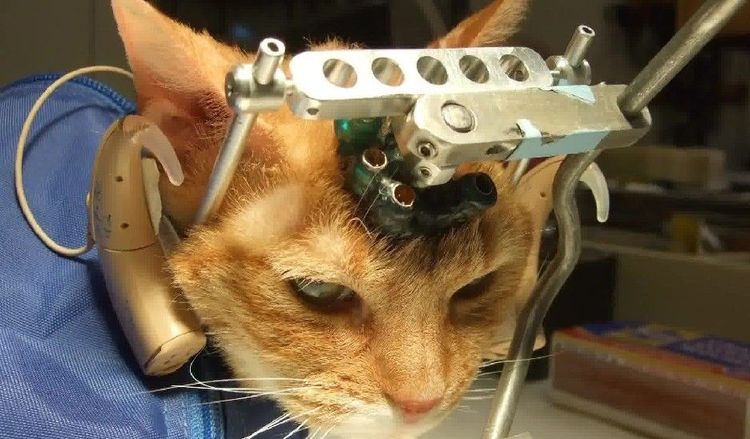
In the most modern veterinary clinics, CT or MRI scans are mandatory to assess the extent of brain tissue damage and to rule out (or confirm) the presence of blood clots in the blood vessels.
Treatment methods
Initial medical care will be aimed at relieving painful symptoms and preventing death. Specifically, the pet will receive oxygen therapy. The cat will be placed in a special chamber or provided with supplemental oxygen through a special mask. This inexpensive and completely painless procedure will promote the restoration of damaged brain tissue. A saline drip may also be placed to prevent dehydration and a catheter may be inserted to facilitate urination.
Once the cat's condition has stabilized and the veterinarian has determined the type of disease, medications will be administered to prevent the development of new blood clots and heal damaged vessel walls.
If possible, it's best to keep your pet in a boarding facility, as the risk of another stroke increases tenfold during the first few days after a stroke. It's important to remember that proper treatment directly impacts the animal's future health. Therefore, it's best to entrust your cat's care to professionals.
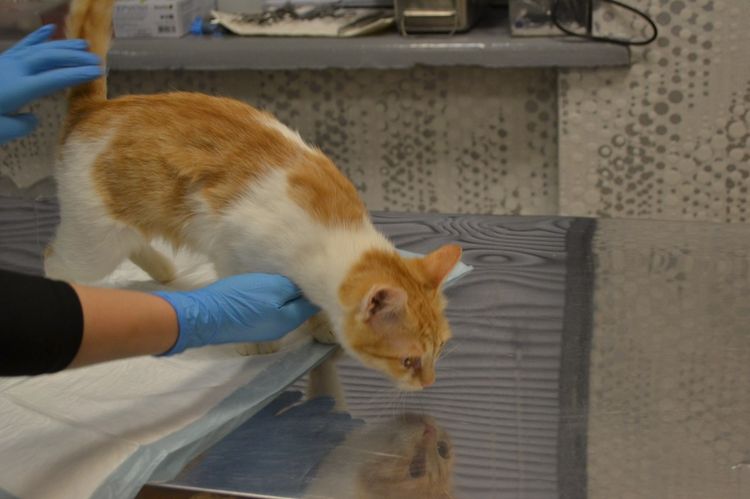
If there are no 24-hour veterinary clinics in your city, you'll need to arrange for 24-hour care at home. First, place an absorbent pad on the cat's bedding (which should be dry and warm). It's likely that your cat will urinate on its own at first. Second, ensure it gets enough water. If your pet can't lap on its own, administer water down its throat (using a nipple or a large syringe) every few hours. Feed only liquid food twice a day. Read more on our website. What to do if a cat doesn't drink water.
Rehabilitation
For the first 2-3 days after a stroke, pets are usually kept in the clinic under 24-hour observation by specialists. This is necessary to assess the effectiveness of the prescribed treatment and reduce the risk of a recurrent stroke.
After discharge, the veterinarian will develop an individualized recovery plan. Rehabilitation can be carried out independently at home or with the help of a rehabilitation specialist.
During the recovery period, it's important to review your cat's diet. Chewing may be impaired, so consider feeding semi-liquid food, wet food, or pâtés. Feedings should be more frequent—up to 5-6 times a day—making sure your pet gets enough fluids, especially if they're not drinking well on their own.
If your cat continues to have mobility and sensory issues, it's best to place the bed on the floor and place an absorbent pad underneath. To prevent bedsores, gently turn the cat every 2-4 hours.
Massage is helpful for restoring mobility. At home, you can gently massage your limbs to improve circulation. A course of therapeutic massage with a specialist is also possible. In some cases, physiotherapy treatments such as electrophoresis or magnetic therapy are also prescribed, usually in courses of 10 sessions.
The recovery period after a stroke in cats can last from several months to a year and a half. It's important for owners to be prepared for the fact that a full return to their previous condition is not always possible. However, there is still a chance for improvement and even full recovery.
It's important to schedule appointments with a veterinary neurologist in advance. Follow-up visits are usually scheduled every 2-3 months to monitor progress and adjust treatment if necessary.
During the recovery period, stress levels should be minimized. Protect the cat from loud noises, bright lights, and contact with other animals and small children, who may frighten or accidentally hurt it.
It's crucial to surround your pet with care and attention. Talk to your cat often, pet them, support them, and praise them for any successes. An emotional connection with their owner plays a vital role throughout the entire recovery process.
Prognosis for the life and health of a cat that has suffered a stroke
The prognosis for a cat that has suffered a stroke will depend on the underlying condition that triggered the stroke. A veterinarian can only provide a specific prognosis after examining a brain scan.
Important to know! It is extremely difficult to restore tissue damaged in the first 24 hours after a stroke. Therefore, if areas of the brain responsible for vital functions have been damaged, a full recovery of your pet should not be expected.
If a stroke is identified and treated within a few hours, the chances of a full recovery increase several-fold. As for the fatality rate, no official studies have been conducted to date. However, veterinarians claim that without adequate medical care within the first 24 hours, nearly 80% of animals die. However, the mortality rate among pets who get to a veterinarian promptly is only 10%.
You can also ask our website's staff veterinarian a question, who will answer them as quickly as possible in the comments box below.
Read also:


16 comments
Natalia
My cat died two days ago. The doctors said it was a mini-stroke and prescribed injections, piracetam. It got better on the third day, but worse on the fourth; she couldn't even get up. Everyone blamed her age, but age isn't a disease; she was 20 years old. I've read a lot about people living after a stroke. Or maybe they prescribed the wrong treatment?
Daria is a veterinarian
Hello! I'm so sorry to hear about your pet's death. But let's start by saying that you had an elderly pet. Yes, that's not a diagnosis. But consider for yourself, who has a better chance of recovering from any illness, even with absolutely identical treatment: a young or an elderly animal? Did you seek help at the clinic in the first hours after the stroke, or did you first try to treat it at home, hoping it would resolve on its own? Although piracetam alone won't restore an animal (or rather, it's rarely used anymore).
Elena
Hello, my cat gave birth 20 days ago. A week later, her behavior changed. First, her back legs started to sag, and then she started walking waddling to the side, sometimes falling over. Her head wobbled when she turned. The vet prescribed calcium injections and painkillers, but they didn't really tell me anything. Could you tell me what this could be? A stroke?
Daria is a veterinarian
Hello! It's unlikely this is a stroke. Based on the history, it sounds more like a postpartum complication, something similar to eclampsia, when a large amount of calcium is lost with milk. This disrupts nerve impulse conduction, which can lead to paralysis/paresis of the hind limbs. This is especially common in animals that feed their offspring a lot (maybe they have many kittens, or they eat frequently and heavily). Calcium supplements are essential (preferably an IV, but subcutaneous injections are also acceptable), and calcium supplements should be added to the diet.
Irina Novikova
Good afternoon! My cat is 1.5 years old. Yesterday morning, I noticed some strange behavior: he started walking strangely—his hind legs were splayed out and he was unsteady, but it wasn't too noticeable, so we thought maybe he'd gotten into a fight. By the evening, when I returned from work, he was getting worse—when he tried to wash himself or shake himself, he'd start falling on his left side, but he still tried to play with the dog and walk down the street hesitantly. He became skittish and twitched at every sound.
He's gotten worse overnight: he's barely able to walk, swaying back and forth, falling frequently, his head tilted to the left side, pacing, and I think his vision has been affected—his eyes are darting around, he can't focus, and it's as if he can't see clearly or isn't seeing well. He's eating a few small meals on his own, and he's drinking milk. His pupils are now different sizes, and his left one has constricted, but that started about two weeks ago, when he returned from the March ghouls, and everything was fine until yesterday.
I went to the vet today. Since the town is small and there's no diagnostic equipment, it's a long way off. They said it's most likely a stroke, as all the signs are there, but they can't help me. They can't tell me if he'll recover, or... I begged for some vitamin shots, but they prescribed a 5-day course of ceftriaxone, although they didn't really say how many ccs to dilute it into. Please help. What other medications should I give him? At least roughly what dosages. I can't stand watching Kuzya suffer, trying to get outside, screaming because we won't let him in. I'm afraid he'll die there, because he's not responding. Thanks in advance!
Daria is a veterinarian
Hello! Based on the symptoms you described, we can suspect both a stroke and a traumatic brain injury (which could have led to a stroke). Since the cat is free-ranging, the risk of serious injury is extremely high. Treatment should have begun within the first 24 hours. Irreversible damage to the brain then began to develop (sections of nerve tissue were left without blood and oxygen, plus the hematoma is compressing the surrounding tissue, which is also slowly dying). It will be impossible to fully restore motor function. Medications that improve blood flow to the brain are needed (available in human pharmacies for stroke patients), but they are very expensive. And there is no guarantee the animal will recover, as there is no information on the extent of the brain damage.
Anastasia
Hello, my British Shorthair cat is 7 years old. Last night, his condition suddenly worsened. He started screaming and urinating, unable to move. We immediately took him to the vet, but during the appointment, his front paws gave out and he stopped recognizing his owner. It's been a little less than 24 hours now, and they inserted a catheter. He still doesn't recognize his owner. His eyes are glassy, but he's started moving his paws. Is there any chance of his recovery?
Dasha is a veterinarian
Hello! What was the cat's diagnosis? It's wrong to ask about the prognosis without knowing the diagnosis. But overall, the symptoms described don't suggest a favorable outcome. Sudden limb paralysis and disorientation are bad signs. Did the doctor give you the diagnosis?
Anastasia
The only thing they told us was that the cat had sand, so they put a catheter in. Then last night he had a stroke in his front paws, and that's it! They said to wait until he comes to! At the moment, the cat's condition hasn't changed!
Dasha is a veterinarian
I sympathize with you. It's truly heartbreaking to watch a beloved pet fade away and be unable to do anything to help. I worry about my patients during appointments as if they were my own. But we can't take them so personally, or they won't last long. Did they even give the cat an IV? Are they trying to revive him? How is he doing now? A stroke isn't a good thing; it's extremely difficult to revive an animal (even a human can't always be saved, and veterinary medicine doesn't have as many medications and equipment as human medicine). All we can do is hope for a miracle.
Anastasia
This morning I was diagnosed with ICD and heart failure.
Dasha is a veterinarian
Heart failure could be the cause of the problems with the limbs and sensation. Why didn't they find any heart problems? Did they prescribe anything to support the heart? How did they treat the urolithiasis? What are you feeding her? Did they not do a biochemistry test to assess the severity of the pathologies in her body? Could there be kidney problems and failure as well?
Catherine
Hello. My cat suffered a stroke three days ago and has been at the vet's house under constant supervision since then. She's clearly improved, started eating and drinking, and is walking well, as if nothing had happened, but she's gone blind. Her pupils are reactive to light, and her eyes appear completely healthy. Is there a chance her vision will recover?
Dasha is a veterinarian
Hello! There's always a chance, but sometimes it's so slim that success is out of the question. Much depends on the animal's age, treatment plan, the underlying cause of the condition, and the location of the lesion (it seems the problem is in the brain's visual system, since both eyes haven't "changed" and remain normal, but vision has disappeared). Don't stop treatment; keep an eye on your veterinarian. But don't get your hopes up for a full recovery. Unfortunately, positive changes in pets aren't as common as in people.
Marina
Good afternoon! My cat is 16 years old. He's never been outside and hasn't been to the vet in that time. He's not neutered or vaccinated. He has no complaints. A month and a half ago, he started holding his head to one side and walking the same way. We gave him vitamins, and within three days, his condition improved. We continued giving him vitamins. Ten days ago, we found him on the floor in an unexplained state. He couldn't move, and when he tried to walk, he kept flipping over his head. We assumed he was paralyzed, but at first he lost feeling in his front paws, then his back paws. We laid him down on a mat, gave him some pain medication, and left him to rest.
The cat lay with his eyes open. While lying down, he raised his head and ate. His ears and tongue were pink. He couldn't lie down permanently; he tossed and turned constantly. After a day, he was moved to another room, where he rolled over. He didn't refuse food, and we gave him water from a syringe. On the second day, the cat stood up and waddled to the litter box on his own. His hind legs were drooping. Then, throughout the day, after eating, we placed him on the litter box, where he did his business.
On the fifth day, the cat started jumping onto the bed but couldn't get off. He kept falling. On the eighth day, he started drinking greedily, going to the water several times a day and after eating. Today is the tenth day. His condition is improving. We haven't taken him to the vet yet because we don't know where to take him. We'd like to get some advice.
Dasha is a veterinarian
Hello! What, you don't know where to go? To a veterinary clinic to see a specialist! They'll be able to point you in the right direction if they don't have a specialist (we'll refer you to another city if we understand an x-ray is needed). Perhaps your pet had a stroke? Maybe something neurological? We need to differentiate the underlying condition, make a definitive diagnosis, and prescribe treatment based on that. The vitamins you gave your pet are unlikely to have cured it (it was probably just a coincidence). Urgently request an in-person examination (you can even have them come to your home).
Add a comment