
Feline infectious peritonitis
Feline infectious peritonitis (FIP) is a dangerous, rapidly progressing viral disease with a high mortality rate, diagnosed in animals of both sexes and ages.
Today we'll explain what peritonitis is, how the pathogen can enter the body, what symptoms should alert a breeder, and what treatment methods are used today to combat different types of FIP (Feline Infectious Peritonitis).
Content
Pathogen
The causative agent of peritonitis in cats is the RNA-containing virus Feline coronavirus (one of the varieties of coronavirus), which poses a danger only to cats and ferrets.
Important! This strain of the virus is not dangerous to humans or other animals living in the home, even with constant contact.
The virus itself has not yet been fully studied by scientists. It is known that it can cause illnesses of varying severity, from a latent course without any noticeable symptoms to an acute intestinal infection.enteritis) and the deadly IPC. The secret behind the virus's "selectivity" is still unknown, but some cats remain uninfected even after contact with an infected animal, while others, after contact with a carrier of a mild form, develop severe peritonitis.
Most often, infection occurs:
- feco-oral route through a common litter box, licking the fur, sniffing contaminated feces;
- through household items and animal care items;
- from mother to fetus.
Feline coronavirus is highly contagious and remains active outside the host's body for a long period (up to 7 days), which explains its rapid spread in nurseries where animals are kept in large groups.
Important! An animal that has recovered from the intestinal form of coronavirus infection remains potentially infectious (can infect other cats) even after symptoms have completely resolved. This period can last up to 2 months.
Types of feline coronavirus infection
When penetrating the body, feline coronavirus most often causes viral enteritis, which is commonly referred to as the "intestinal" form of coronavirus infection.
It is known that 10% of all diagnosed cases of coronavirus infection in cats are infectious peritonitis, which is almost always fatal. The remaining 90% are caused by enteritis of varying severity and carrier states.
Thus, among the animals that were tested for FIP (coronavirus), the following are carriers:
|
Group |
% of carriers |
|
Show animals |
82% |
|
Pedigree (not show) |
53% |
|
Domestic (kept in groups) |
28% |
|
Domestic (not in contact with other cats) |
15% |
Intestinal form (enteritis)
Main symptoms:
- diarrhea;
- vomit;
- increase in body temperature;
- refusal to eat;
- lethargy, loss of strength.
The acute phase usually lasts 2-4 days, after which the symptoms go away, but the cat continues to shed the virus in feces and saliva.
It has been noted that young animals under two years of age and older animals (over 10 years of age) are most susceptible to this disease. Cats with other serious chronic illnesses are also at risk.
Exudative peritonitis
An acute form of the disease with a mortality rate close to 100%. Mutating under the influence of unfavorable factors, feline coronavirus can affect not the intestinal epithelial tissue, but the walls of blood vessels located in the chest cavity or peritoneum. This causes effusion (fluid leaking through the thinned vessel walls and accumulating in the sternum or abdominal cavity).
The symptoms in this case will be as follows:
- belly enlargement or chest;
- heavy breathing (if the thoracic region is affected);
- refusal to eat (anorexia);
- weight loss;
- lack of coordination;
- convulsions;
- paralysis of the limbs.
The appearance of these symptoms indicates that the disease has progressed to a severe stage. Unfortunately, even with prompt medical attention, the prognosis is poor. Depending on the severity of the condition, resolution occurs quickly (from a few days to several weeks).
Dry (chronic) peritonitis
In the non-effusive form of peritonitis, granulomas (neoplasms) form on the internal organs of cats. The dry form of FIP often produces atypical symptoms, as there is no fluid accumulation or acute gastrointestinal upset.
The chronic course of the disease is characterized by the following symptoms:
- refusal to eat and significant weight loss;
- dry skin and changes in the appearance of the coat;
- yellowish tint of skin and eyes (especially noticeable in light-colored cats);
- change in the color of the iris of the eye to brown, completely or partially.
Symptoms such as impaired coordination, seizures, and paralysis also occur with this form, but much later. With prompt supportive treatment, a cat can survive for about a year, although the prognosis, as with the effusive form, is poor.
Diagnostics
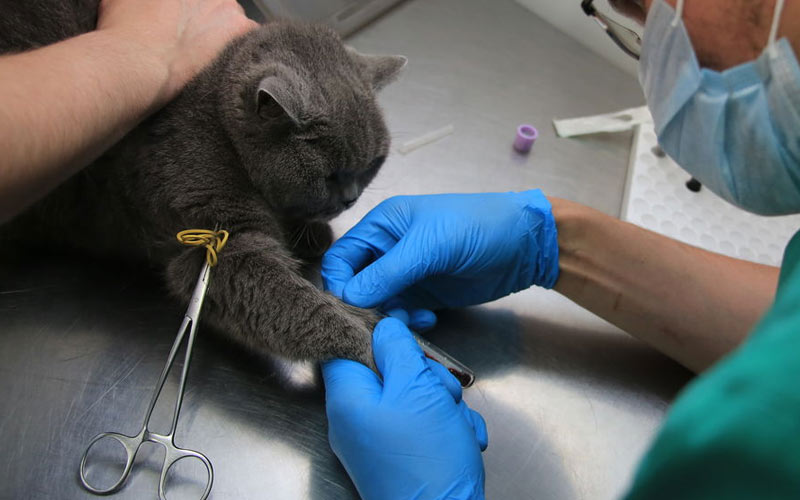
Modern diagnostic methods can detect the presence of coronavirus in an animal's body, but the results do not answer the question of whether this pathogen can cause peritonitis in a cat.
As a rule, the FIP test is prescribed if a male cat or female cat shows specific symptoms of the disease, as well as for kittens if growth is delayed and a number of concomitant factors are present (group housing, contact with a sick animal).
When diagnosing dry peritonitis, an ultrasound of the internal organs is often prescribed, which can confirm the presence of granulomas, their number and location.
Treatment
Unfortunately, treatment for cats with infectious peritonitis is aimed only at relieving symptoms and improving their condition. If secondary microflora also becomes involved, the animal dies very quickly.
There is currently no vaccine for this disease. Treatment for viral peritonitis will depend on the symptoms and which organs are most affected by the virus.
The most a veterinarian can do for a sick animal is to alleviate the course of the disease (regularly “pump out” the accumulated fluid in the abdominal and chest cavities, inject antibiotics, drugs that support cardiac function, and painkillers).
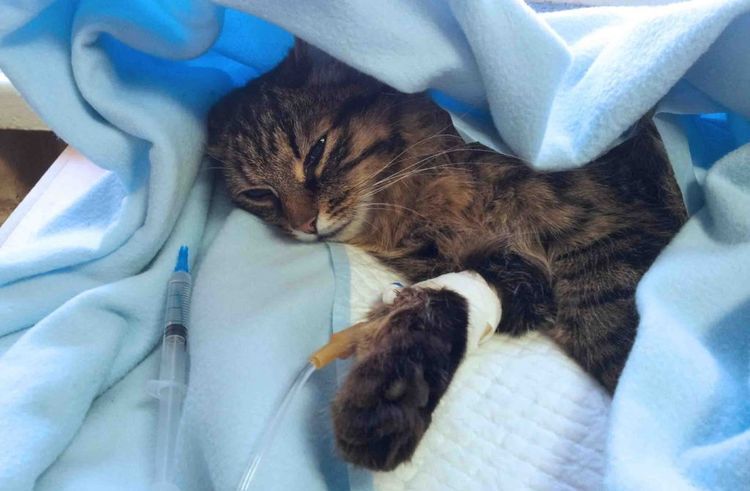
For antibiotic therapy, drugs from the cephalosporin and penicillin groups, as well as sulfonamides, are usually used, which, depending on the animal’s condition, are administered subcutaneously or intramuscularly, and in the most severe cases, intravenously.
During acute attacks, it is recommended to apply ice wrapped in a towel to the cat's abdomen. Additionally, the following may be prescribed:
- blood transfusion (in case of serious damage to the circulatory system);
- vitamin therapy (to strengthen the immune system and increase the body's natural resistance);
- painkillers (to reduce pain syndromes);
- hormonal or chemical therapy (for severe forms of the disease).
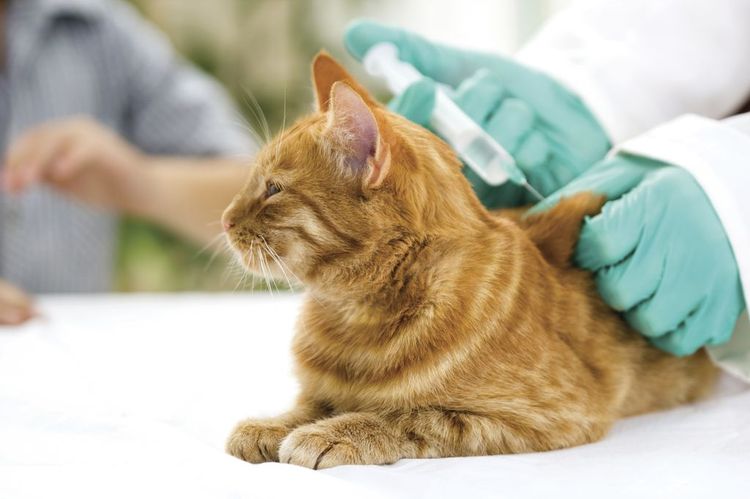
One element of therapy is a gentle diet based on light foods that will place minimal strain on the pet's digestive system. A veterinarian will select this diet based on the animal's condition and the severity of the disease. The following is recommended:
- transfer the animal to natural feeding;
- give soft food in semi-liquid or liquid form with finely chopped meat;
- feed freshly prepared food;
- minimize the amount of fat in your diet.
Infectious peritonitis has a high mortality rate. Chances of survival depend on timely detection, the absence of complications, and appropriate treatment. However, even with medical attention, no more than 10% of infected pets survive, so the owner's primary goal is to prevent infection, which is entirely possible with simple preventative measures.
Prevention
Prevention of feline infectious peritonitis involves:
- timely vaccination of kittens and adult cats;
- mandatory deworming;
- proper balanced feeding;
- regular preventive visits to the veterinarian;
- limiting the animal's contact with stray cats and animals kept in large groups;
- thorough cleaning of the premises using disinfectants.
Any questions? You can ask our website's staff veterinarian in the comments below, who will answer them as quickly as possible.
Read also:
- Herpes in cats: symptoms and treatment
- Coccidiosis in cats: symptoms and treatment
- Coronavirus in cats


2 comments
Olga
The article was outdated even at the time of publication. IPC is treated with GS. In 2022, they'll try esperavir. Then maybe they'll come up with something else.
In any case, it is no longer fatal, but simply expensive and time-consuming.
Daria is a veterinarian
Hello! Yes, there is a medication. It's indeed very expensive, time-consuming, and not always successful. Treatment can sometimes last longer than 80 days. The essence of the medication is that it must be administered daily, strictly as recommended by the doctor, without missing a single dose. Symptomatic therapy is also administered, and in severe cases, the animal must be hospitalized. The medication is quite expensive; the bottles are small and last only a couple of days. Such therapy can cost hundreds of dollars; a full course, including symptomatic therapy and 24-hour hospitalization, can cost over $1,000. Due to supply delays, the required dose for the next treatment may not be available. Many clinics don't stock it because owners often refuse treatment upon learning the cost, resorting to euthanasia. Animals sometimes die mid-treatment. Therefore, the disease remains dangerous and has a high mortality rate, despite the existing GS. And owners should be aware of this and be prepared.
Add a comment