
Heart attack in a dog
In recent years, veterinarians have increasingly encountered heart attacks in dogs, which is alarming, as it's one of the most dangerous conditions. Without prompt and professional assistance, the disease almost always results in death. Therefore, it's important to understand what can cause a myocardial infarction in dogs, what signs to look for, how it's diagnosed, and what treatment a veterinarian prescribes.
What is a myocardial infarction? The myocardium is the muscular tissue of the heart, and its function directly affects the entire cardiovascular system. Without normal blood circulation, no organ can function properly, as blood delivers oxygen and nutrients throughout the body. The heart muscle itself also requires a constant and uninterrupted supply. If, for any reason, the blood and oxygen supply to a certain area of the myocardium is disrupted or completely stopped, that area begins to die. This tissue death is called an infarction.
Reasons
Essentially, the primary cause of myocardial infarction in dogs is always the same: impaired blood supply to the heart muscle. However, there are a number of factors that can contribute to the development of this dangerous condition and significantly increase its risk.
Cholesterol plaques
Well, who among us hasn't heard of them? In dogs, as in humans, these plaques can lead to serious pathologies in the body, one of which is a heart attack. Cholesterol gradually clogs the lumen of the coronary artery (which supplies the heart muscle), causing the myocardium to "starve" and gradually die.
The coronary artery itself is large in diameter, but it is full of small branches located "inside" the myocardium. Therefore, the location of necrosis depends on the exact location of the vessel "blocked." If the blockage is not complete, and blood partially flows, ischemic heart disease develops.
Ischemia (translated from Greek - I hold back/stop blood) is a localized (simply put, local) anemia of a certain area (organ, tissue) due to a decrease or complete cessation of arterial blood flow.
If this condition persists for a long time, cells begin to die, leading to tissue necrosis.
Hormonal imbalance
Hormonal imbalance caused by age-related changes or even hypothyroidism. Hypothyroidism – is a pathological condition that occurs as a result of insufficient functioning of the thyroid gland.
If the thyroid gland isn't functioning properly, metabolic disorders are inevitable. After all, the thyroid gland produces hormones, and if it stops producing them, the natural hormonal balance is disrupted. As a result, the functioning of virtually all organs and organ systems is altered. The cardiovascular system is no exception—failure develops.
Other reasons
- NeoplasmsTumors can compress arteries, thereby disrupting normal blood flow.
- InfectionsThere are infectious diseases (bacterial and viral) that can lead to the development of verrucous or even ulcerative endocarditis in pets. Although not a direct cause, but a contributing one, it can still lead to a heart attack in an animal.
- Parasitic and blood-parasitic diseasesThere are also parasitic diseases that lead to cardiovascular pathologies. For example, diphyllobothriasis. These "worms" parasitize directly into the heart.
- VasculitisThese are inflammatory processes within the blood vessels themselves. Vasculitis narrows the vessel lumen, reducing blood flow. This leads to ischemia, which is a short step toward a heart attack.
Symptoms
By learning the characteristic symptoms of myocardial infarction in dogs, you can quickly suspect something is wrong and seek emergency, qualified veterinary care.
Pain and behavioral changes
The animal experiences severe pain in the left elbow area. Believe me, even though your pet can't speak, you'll notice a pain in the heart. The dog will become very restless and may even try to lick the painful area. Excessive agitation may be observed, and the animal will try to get your attention in every way possible.
Arrhythmia
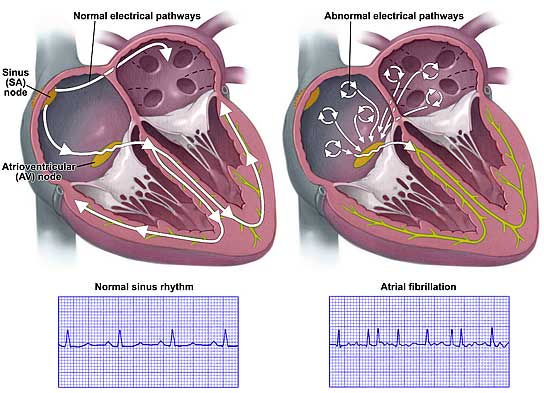
Because areas of muscle tissue (even small ones) undergo necrosis, the heart cannot contract normally. The first symptom of a myocardial infarction in a dog will be arrhythmia (most often atrial fibrillation).
Arrhythmia is a disturbance in the rhythmic activity of the heart, which occurs due to a disturbance in automatism, conduction, contractility, and even excitability.
The symptoms of a heart attack in dogs are usually quite noticeable, but they are not strictly specific, meaning they can also occur with other conditions. For example, bluish discoloration of the mucous membranes can occur not only with heart disease but also with serious breathing problems. Therefore, making an accurate diagnosis based solely on external signs can be difficult—a professional diagnosis is necessary.
The disease may progress slightly differently in different breeds, but overall the picture is largely similar.
Pre-infarction condition
At this stage, the heart muscle has not yet died, and with timely intervention, the pathology is much easier to stop. However, the insidiousness of this stage is that the symptoms are subtle and often go unnoticed.
During this period, the owner may notice that the dog:
-
I began to breathe more frequently and with greater difficulty due to increased heart rate and high blood pressure;
-
gets tired quickly, is reluctant to go for walks, lies down more and moves less;
-
sleeps restlessly and may stagger when walking;
-
often licks the area of the left elbow, whines or shows signs of pain in the chest area.
Stage of the attack
When a heart attack develops directly, the symptoms become more pronounced and new, more alarming manifestations are added to the existing signs.
This stage is characterized by:
-
cyanosis - the mucous membranes from normal pink become bluish due to circulatory problems, this is especially noticeable on the gums, cheeks and palate;
-
increasing shortness of breath, while the dog often takes an unnatural position, sits with its head down, trying to at least slightly alleviate its condition;
-
pronounced weakness and restless sleep, and with a sharp drop in blood pressure, the animal may even lose consciousness;
-
sudden changes in behavior: the pet may whine, completely refuse to play or go on walks, and, due to severe pain, become irritable or aggressive.
Acute and acute stages
At these stages, the risk of death is especially high. The likelihood of a fatal outcome increases significantly if the dog is elderly, weakened, or if this is a repeat heart attack. Therefore, at the slightest suspicion of heart problems, it is absolutely essential to seek veterinary attention immediately.
Other symptoms
Other characteristic signs of myocardial infarction in dogs:
| Dyspnea | Even the slightest physical exertion can cause your pet to experience shortness of breath. It's crucial not to confuse the initial symptoms of a heart attack with signs of pulmonary failure. |
| Cyanosis of the mucous membranes | Because the heart is working less efficiently, blood is not delivered to the tissues and organs in sufficient quantities. Cyanosis occurs because venous blood does not return to the heart well, especially after physical exertion. |
| The gait changes | Even if the pet walks calmly, it's noticeable that it's unsteady, swaying from side to side. Its paws are weak. |
| Increased fatigue | Previously, the dog ran around like crazy during walks, but now even a simple slow walk tires the pet. |
| Sleep disturbance | The pet sleeps poorly, usually on its side. It constantly grunts and whines due to severe pain. |
How to make a diagnosis?
Don't try to diagnose this yourself! Myocardial infarction in dogs is a very dangerous condition. Only a veterinarian can confirm this based on additional examinations. Angiography is considered the best test, but no animal will lie quietly and calmly (they're not humans, after all). Some might ask, "What about anesthesia?" But the pet has a heart condition, and general anesthesia could be fatal. Therefore, angiography is used extremely rarely.
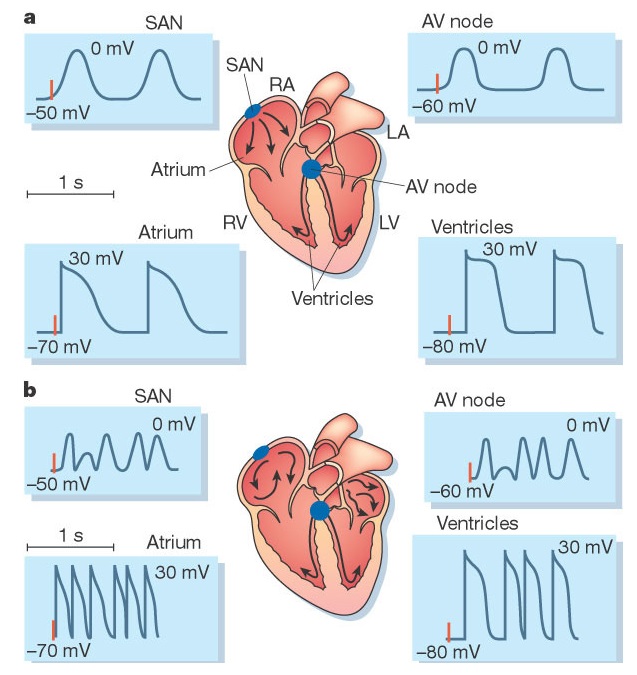
An ECG is most often used. Based on its results, a qualified veterinarian can determine the specific heart problems your pet has. An echocardiogram, radiography, and ultrasound are also prescribed. Blood tests can also be helpful. A urine test may also be ordered.
Dog treatment
Treatment for a dog with myocardial infarction should only be prescribed by a veterinarian! Most often, the treatment plan looks like this:
Antianginal drugs
These medications are prescribed to reduce the heart's oxygen requirements. Nitroglycerin should not be used without a doctor's approval. Firstly, it will not relieve pain and is only effective against shortness of breath. Secondly, administering this medication without monitoring blood pressure is life-threatening, as if the dog has low blood pressure, nitroglycerin will worsen its condition.
Drugs to support cardiac function
They help the heart function. Muscle tissue contracts better, and nerve impulses are conducted more efficiently. But the dosage must be administered with extreme caution. Otherwise, the condition can get worse (the body's "motor" will stop, and the animal will die).
Anticoagulants and diet
Heparin and its analogs are used to prevent blood clots. A clot can break off and block a blood vessel (not necessarily in the heart), causing a kidney, brain, or other organ infarction. Anticoagulants prevent blood from clotting, preventing thromboembolism. Furthermore, this blood is easier to pump throughout the body. Fat intake is essential, and vitamins and minerals are added to the diet.
Diagnostics
The signs of a heart attack are very similar to those of other diseases, primarily heart disease, so it is impossible to make an accurate diagnosis based solely on the external picture.
At the appointment, the veterinarian first asks the owner detailed questions about the pet's condition: how its behavior has changed, what it eats, what lifestyle it leads, whether there have been any alarming symptoms or sudden changes in its health recently.
After a general examination, the specialist will typically prescribe additional tests. The diagnostic program may include:
-
urine tests;
-
blood tests - general and biochemical;
-
instrumental diagnostic methods: electrocardiography, echocardiography, ultrasound examination of the heart, chest x-ray.
The most accurate way to assess the condition of the heart muscle is considered to be angiography—an X-ray examination of the vessels using a contrast agent. However, it is not always used. The procedure is performed under general anesthesia, and only a veterinarian can determine whether this examination method is appropriate in a particular case, based on the dog's overall condition.
Prevention and predisposition
Preventing myocardial infarction in dogs involves keeping up with routine veterinary examinations. Blood and urine tests are recommended, along with periodic ECGs (especially if there's a predisposition to the disease).
- Do not overload your pet (no need to drive the animal to the point of exhaustion).
- Monitor your pet's emotional state. Stress and fear will lead to harm.
It's impossible to say that any specific breeds are susceptible to myocardial infarction. There is a predisposition, meaning that some breeds are more likely to experience this condition than others.
Large breeds
Large breeds, such as Newfies and St. Bernards, are at the forefront. Cardiac necrosis occurs when these beautiful dogs are given the wrong amount of exercise. Excessive exercise can lead to heart disease.
Miniature breeds
In second place, as the complete opposite of first, are representatives of small (miniature) breeds. Pinschers, miniature poodles, and other toy dogs. Why? Because of their excessive emotionality. These small dogs are overly impulsive, often frightened by everything (every rustle or loud sound leads to fear, stress, and even excessive aggression). Their heart starts pounding, and they wear out faster.
Old people
It's no secret that heart disease is more common in older animals than in younger ones. Hormonal levels change, and the heart and blood vessels wear out.
Any questions? You can ask our website's staff veterinarian in the comments below, who will answer them as quickly as possible.
Read also:


Add a comment