
Chronic renal failure in cats: symptoms and treatment
Chronic renal failure is a fairly common disease in cats, primarily developing in older animals. British Shorthair cats are considered more susceptible to this condition. Abyssinian, Persian breed And Maine CoonsThis disease is irreversible, but if it is detected early and treatment is started promptly, the cat can live a long life and enjoy good health.
Content
What is chronic renal failure?
Waste products from animals' bloodstream enter the kidneys, where they are filtered of toxins, which are then excreted in the urine. The kidney nephrons act as filters. A condition in which the kidneys fail to function properly, and the cat's body is poisoned by metabolic waste products, is called chronic renal failure.
The development of chronic renal failure involves two scenarios. In the first, the number of functioning nephrons decreases, and the remaining ones are forced to work under increased strain. In the second, the structure of the nephrons is disrupted, resulting in a slower filtration rate.
This is important to know! There are several stages of CRF, depending on its severity: compensation, subcompensation, decompensation, and terminal. In the first two stages, symptoms of renal failure are almost unnoticeable. In the decompensation stage, they are quite pronounced, but the prognosis for life can still be positive with ongoing supportive care. The terminal stage of the disease is practically a death sentence; such cats often have to be euthanized to end their suffering.
Causes of the development of pathology
Chronic renal failure in cats can develop as a result of injury, exposure to toxic substances, or a previous infectious kidney disease (including viral peritonitis). CRF can also be caused by:
- diseases associated with the immune system;
- nephrolithiasis (kidney stone disease);
- congenital anatomical defects of renal tissue;
- the presence of benign or malignant neoplasms in the kidneys.
Symptoms
This disease is insidious because it is rarely detected in its early stages: the first obvious signs of renal failure appear only when the organ is functioning at less than half capacity due to sclerotic tissue damage in the nephrons. However, certain signs of illness in a cat may suggest the development of chronic renal failure. These symptoms may vary at different stages of the disease.
Stages of compensation and subcompensation
In the early stages of the disease, the cat experiences mild malaise, loss of activity, and poor appetite. Blood tests show elevated creatinine levelsCreatinine is one of the products of amino acid-protein metabolism; its higher level (250-300 μmol/l) indicates impaired renal function.
Decompensation stage
The animal is lethargic, apathetic, and eating poorly. Despite drinking a lot, the cat shows signs of dehydration, as polyuria (frequent urination) is rapidly eliminating all fluid. Vomiting is also observed. diarrhea or constipation. Creatinine levels can reach 400 μmol/L. Structural changes in the kidney tissue may be visible on ultrasound. At this stage, cats often experience elevated blood pressure.
Terminal stage
This is the final stage of the disease, when the animal's condition is considered severe. The animal rapidly loses weight and stops eating. Uremia—a poisoning of the body by metabolic products—develops, causing the cat to develop bad breath. Severe blood composition abnormalities are observed: elevated potassium and phosphate ion concentrations, decreased calcium levels, and creatinine levels can exceed 450 μmol/L. Radiographs show decreased bone density. In severe cases, the cat may develop pulmonary edema.
Diagnostics
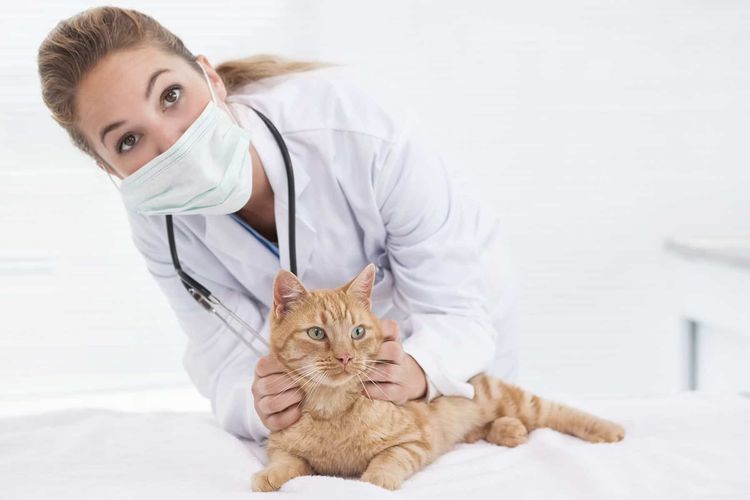
Diagnosis of CRF in cats begins with a veterinarian examining the animal and reviewing the symptoms reported by the owner. If clinical signs indicate possible renal failure, laboratory tests of blood and urine are performed to confirm the diagnosis. If necessary, the cat may be prescribed imaging tests, such as radiography or ultrasound. These can help identify causes of CRF, such as: polycystic disease, tumors, urolithiasis.
On the importance of differential diagnosis. Laboratory and imaging studies are necessary not only to differentiate CRF from other pathologies, but also to identify additional problems that arise during the disease: anemia, water-electrolyte imbalance, and mineral deficiency. Based on these studies, treatment strategies for renal failure are developed and a life prognosis is provided.
Treatment
It is impossible to restore kidney nephrons that have lost their functionality due to sclerotic changes. Treatment for chronic renal failure in cats involves measures to preserve healthy kidney cells and maintain a satisfactory quality of life.
For cats with stages 1 and 2 CRF, a diet with minimal phosphates and proteins and increased calcium may be sufficient. Your pet will need to maintain this diet for life. Food for cats with CRF can be prepared at home, or you can buy commercially prepared food—nearly every pet food manufacturer produces special therapeutic canned food for cats with kidney disease. Since poorly functioning kidneys require more water to flush toxins from the body, cats should be given plenty of fluids.
Treatment for cats with chronic renal failure stages 3 and 4, in addition to a special diet, may include:
- constant monitoring of blood pressure, if necessary, taking medications to lower it;
- when vomiting - gastroprotectors and antiemetic drugs;
- for anemia - vitamin B12 and hematopoietin (a hormone that stimulates the production of red blood cells);
- in case of hyperkalemia - administration of calcium gluconate;
- to reduce phosphorus levels - chitosan preparations;
- to correct electrolyte disturbances - drip infusion therapy.
The answer to the question, "How long do cats with CRF live?" is that their lifespan directly depends on timely diagnosis and adequate treatment. If the disease is detected early and all necessary measures are taken to prevent its progression, your pet can live as long as their healthy counterparts.
Prevention
To prevent kidney failure in cats, it's important to provide them with proper nutrition—their diet should include foods containing all the nutrients they need. Senior cats, as well as cats of at-risk breeds, should undergo regular checkups. These checkups are recommended annually, and twice a year if your pet is over 10 years old.
A veterinarian talks about CRF in cats: video
Read also:


7 comments
Lyudmila
Good afternoon
A 13-year-old Thai cat. Spayed. We took her for a checkup and had some tests done. Her urine is normal. Her biochemistry shows elevated creatinine at 199, direct bilirubin at 2.5, and high cholesterol at 5.96. All other values are normal. The doctor recommended giving Ipaquetine to prevent urolithiasis. She weighs approximately 4 kg. I give her 1 g once a day. Is this dose sufficient for prevention? Or should she be given strictly twice a day?
Thanks in advance for your reply.
Daria is a veterinarian
Hello! It's important to strictly follow all your veterinarian's recommendations. Don't take any liberties, reduce dosages, or change the frequency of medications. Did your veterinarian perform additional liver examinations? Did they refer your pet for an ultrasound? Did they prescribe a special diet? Dietary adjustments are crucial for preventing urolithiasis.
Irina
My cat is 13 years old. She's started eating poorly, drinking water, and is lethargic, always lying near the radiator. We took her to the veterinary hospital. They did blood tests. They diagnosed her with stage 4-5 chronic renal failure. They recommended euthanasia. Is there really nothing we can do? Should we give her some medication or injections? What should we feed her? Or are we just torturing her? Thank you.
Daria is a veterinarian
Hello! This is the most advanced stage of chronic kidney disease (CKD). It's extremely difficult to treat (it only improves life for a few years, at most). Proper nutrition is crucial, as renal failure causes loss of appetite (the sense of smell is weakened, and the taste of food also becomes unappealing). You can warm the food slightly to enhance its aroma. It's crucial to avoid loss of appetite. Food should be low in protein (fill it up, protein foods are hard on the kidneys!). It's best to choose a food high in fat, as it has a higher calorie content (not fatty foods, but commercial foods high in carbohydrates and fats, and polyunsaturated fatty acids—Omega-3). The pH of the food should be alkaline to deacidify the urine. Unfortunately, at this late stage, conventional therapy with erythropoiesis-stimulating drugs is ineffective. At late stage 4, hemodialysis or a transplant are the only options.
Natalia
Today we sent our beloved cat to the Rainbow. The vet said it was impossible to torture the animal and ourselves. Unfortunately, they overlooked the stages of chronic kidney disease.
Natalia
Hello. My cat is 16 years old. He is neutered and litter box trained.
Three days ago, he started having urinary incontinence and was barely eating.
The veterinarian on the phone told me to give a quarter of Furadonin.
But nothing has changed.
Tell me what to do?
Daria is a veterinarian
Hello! So, you were advised to give nitrofuran, a diuretic, to a cat who already has urinary leakage? Ideally, an ultrasound would be done to rule out cystitis, urolithiasis, and bladder atony. Has the cat had any recent health issues? Has it been treated for cystitis or urolithiasis recently? Was it stress? Was a catheter inserted? Was its body temperature taken?
Add a comment