
Hovawart - dog breed
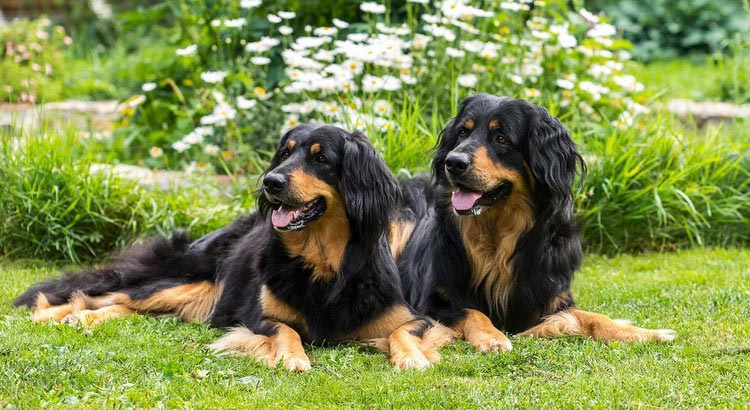
The Hovawart is a dog of German origin that combines the qualities of a reliable guard dog and a devoted companion. The breed is easily trained, characterized by a stable psyche and a balanced character. Hovawarts are not aggressive toward people, but remain active, alert, and disciplined. While not a common breed, the largest number of Hovawarts are still bred in Germany.
Content
History of origin
The breed's history spans hundreds of years. The first mention of such dogs appears in the German chronicle "Der Schwabenspiegel" (1274). The events described in the book took place in 1210. When the Ordensritterburg fortress was besieged by northern tribes, the castle's lord entrusted the rescue of his young child to a dog. He strapped the baby to the back of a Hovawart and released him outside the castle. The faithful dog not only rescued the heir, but also returned with reinforcements. The child's name was Eike von Repkow. As an adult, he felt it necessary to record this fact in history.
The name Hovawart is believed to be derived from two words: hof (yard, estate), wachter (guard, watchman).
In the 15th century, dogs known as Hovawarts were among the most revered breeds in Germany. Since the Middle Ages, the breed has experienced ups and downs, but has never been completely forgotten. Hovawarts have been regularly mentioned in cynological literature throughout their existence. A significant role in the breed's history belongs to Kurt and Bertram König, a father and son team who began reviving the breed in the early 20th century. This work took place in several stages.
In 1915, breeders selected sturdy peasant dogs to form the genetic core. Then, with characteristic German meticulousness, they began refining the appearance and establishing the desired traits. According to some sources, Leonberger, Newfoundland, Kuvasz. The first kennel was registered as early as 1922. By 1937, the stud book contained records of 125 litters. The breeding program could be considered virtually complete, but World War II brought about its own setbacks. The population was almost completely destroyed and only began to recover in 1949. In 1959, Germany officially recognized the Hovawart breed and granted it the status of a service dog. The FCI recognized the Hovawart as a service breed in 1964. After this, it received international recognition.
Video review of the Hovawart dog breed
What should a Hovawart look like according to the standard?
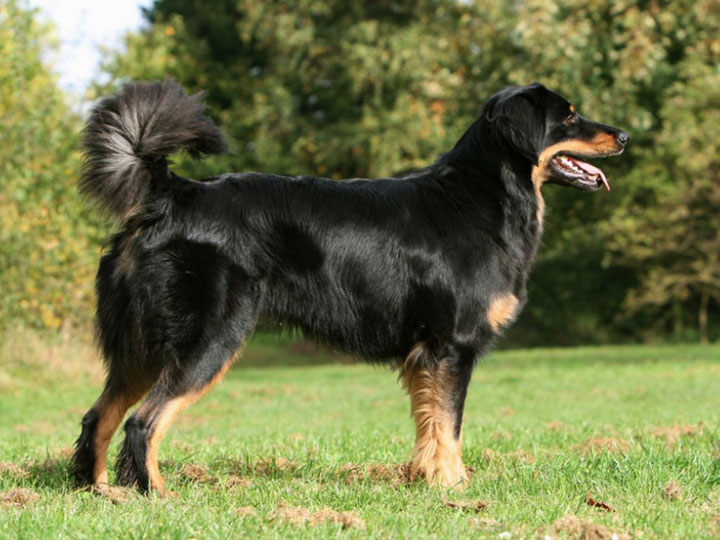
The Hovawart's appearance confirms its working purpose. It is a strong, energetic, long-haired dog of medium size, with a somewhat elongated build. Sexual dimorphism is very pronounced, particularly in build and head shape. The body length is 110-115% of the height. The optimal height at the withers for males is 60-70 cm, and for females, 58-65 cm. Weight is not specified in the standard; the dog's proportional build is paramount.
The head is proportionate to the body, with a broad, rounded forehead. The stop is well defined. The muzzle tapers slightly toward the nose. The strong nasal bridge is parallel at the top of the skull. The straight length of the skull and muzzle are approximately equal. The nose leather has well-formed, open nostrils. Pigmentation may be black or light in dogs of the corresponding color. The lips are not pendulous. The teeth are complete. The bite is a scissor bite. The eyes are oval-shaped, medium in size, with tight-fitting eyelids. The color of the eyes is dark brown. The triangular ears are set wide and high, lying loosely against the head. When viewed from the front, they visually broaden the head. They are long, reaching the corner of the lips. The tips of the auricles are slightly rounded. When relaxed, they hang down; when excited, they are raised on cartilage and directed forward.
The neck is medium in length and strong. The back is straight. The loin is slightly longer than the croup, which is moderately sloping. The chest is deep, broad, and strong. The tail is of normal length, reaching to the hocks, and is very densely covered with hair. It changes position depending on its mood: carried low or curled over the back. The limbs are strong and set vertically. The paws are round and compact. The toes are close together and slightly arched. Dewclaws It is customary to remove them in countries where it is not prohibited. Black and black-and-tan dogs should have black pads and nails.
The skin is tight-fitting, typically pink in fawns and dark with a bluish tint in blacks. The coat consists of a long, slightly wavy, medium-hard topcoat that lies flat against the body, with a moderate undercoat. The coat is longer on the chest, back of the legs, and belly. The hair on the tail, head, and front of the legs is short. Overall, the coat is very dense and thick.
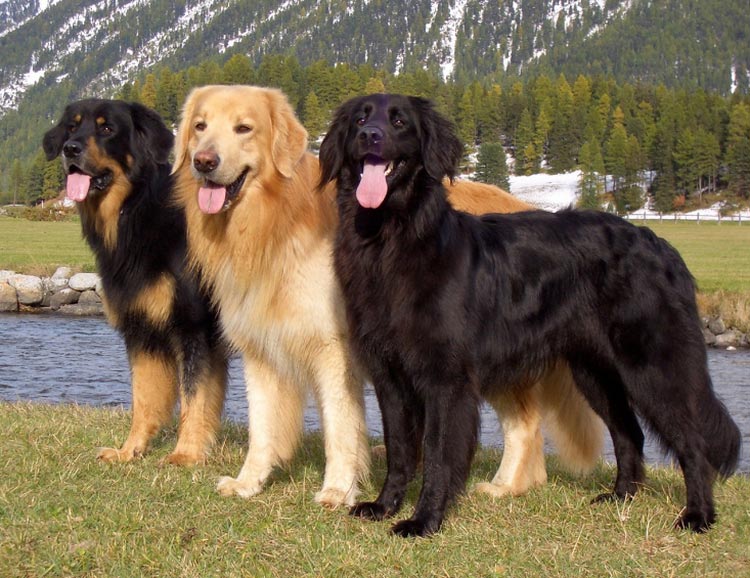
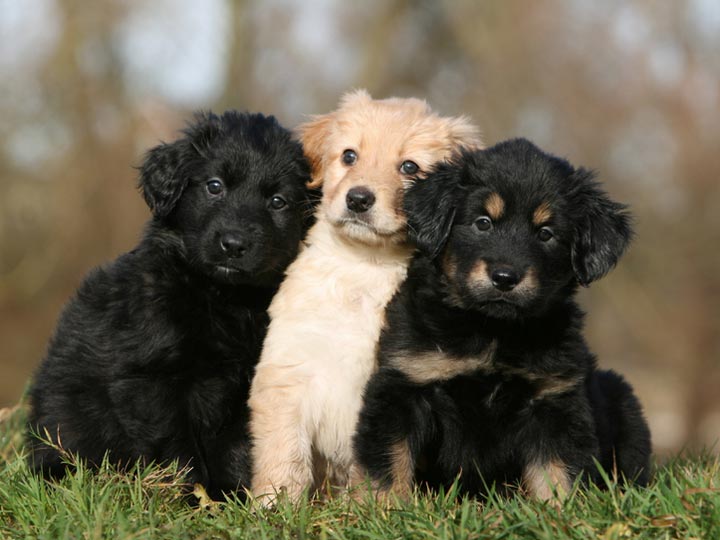
There are three colors
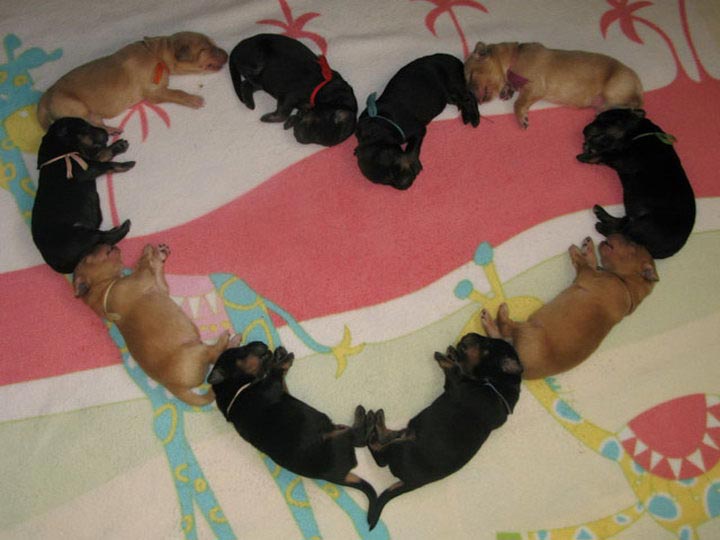
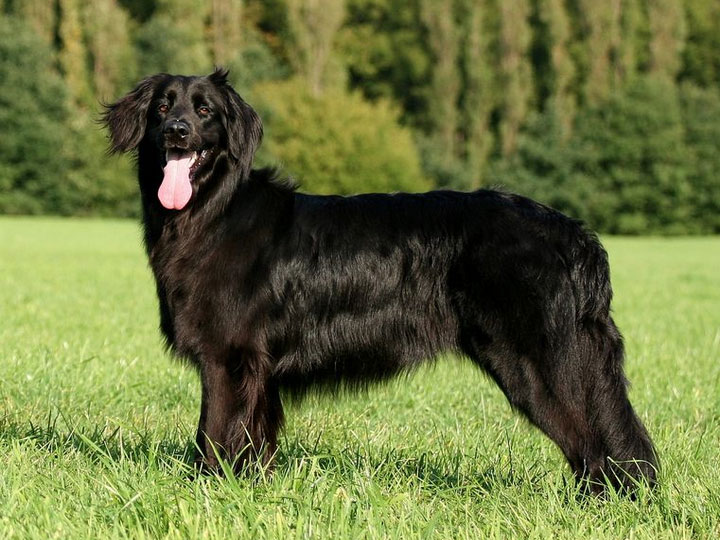
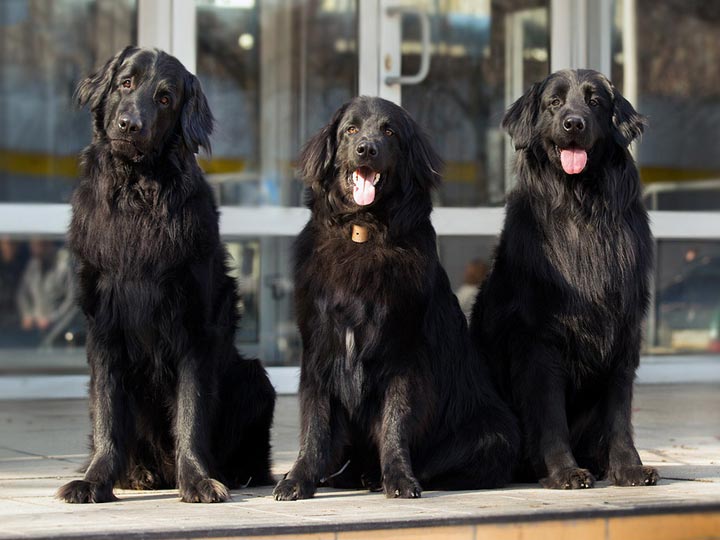
- Black – The coat is uniformly black and shiny. White spots on the chest and individual light hairs on the tip of the tail or toes are permitted.
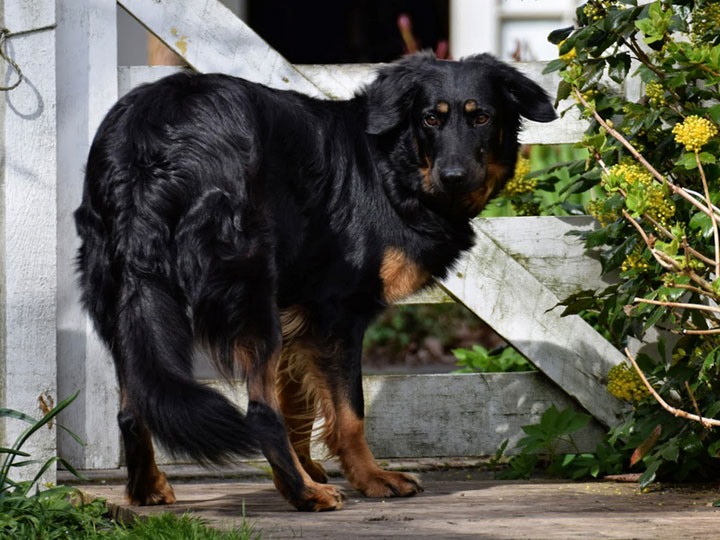
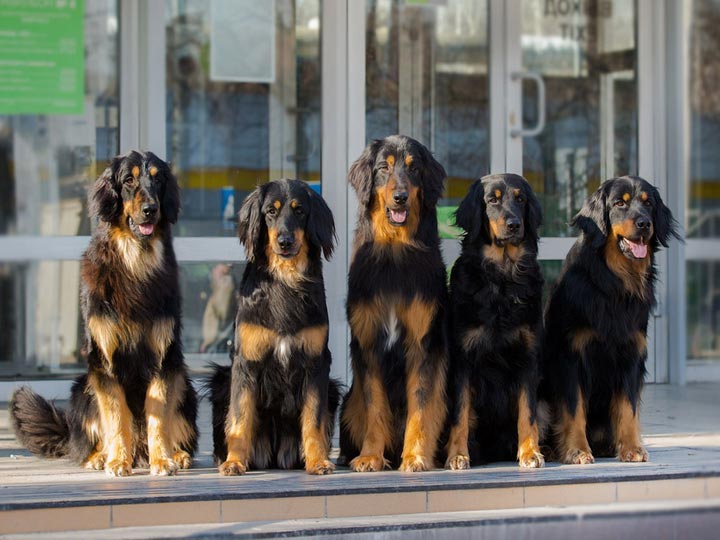
- Black and tan – the base color is black, with scattered fawn-colored markings. Markings are located on the head (the pattern begins just below the bridge of the nose, curves around the lips, and descends toward the throat). Point markings should be above the eyes, on the forelegs in the form of a wide stripe, on the hind legs a wide stripe below the hock and a thin one above it, all the way to the belly. Markings are also present at the base of the tail and on the chest.
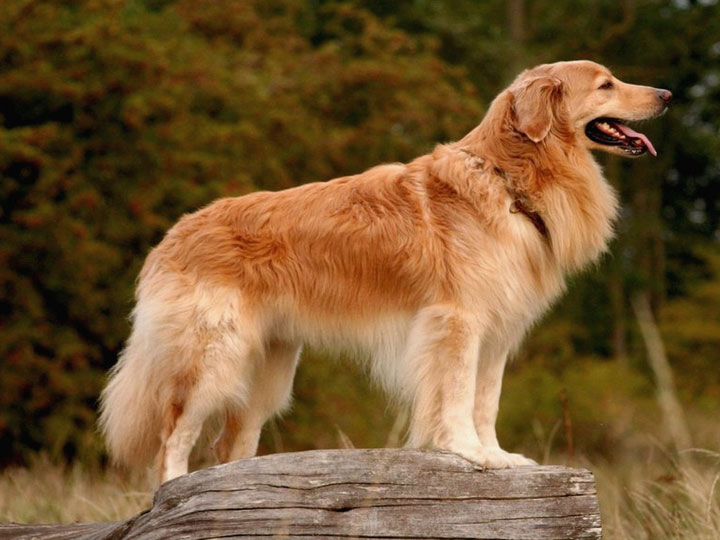
- Fawn - The coat is shiny and fawn-colored, the richer the better. It becomes lighter toward the belly and paws than on the back. Individual white spots on the chest, as well as white hairs on the toes and tip of the tail, are permitted. Fawn-colored Hovawarts are often confused with golden retriever because of the external resemblance.
Character
The Hovawart is a balanced, calm dog with a moderately excitable temperament, but by no means phlegmatic. Self-confident, resilient, and alert, it has a strong protective instinct. The Hovawart has a strong nervous system, allowing it to ignore trivial matters and avoid disturbing the family with idle barking. Incidentally, its voice is very loud and resonant.
The Hovawart is active, agile, and alert, with a very spirited work ethic. While calm at home, on walks, it's a playful, playful companion who loves to tumble in the grass, jump, and frolic like a puppy. The Hovawart demonstrates all the virtues of a companion when living in close contact with its owner. When necessary, it will defend its owner and their property without a moment's hesitation. When it comes to protection, it is fearless, bold, and determined. Walking with a large group requires the Hovawart to be especially responsible and regularly "count" all participants to ensure no one gets lost.
Their character is characterized by independence and self-reliance. Even well-trained dogs remain prone to making independent decisions. The Hovawart, as its owners affectionately call it, is strongly attached to all family members but typically obeys only one, whom it considers the leader. It's worth remembering that the Hovawart is often easily offended, and if it feels its owner has overstepped, it can become withdrawn.
The Hovawart is a natural leader with an innate territorial instinct. In the company of other dogs, it will always strive to take the lead, so it gets along well with breeds that don't aspire to be pack leaders. With dogs that are prone to dominance, conflicts will constantly arise, especially between males. The Hovawart adapts well to new environments, making it easy to travel with. It's undemanding on the road and quickly settles into a new environment.
Who are these dogs suitable for?
The Hovawart is an excellent choice for dog owners who:
- Able to devote enough time and attention to your pet;
- They are planning to get a reliable guard for their home and family;
- They love long walks and an active lifestyle with a dog;
- Ready to regularly engage in training and development of the working qualities of the Hovawart;
- They value the impressive appearance and noble character of the breed;
- They want to see in their pet an emotionally responsive and sensitive companion;
- Raising teenage children;
- Looking for a permanent companion for hiking, traveling and outdoor recreation;
- Do sports, running or cycling;
- Already have cats or other dogs;
- They live in a country house or a spacious apartment;
- Need a guide dog or assistant;
- They are engaged in search and rescue activities.
The Hovawart is not suitable for owners who:
- They live in small housing and cannot provide the dog with enough space;
- They do not have the opportunity for long walks and regular trips out of town;
They are looking for a decorative or “sofa” breed; - You are not ready to devote time to training and raising your pet.
Education and training
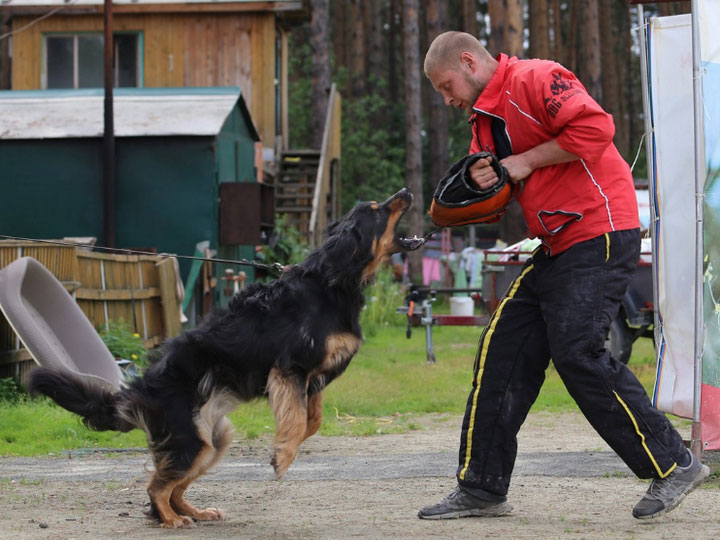
It's worth noting that the Hovawart matures relatively late. An adult dog may retain puppy-like behavioral traits. Training should be patient and gentle; forceful methods can cause the pet to become withdrawn, making it untrainable. Hovawarts often demonstrate guard dog qualities at an early age and often don't require special training for guard dog duties.
The Hovawart obeys commands without losing his own dignity and always remains a friend, not a servant.
The Hovawart has an innate sense of discipline, exceptional intelligence, and is highly trainable. These qualities make the dog very easy to work with. A Hovawart doesn't aim to dominate the family, but if it sees its owner failing to fulfill its pack leadership role, it will strive to assume that position and then decide how to behave in various situations.
Hovawarts intended for breeding undergo working trials, are tested for guard qualities and shooting ability.
Features of maintenance and care
The Hovawart is a strong, hardy dog that will work in any environment. The breed is best suited to outdoor living, but not on a leash. Furthermore, there should be no in-between situations; the dog lives either indoors or outdoors. A crate is optional, but the dog should definitely not spend most of its free time there. Hovawarts are intelligent enough and not so ambitious as to jump fences or quarrel with neighbors' dogs. Recently, Hovawarts have become increasingly common in apartments, but this will require a significant amount of time spent walking them.
Hovawarts require ample exercise. Even if the dog lives in a yard, it should be taken outside the protected area regularly. Regular walks should be interspersed with games and exercise. Hovawarts love water and will happily jump into any body of water. However, it's important to teach the dog from puppyhood that not every person swimming needs rescuing.
Care
The Hovawart's coat is medium-length and tangle-free, but it sheds quite heavily, especially in the off-season. Brushing the dog weekly and bathing it regularly will ensure it always looks well-groomed. A deshedding unit with a working surface of approximately 10 cm is an excellent solution for Hovawart owners.
Health and life expectancy
Hovawarts enjoy excellent health; sick dogs of this breed are rare, thanks to strict breeding practices. Experts consider the Hovawart a model for fighting hereditary diseases. Breeders have succeeded in almost completely eliminating hypothyroidism, hip dysplasia, and heart failure. Nevertheless, specimens used for breeding are required to have hip X-rays to confirm the absence of pathological conditions.
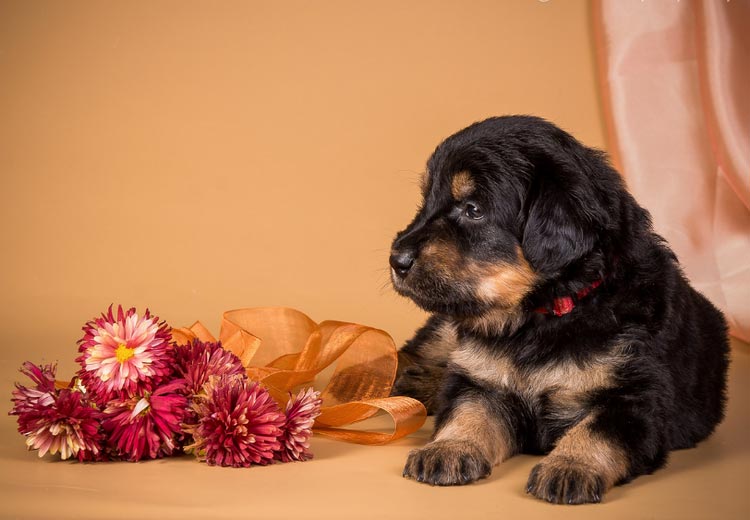
Good genetics and a strong immune system don't eliminate the need for proper health care. Preventative treatments for internal and external parasites, as well as vaccinations against major infectious diseases, are mandatory. Their lifespan is 12-13 years.
Choosing a puppy and price
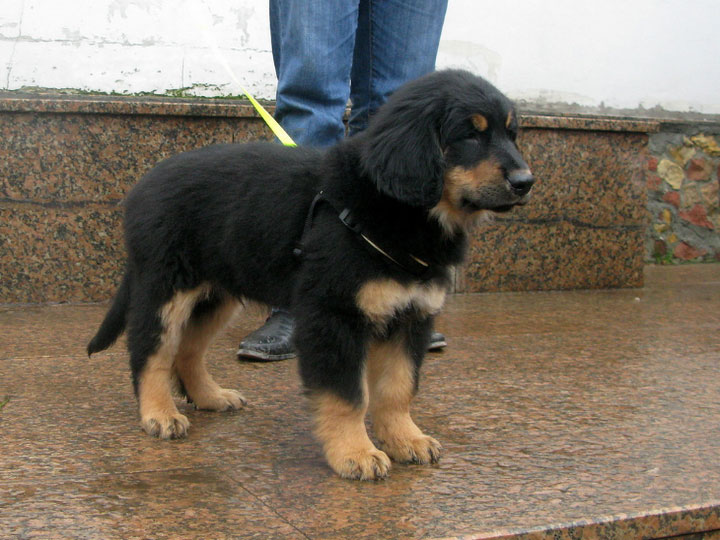
First of all, it's worth noting that this is a relatively rare breed. Puppies often need to be reserved in advance. Purchasing a puppy from someone without papers is out of the question. Given the breed's small population, it's highly likely that owners who breed their animals "for health" or for profit don't consider the dogs' ancestry and may breed offspring from close relatives, which can lead to health problems. There's a Hovawart Club in Russia, and it's best to search for breeders and puppies through it.
It's worth noting that males and females differ greatly in temperament. Females are easier to train and bond with their owners more quickly. Males are a bit more challenging to train, but well-trained, they are more disciplined.
As for price, it's roughly the same in Russia and abroad. Pet-class puppies in kennels cost 20,000-25,000 rubles. Hovawart puppies with potential for show or breeding careers start at 30,000 rubles.
Photos
The gallery contains photos of Hovawart dogs.
Read also:
- Kurzhaar (German Shorthaired Pointer) is a dog breed
- Schipperke (Schipperke) is a dog breed
- Chodska dog (Czech herding dog, Bohemian Shepherd)


Add a comment