
Croatian Shepherd Dog
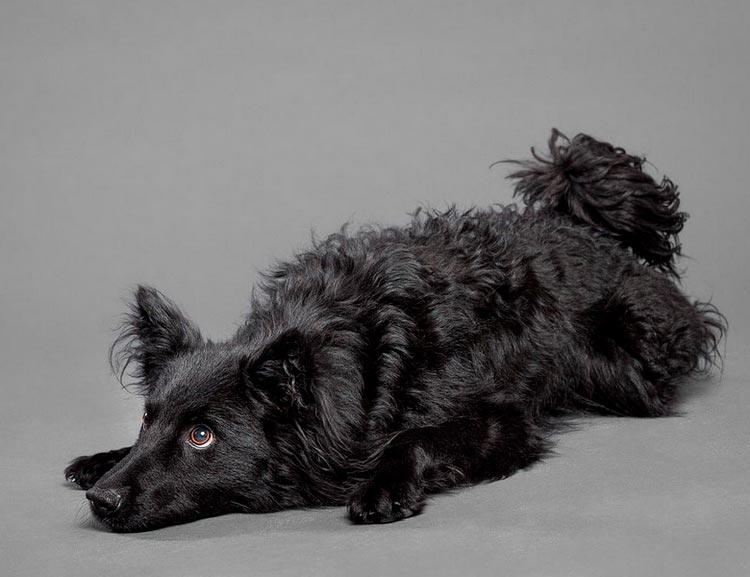
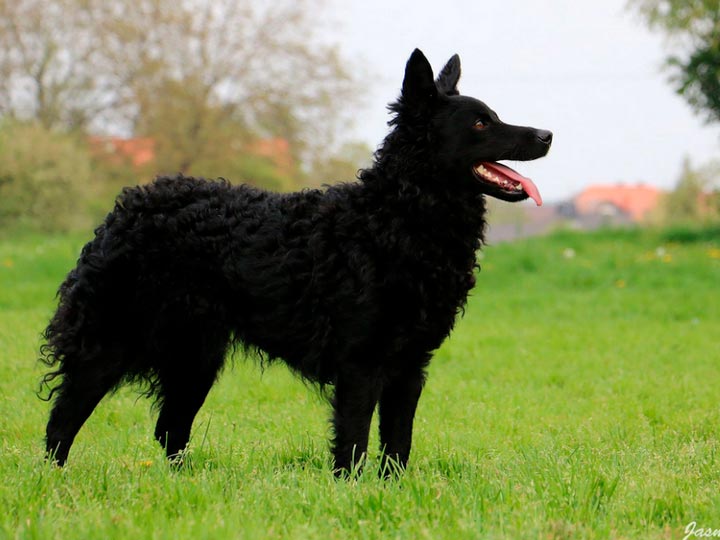
The Croatian Shepherd is a working breed of herding and guard dog. Popular in their native Croatia, but rare outside the country, Croatian Shepherds are smaller than medium-sized, with a black, curly coat that is short and straight only on the head and legs. These dogs are intelligent, attentive, obedient, and easy to train, but quite temperamental, and are not the best choice for a beginner.
Content
History of origin
Croatian Shepherds have been bred in Croatia for over six centuries, primarily in the Slavonia region. Virtually nothing is known about the ancestors of these herding dogs. The breed developed largely spontaneously. It was highly prized for its well-developed herding instincts, trainability, and ease of maintenance. The Croatian Shepherd's appearance has remained virtually unchanged since the 14th century. The chronicle of Bishop Petar Horvat (1374) describes a dog 45 cm tall, black, with curly hair of medium length on the body and short on the muzzle, which was brought to the country around the 7th century.
Targeted breeding of the Croatian Shepherd Dog began in 1935 by Stjepan Romić in Djakovo. In 1969, the breed was officially recognized by the FCI.
Appearance
The Croatian Shepherd is a dog of slightly smaller than average height, relatively light, and somewhat elongated in build. Gender is not clearly defined.
- Height at withers: 40-50 cm,
- Weight: 13-20 kg.
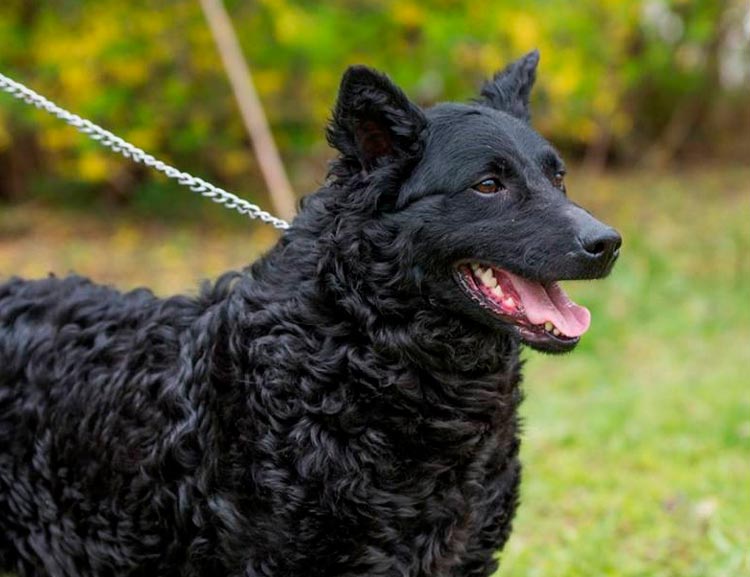
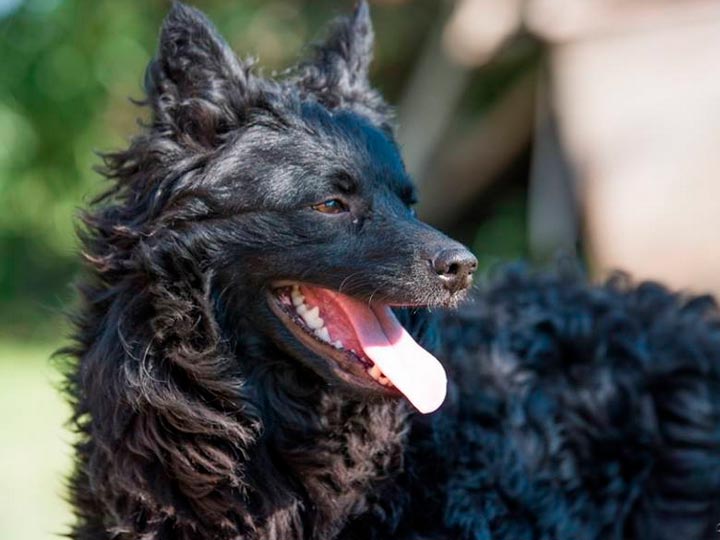
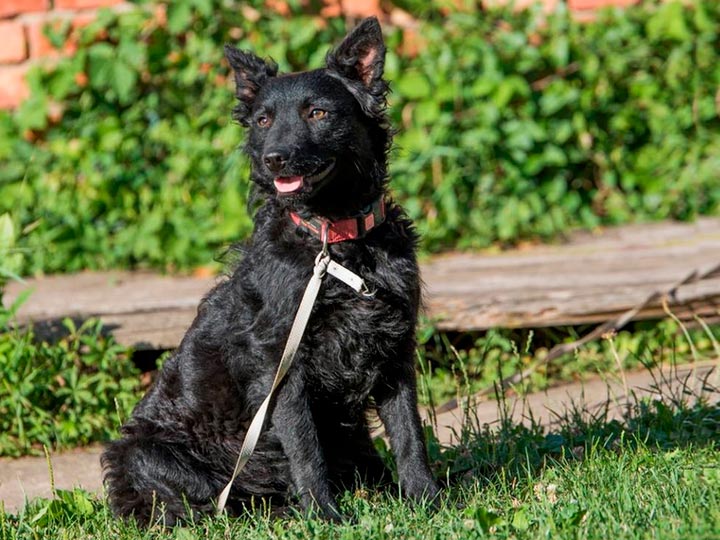
The head is wedge-shaped. The skull tapers toward the muzzle. The stop is defined. The muzzle is small, thin, and conical. The bridge of the nose is straight. The nose leather is black. The teeth are well developed, with a scissor bite; a level bite is acceptable. The lips are thin. The eyes are almond-shaped, medium in size, black or brown, and set straight. The ears are triangular, erect, set high, and of medium length. The neck is set at an angle to the horizontal and is moderately long.
The body is moderately elongated. The back is short. The loin is short. The croup is of medium length, moderately sloping. The chest is of medium length, broad, and deep. The belly is tucked up. The forelimbs are straight and parallel, the hindquarters have strong thighs and pronounced angulation. The tail is set high and carried low.
Sometimes Croatian Shepherds are born without a tail, and it can also be docked to 4 cm in length.
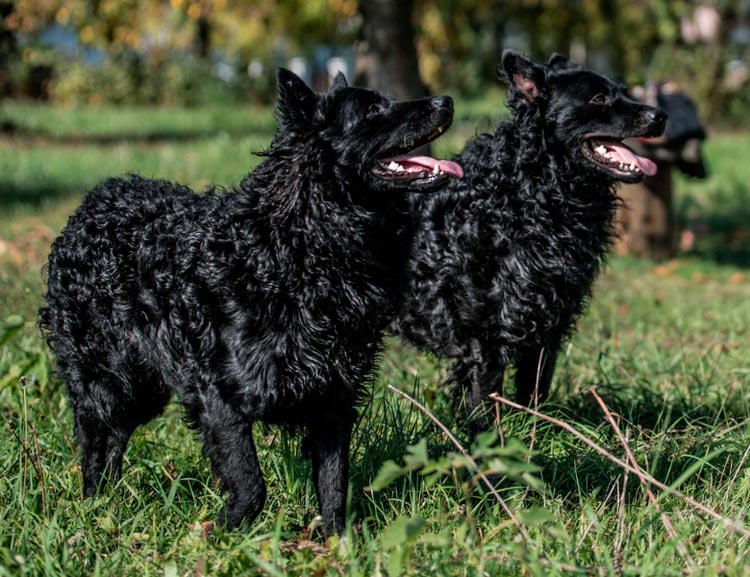
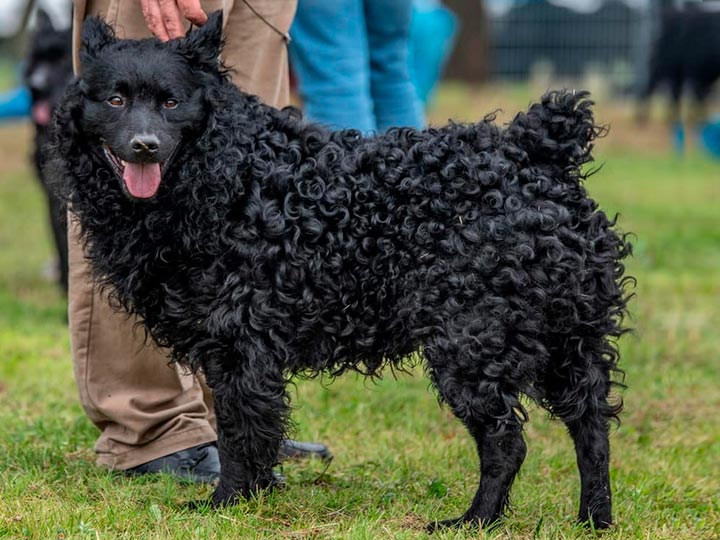
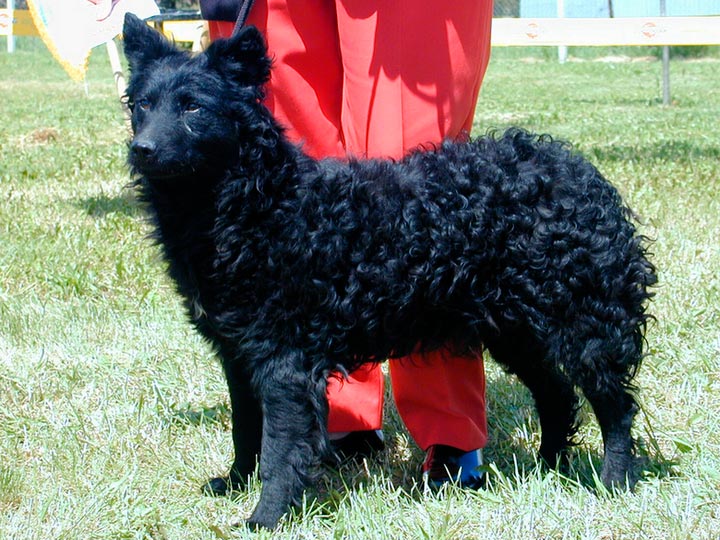
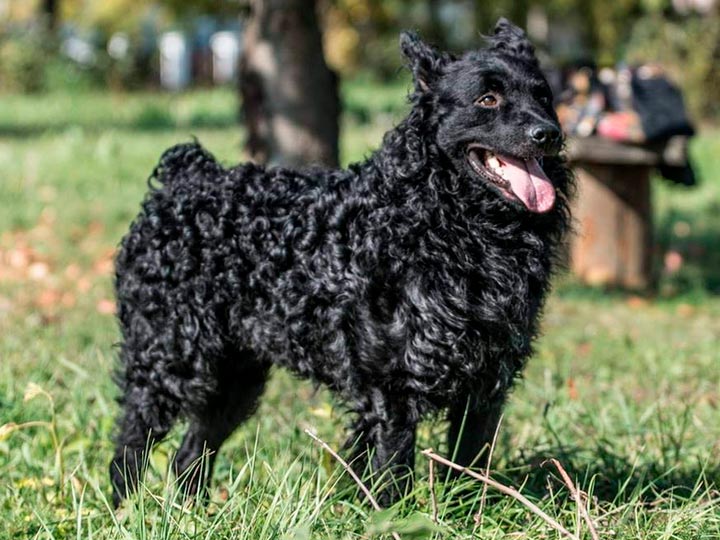
The back hair is 7-14 cm long. The coat is soft, wavy or curly, and not matted. The top of the head, muzzle, outer ears, and front of the legs are covered with short, straight hair. The undercoat is dense. The color is black. Small white markings on the paws are allowed, but undesirable on the chest, throat, and head.
The difference between the Croatian Shepherd and the Mudi
The Croatian Shepherd is very similar to the Hungarian Shepherd. moody. It can be almost impossible to distinguish between these two breeds in photographs.Nevertheless, they do have distinctive characteristics. The Croatian Shepherd is a relatively ancient breed, which has remained virtually unchanged over several centuries of existence. Mudis were developed at the turn of the 18th and 19th centuries by crossing various Hungarian and German herding dogs. It's likely that the descendants of both originated in Croatia.
Croatian Shepherds are somewhat elongated in size, while Mudis are almost square. The coat length on the back of Hungarian Shepherds typically does not exceed 10 cm, while that of Croatian Shepherds is about 14 cm. Mudi colors vary widely, and eye color can vary depending on the color. Croatian Shepherds are exclusively black, with dark brown eyes.
Character and behavior
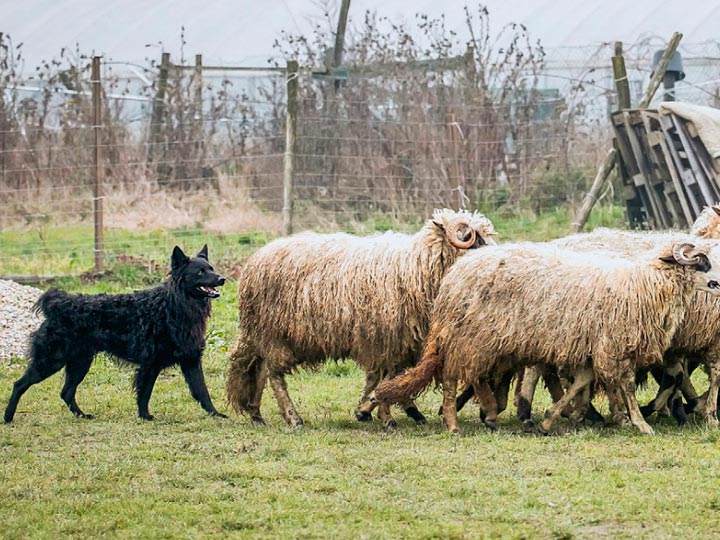
The Croatian Shepherd is a hard-working, energetic, and intelligent dog with a strong need for companionship. It makes an excellent watchdog, but is not aggressive. Always enthusiastic and curious, it loves to run and be independent. It gets along well with children. It is best suited for a family with older children, who can be playmates. Its herding instinct is innate and manifests itself at an early age, to varying degrees depending on its lineage (working or show). The Croatian Shepherd is capable of working with any type of livestock.
The Croatian Shepherd should be considered a working dog, constantly following its owner and expecting specific tasks from them. It can only be a companion to someone who can offer it an alternative to herding duties.
This small dog possesses courage, perseverance, flexibility, and extraordinary loyalty. It is very caring towards all its charges. It gets along well with other dogs and animals. When necessary, it can be patient and quickly adapts to changing conditions.
For the Croatian Shepherd to fully realize its potential and positive qualities, it requires early, comprehensive socialization, proper upbringing, and serious training.
Education and training
Requires firm and consistent training. She's quite willful and temperamental. She's prone to excessive barking and will, if possible, be selective in following commands. Training her to obey requires considerable time, patience, and establishing a close bond.
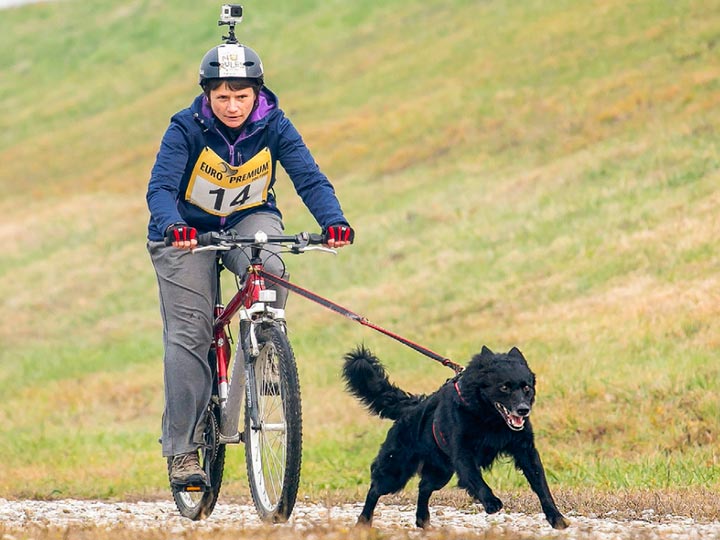
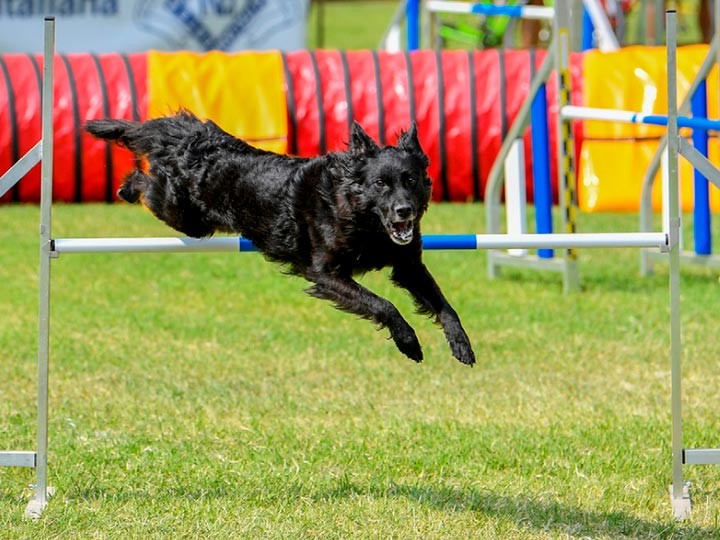
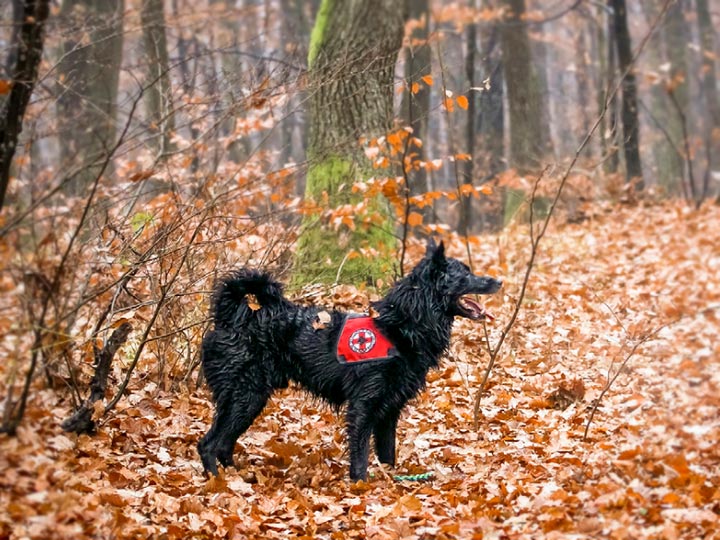
The Croatian Shepherd can be not only a friend and companion, but also a shepherd, an agility athlete, bikejoring, rally, frisbee, suitable for search and rescue services, protection and other work.
Content Features
The Croatian Shepherd is hardy and frugal in its diet. It adapts well to any living conditions. It is suitable for year-round outdoor living and apartment living. The Croatian Shepherd prefers to live on a farm or in a private home with a farmstead, where there is plenty of work, room to roam, and an owner who is always nearby. Croatian Shepherds do not tolerate prolonged loneliness and do not like to be confined in a pen or tied up.
A bored Croatian Shepherd may become unruly, prone to excessive barking, or have other behavioral problems.
They require a good amount of exercise, preferably varied. They should also be given time for intellectual pursuits. The Croatian Shepherd is not suitable for people who can walk the dog for less than 2-3 hours a day.
Care
Croatian Shepherds don't require any special grooming. They are brushed periodically and bathed as needed. Their ears are cleaned if they get dirty, and their nails are trimmed.
Health and life expectancy
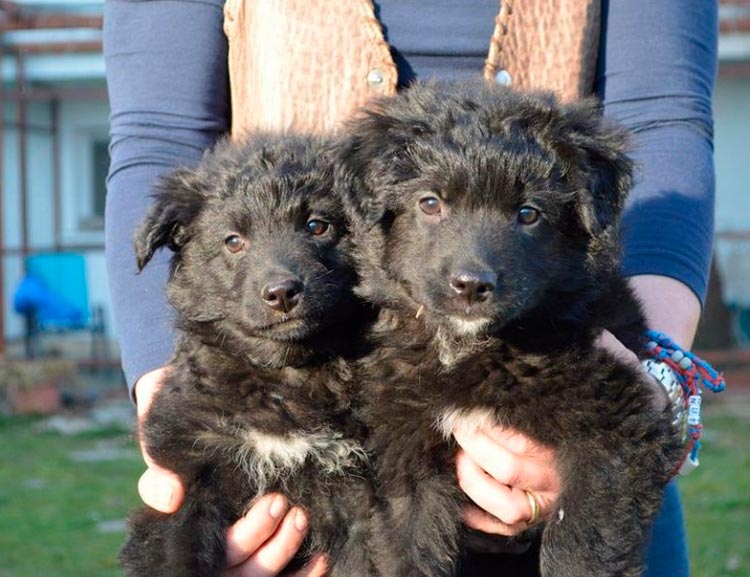
Croatian Shepherds are healthy, strong, and hardy dogs. There are no known health problems associated with the breed. Their life expectancy is 14-16 years.
Where to buy a Croatian Shepherd puppy
There is no information on breeders in Russia. The online Croatian Shepherd pedigree database lists contacts for over 200 breeders in Croatia. There are also breeders in several other European countries and the United States.
Price
In Croatia, a good puppy from a breeder costs around 1,000 euros. There are many online ads offering Croatian Shepherd puppies for sale at much lower prices, but there are no guarantees of breed, temperament, or, especially, health.
Photos and videos
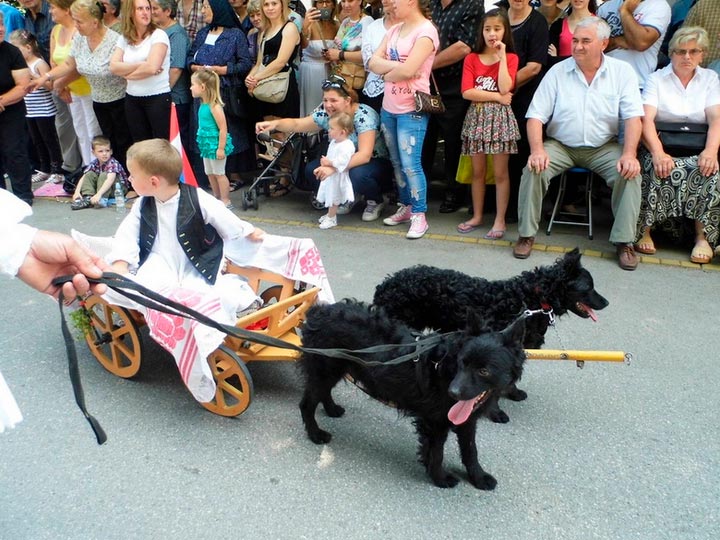
The photo in the gallery shows representatives of the Croatian Shepherd breed.
Video about the breed
A short film about the 1st Croatian Shepherd World Championship, which took place in Zagreb, Croatia, in 2016. Dogs competed in 10 disciplines: herding, agility, bikejoring, rally, frisbee, search and rescue, obedience, tracking, protection, and a specialty show.
Read also:


Add a comment