
Greyhound
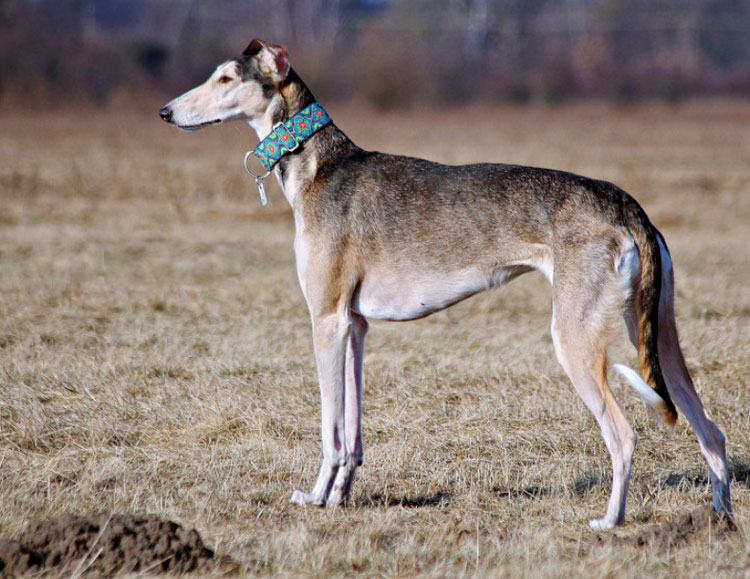
The Hortaya Borzaya is a fairly large, sturdy dog with a short coat and a typical sighthound build. It has excellent working qualities and is suitable for hunting various game species, including wolves. Today, it is very rare.
Content
History of origin
The Hortaya Borzaya traces its origins to ancient Asian lop-eared sighthounds, and therefore belongs to the group of oriental sighthounds. It is one of the oldest hunting breeds bred in southern Russia.
In the 17th century, "Khortya" was a generic term for a sighthound-like dog. The term "Khorty" was first applied to smooth-haired sighthounds when describing dogs in the kennels of Empress Anna Ioannovna. The Hortaya Borzaya was described as a distinct breed in 1859 by P.M. Machevarianov. The breed's development was significantly influenced by the Gorskaya and Crimean sighthounds, the Russian Psovaya, and, according to some sources, some European sighthounds. The first official standard was adopted in the USSR in 1951.
Purpose
The Greyhound is used for hunting foxes, hares, small ungulates, and very rarely wolves without weapons. The dog is practically universal, very agile, hardy, and has a high catch rate. Nowadays, greyhounds also participate in sporting competitions, such as racing. coursing.
Appearance
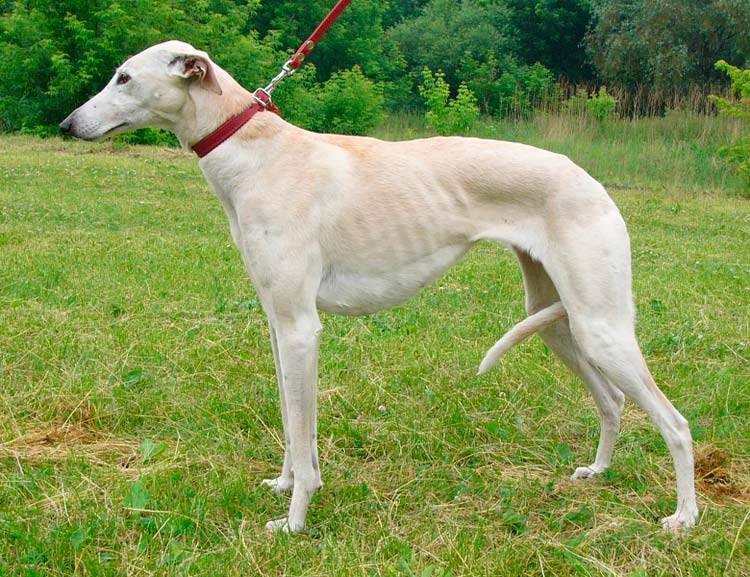
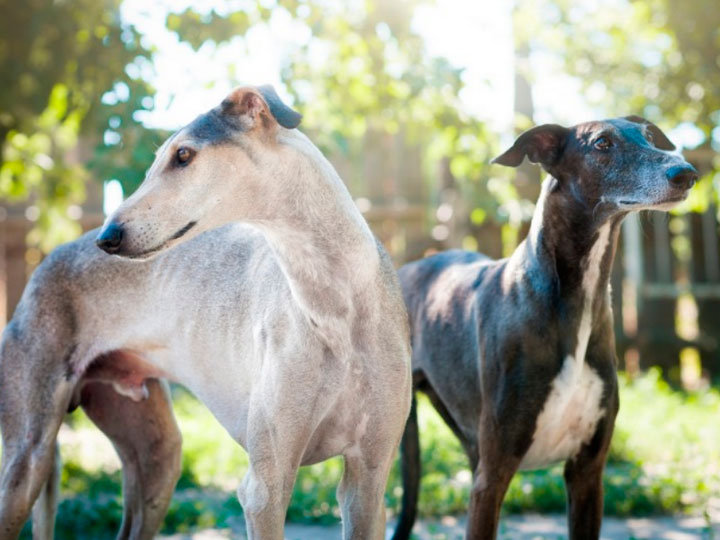
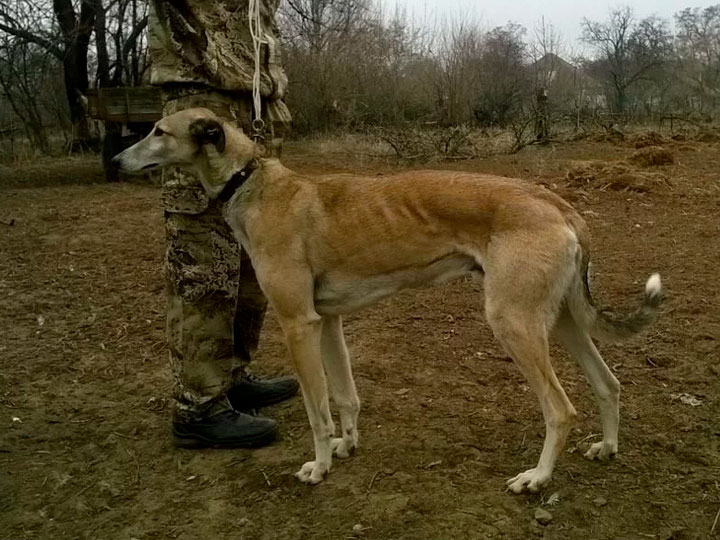
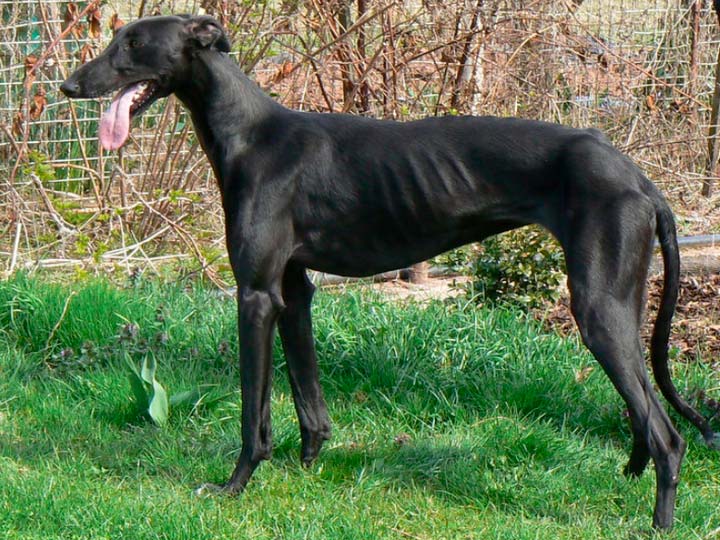
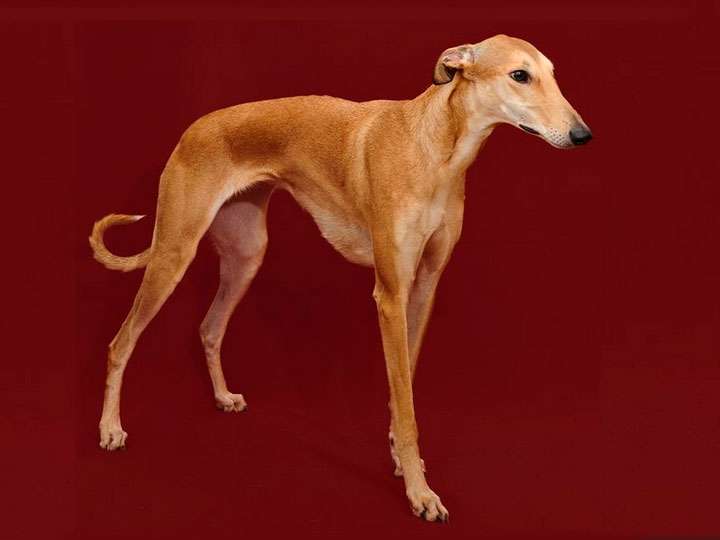
The Hortaya Borzaya is a large or above-medium sized dog. The body is slightly elongated or square. The build is lean, with defined, dry muscles. The skeleton is strong, with flattened limbs. Sexual dimorphism is well-defined.
- Height at withers for males: 65-75 cm;
- The height at the withers of bitches is 61-71 cm.
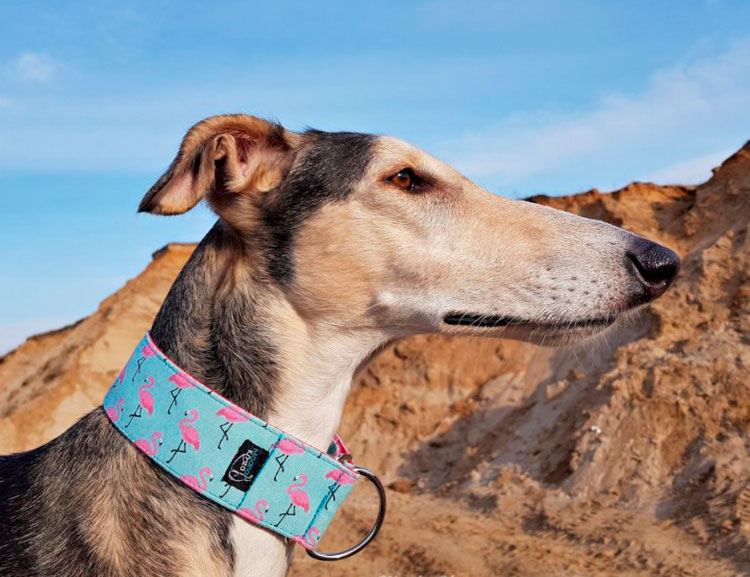
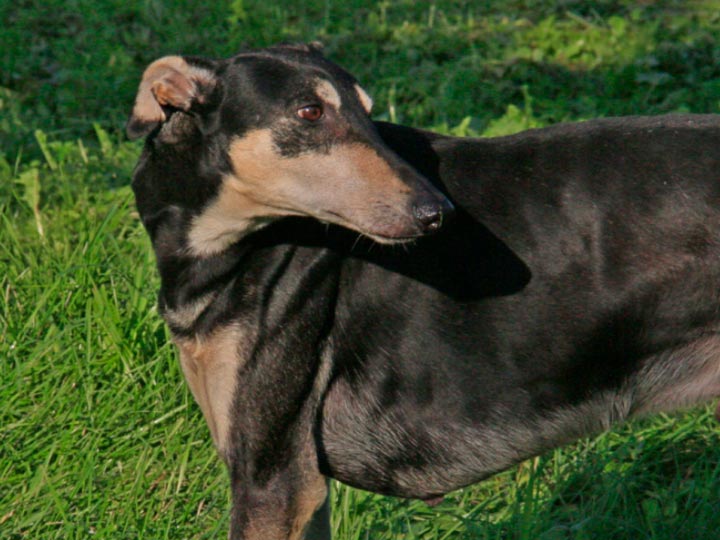
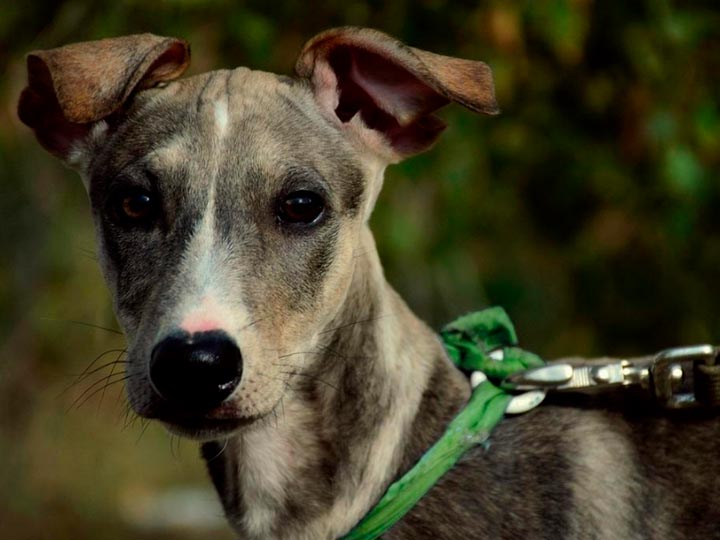
The head is elongated, dry, and wedge-shaped. The skull is moderately broad. The stop is smooth. The muzzle is slightly compressed at the sides; a slight aquiline nose is permitted. The nose is black, protruding beyond the lower jaw. The lips are dry and thin. The jaws are strong. The dentition is complete. The bite is scissor-like. The eyes are large, oval, with slanted eyelids, and are dark in color. The eyelids are dark and dry. The ears are medium in size, tucked along the neck, set level with the outer corner of the eye and slightly lower. In many dogs, when excited, the ears are raised on cartilage, and their tips are directed to the sides. The neck is long, oval in cross-section, set at an angle of 35-40 degrees to the horizontal.
The length of the body is approximately equal to or slightly exceeds the height. The height at the sacrum is slightly less than or equal to the height at the withers. The back is broad and straight. The loin is arched, wide, and fairly long. The croup is long, slightly sloping, with clearly visible hip bones (the width between them is at least 7 cm). The tail is sickle- or saber-shaped, may be curled at the end, long, carried between the legs, and set low. The belly is strongly tucked up. The fore and hind legs are dry, with strong bones and prominent muscles, straight and parallel. The paws are oval, with well-knit toes. The claws point toward the ground.
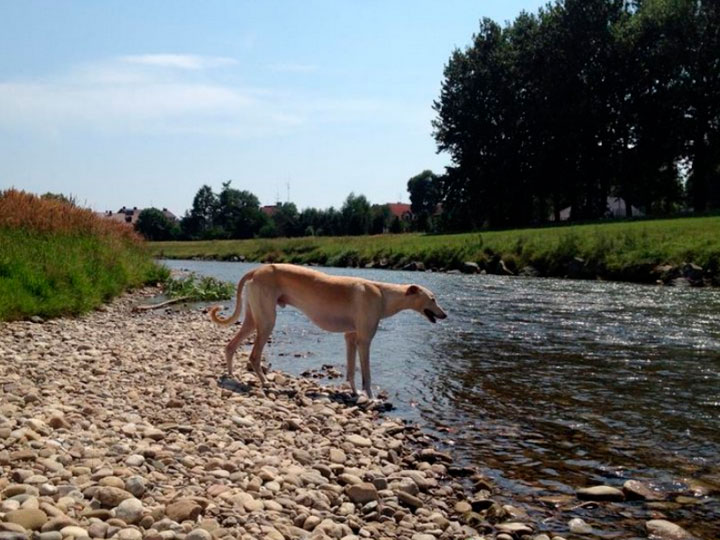
The skin is elastic and thin, with no visible subcutaneous tissue. The coat is double. The topcoat is straight, up to 2.5 cm long. There may be some feathering on the back of the thighs and underside of the tail. In winter, the undercoat is slightly developed and unnoticeable in summer. Colors vary:
- Fawn of various shades;
- Fawn with a dark tint;
- Red;
- Red with black coating;
- Grey;
- Gray and tan;
- Black;
- Black and tan;
- Black in tan;
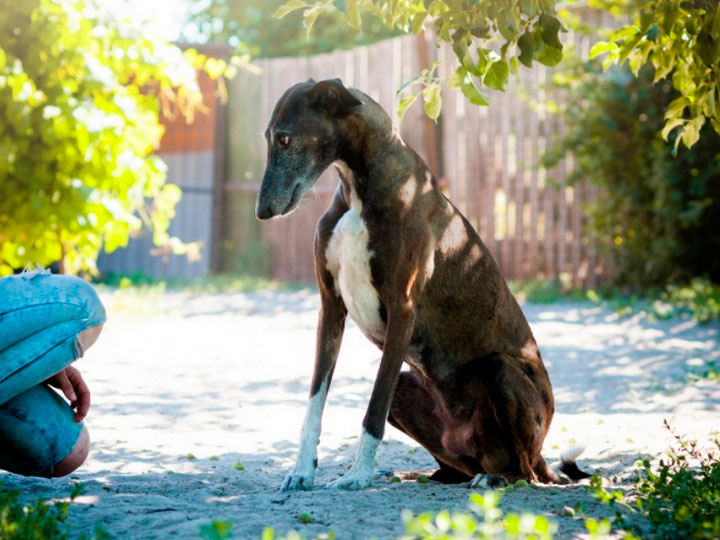
- Fawn, red or grey with dark spots that go in stripes.
A dark or light mask on the face is permitted. All colors can be solid or piebald (with white markings).
Character and behavior
The Greyhound has a calm disposition. Adult dogs are generally choleric, while young ones are more temperamental. Their attitude toward people and pets is neutral to friendly, but only with proper training and provided the dog has grown up with livestock. Some Greyhounds remain incorrigible cattle dogs. In everyday life, Greyhounds are quiet and unobtrusive, very calm, and even shy. They will not bother anyone, but will gladly respond to any signs of attention.
The borzoi's behavior and personality are determined by the specific nature of its work. The Hortaya is independent and self-sufficient. It bonds with its owner and family members, but does not consider it necessary to play with children or try to please people in any way. Territoriality is weak. The borzoi will not guard the yard and may wander off instinctively. These dogs have a very strong visual response.
The common belief that sighthounds are somewhat "dim-witted" is generally untrue. In fact, they are quite intelligent dogs, comparable in intelligence to many gundogs, but they are more independent and less sociable.
Content Features
The Greyhound remains a working breed, used for hunting, and working qualities are paramount when selecting breeding stock. The range of climates in which the dog can live and hunt includes hot southern regions and relatively cold forest-steppe and wooded areas. The dog is not adapted to life and work in severe frosts, so it has not thrived in regions north of southern Russia.
Working Greyhounds are not suited for indoor living. Outdoor life allows the dog to acclimate to any weather and develop the necessary muscles. In the yard, dogs are usually kept in an outbuilding or insulated shed, less often in a kennel. Within the four walls of a house, a Greyhound quickly weakens and is only fit for hunting after extensive training. Furthermore, working dogs require walks of approximately 10 km, daily if possible. A Greyhound should cover half the distance in a single bound.
Care
The Greyhound doesn't require any special grooming. Occasional brushing and bathing as needed are sufficient. Regular inspections, ear cleaning, and nail maintenance are essential.
Health and life expectancy
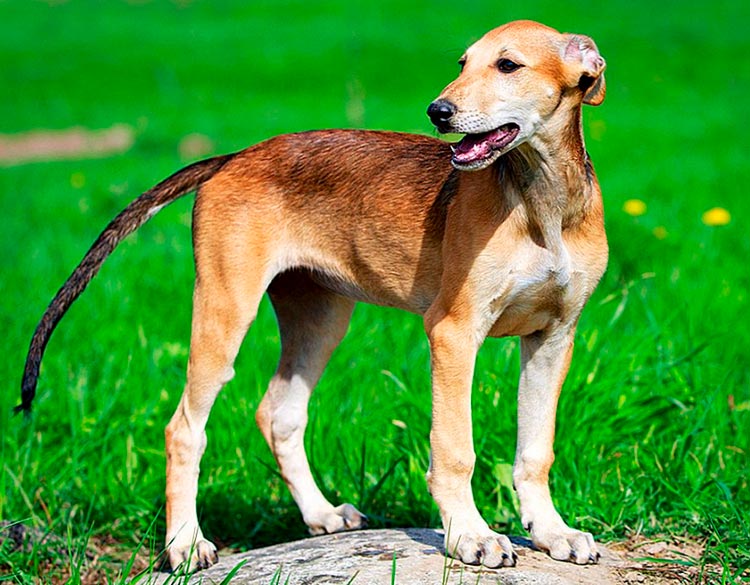
Greyhounds are generally healthy, robust dogs that rarely get sick when kept in good conditions and fed a proper diet. Important preventative measures include regular deworming and timely vaccinations. The most common ailments suffered by greyhounds are injuries and wounds sustained while hunting. Life expectancy is 11-12 years.
Where to buy a Greyhound puppy
In 2002, the National Hortaya Borzaya Breed Club was established and registered with the Russian Kennel Federation (RKF). The club's goals include uniting breeders and recognizing the breed with the FCI. At the end of the 20th century, there were still several thousand Hortaya Borzayas, but in the early 2000s, their numbers plummeted. The largest population of Hortaya Borzayas is concentrated in the Kharkiv region, with just over 10 dogs. A few specimens of the breed can be found in other regions of Ukraine and in southern Russia. Those looking to purchase a puppy are best off searching for a breeder at shows, through breed clubs, or through specialized forums.
The Greyhound is bred with working tests in mind. This means that all breeding dogs must not only achieve good scores at shows but also pass field trials.
Price
The price of a Greyhound puppy typically ranges from 20,000 to 35,000 rubles. The price is influenced by geography, demand for puppies, the value of the breeding stock and their working qualities, and other factors.
Photos and videos
Photos of the Hortaya Borzaya breed of dogs can be viewed in the gallery.
Video about the Hortaya Borzaya dog breed
Read also:


Add a comment