
Cholangitis in cats: treatment and symptoms
Cholangitis in cats is an inflammatory disease of the bile ducts that can involve the liver and intestines. This condition is more common in cats than in dogs and is very life-threatening. Therefore, it is important to recognize the symptoms of a developing disease promptly and provide appropriate treatment.
General information
Cholangitis syndrome begins in the bile ducts and can spread to the liver and intestines. Various diseases of these organs can also trigger cholangitis syndrome. In advanced cases, it can be difficult to determine which disease is primary or secondary.
In many cases, cholangitis is accompanied by pancreatitis and inflammatory bowel disease. Therefore, their combination is commonly referred to as a "triad."
Cholangitis can occur as a result of bacterial infection in the bile ducts, be a consequence of parasitic activity, or be of autoimmune origin.
There are three main types:
- neutrophilic (purulent);
- lymphocytic (non-purulent);
- lymphoplasmacytic.
The development of the neutrophilic type is most often promoted by a bacterial infection of the intestines or liver that penetrates the bile ducts. It is often accompanied by inflammation of the pancreas.
The lymphocytic and lymphoplasmacytic types are still under study. They are believed to arise from a malfunction of the body's immune system.
The neutrophilic type is more common in young cats, while the lymphocytic and lymphoplasmacytic types are more common in mature and elderly cats. A hereditary predisposition to cholangitis has been observed in Persian cats.
Clinical picture
Symptoms of cholangitis in cats will depend on the type of pathology. The purulent variety is characterized by an acute onset with a rapid increase in symptoms. The cat will experience vomiting. loss of appetite, bowel movement disorder, jaundice, general lethargy.
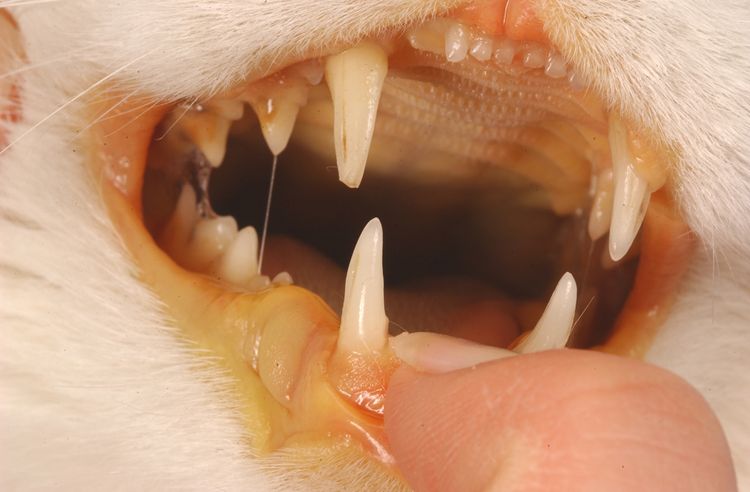
Jaundice in cats manifests itself as discoloration of the skin and mucous membranes. This sign can be seen in areas of the body that are minimally covered with hair (ears, abdomen, groin). Jaundice is also clearly visible on the sclera and mucous membranes of the eyes and mouth: a distinct yellow tint will be noted.
Important! Neutrophilic (purulent) cholangitis progresses rapidly and is particularly dangerous for the animal. Without timely treatment, the disease can be fatal.
The non-suppurative form of the disease is characterized by a sluggish course, slow progression, and chronicity. This condition is most often observed in older cats, and the development of the pathology may not always be immediately apparent. The animal's appetite decreases, frequent vomiting occurs, rapid weight loss is noted, and jaundice gradually develops.
Important! Chronic disease can lead to complications such as abdominal hydrops.
Diagnostics
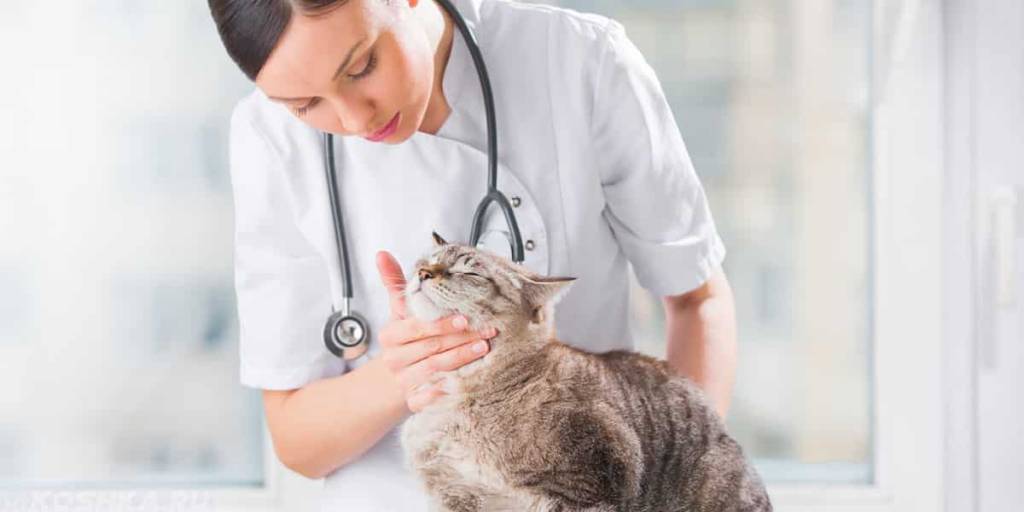
If the first signs of the disease appear (vomiting, loss of appetite, apathy, jaundice), you must immediately contact a veterinarian.
Diagnostic methods include physical examination, laboratory testing, and instrumental examination. Based on clinical data, the veterinarian conducts a differential diagnosis with the following pathological conditions:
- poisoning with toxic and medicinal substances with liver damage;
- infectious peritonitis;
- hepatic lipidosis;
- liver trematodiasis;
- liver neoplasms.
To make a diagnosis, the cat may be prescribed the following examinations:
- general and biochemical blood test;
- urine analysis;
- X-ray examination of the abdominal cavity;
- Ultrasound;
- percutaneous liver biopsy;
- laparoscopy.
Blood tests reveal elevated bilirubin levels, anemia, leukocytosis, and elevated serum bile acid levels. Ultrasound and X-rays reveal characteristic liver enlargement, bile duct obstruction, and bile stasis.
Laparoscopy allows a veterinarian to thoroughly examine the liver, bile ducts, and gallbladder, as well as obtain biological samples for biopsy. However, despite the high information yield of this method, it is rarely performed.
A percutaneous liver biopsy is crucial for establishing a correct diagnosis. The procedure is performed after the animal's condition has stabilized.
Treatment
Treatment for cholangitis in cats involves medication. If bile duct obstruction occurs, surgical intervention is performed. Emergency surgery is performed if signs of peritonitis appear.
Antibiotics are the most important medication. They are prescribed for the treatment of any type of cholangitis. Amoxicillin (for anaerobic bacteria) and aminoglycosides (for anaerobic infections) are most commonly used. Tetracycline, which has hepatotoxic properties, is contraindicated.
In the treatment of lymphocytic and lymphoplasmacytic types, immunomodulators (prednisolone) are used.
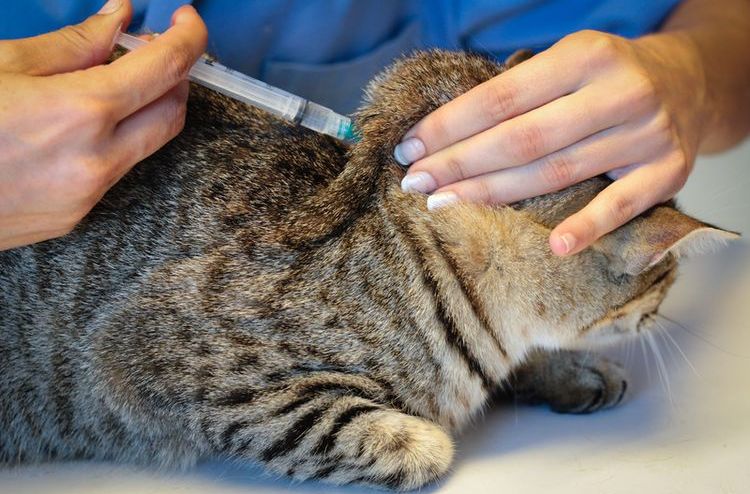
Vitamin K is prescribed in case of increased blood clotting time.
To support liver function, hepatoprotectors can be used. They prevent the destruction of cellular structures and stimulate their regeneration.
During treatment, it's important to adjust your cat's diet. It's recommended to use a low-protein, easily digestible food (or natural food).
Forecast
Treatment for cholangitis is time-consuming, lasting anywhere from several weeks to several months. During this time, additional tests will be required to monitor the condition.
Repeat blood biochemistry tests with liver enzymes are required every two weeks. If the disease does not resolve within 4-6 weeks, an additional liver biopsy is performed.
This pathology requires stable drug therapy. In case of inadequate or delayed treatment, there is a risk of complications (ascites, hepatic encephalopathy).
The purulent type of pathology, despite its acute course, has a more favorable prognosis. Other types of the disease quite often lead to liver cirrhosis.
Read also:


2 comments
Olga
An immunomodulator (not an immunostimulant), meaning it suppresses excessive activity of the immune system.
Maria
Prednisolone is an immunomodulator??? I thought the opposite!
Add a comment