
Harrier (English Harehound)
The Harrier is a medium-sized hunting dog breed developed in medieval England for hunting hare. Harriers are very hardy and energetic, possess a well-developed sense of smell and a strong stalking instinct, and are sociable and friendly by nature. Modern Harriers have also proven themselves to be excellent companions for active people. Another name for the breed is the English Hare Hound.
Content
History of origin
English hounds have a very long history, but almost nothing is known for certain about the Harrier's origins. The creation of the breed is attributed to Sir Elias de Midhope. According to some sources, he created the first pack of "Peniston" hounds in 1260. It included dogs similar to the modern Harrier. Their breeding is believed to have been based on old southern hounds, crossed with greyhounds and fox terriers. In March 1891, the Master Harrier Association was formed. beagles, which still registers dogs of these breeds. It's worth noting that Harriers weren't always bred in pure form. Often foxhounds "Undersized" beagles and beagles that exceeded the height limit were registered as harriers.
The Harrier is traditionally used for hunting hare, but is also suitable for fox and wild boar.
The Harrier breed was recognized by the International Cynological Federation in 1974. In the UK, most hounds are bred for working qualities, but in America and Canada they have long been positioned as companions.
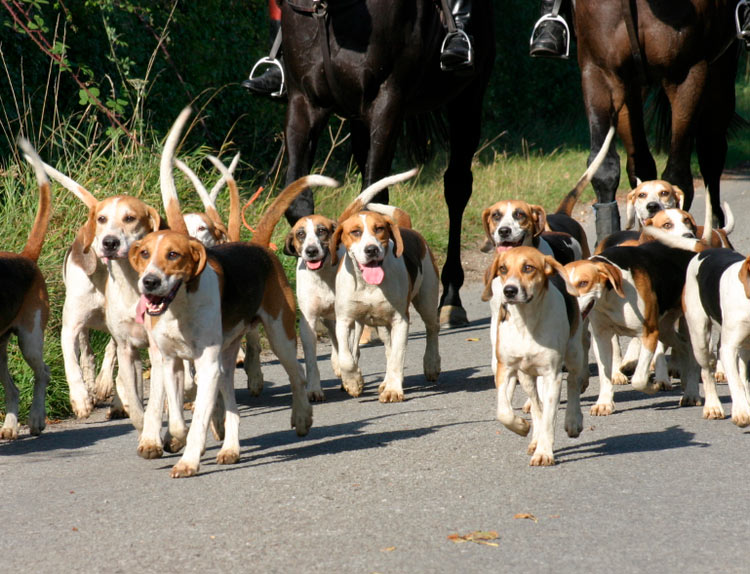
In Great Britain, Australia, Ireland, New Zealand and some other countries there are packs of hounds, including harriers, which are used for humane hunting on horseback (drag hunt).
Appearance
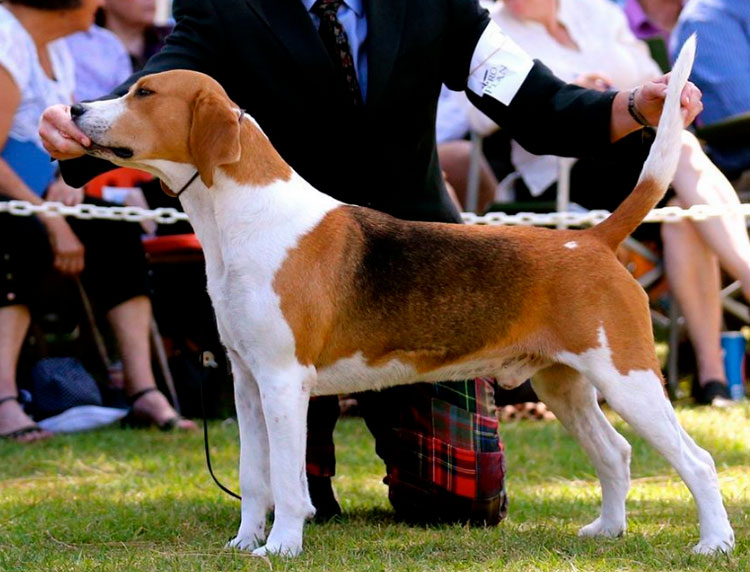
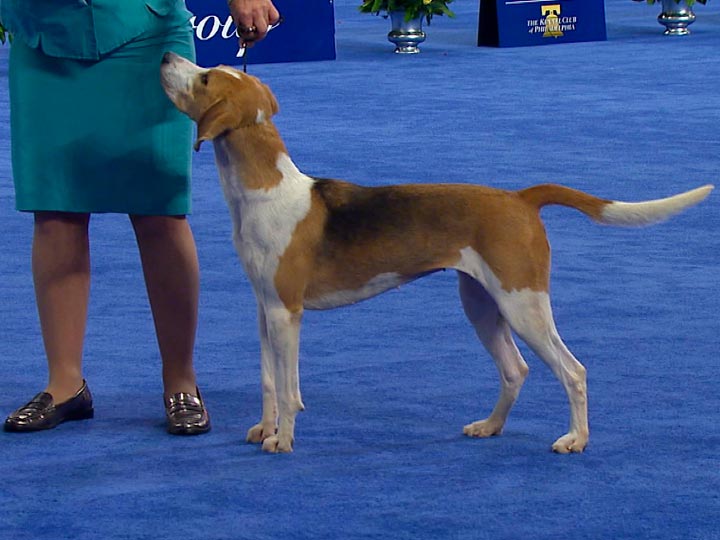
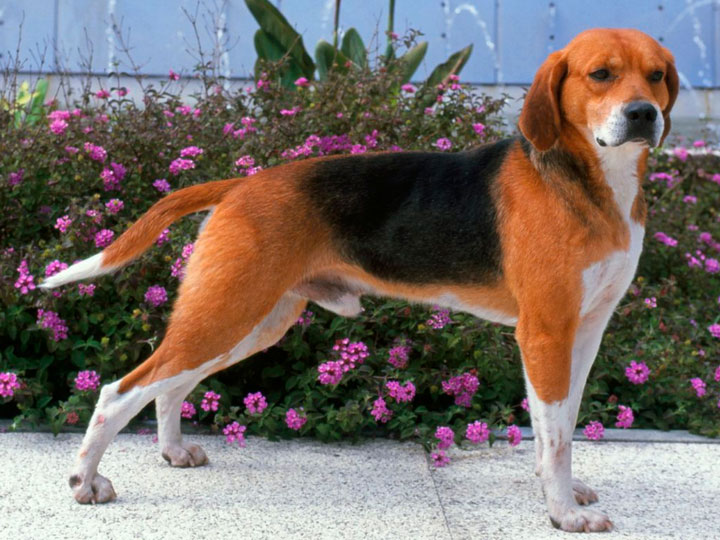
The Harrier is a strong, light-bodied, medium-sized dog. Height at the withers: 48-55 cm. Weight: 20-27 kg.
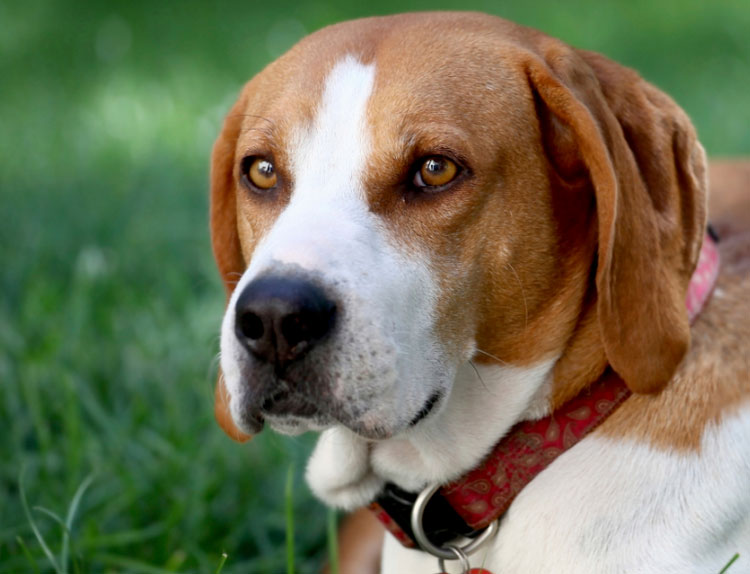
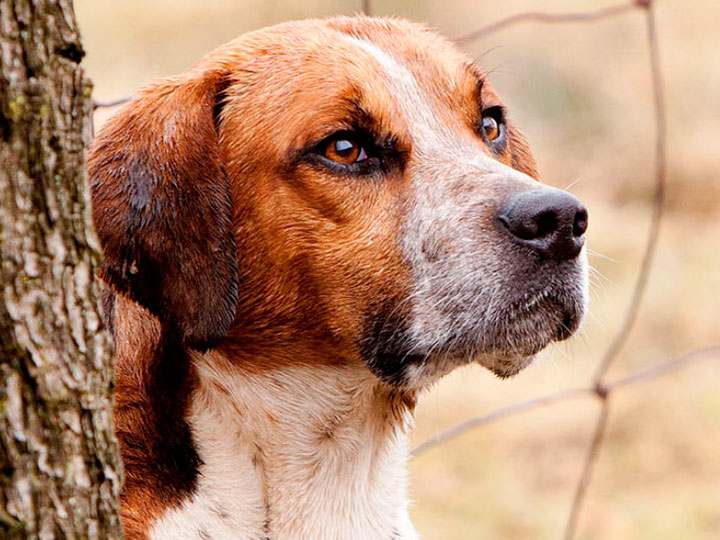
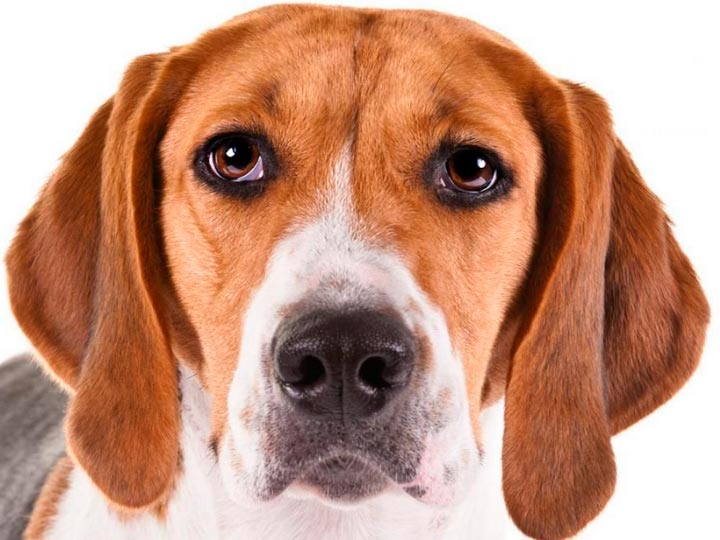
The head is medium-sized and expressive. The skull is flat. The muzzle is pointed and fairly long. The nose is large and black. The lips hang down, covering the lower jaw. The eyes are dark, set fairly deep, oval in shape, and medium in size. The ears are V-shaped, hanging flat, relatively short, and set high.
The neck is flexible, long, and slightly arched at the top. The back is straight. The loin is slightly arched and strong. The chest is deeper than it is wide. The ribs are not too sprung. The underline is slightly tucked up. The tail is set high and carried high, of medium length, covered with coarser, longer hair (a brush). The forelegs are straight and vertical. The hind legs have strong, massive bone structure. The paws are not too rounded, and the toes are not tightly knit.
The Harrier is much slower than the Beagle and not as fast as the English Foxhound, but no less hardy and tenacious.
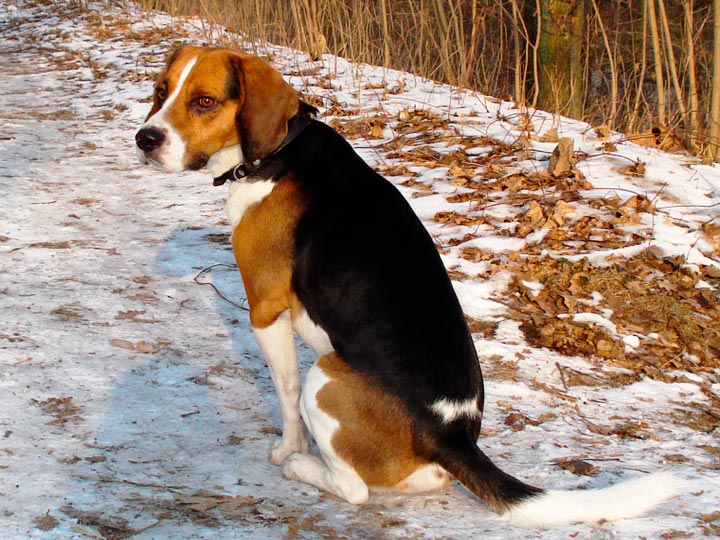
The skin is white with black spots. The coat is close-lying, not too short, and smooth. The base color is white with spots of any shade of black and orange.
Character and behavior
Behind the friendly brown eyes and sweet face of the Harrier lies a highly intelligent, willful, and independent hound with a strong character. But don't think of the Harrier as a solitary dog. These qualities are primarily related to work. At home, he is social and people-oriented. He won't be happy sitting in the yard for days on end, so owners with long working hours should consider getting two dogs. In pairs, they will be mentally and physically well-developed and less destructive.
Harriers were bred to hunt hares in packs, so they are not always comfortable alone.
The Harrier loves spending time with its owner, playing, sleeping nearby, and sharing any active hobbies. Hunting together is always its favorite activity. The Harrier is often very talkative, possessing a characteristic hound singing voice and happily using it when excited. If desired, it can be trained to be more calm and quiet. Some hounds enjoy digging. Some do it for fun, others after catching the scent of a mole, for example. Both will dig in a flowerbed out of boredom. It's important to remember that hounds were bred to pursue game over long distances. This behavior is instinctive and completely normal for them. However, in everyday life, it can cause problems.
Education and training
Like any other hound, the Harrier is quite difficult to train. You need to know at least the basics of working with hunting dogs. If you lack this experience, you should seek professional help and specialized literature. Don't expect unquestioning obedience from the dog, especially at a young age. The puppy learns commands relatively quickly, but is usually slow to follow them.
When working with a Harrier, be patient and use only positive reinforcement. No punishment, especially physical, should be used. If you devote sufficient time to training and become a friend and companion to the dog, you can achieve excellent results. This is confirmed by dogs that successfully compete in agility competitions, master handling, and even search and rescue work.
Content Features
The Harrier is not well suited to apartment living; a spacious enclosure with an insulated kennel and the opportunity to spend a lot of time outdoors is the ideal option. A private yard where the hound lives should be very well fenced. A dog that has escaped and picked up a scent can wander very far and, without proper training, will not return, no matter how much the owner yells. During such wanderings, the Harrier faces many dangers: cars, other dogs, poisons, and so on.
The Harrier is very energetic and resilient, requiring ample exercise to maintain its fitness. Apartment-dwelling dogs should be allowed outside at least an hour a day. Regular outings are recommended, but don't let your Harrier off-leash unless you're sure it will return.
The Harrier has a well-developed territorial instinct and is a good watchdog, but will leave the yard at any opportunity.
Most Harriers love to eat, so it's important for owners to monitor portion sizes and calorie intake to prevent regular overeating and weight gain.
Care
Harrier grooming is minimal. The dog is brushed periodically with a fine-toothed brush or a special mitt for short-haired dogs to remove mature hair. Bathe as needed, usually every 2-3 months. The ears are inspected periodically and cleaned as needed. Nails are trimmed every 3-4 weeks unless they wear down naturally. To prevent dental problems in adulthood, it is recommended to accustom the puppy to having his teeth brushed at least once a week.
Health and life expectancy
Harriers are considered a healthy breed. Their life expectancy is 12-15 years. They are susceptible to certain health issues related to their care, maintenance, and diet, but are less susceptible to genetic disorders. Hereditary diseases are rare in Harriers, including:
- hip dysplasia;
- eye disease (cataract, progressive retinal atrophy);
- hypothyroidism;
- allergy;
- development of cancer in adulthood;
- predisposition to ear infections.
Where to buy a Harrier puppy
In the UK, the right to register Harriers belongs to hunting organizations registered with the Association of Masters of Harriers and Beagles (AMHB). To be considered a purebred, a dog must be introduced to a pack and hunt during the hunting season. In other countries, Harriers are registered by the National Canine Associations (RKF, AKC, and others) that are established in the country.
The Harrier is a very rare and small breed. Statistics clearly demonstrate this. In 1999, the American Kennel Club registered only six Harrier litters (24 puppies) and 19,000 Beagle litters (49,000 puppies), plus numerous dogs bred outside the club.
Finding puppies for sale is very difficult. They are usually reserved in advance through a hunting club or directly from the breeder. Often, you have to wait years for your puppy. There are breeders in England, Austria, France, Germany, the USA, Canada, and several other countries.
Price
In the UK, a Harrier puppy costs an average of £700, in the US – $500-700.
Photos and videos
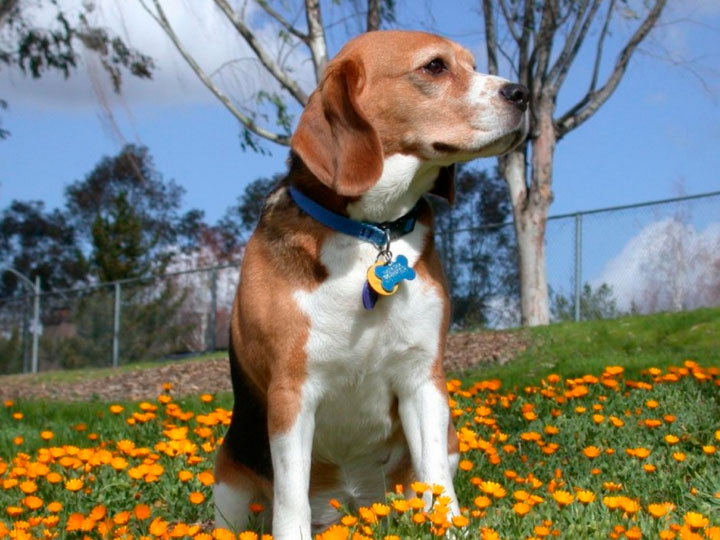
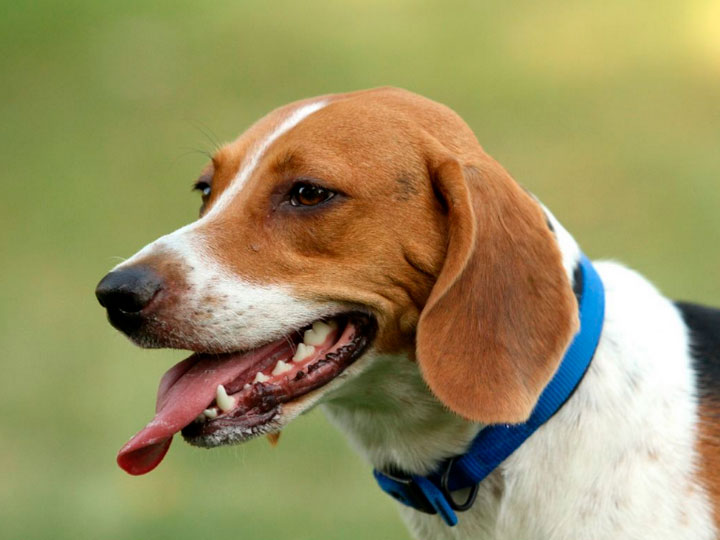
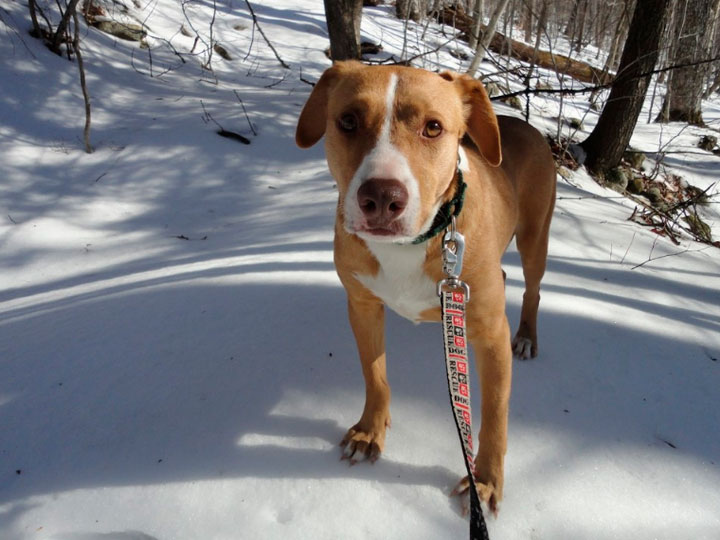
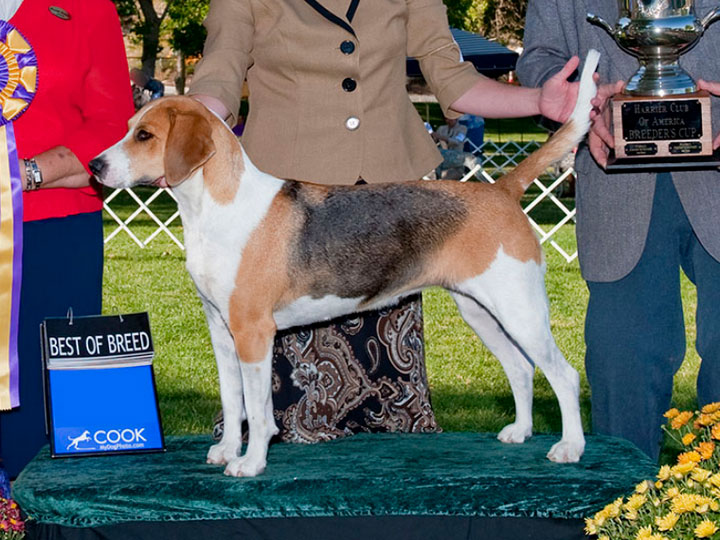
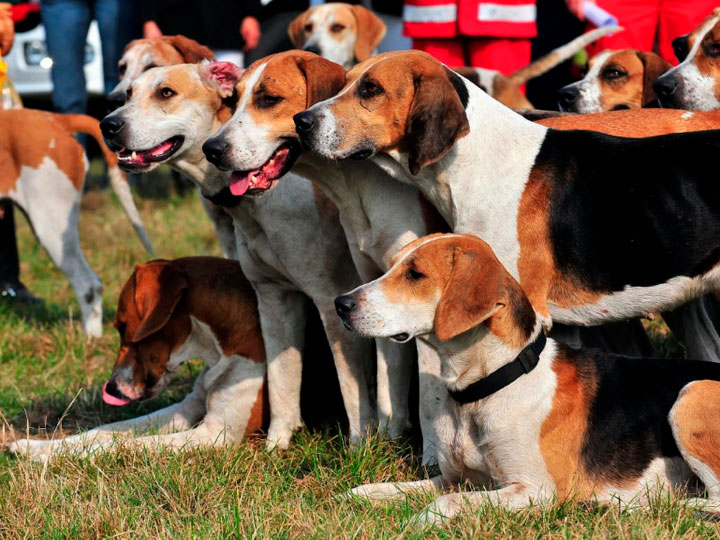
This gallery is dedicated to the Harrier dog breed (English Hare Hound). The photos collected here show what English Hare Hounds look like at different ages, genders, and colors.
Read also:


Add a comment