
Canaan Dog
The Canaan Dog is the only dog breed native to Israel and one of the oldest in the world. This unique, aboriginal, primitive breed is still found in its native wild and semi-wild state. Canaan dogs from kennels are low-maintenance, hardy, devoted to their owners and families, and make excellent companions with strong watchdog and guarding instincts. They are suitable for families with children and are highly trainable in many areas.
Content
History of origin
Until the 1930s, Canaan dogs existed as pariahs—semi-wild dogs of uncertain origin. For over 1,000 years, local populations used them to guard livestock and homes, as well as to help shepherds. In their homeland, Canaan dogs still accompany the Druze and Bedouin.
The Canaan Dog was recognized as a separate breed by the Fédération Cynologique Internationale in 1966.
Cynologist Rudelfina Mendel began breeding "mongrels" from Israel. She was the one who noticed the local pariahs and began selecting individual specimens. Convinced that these dogs were not only hardy but also highly trainable, she founded her own kennel and developed a specialized breeding program. She later wrote the first standard, which was approved by the Israel Kennel Club and the International Kennel Federation. Mendel decided to call her breed the Canaan Dog, thus emphasizing its place and ancient origins.
Purpose
The Canaan dog is considered a versatile working breed. It can be used as a guard dog, watchdog, and bodyguard. In Israel, they are recruited by the military as sentries, mine-detection messengers, and search-and-rescue dogs. There are reports of Canaans being used as guide dogs. In America and Europe, Canaan dogs are promoted as companions and participate in various sports, such as agility and obedience, and are less commonly used as herding dogs.
Their intelligence and excellent sense of smell are evidenced by the fact that many modern pariahs continue to inhabit minefields near the country's border. They also unerringly choose routes and den sites in which to raise their puppies. The rabies epidemic that broke out in the 1980s forced Israeli authorities to take serious measures and begin exterminating all stray dogs, but many wild "Canaan dogs," hearing helicopters, hid in dens, allowing them to survive.
Video about the Canaan Dog breed:
Appearance
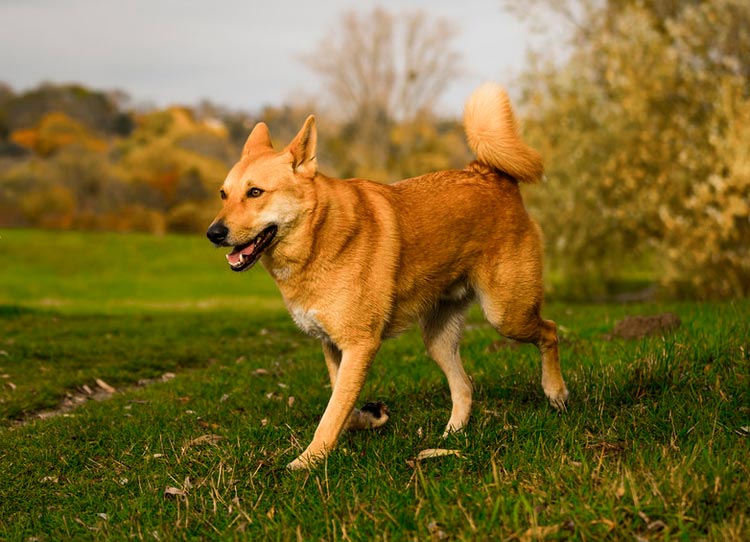
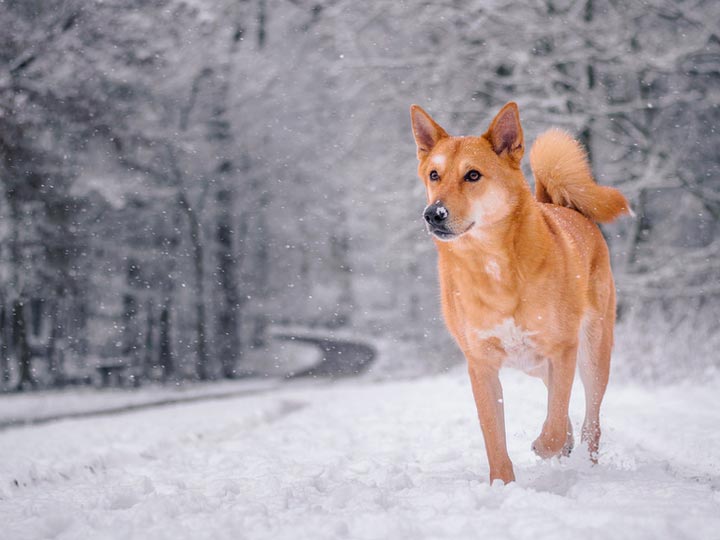
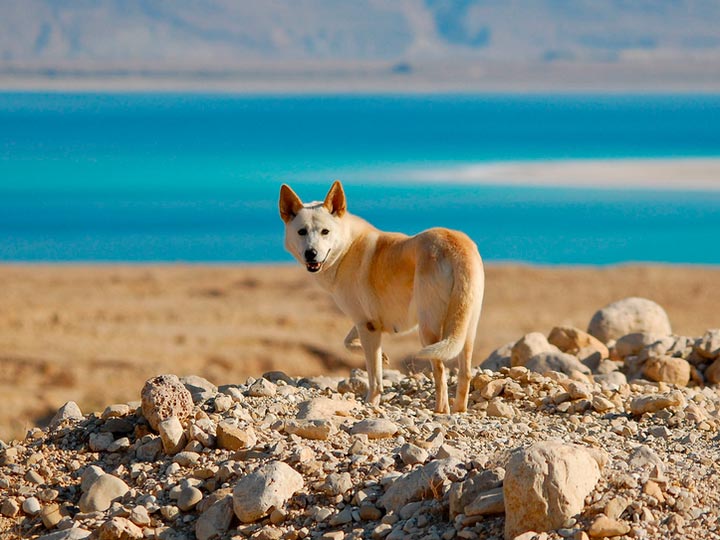
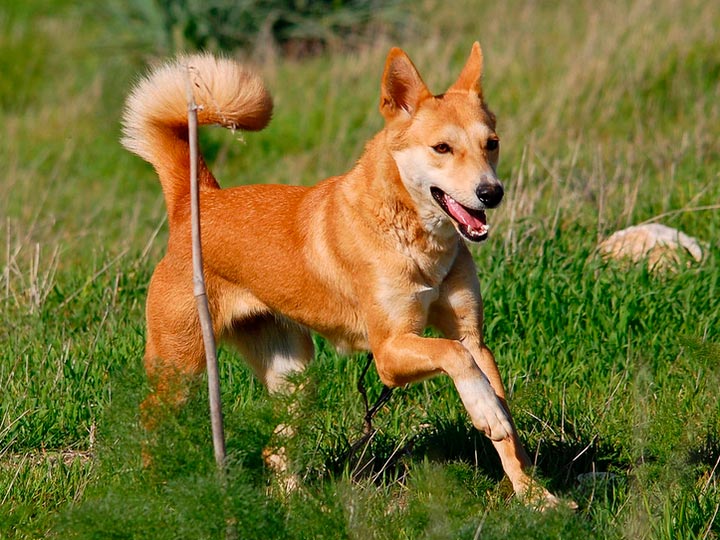
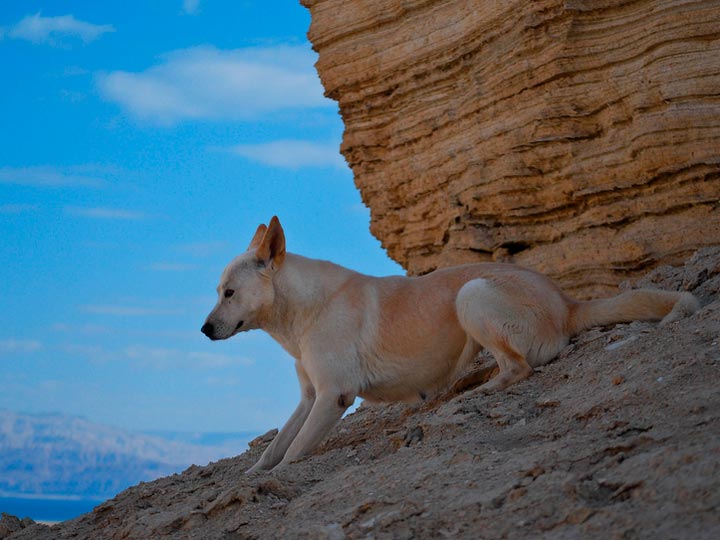
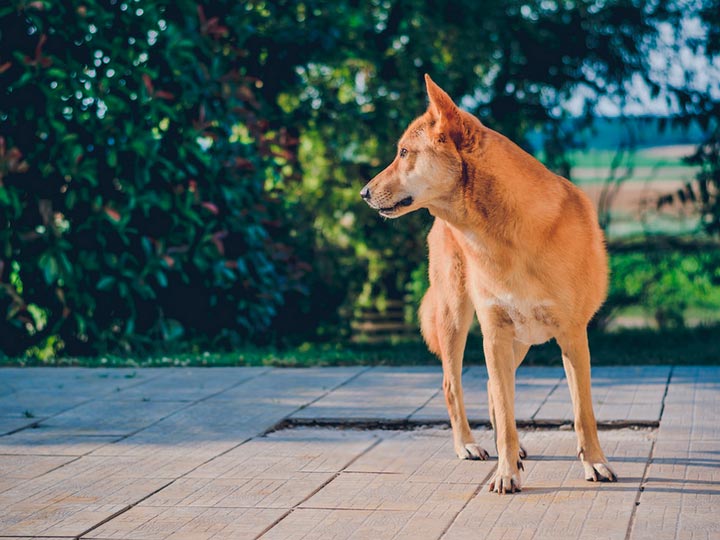
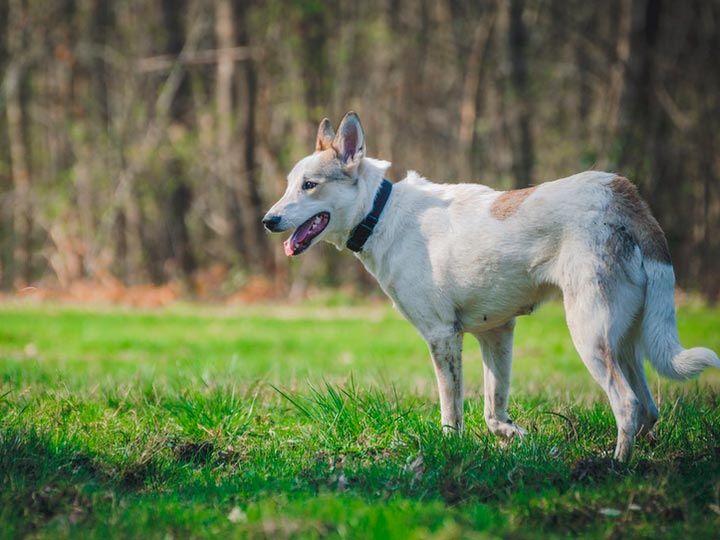
The Canaan Dog is a medium-sized, sturdy dog with a lean, balanced, square build. Overall, it retains the wild type, which is also characteristic of dingo or Carolina Dog. Sexual dimorphism is very pronounced. Height at the withers is 50-60 cm, weight is 18-25 kg.
The head is well proportioned, medium in length, blunt wedge-shaped, and the skull is somewhat flattened. The stop is noticeable but not abrupt. The muzzle is of moderate width and length, strong. The nose is black, the eyes are dark brown, almond-shaped, and slightly slanted. The eyelids are dark. The lips fit tightly. The jaws are strong. The bite is level or scissor-shaped. The dentition is complete. The ears are set low, erect, wide at the base and relatively short, slightly rounded at the tips.
The neck is medium in length and muscular. The body is square, with well-defined withers and a straight back. The loin is muscular. The chest is moderately wide and deep, with well-sprung ribs. The belly is well tucked up. The tail is carried curled over the back, set high, and well feathered. The limbs are balanced and moderately angulated. The paws are rounded and strong, with durable pads. The dog's gait should demonstrate endurance and agility.
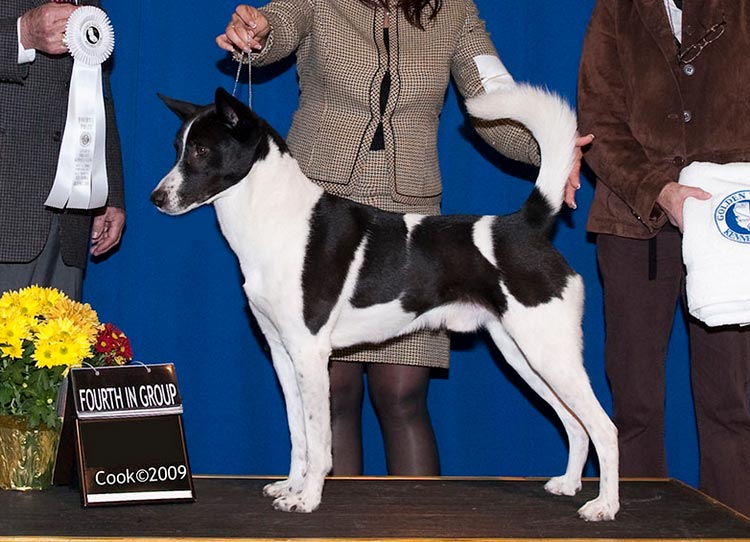
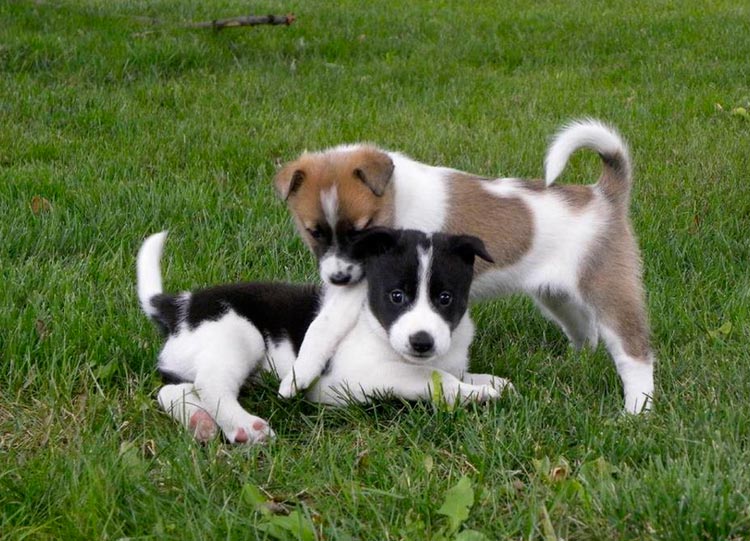
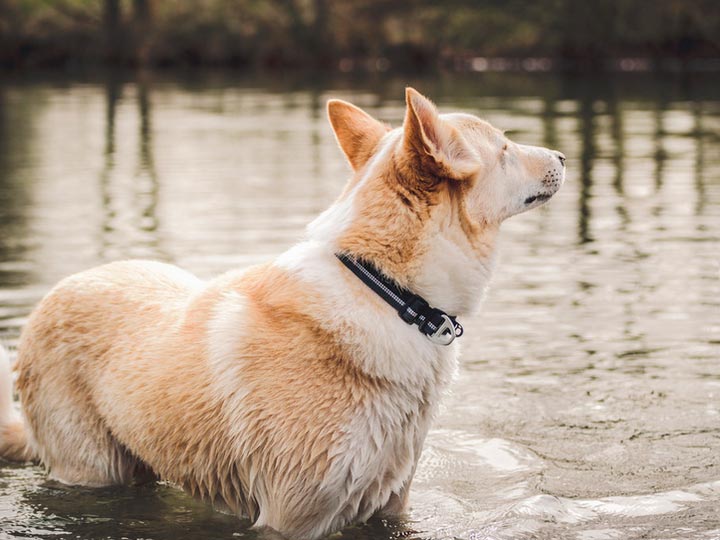
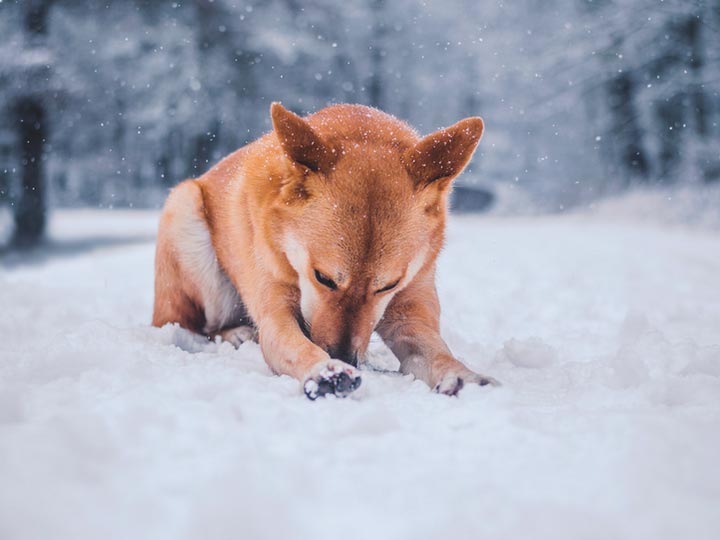
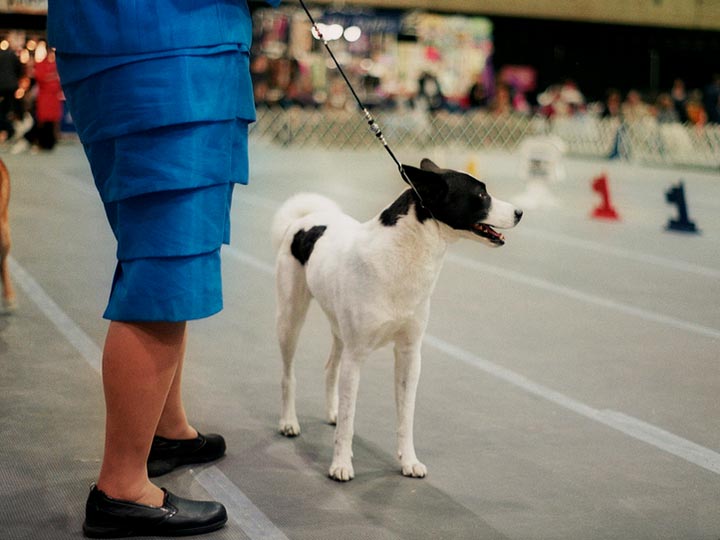
The coat is double. The outer coat is coarse, dense, straight, and short to medium in length. The undercoat lies close to the body and is abundant. Color ranges from sandy to reddish-brown, black, white, or spotted. With or without a mask. Black and tan, tricolor, brindle, or gray colors are unacceptable.
Character and behavior
The Canaan Dog is even-tempered, calm, alert, and very suspicious and wary of strangers, but not cowardly. It is not naturally aggressive toward people, but has quick reactions and a strong watchdog and guarding instinct, clearly distinguishing between friends and strangers. It considers not only other animals but also strangers as strangers. It forms a strong bond with its owner and home. It is caring and patient with children. It can be quarrelsome with other dogs and may chase cats on the street, but it gets along well with pets it has grown up with.
The Canaan Dog possesses all the qualities necessary for a family dog and companion: unpretentiousness, devotion, and a loyal attitude toward children. When properly trained, they are obedient and disciplined.
For centuries, members of this breed survived solely thanks to their suspicious nature and their ability to react instantly to potential threats. However, when socialized and well-trained, they become true companions, reacting enthusiastically to anything outside their territory, loving to explore new places, and maintaining a calm composure.
Canaan dogs have a strong pack and territorial instinct. This makes them vigilant watchdogs and serious guardians, but on the other hand, they can be prone to certain challenges, such as aggression toward guests and, less commonly, other dogs. Canaans may consider the area where they are regularly walked as their territory and begin to defend it.
Education and training
The breed standard states that the Canaan Dog is versatile and easy to train. However, due to its strong character, it is not the best choice for an inexperienced owner or someone with a soft nature. Often, external stimuli are more interesting to a puppy than training with its owner. When training, it is important to remember that Canaan Dogs strive to dominate. The owner should become the puppy's leader by the time it reaches three months of age and maintain this position. Consistent work is essential for the dog to understand what is expected of it. Otherwise, it will refuse to listen. Training sessions should be short, with minimal repetition of a single command.
The Canaan Dog needs professional training Using the positive reinforcement method, training begins at 2.5-3 months of age. Another important aspect is socialization; introductions to the outside world should be consistent, gentle, and as diverse as possible.
A high level of obedience can be achieved by training your dog from an early age, focusing on socialization and communication exercises, strengthening the bond, and maintaining a dominant position in the dog's eyes. Cruelty and injustice will lead to the dog becoming timid and withdrawn.
Content Features
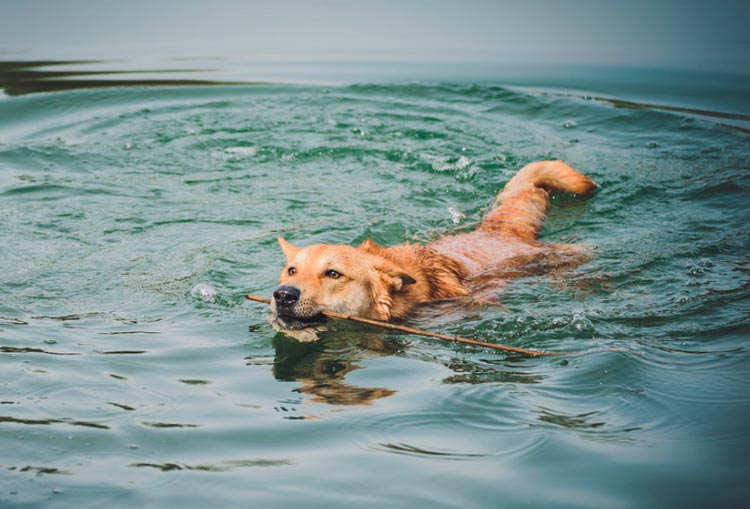
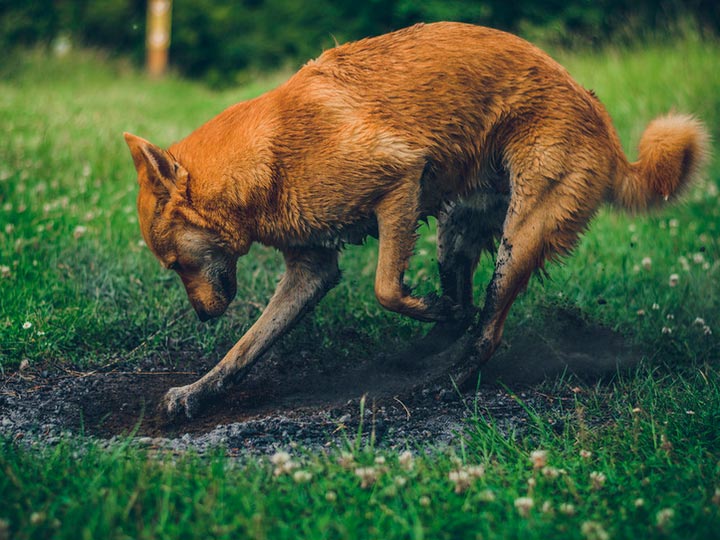
The ideal environment for a Canaan dog is a private courtyard, not a crate. They can also live in a house or apartment, provided they get at least a couple of hours of daily exercise. A bored dog becomes sensitive and destructive. Mental stimulation is also important for their mental well-being. Canaan dogs are good at solving various problems, and training them to obey commands, search games, and games of intelligence are all suitable.
The Canaan dog requires moderate exercise. The ideal option is training and participation in some kind of sport. This will help release pent-up energy and exercise not only the body but also the mind. Total walk time should be approximately 1.5-2 hours per day.
Care
Canaan dogs require little grooming. Their coat is self-cleaning and has virtually no odor, so bathing is recommended infrequently. Seasonal shedding is profuse. The rest of the year, the dog sheds lightly, requiring only occasional brushing.
Canaan dogs' ears are regularly examined and cleaned as needed. Their nails wear down naturally with normal exercise; otherwise, they need to be trimmed to an appropriate length. To prevent dental problems, puppies are accustomed to having their teeth brushed from an early age.
Nutrition
The Canaan dog requires high-quality food with optimal levels of carbohydrates, proteins, and fats. This can be homemade food supplemented with vitamin and mineral supplements or prepared dry food. In any case, the diet should be appropriate for the dog's age and size.
Health and life expectancy
Canaan dogs are generally healthy and rarely get sick with proper care and nutrition. The average life expectancy is 13-15 years.
Introducing semi-wild dogs into breeding allows us to expand the gene pool and maintain the breed's health. However, not every captured dog is a Canaan, only one living in a specific desert region. Furthermore, it must meet the standard and be health tested. Like regular dogs, Canaans are routinely vaccinated and regularly treated for external and internal parasites.
Choosing a Canaan Dog Puppy
Until a few years ago, the Shaar Hagai Canaan breeding center was located in Israel. It was managed by Myrna Shiboleth. However, due to a decision by local authorities, the kennel was forced to relocate to Italy. Currently, there are no kennels in Russia. The only one has moved its operations to Poland, but it delivers and sells puppies to all CIS countries. Large kennels professionally breeding Canaan dogs exist in the United States, France, Germany, and several other European countries.
The only proof that a puppy or adult dog belongs to the breed is a pedigree. The Canaan Dog is registered with the FCI and most other international cynological associations. At the time of sale, puppies must have a tattoo, a puppy card, and a veterinary passport with vaccination records for their age. Externally, puppies must be completely healthy and meet the standard. By nature, they are curious and friendly, never shy or aggressive. Most breeders are very careful when choosing future owners for their rare breed dogs, and only a few are allowed to breed. Advertisements for puppies for sale from private individuals are extremely rare, and they should be treated with great caution to avoid scams.
Price
The average price of a Canaan puppy not for breeding is 60,000 rubles. The price of promising puppies can exceed 100,000 rubles.
Photos
The gallery contains photos of Canaan dogs.
Read also:


Add a comment