
Hernia in kittens: causes and treatment
A hernia is an anatomical condition in which a portion of an internal organ protrudes into an adjacent cavity or through an opening in the muscular wall. Hernias are common in cats, but they can be life-threatening when the prolapsed portion of the organ becomes trapped, blocking its blood supply.
Content
Causes and signs of hernias in cats
The development of a hernia can be provoked by:
- congenital defects of the peritoneum or diaphragm;
- injuries involving muscle rupture;
- straining during bowel movements caused by constipation;
- frequent bloating;
- weak abdominal muscles;
- multiple pregnancy or difficult labor;
- complications after surgery (seams on the abdominal wall came apart).
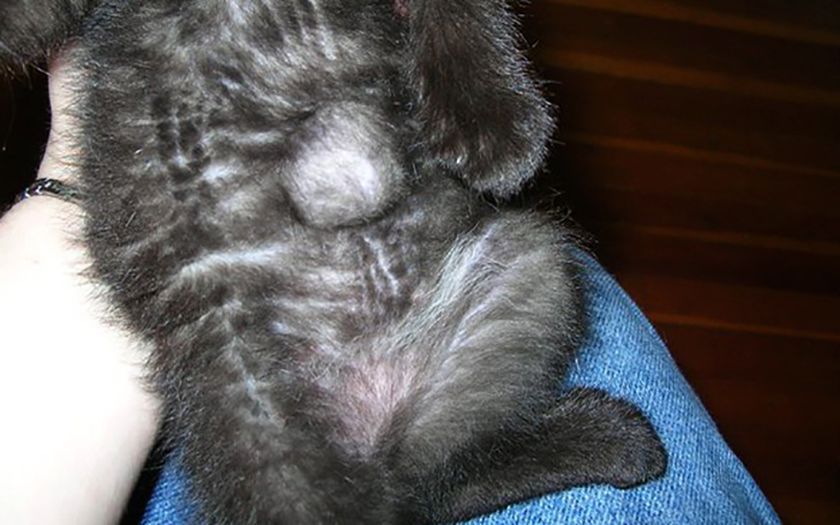
If the hernia is small and not strangulated, there may be no other signs other than the easily retractable bulge. If the hernia is strangulated, swelling will occur in the area, and the cat will experience severe pain. Depending on the location of internal hernias, vomiting, loss of appetite, general malaise, and loss of activity may occur. A diaphragmatic hernia can cause breathing problems.
Types of hernias
Depending on the time of development, hernias in cats can be congenital or acquired. The congenital form is typical for kittens and occurs when the newborn animal's umbilical cord does not close properly, causing the omentum or part of the intestine to protrude through the skin.
Hernias are classified by type as internal or external. In the former, the hernial lesion is displaced into an adjacent cavity, while in the latter, the hernial sac protrudes into the subcutaneous muscle and fatty tissue without breaking the skin. External hernias, in turn, are classified as reducible and irreducible, or strangulated. In an irreducible hernia, the prolapsed organ cannot be returned to its place; due to impaired blood circulation, the contents of the hernial sac become inflamed and eventually necrotic.
Hernias are also classified by location.
Umbilical
It appears as a bulge, soft to the touch. It is located on the linea alba and develops when a gap or opening forms in the abdominal wall.
A hernia on the abdomen of kittens often disappears on its own by the age of three to four months, when the umbilical ring, formed by the interweaving of tendons, heals.
Inguinal
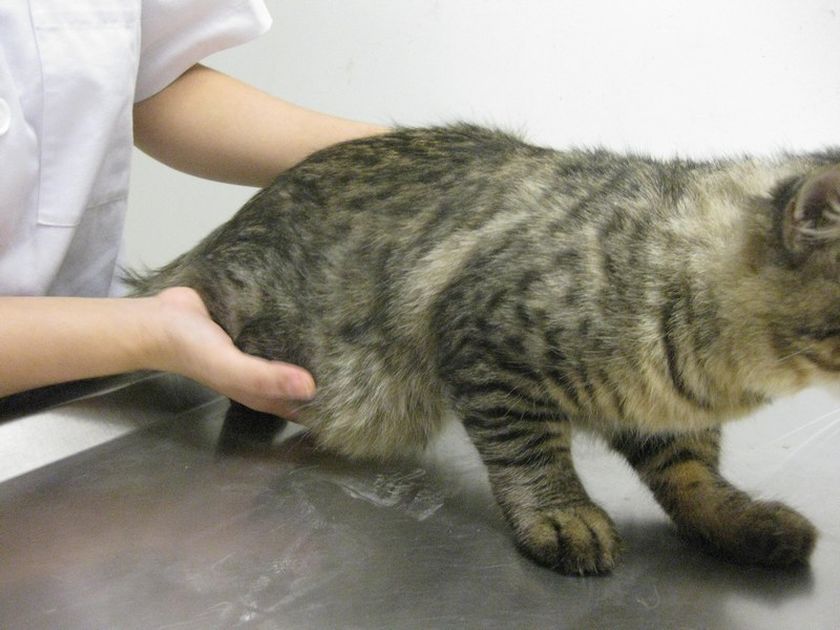
It occurs when a portion of the intestine prolapses between the muscles and ligaments located in the groin area. It is often reversible and does not require surgical intervention.
Diaphragmatic (hiatal)
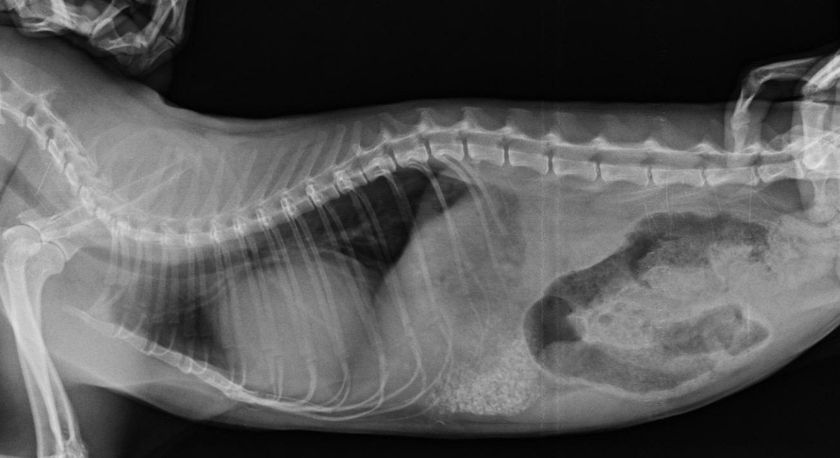
It occurs when an organ located in the abdominal cavity protrudes through an opening in the diaphragm into the chest cavity. It occurs as a result of injury or congenital anatomical abnormalities (this type is called a "sliding hernia" because it tends to appear and disappear on its own).
Scrotal
The prolapsed organ becomes lodged in a sac-like structure located in the perineum. Scrotal hernias in cats are relatively rare and most often develop due to abdominal muscle strain.
Pericardioperitoneal
Another rather rare type of hernia in cats, this occurs when organs protruding from the abdominal cavity into the chest cavity put pressure on the heart muscle. It is usually a complicated form of hiatal hernia.
Intervertebral
It occurs due to a deformed spinal disc, and in most cases, damage to the spinal cord is also found. A herniated disc typically causes severe pain. Since cats are not upright mammals, this type of herniation most often develops in older cats.
Diagnosis and treatment
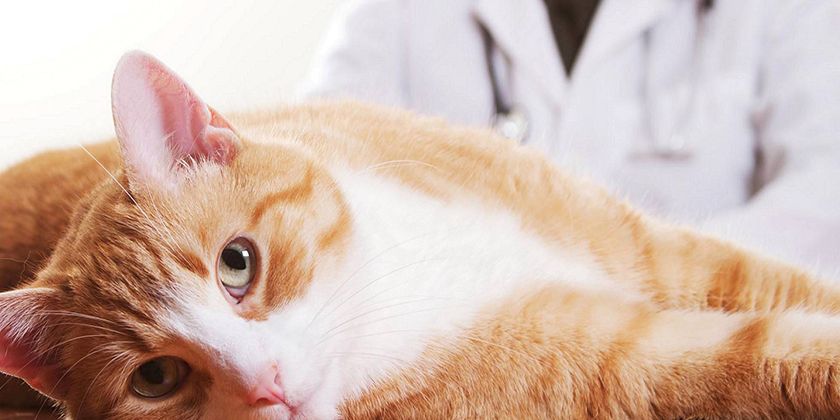
In most cases, a physical examination is sufficient to diagnose an external hernia in a cat. For example, an inguinal hernia is easily detected by standing the cat on its hind legs. An umbilical hernia in a kitten becomes visible when it lies on its back. However, if the hernia detected during examination is large, the veterinarian may order an x-ray to rule out the possibility of strangulation.
Internal diaphragmatic, pericardial and vertebral hernias can only be detected using hardware diagnostic methods: X-ray, sonography (ultrasound), magnetic resonance imaging.
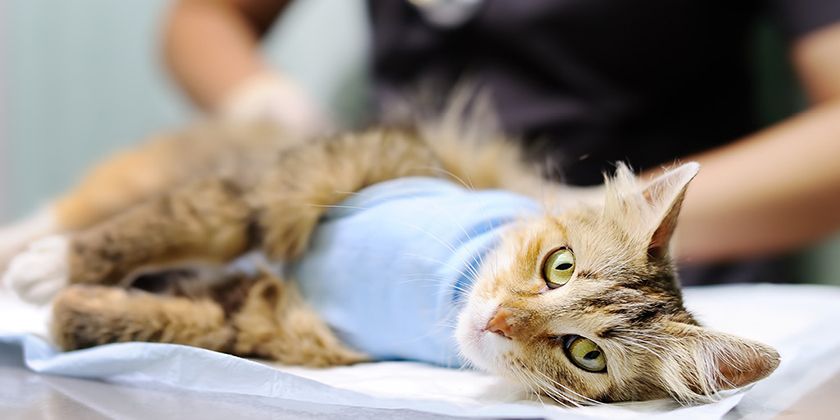
Any hernia in cats is treated at a veterinary clinic. For small umbilical, inguinal, and scrotal hernias, the veterinarian may attempt to gently push the hernia back into place. If this is successful, the animal is placed in a rigid, supportive brace to prevent recurrence. The cat will need to wear this brace for about a month. Conservative treatment is not possible for diaphragmatic, pericardial, or intervertebral hernias due to their internal location.
Large hernias in cats are removed surgically, but if the internal organs are trapped by the muscular walls, the cat requires emergency surgery.
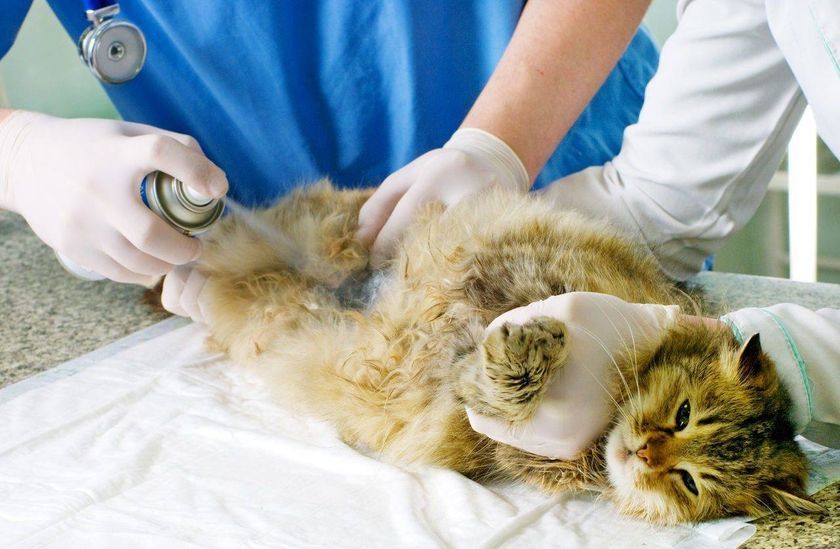
Herniorrhaphy is performed under general or local anesthesia. Prior to the procedure, the cat undergoes tests to determine its overall health. If there is inflammation in the body, the elective surgery is not performed.
Because hernias are more common in kittens than in adult cats, veterinarians often suggest combining hernia repair with spaying or neutering to reduce the number of surgical interventions.
Stages of the operation:
- The animal is fixed in a position on its back.
- The peritoneum at the base of the hernia is injected with an anesthetic. The anesthetic solution is first injected into the subcutaneous layer, then into the deep muscles.
- The skin in the area of the hernial protrusion is cut with a scalpel.
- The area of the peritoneum from which the hernia protrudes is separated using a gauze swab.
- If dead (necrotic) areas are found in the hernia contents, they are resected.
- The hernia is returned to its original position within the abdominal cavity. Its edges are scarified (notched) to facilitate healing with the internal tissues.
- After the hernia contents have been reduced, the empty serous sac is amputated.
- If an adhesion is found between the hernia and the peritoneum, they are separated with a button scalpel.
- In cases where there is a risk of recurrent hernia prolapse due to the wide hernial orifice of the ring, an endoprosthesis in the form of a polypropylene mesh is used, which over time grows into the body tissue.
- The wound (hernia opening) is sutured with a self-absorbable thread using a loop suture.
To prevent infection of the postoperative wound, it is treated with an antiseptic (chlorhexidine or hydrogen peroxide) for several days. To prevent the development of a bacterial infection, the animal may be prescribed a five-day course of antibiotics (Amoxicillin, Oxacillin, Cefazolin).
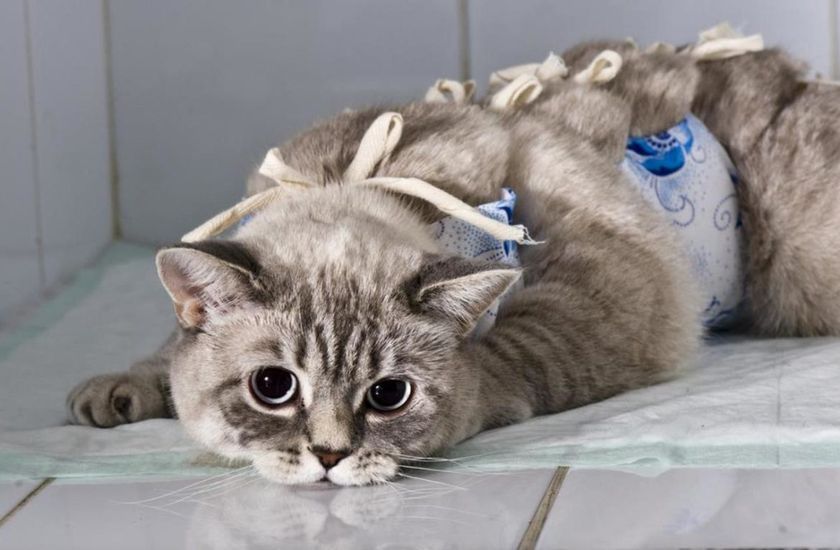
To prevent the cat from licking or scratching the incision, a protective bandage or a special, rigid, funnel-shaped collar is placed on the cat. For the first few weeks after the surgery, your pet is prohibited from going outside and engaging in active play.
After surgery, a gentle diet is recommended for cats – the menu should predominantly consist of soft, semi-liquid and easily digestible foods.
Prevention
Hernias in cats can be caused by any problems with internal organs, so it's important to schedule regular veterinary checkups, vaccinate, and treat any identified illnesses. To maintain health, it's important to provide proper nutrition and protect your cat from injury and overexertion. Since congenital hernias can be passed on to the next generation, it's not recommended to breed a cat with this condition.
Read also:
- Hemorrhoids in cats: do they occur, symptoms, and treatment
- Herniated Discs in Dogs: Symptoms, Treatment, and Recovery
- DIY cat bandage after sterilization


Add a comment