
Do you know your pet's blood type?
Everyone knows that human blood is divided into four types. But did you know that animal blood is also divided into groups? Until recently, this wasn't considered important, but today, every owner should know their pet's blood type. What do you know about cat blood types?
Content
Why is this important?
In the 1950s, British scientists studied cat blood and determined the presence of blood groups and inheritance patterns. But for the next 30 years, virtually no one addressed this issue, considering it unimportant. It wasn't until the early 1980s that zoologists returned to the field.
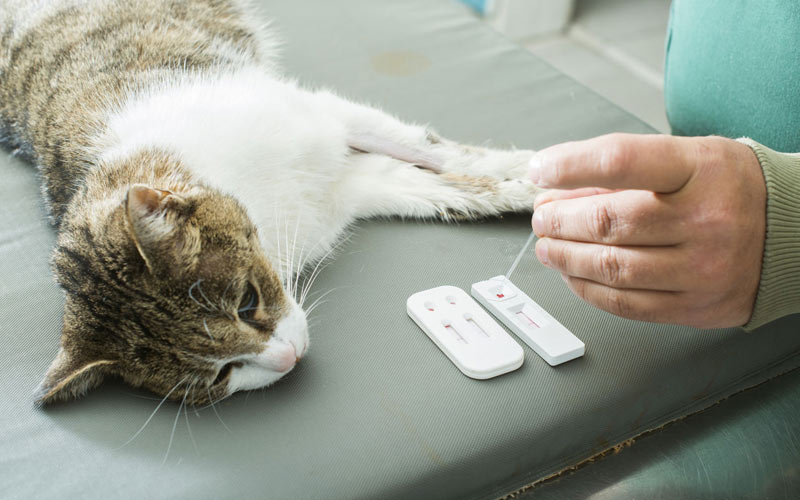
Blood gets its red color from red blood cells called erythrocytes. In addition to carrying oxygen to every cell in the body, these blood components are also responsible for determining blood type. Each erythrocyte carries a protein called an antigen, while the blood plasma contains proteins called antibodies. These antibodies are responsible for destroying foreign antigens.
Knowing exactly which group your pet belongs to is important in the following cases:
- if the animal requires a blood transfusion;
- when choosing a partner for breeding.
Veterinarians strongly recommend blood typing at an early age. This will save precious time if your pet requires emergency medical care.
How many and what blood types does a domestic cat have?
Humans have four blood types and Rh factors. Pets currently have only three blood types, inherited according to Mendel's laws.
Scientists talk about the possible existence of a 4th, but at the moment this fact is being researched and needs confirmation.
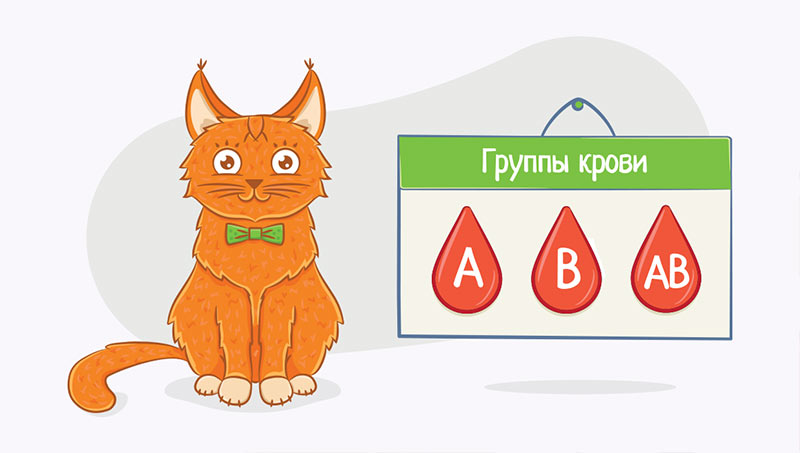
When inheriting blood types, gene A is dominant and gene B is recessive, so most cats have blood type A.
Find out on our website also about: How many blood types do dogs have?.
Important! When choosing an animal for breeding, be sure to inquire about the blood types of its parents, as this will help you choose the most appropriate partner for it in the future.
The table of officially recognized feline blood groups in veterinary medicine looks like this:
|
Animal group |
Genes |
It occurs |
|
A |
A/A or A/B or A/AB |
often (90%) |
|
IN |
I/V |
rarely |
|
AB |
AB/AB |
very rare (less than 1%) |
Blood type A contains antigens for type B, and vice versa. This is where incompatibility issues arise. Blood type AB lacks antigens, making it compatible with the other two.
The number of individuals with groups A and B for different breeds varies significantly:
|
Percentage of animals with group B |
Breed |
|
not identified |
Siamese and mongrel |
|
1-5% |
Norwegian Forest Cat, Maine Coon |
|
5-25% |
Scottish, Persian, Burmese, Abyssinian, Somali, Kurilian Bobtails |
|
30-60% |
British Shorthair, Rexes, Exotic Shorthairs |
Blood incompatibility during transfusion
Unfortunately, any animal may require an urgent transfusion, possibly due to injury or illness. Before the procedure, the vet will conduct the necessary tests. However, knowing your pet's blood type will help you find a donor more quickly.
Hemotransfusion (blood transfusion) may be urgently needed in the following cases:
- serious injury with significant blood loss;
- prolonged, although not severe, bleeding;
- complicated childbirth;
- extensive surgical intervention.
The procedure is also indicated for anemia, decreased immune status, blood clotting disorders, as well as chronic inflammatory processes and very severe poisoning.
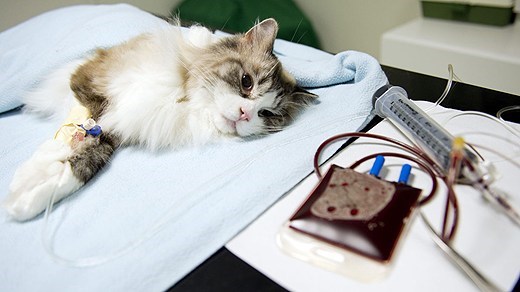
Important! If an incompatible blood type is transfused, antibodies will attack the foreign cells in the donor blood, which in most cases leads to death.
Compatibility issues in breeding
Studying blood type compatibility in cats has helped solve the problem of sudden kitten death, also known as "slow decline." Breeders had encountered this problem before, but were unable to find a scientific explanation. Within a few days of birth, seemingly healthy kittens weaken and die. They cannot be saved with medications or injections because this occurs due to blood type incompatibility between the mother and kitten.
When a male and female cat have different blood types, the kittens born from this pair can inherit either the mother's or the father's blood type. However, kittens whose blood type is incompatible with their mother's are doomed to die or develop serious health problems without special care.
When mating a male and female cat, it's important to consider not only their blood type but also the parents' blood type. Inheritance occurs according to the following rules:
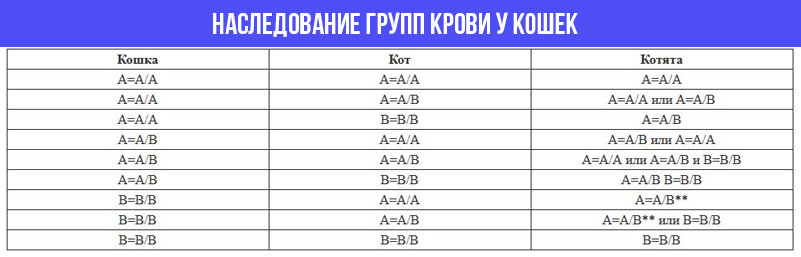
*A variant in which incompatibility occurs between a cat and a kitten.
Why does this happen? During pregnancy, incompatibility doesn't manifest itself in any way, as the mother and baby's blood don't mix, and antibodies don't cross the placental barrier. But everything changes immediately after birth. The newborn kitten receives maternal antibodies through colostrum, which enter its bloodstream and destroy red blood cells.
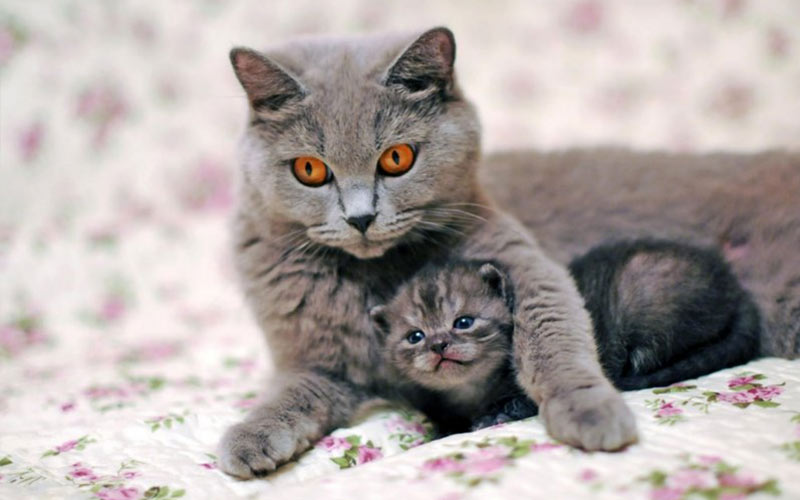
In the first hours after birth, the kitten appears perfectly healthy, but its condition deteriorates very rapidly. The following symptoms may occur:
- sudden death (most often within the first day);
- a kitten's refusal of its mother's milk (without human intervention, this also leads to death);
- The kitten survives, but the tip of the tail dies off (the most favorable of all possible outcomes).
The tip of the tail suffers because blood flows to it through small vessels. Even after surviving the critical period, such kittens have serious health problems. Metabolic disorders affect more than just the circulatory system. These kittens often experience severe kidney damage.
Such consequences can be avoided. If there is a risk of incompatibility, newborn kittens are removed from their mother and immediately transferred to artificial feeding. A detailed description of How to feed a newborn kittenYou'll find information on our website. Naturally, the cat also requires special care during this period, as she will be producing colostrum.
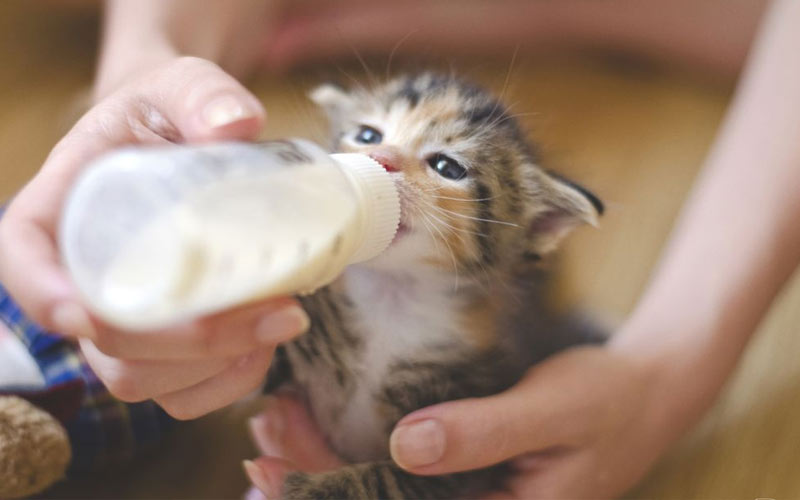
Typically, the milk detoxification process takes several days. Once this period is complete, the babies can be returned to their mother, continuing to be bottle-fed.
Important! You can only do everything right and save your babies if you understand the risks ahead of time. But it's even better to plan your pregnancy and birth, choosing the most compatible partner for your beloved.
How is blood type determined?
There are tests that can instantly determine a cat's blood type. They are available at all veterinary clinics and are also over-the-counter at specialized pet pharmacies. Any breeder can purchase such a rapid system and perform the test at home. However, if you lack the necessary skills, it's best to go to a clinic, where everything will be performed quickly and in the most sterile conditions.
Read also:


Add a comment