
Greyhound (English sighthound)
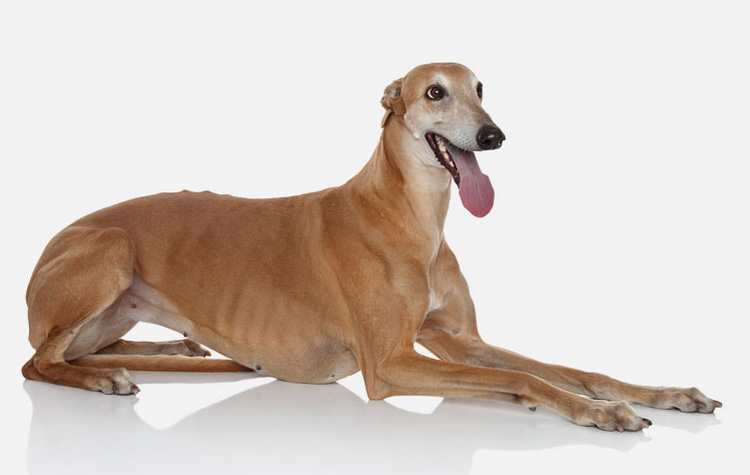
The Greyhound, or English Greyhound, is one of the most popular breeds among sighthound enthusiasts. Contrary to popular belief, Greyhounds don't run around like mad all day long, despite being the fastest dogs in the world. They are calm and even-tempered, tolerate solitude well, and possess all the qualities of a companion: friendly, sociable, outgoing, highly intelligent, and a bit willful. Modern Greyhounds can be hunters, athletes, or show stars. They are suitable for apartment living and are a great companion not only for adults but also for children.
Content
History of origin
The Greyhound originated in the British Isles. Where this dog came from in the foggy Albion remains a mystery. Some cynologists suggest the ancient Egyptian origins of the English greyhound and consider them related. Pharaoh HoundsOthers claim that these dogs came from Asia Minor, where they were already widely known and popular thanks to hare hunting competitions. In this case, they may share common roots with the Arabian Sloughi.
More recent records of greyhounds date back to the Middle Ages. In England, greyhounds were used to hunt foxes, deer, and wild boar, but the main game remained hare. By the 18th century, English greyhounds had begun to degenerate; they had become smaller and lost their bone strength. To refresh their bloodlines and strengthen their bones, the renowned British breeder Lord Oxford decided to breed a greyhound with a bulldog. The result of this cross was a dog named Half-and-half, which translates as "neither one nor the other" and perfectly reflects the appearance and working qualities of the male. All subsequent breeding work was based on his offspring, and soon the forefather of the modern greyhound, the famous King Cob, was born.
A huge impetus for the breed's development was the passion for lure coursing competitions. As early as 1776, Lord Oxford founded the first club for enthusiasts of this canine sport, which still exists today. In the second half of the 19th century, with the growing interest in shows, a separate show type began to emerge within the breed.
Greyhounds have made an invaluable contribution to the development of cynology worldwide. They played a role in the development of many sighthound breeds and dogs from other groups. For example, they were used to develop the Irish Wolfhound, Deerhound, and Whippet. Among hunting dogs, their bloodlines include pointers and Irish setters, and among non-hunting dogs, Great Danes and Dobermans.
Greyhounds appeared in Russia in the mid-19th century. They were never numerous, but were regularly featured at dog shows.
Modern Greyhound: Type and Purpose
Modern greyhounds have long been divided into three types:
- sports (also known as running or racing);
- hunting (coursing);
- Show dogs that have an ideal exterior, but do not participate in competitions or hunting.
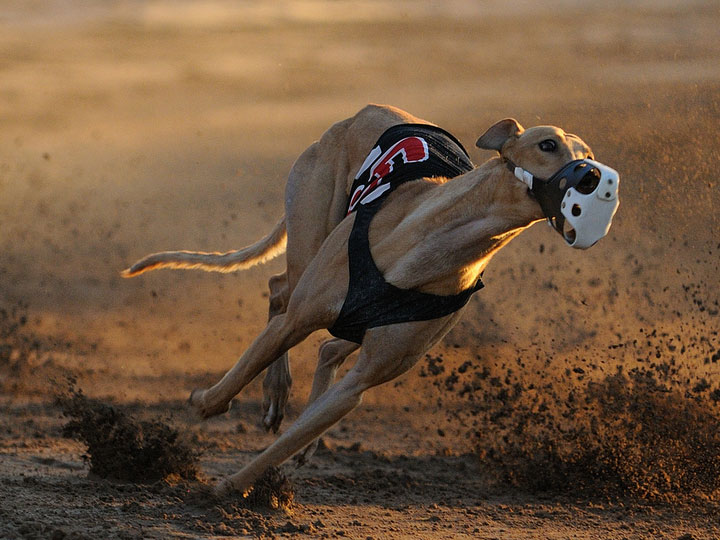
The English breed standard describes show-class greyhounds as larger than their racing counterparts. Coursing greyhounds (dogs that hunt wild hare) are smaller and more maneuverable. However, racing greyhounds surpass them in speed. Only a cheetah can compete with a racing greyhound over a short distance. The maximum officially recorded speed of a greyhound is 45.5 mph (72.4 km/h). Show dogs perform relatively poorly in competitions, but they often outperform other sighthounds.
In England, dogs of different types are bred separately, while in other countries, particularly in Russia, they are often mixed together.
Breeding selection for Greyhounds isn't based solely on their ability to run fast. Temperament is also important—a timid dog won't perform well, and an aggressive one will be disqualified. Therefore, a racing Greyhound must have a balanced nervous system and a friendly disposition, making it a good companion. Furthermore, the dog must have an excellent interior, as without this, obtaining working pedigree papers is virtually impossible.
As for its intended purpose, the modern Greyhound can remain a show dog or a companion, unfamiliar with racing and hunting but well-versed in shows. It can also be a sporting dog, regularly trained and participating in races, or a working dog, used for hunting and, in the off-season, chasing a mechanical hare.
Video review of the Greyhound dog breed
What does a greyhound look like according to the standard?
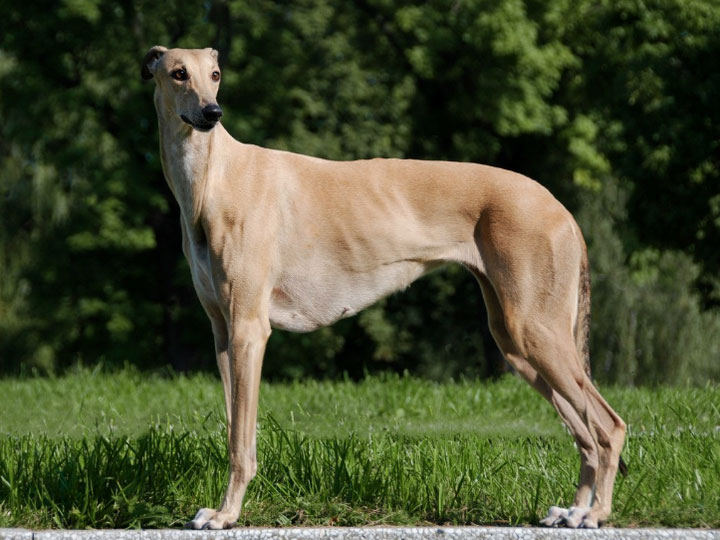
The Greyhound is a dog with a strong, symmetrical build and well-developed muscles. The body lines are elegant, flexible, and smooth. The loin is noticeably arched. Overall, the Greyhound has a typical sighthound build: high legs, a chiseled body, and a long head. The height at the withers is 80-70 cm, and the weight is 36-40 kg. Sexual dimorphism is pronounced, with males noticeably larger and more powerful than females.
Head
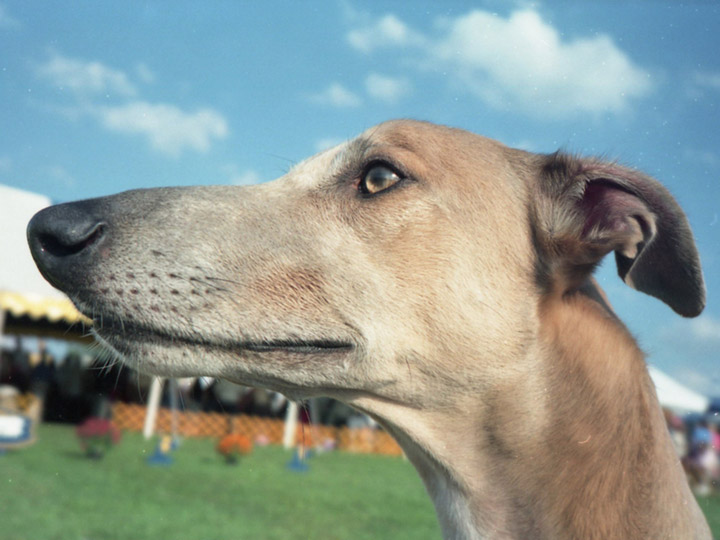
The head is narrow and long, with a fairly wide width between the ears. The stop is barely noticeable, and the nasal sinuses are weakly developed. The muzzle is long and well-filled, but not coarse. The teeth are complete and correctly aligned. The eyes are clear, oval, and set slightly slanted. A dark color is preferred. The expression is intelligent and alert. The ears are small, finely textured, and rose-shaped. They are usually pulled back and folded, but only semi-erect when alert.
Frame
The neck is long and muscular, with an elegant, smooth arch, gradually widening toward the withers. The limbs are clearly defined, long, and lean. The chest is full and deep. The ribs are well sprung and tucked back. The back is long, square, and broad. The loin is strong and slightly arched. The paws are of medium length. Compact, with well-arched toes and strong pads. The tail is set low, has a strong base, is long, and tapers to a point.
The Greyhound's gait is very smooth and direct. A free, long stride allows for great speed, and the hindquarters are brought under the body, providing propulsion.
Coat and colors
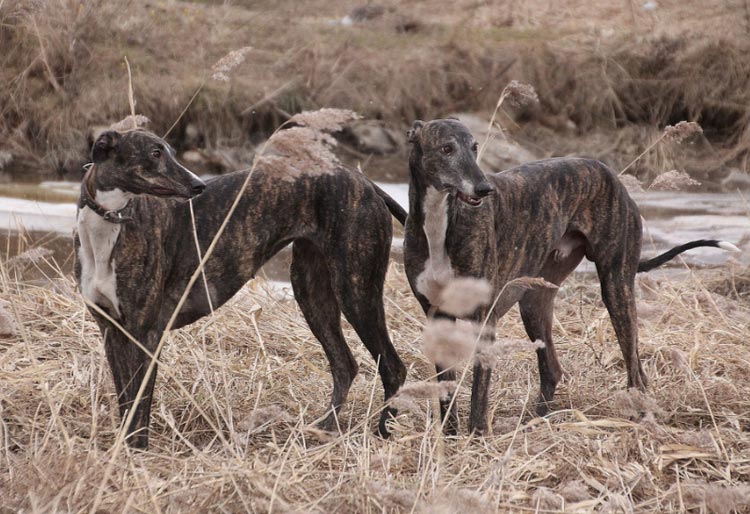
The coat is fine, dense, short, and very close. The texture is smooth and very pleasant to the touch. The coat is more sparse on the inside of the hind legs and belly. The undercoat is virtually absent, becoming noticeable only in winter or early spring. Possible colors: black, red, white, fawn, blue, brindle, or any of these combined with white.
Character
Greyhounds have a very gentle, calm, friendly, and unflappable nature. These dogs are highly intelligent and possess a sensitive psyche. However, intelligence doesn't necessarily imply trainability or flawless command following. Rather, it implies the ability to understand and adhere to rules of conduct, as well as to make independent decisions in work and everyday life. Greyhounds get along well with other dogs and other pets, and are friendly and sociable.
The hunting instinct is very strong; dogs can "chase" bicycles, cars, and other animals. This isn't due to stupidity; Greyhounds are simply very faithful to their calling.
Greyhounds love attention and companionship, but try not to be intrusive. They are extremely devoted to their owners, but can be a bit moody. Greyhounds can have a paradoxical personality in some ways. For example, while chasing a hare, a dog will ignore cuts, but may throw a terrible tantrum when having its nails trimmed or its ears cleaned.
Such qualities as nervousness, timidity or aggressiveness are absolutely not characteristic of the breed.When young, they can be a bit shy. Adult Greyhounds are indifferent or curious toward strangers. They are very gentle and careful with children, allowing them to get into many mischiefs, and if they don't like something, they simply step aside. Greyhounds are certainly suitable for families with children. However, Greyhounds are poor watchdogs and protectors. They bark very rarely and are unlikely to announce the arrival of guests or ward off intruders.
Greyhounds are pack dogs that thrive on companionship and enjoy interacting with other Greyhounds. Furthermore, only sighthounds are suitable companions for them in games and competitions; other breeds, even hunting ones, seem too slow and uninteresting to Greyhounds.
Education and training
Greyhounds and training in the traditional sense are incompatible. A dog needs to be trained rather than disciplined. After all, it is, first and foremost, a companion who follows commands out of love for its owner.
Greyhound training is a complex process, but it helps strengthen the bond between dog and owner. Given the breed's sensitivity, training must be done gently, without aggression, yelling, or punishment. The dog must feel valued and respected.
He learns house rules and basic, simple commands very quickly and tries to obey them on demand. It's safe to say that the Greyhound adapts to his owner's rhythm and adopts their habits. Many commands that a service dog would obey without question, a Greyhound may ignore. He often fails to retrieve because he doesn't understand the point of putting a dirty stick in his mouth and carrying it around.
Preparing for the race
Preparing for racing should begin with proper puppy training. Until a puppy is one year old, avoid strenuous exercise to allow its musculoskeletal system to develop. Walking includes free roaming, bathing, and playing with peers.
As early as 2-3 months, a greyhound can be teased with a hare pelt tied to a rope to awaken its hunting instinct. This should be done sparingly, to avoid losing interest. At 5-6 months, the first races are held over a distance of about 100 meters: first, one dog is allowed to run, then two or more, thereby fostering a competitive spirit. During competition preparation, the training load is always increased gradually, alternating with rest periods. Trotting behind a car or bicycle is effective.
Greyhound on the hunt
You can take a greyhound puppy hunting as early as 4-5 months. The puppy should be shown how other sighthounds hunt, given the opportunity to run, chase a hare, or catch a wounded bird. When preparing, keep in mind that the ideal age for training is 6-8 months. A one-year-old dog will be difficult to retrain.
The number of times the dog is shot at a hare during the day depends on the dog's training. A Greyhound, like a purebred English racehorse, can run until it collapses. Therefore, first and foremost, an owner must objectively assess their dog's capabilities.
Greyhound Hare Hunting: Top 10 Catches
Content
Greyhounds can live in an apartment or house, as well as in a separate space such as a barn or outbuilding, provided the winter temperature there does not drop below 5 degrees Celsius. In southern regions, it may be sufficient to provide the dog with an insulated, dry kennel with raised beds. It's important to note that in winter, greyhounds expend a lot of energy on their own heat, which reduces immunity and performance, and stunts the growth of puppies.
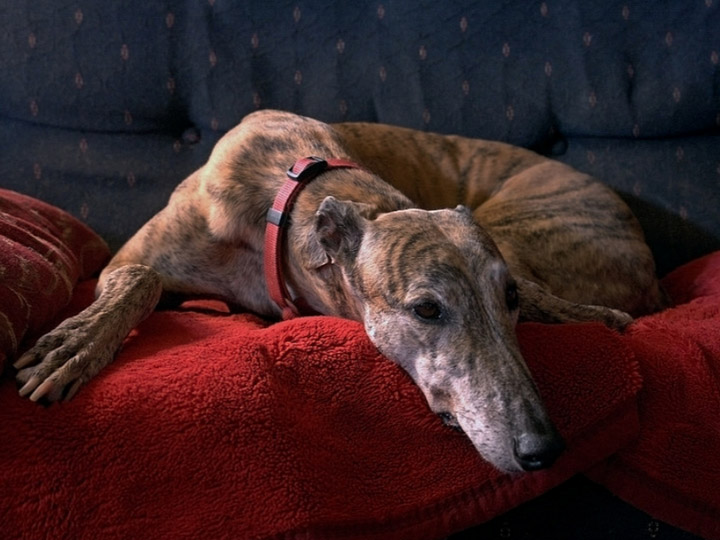
Contrary to popular belief, the greyhound behaves very well in an apartment and prefers to spend most of its time lounging on the sofa. He may seem lazy, but this is actually a characteristic of most sighthounds—they only "explode" when necessary. Furthermore, an adult greyhound that gets the necessary exercise usually doesn't have the nasty habit of destroying household items. He tolerates loneliness well, as well as confinement. This doesn't apply to puppies under 4-5 months of age; they are the most restless creatures.
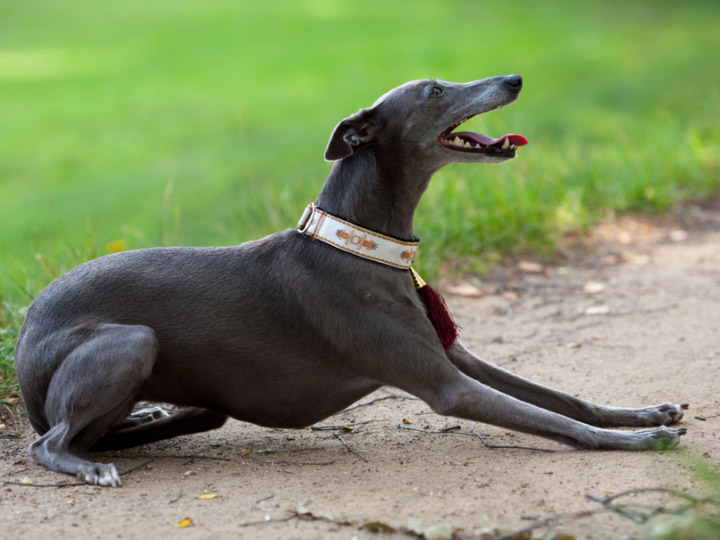
Like other smooth-coated dogs, Greyhounds do not tolerate cold well. When hunting or racing, and on the move, they're not afraid of severe frosts. For daily walks, it's advisable to dress the dog appropriately for the weather. Overalls, sweaters, and jackets are recommended for this purpose. Protecting the greyhound's neck and ears from the cold is crucial, so clothing for them usually features a very high collar.
Even a show dog needs physical exercise, not to mention sporting and hunting dogs, for whom training is like air. A greyhound should be walked 2-3 times a day. One of the walks should be long, about 2 hours, and the other two should be short, allowing the dog time to do its business. It should also be given approximately 40 minutes of free, off-leash exercise each day.
The greyhound does not require any special care. The coat only needs occasional brushing with a brush or mitten for short-haired breeds. Dogs are typically bathed every 2-3 months. The eyes and ears of an English Greyhound rarely need cleaning, and their nails usually wear down on their own during walks.
Feeding
Greyhounds can be fed both natural and commercial foods. Naturally, the food should be fresh and high-quality, while commercial foods should be super-premium or higher.
The diet is formulated to contain approximately 20% protein. A medium-sized dog requires 350-450 grams of super-premium dry food per day, and 800-1200 grams of natural food per day, of which 65-75% should come from meat and meat products, with the remainder coming from vegetables and grains. During colder months and periods of intense physical activity, the calorie intake can be slightly increased. Most greyhounds are not picky eaters, finishing their portion and asking for more. They often steal from the table.
The dog should not be fed 4-5 hours before hunting or running competitions.
It's important to remember that English greyhounds are prone to obesity, so overfeeding them is not recommended. Their calorie intake should vary depending on their physical activity.
Health and life expectancy
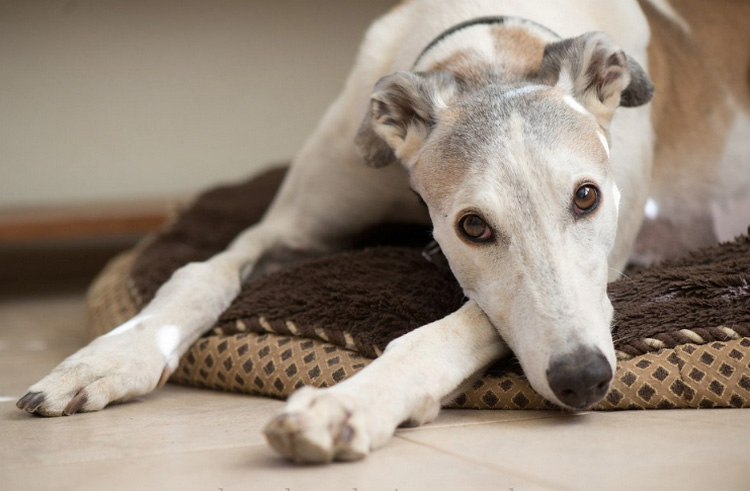
Greyhounds, unlike other similarly large breeds, live relatively long lives. With proper nutrition and care, their lifespan is approximately 13-15 years, and even in old age, they retain their beautiful figure, agility, and good character. Generally, Greyhounds enjoy robust health and a strong immune system. While they rarely get sick, the breed is predisposed to a number of hereditary diseases:
- eye diseases: cataracts, progressive retinal atrophy, developmental anomalies of the lacrimal ducts;
- age-related arthritis;
- thyroid insufficiency;
- deafness in white dogs;
- allergies.
Starting at 1.5 to 2 months of age, dogs are vaccinated against major infectious diseases. The vaccine is then repeated annually, ensuring strong immunity throughout their life. Deworming is performed every 3 months, and from early spring to late fall, dogs are treated for fleas and ticks.
Choosing a breeder and a puppy
Much has been said about the risk of buying a dog without papers or of dubious origin. No one can guarantee that such a puppy won't have health or personality problems. But it's also impossible to say for sure that a Greyhound without a pedigree will definitely be bad. Whether or not to take the risk is a personal decision. However, it's important to remember that a dog is bought primarily for pleasure and can live for 10 years or more.
To choose the right puppy, you first need to decide on a kennel. As mentioned above, dogs are divided into types - some breeders focus on breeding show dogs, while others are involved in hunting or racing. It is worth deciding in advance what direction your greyhound will work in, and depending on this, choose parents and a litter.
The breeder's environment and appearance can reveal a lot about the dogs. Greyhound puppies should be dewormed and vaccinated at 2-3 months of age. Greyhound puppies are very different in appearance from adult dogs, so when choosing a promising puppy, it's best for an inexperienced person to seek the help of a greyhound breeder or a dog trainer.
Even if the greyhound does not have any serious requirements and will never participate in shows, it is a good idea to make sure that the puppy does not have any undesirable defects in character (such as aggression or shyness) and appearance (kinked tail, incorrect bite, long hair, erect ears, etc.).
Price
Greyhound prices vary. Dogs without papers typically sell for 3,000-5,000 rubles. If the parents are elite, but mating is not planned, the puppies can cost 10,000 rubles. Pedigree dogs start at 15,000 rubles.
Photos
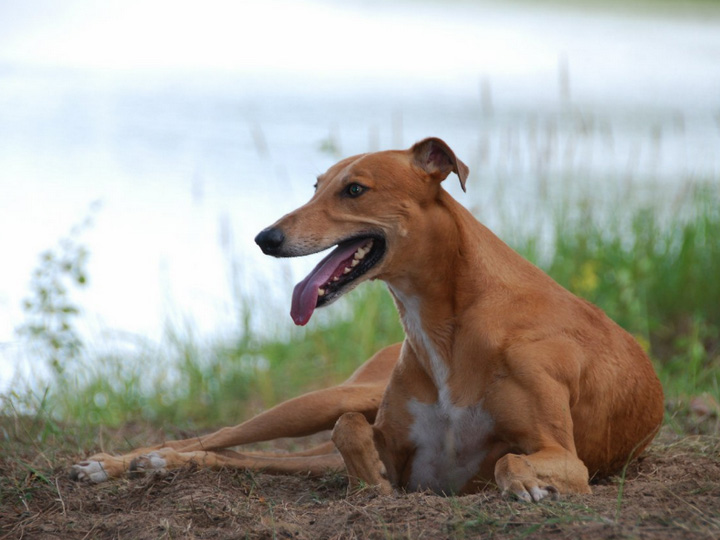
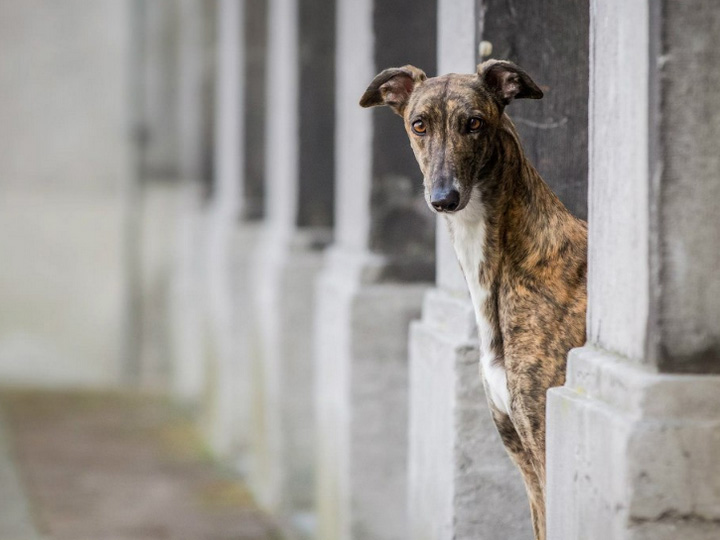
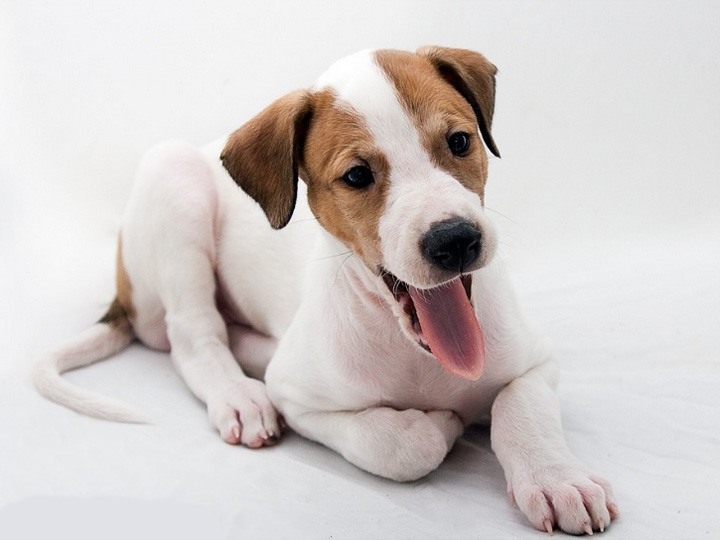
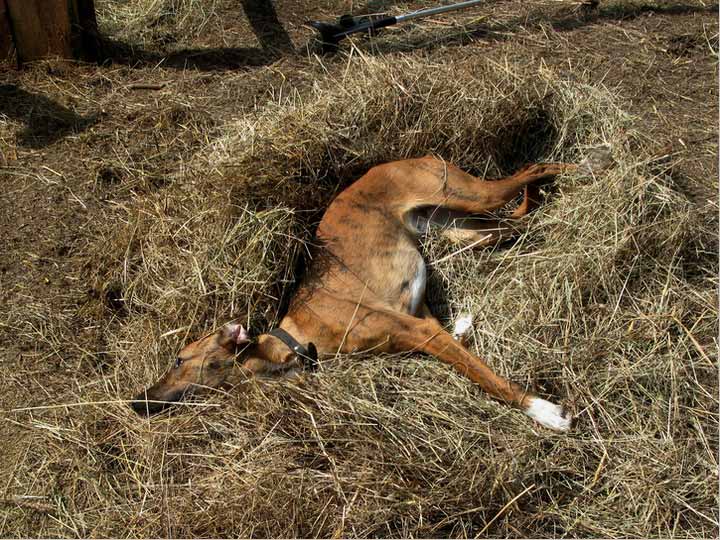
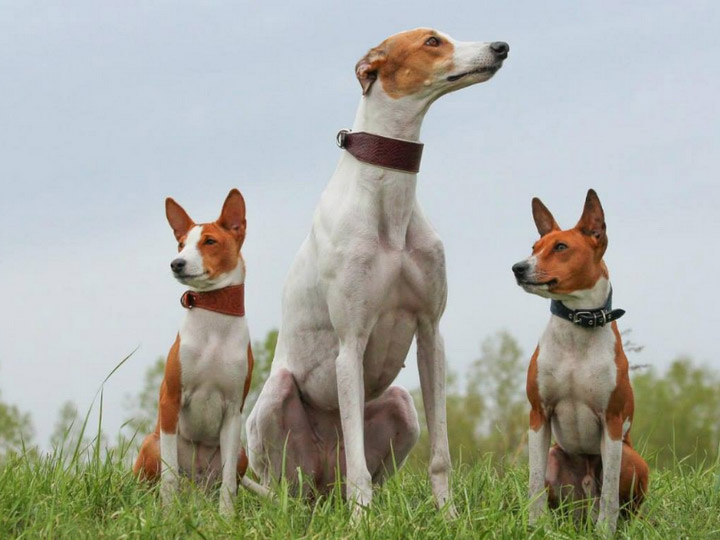
The gallery contains photos of Greyhound puppies and adult dogs.
Read also:


Add a comment