
Hormonal injection for dogs
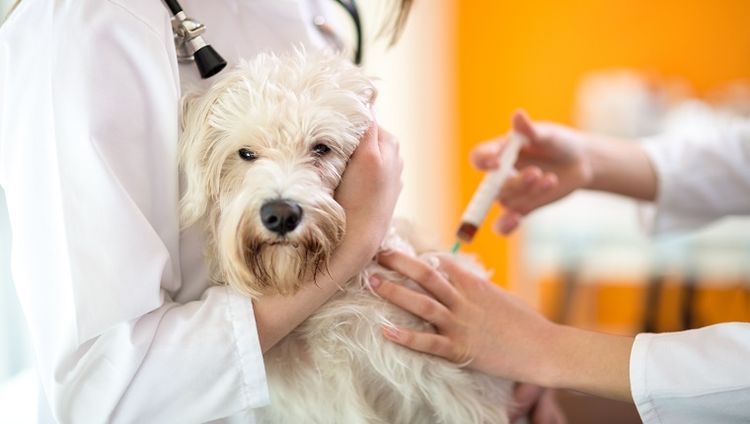
Medications containing natural animal hormones or synthetic compounds with a similar structure and effect on the body are widely used in veterinary medicine. They are used for medical sterilization, as well as for the treatment of reproductive system diseases, endocrine disorders, and allergies.
Content
The effect of hormonal agents on allergies
An allergy is the result of the body's abnormal reaction to various external or internal factors. In this case, the immune system triggers the production of antibodies—special substances designed to fight the perceived "enemy." These substances act as inflammatory mediators, causing the characteristic symptoms of an allergy: rash, swelling of the mucous membranes, and other symptoms, including anaphylactic shock.
Glucocorticosteroids (steroid hormones) have anti-inflammatory, immunosuppressant, anti-allergic, and anti-shock effects on the body. They suppress antibody production, accelerate the elimination of inflammatory factors, and reduce cellular sensitivity to them. Hormonal medications are available for topical and internal use, the latter being divided into oral and injectable.
Important! Injectable medications provide the fastest and most powerful effect. However, hormonal injections are only prescribed for serious conditions where the active ingredient of the medication needs to enter the bloodstream as quickly as possible—for example, to treat an acute allergic reaction or a severe allergy.
Injectable drugs
Hormonal allergy medications can be administered either intravenously or intramuscularly. These medications are available as solutions in ampoules, suspensions, or lyophilized powders in vials. For dogs, the following may be used:
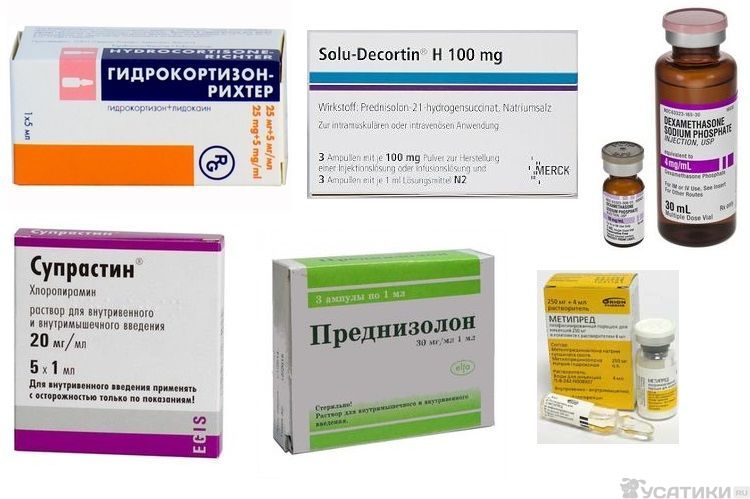
- Hydrocortisone. A 2.5% hydrocortisone acetate suspension is produced by the Ukrainian company Farmak. Each package contains 10 2 ml ampoules and costs from 300 rubles.
- Suprastin. One of the more expensive steroid medications, this product is from the Hungarian pharmaceutical company Egis. It is available in 1 ml ampoules, each containing 20 mg of chloropyramine hydrochloride. The price for one ampoule ranges from 130 to 170 rubles.
- Prednisolone. The most popular corticosteroid for systemic use, it has potent antiallergic and immunosuppressive effects. It is typically administered intravenously. Ampoule solutions prednisolone Sodium phosphate is produced by many domestic and foreign pharmaceutical companies, including Biosintez (Russia), Biopharm (Ukraine), Gedeon Richter (Hungary), Ipka Laboratories (India), and others. A package of Prednisolone from Biopharm costs about 80 rubles.
- Diprospan. An effective treatment for acute allergic reactions from the American company Schering-Plough. The active ingredients are betamethasone dipropionate and disodium phosphate. One ampoule of Diprospan costs 225 rubles.
- Metipred. An injectable medication based on prednisolone. It is available as a lyophilized powder in 250 mg vials. Each vial costs approximately 500 rubles. Manufactured by Orion Corporation (Finland).
- Solu-Decortin. A new-generation prednisolone-based corticosteroid with minimal side effects. Manufactured by Merck KGaA (Germany).
- Dexamethasone. The active ingredient in the drug, sodium dexamethasone, has an effect similar to prednisolone. This corticosteroid is widely used as a first aid treatment for severe allergies, including edema and anaphylactic shock. Dexamethasone is produced by the Russian pharmaceutical companies Akrikhin, Vector, Vostok, and Wicher-Pharm; the German pharmaceutical companies Bayer and Weimer Pharma; and the Polish pharmaceutical company Polfa AO. A package (5 1 ml ampoules) of the Russian drug costs approximately 100 rubles.
Important! A veterinarian will determine whether a dog needs a hormonal injection for allergies. They will base their decision on the animal's examination results, the severity of the illness, the dog's age, and any underlying medical conditions. Self-administration of hormonal medications for allergy treatment is prohibited.
How to give a dog a hormonal injection
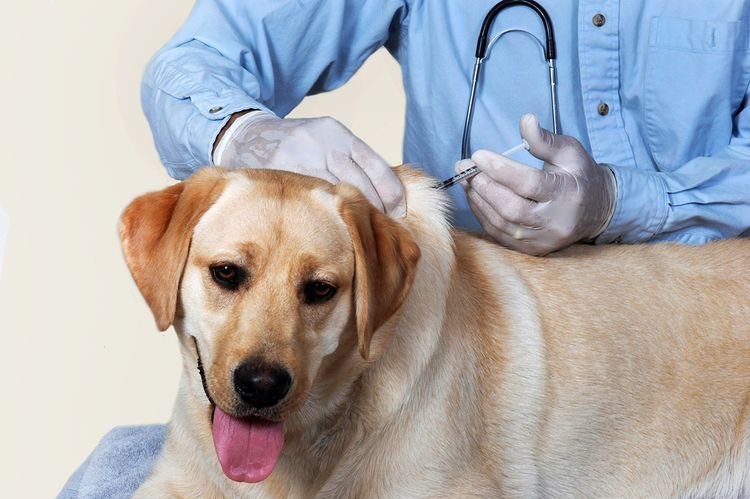
The intravenous injection of the hormonal drug is performed by a veterinarian. Intramuscularly, in the area of the thigh or shoulder blades, where there are no large nerves and vessels, and the muscle layer is quite thick, the medicine can be injected independently, but this requires a certain skill.
The procedure is as follows:
- Remove the contents of the ampoule, which has a filed and broken tip, using a needle and a spudger. Then, turn the syringe needle up and press the plunger to expel any air. If lyophilized powder is used, inject the solvent into the vial by puncturing the cap. Shake the contents thoroughly until a homogeneous suspension is obtained.
- With one hand, fix the selected area of the thigh or shoulder blade, and with the other, insert the needle into its middle at an angle of about 45° to a depth of 1.5-2 cm.
- Press the syringe plunger to squeeze out the medicine and remove the needle.
- Lightly massage the injection site. There is no need to disinfect the dog's skin before or after the injection.
All steroid hormones have side effects, including weakened immune systems, muscle weakness, and gastrointestinal disturbances. Therefore, in most cases, hormonal injections for dogs with allergies are given as a single dose to stop an attack. A veterinarian may prescribe a course of hormonal treatment over several days only in extremely severe cases.
Read also:
- Injections for dogs against distemper
- Chicken allergy in dogs
- Allergic otitis in dogs: symptoms and treatment


1 comment
Anastasia
Suprastin is not a hormonal medication. Yes, it is a histamine receptor blocker used for allergies, but it is not a steroid.
Add a comment