
Schiller's Hound (Schillerstövare)
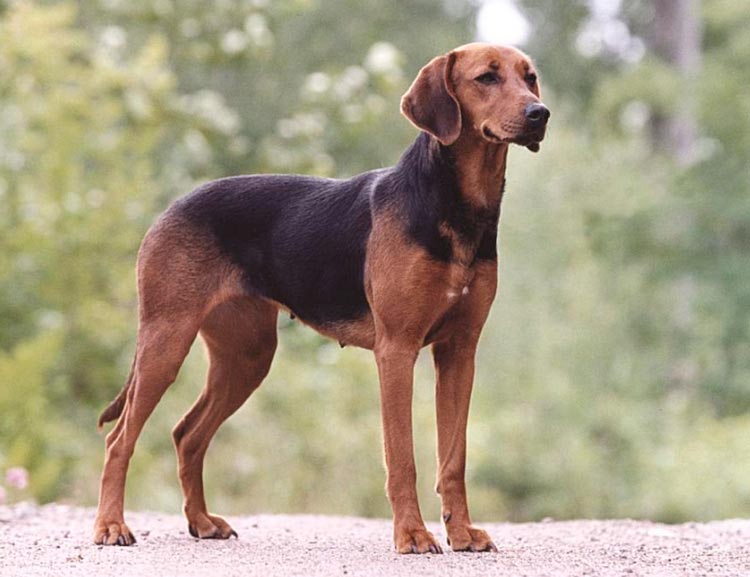
The Schiller Hound (Schillerstövare) is a breed of hunting dog developed in Sweden. Named after its creator, it is a fairly large, smooth-coated dog with a rich red color and a black "mantle." It is used for hunting foxes and hares.
Content
History of origin
At the Royal Hunt Club show in 1886, Stenungsund farmer Per Schiller showed two of her dogs, which won first prize. They were brother and sister, Pang and Stella. These dogs descended from the famous hounds from the Kaflas estate. They were later mated and became the founders of the breed. Their descendants were crossed with Swiss hounds, English (mostly harriers) and German. Incidentally, Patrick Hamilton's dogs were first shown at this same exhibition, giving rise to another Swedish breed named after the author— Hamilton hound.
The Schiller breed group quickly developed a stable phenotype and was officially recognized by the Swedish Kennel Club as the Schillerstövare in 1907. It was registered by the Fédération Cynologique Internationale in 1955.
Usage
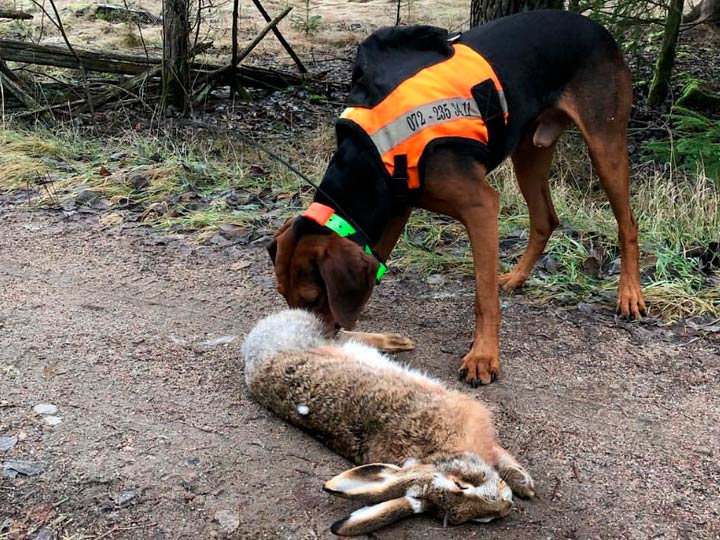
The Schiller Hound is primarily a working hunting dog, suitable for winter hunting of hare and fox. It can also take small fur-bearing animals and lynx. It does not chase deer. It is very lively and hardy. It has a good sense of smell and a clear voice. It is not used for hunting in packs or pairs; it is used only alone. The Schiller Hound is suitable for various search and rescue tasks, service work, and sport.
Appearance
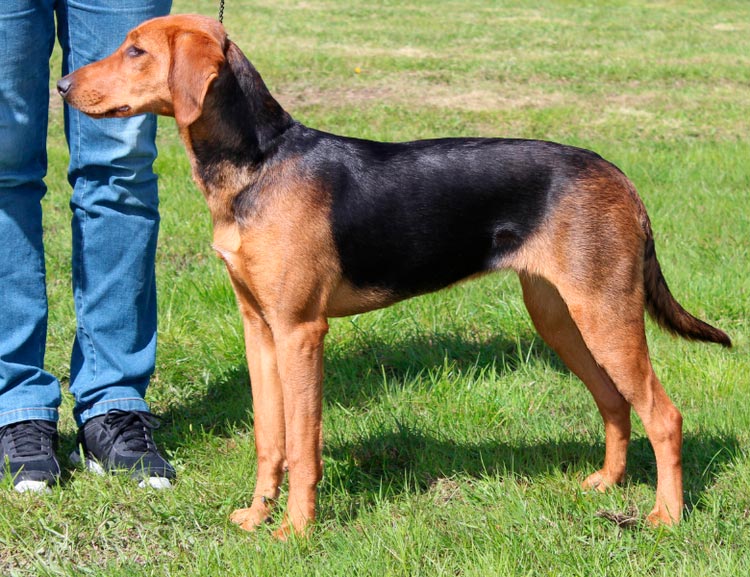
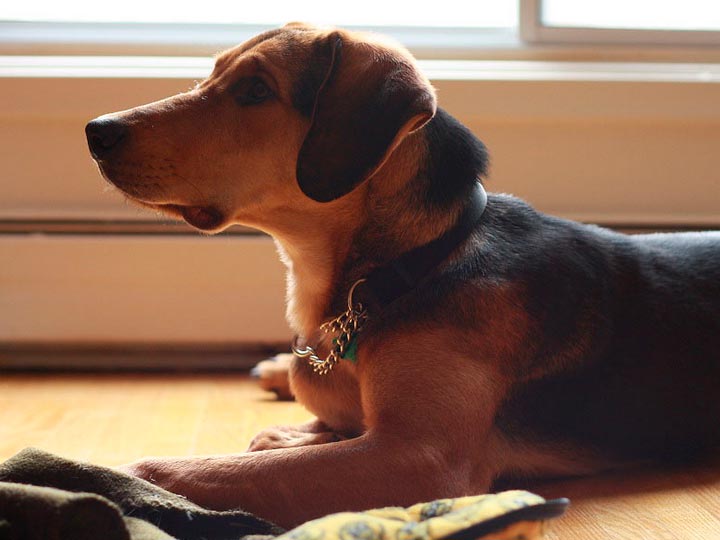
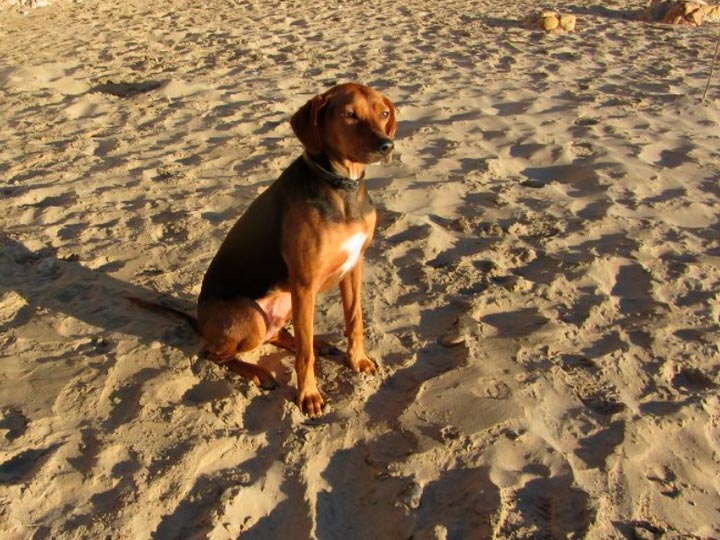
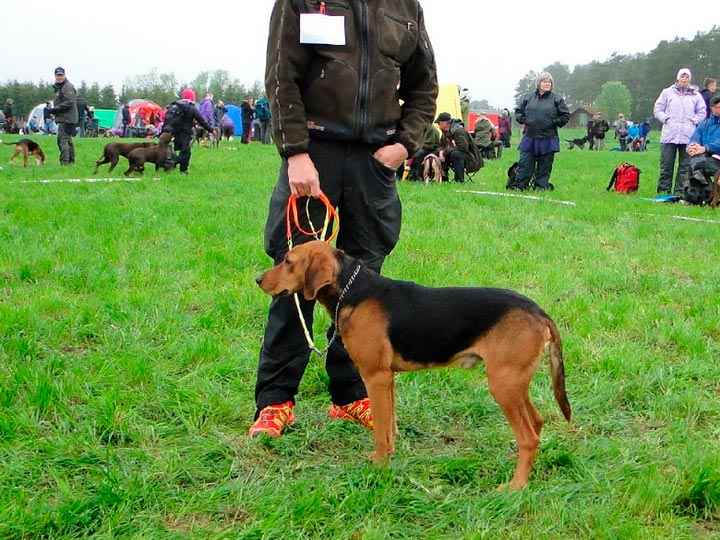
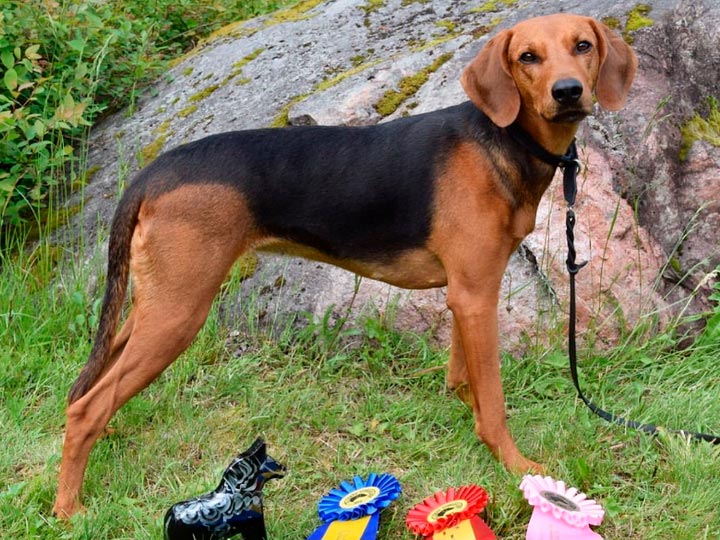
The Schiller Hound is well-built, proportionate, and medium to large in size. Its appearance reflects its function and purpose, conveying an impression of strength and speed. Sexual dimorphism is pronounced.
- Height at withers for males: 53-61 cm;
- The height at the withers of bitches is 49-57 cm.
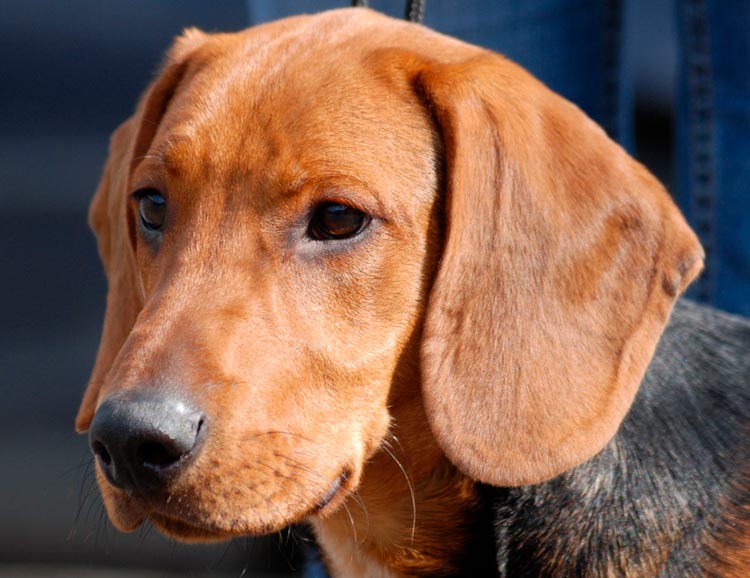
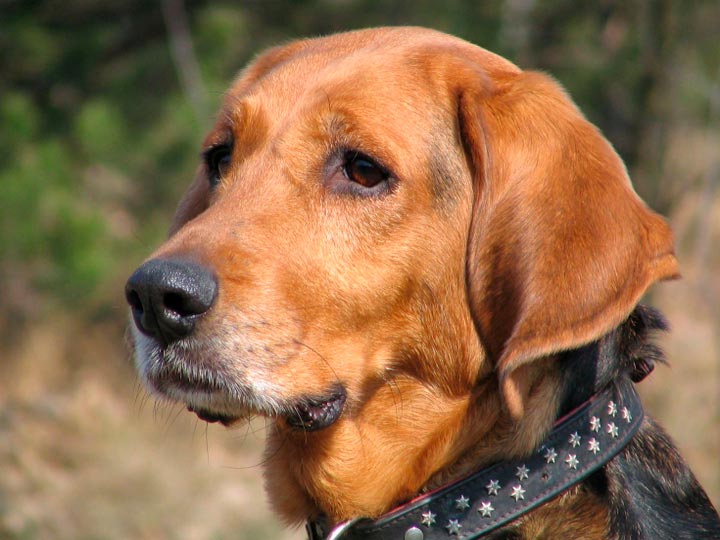
The head is moderately long, triangular in shape, and tapering. The skull is slightly domed, fairly wide between the ears. The stop is pronounced. The earlobe is black, with open nostrils. The eyes are dark brown, with a lively expression. The ears are set high, soft, and hang loosely forward, with the front edge of the fur touching the cheekbones. The neck is strong and long.
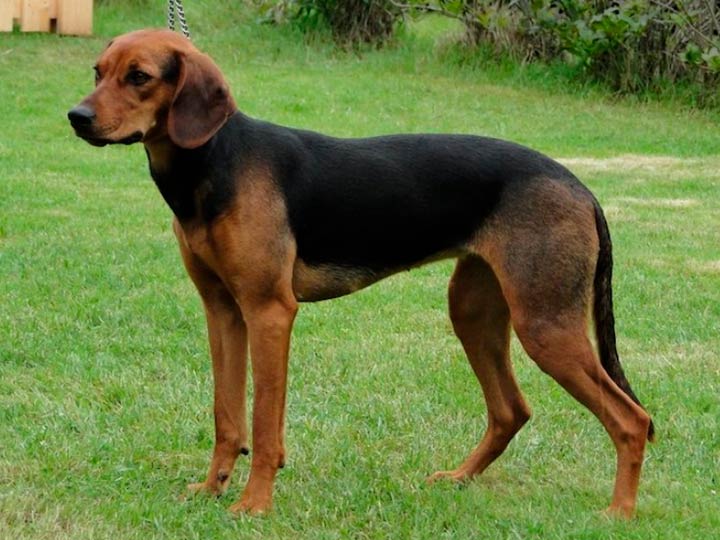
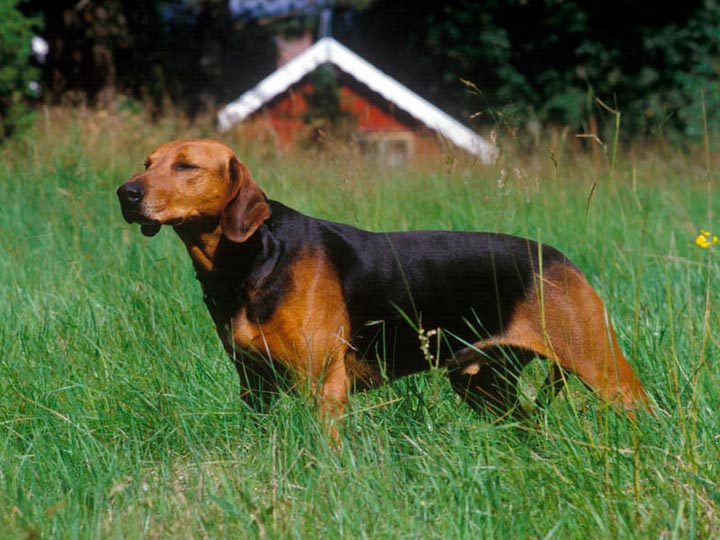
The body is moderately elongated, strongly built, and well-muscled. The back is straight. The loin is slightly arched. The croup is slightly sloping, wide, and long. The chest is deep and long. The belly is slightly tucked up. The tail is straight or saber-shaped, set high. The limbs are strong, straight, and parallel, positioned under the body. The paws are oval.
The coat is not very short, lies close, and is coarse. It is shorter and smoother on the head, ears, and front of the legs. It may be somewhat longer on the underside of the tail and back of the thighs. The color is a rich red with a well-defined black mantle.
Character and behavior
The Schiller Hound has a peaceful, even temperament. It is obedient, clean, and active. With proper training and regular exercise, it is easily trained. It forms a strong bond with its owner. In everyday life, it is affectionate and friendly. It fits well into any family, but at the same time strives to be in control. It requires an owner with a strong character and, preferably, experience with hunting dogs.
The Schiller Hound requires a lot of attention. It is quite tolerant with children. It gets along well with other pets, but can be hostile toward strange dogs. Its territorial instinct is not strong enough to make it a good watchdog.
Content Features
The Schiller Hound is well-adapted to outdoor life. It requires daily walks and good exercise. It can be kept in a city apartment, provided it receives regular, long walks. A more suitable option would be a spacious enclosure outside the city with ample opportunity to explore rough terrain.
A short-haired dog doesn't require extensive grooming. It only requires occasional brushing, somewhat more frequently during shedding season, and regular maintenance of its eyes, nails, and teeth.
Health and life expectancy
No complex hereditary pathologies have been recorded in the breed, although sometimes the following occurs in Schiller hounds:
- hip dysplasia;
- allergy;
- congenital heart defect (patent ductus arteriosus);
- cryptorchidism.
Life expectancy is 11-13 years.
Where to buy a puppy
Outside of Sweden, the Schiller Hound is rare. In its homeland, it is quite popular. Responsible working dog breeders can be found throughout the country. They are members of the Swedish Schillerstövarföreningen Club and breed their puppies according to its rules. One of these rules states that the hound must be used for its intended purpose. Outside of Scandinavia, Schiller Hounds are rare, kept by dedicated enthusiasts.
Price
In Sweden, the average price of a Schiller Hound is 500 euros.
Photos and videos
You can see more photos of Schiller Hound dogs in the gallery.


Video about the Schiller Hound breed
Read also:


Add a comment