
Hamilton Hound (Hamiltonstövare)
The Hamilton Hound (Hamiltonstövare) is a fairly large hunting dog breed that was developed in Sweden in the late 19th century. Hardy, hardworking, with excellent eyesight and scent, it specializes in hunting foxes and hares. Today, the loyal and obedient Hamilton Hound is often adopted. as a companion.
Content
History of origin
The history of hounds in Sweden began in the 16th century. With the advent of weapons and a new form of hunting, hunting dogs began to be imported from England, France, Germany, and other European countries. Until the late 18th century, hunting with hounds was the preserve of the upper classes. Many nobles maintained kennels and bred their own type of hound. With the lifting of restrictions, they quickly spread throughout the country, producing a multitude of hounds, each excellent in appearance and working ability.
In the mid-19th century, Count Adolph Patrick Hamilton, known for his love of dogs and hunting, began targeted breeding efforts. His "ideal" hound had to meet a number of requirements: it had to be intelligent and independent in its work, yet obedient, undemanding, hardy, and friendly. The Hamilton hound is believed to be a cross between various Swedish and southern German hounds. foxhounds And harriersThe breed was first exhibited in Sweden in 1886 under the name Swedish Hound. In 1921, it was renamed in honor of its creator.
Purpose
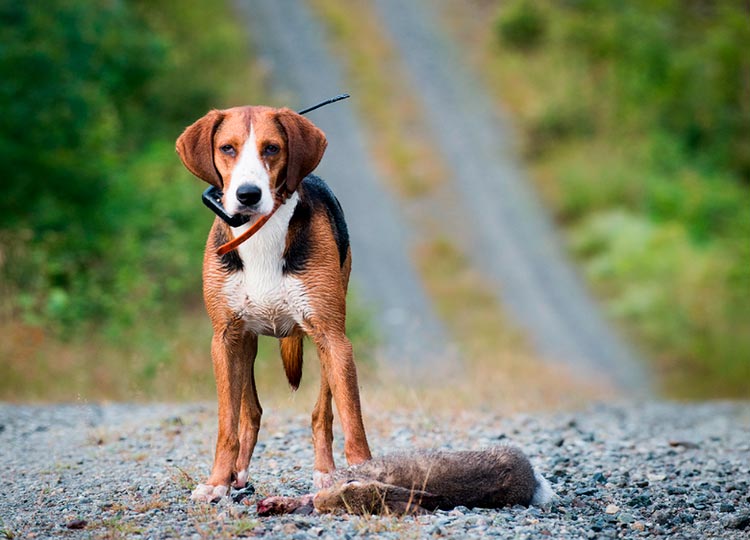
The Hamilton Hound has an excellent sense of smell and vision. Most members of the breed are excellent hunters who prefer to work alone, rarely in pairs. They are used to hunt hare and fox, but are never used on red-hoofed animals.
Today, Hamilton hounds are increasingly being kept as companions. They can also be seen competing in agility, frisbee, tracking, and other sports.
Appearance
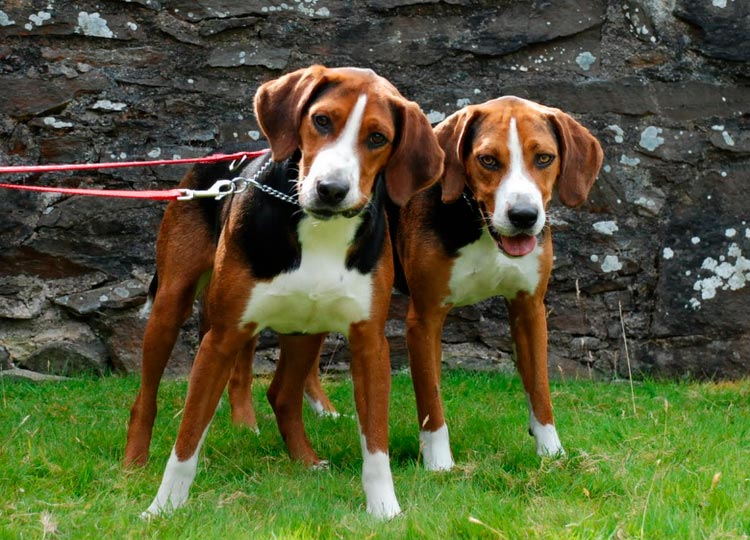
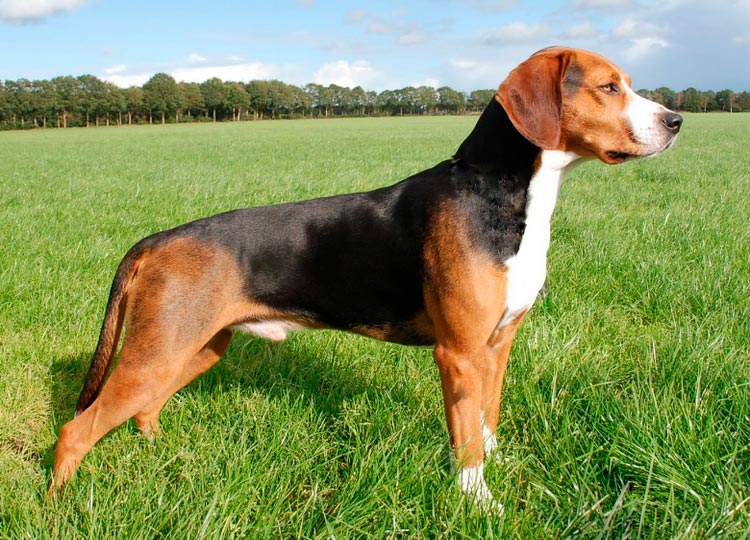
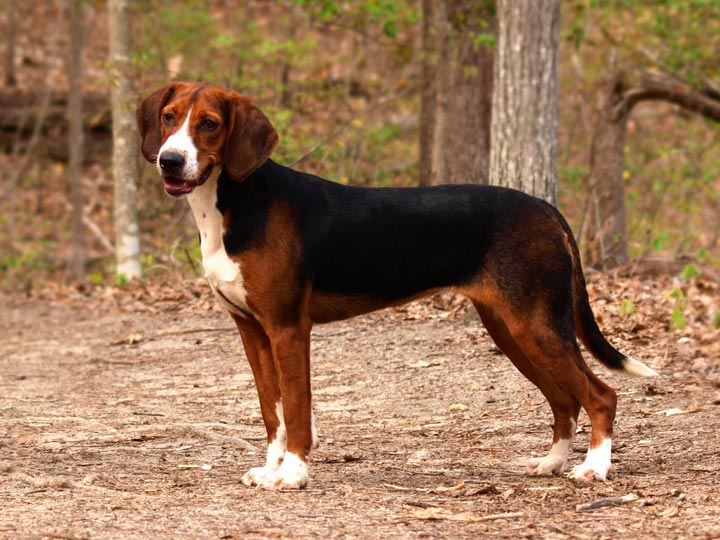
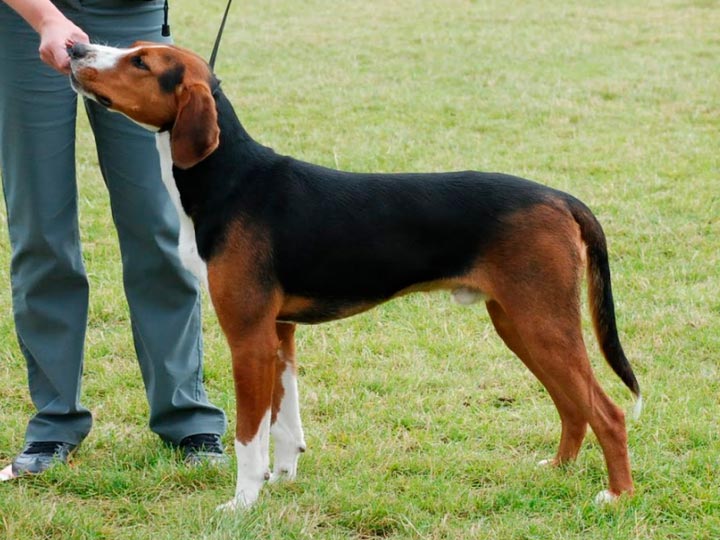
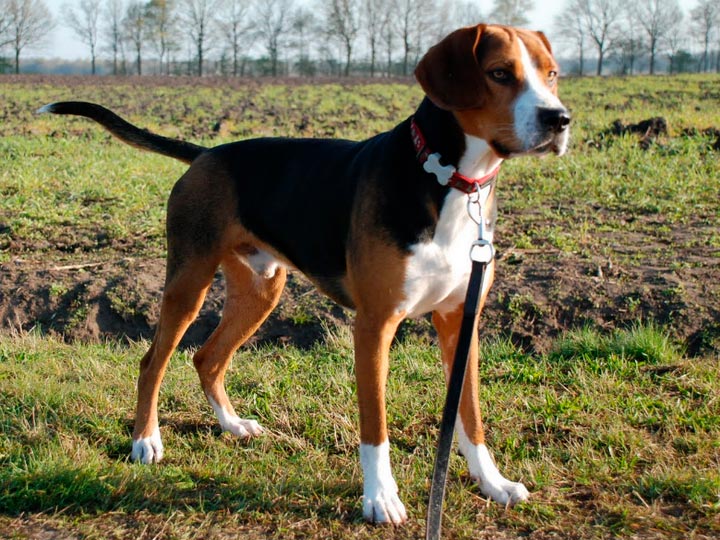
The Hamilton Hound is a balanced, harmoniously built, stately dog that gives the impression of strength and endurance without being heavy. The coat is medium-length and tricolor. The body is moderately elongated. Sexual dimorphism is pronounced.
- Height of males: 53-61 cm;
- The height of the bitches is 49-57 cm.
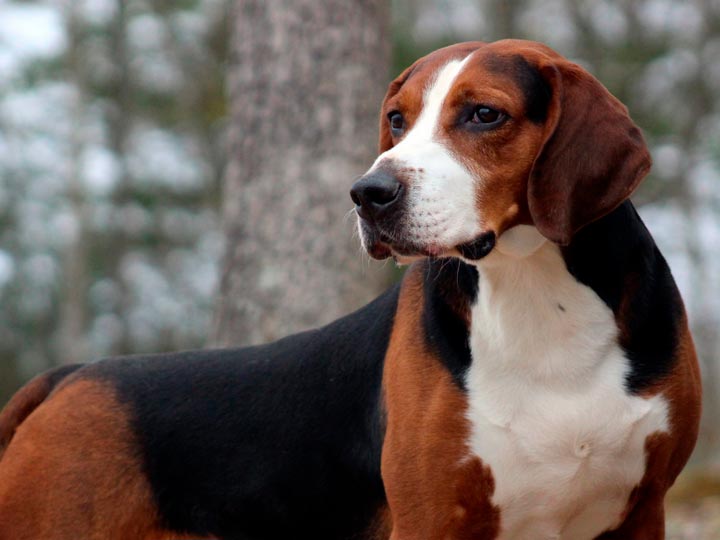
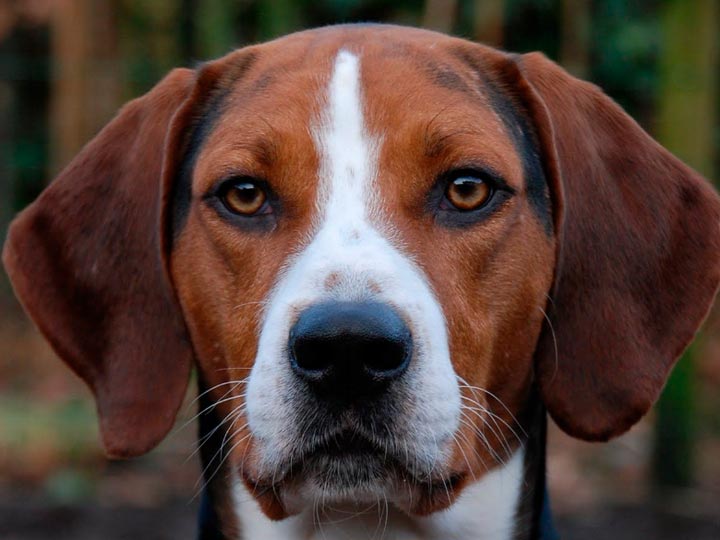
The head is elongated. The skull is slightly domed. The stop is well defined. The muzzle is strong, almost rectangular, and long. The bridge of the nose is straight. The nose leather is black and well developed. The upper lip is thin, dry, rounded, and slightly overhangs the lower lip. The jaws are well developed, with a scissor bite. The eyes have a calm expression and are dark brown. The ears are set high, hanging, reaching halfway to the muzzle, soft, and flat. The neck is strong and long.
The body is strong, with prominent withers, a level, straight back, and a well-developed, deep chest. The loin is slightly arched. The croup is long and slightly sloping. The tail is straight or saber-shaped, reaching to the hocks. The forelimbs have strong bone and joints, are harmonious, straight, and parallel. The hindquarters are well set, with well-developed muscles and distinct angulations. The paws are oval and tightly knit.
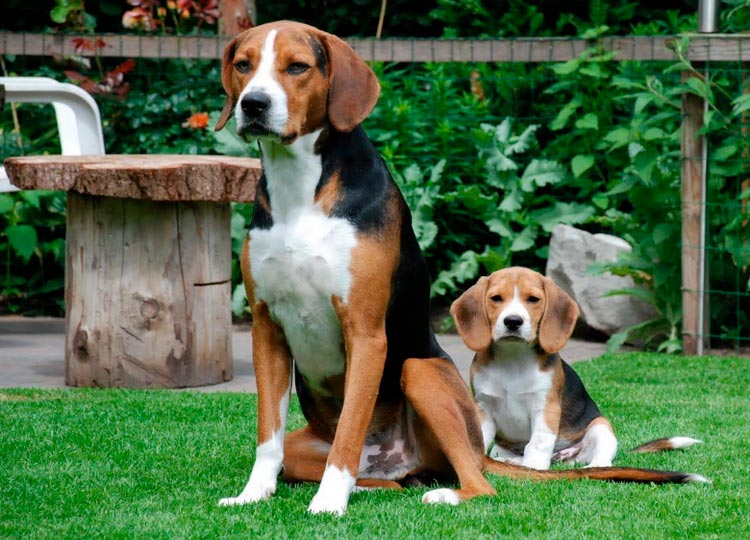
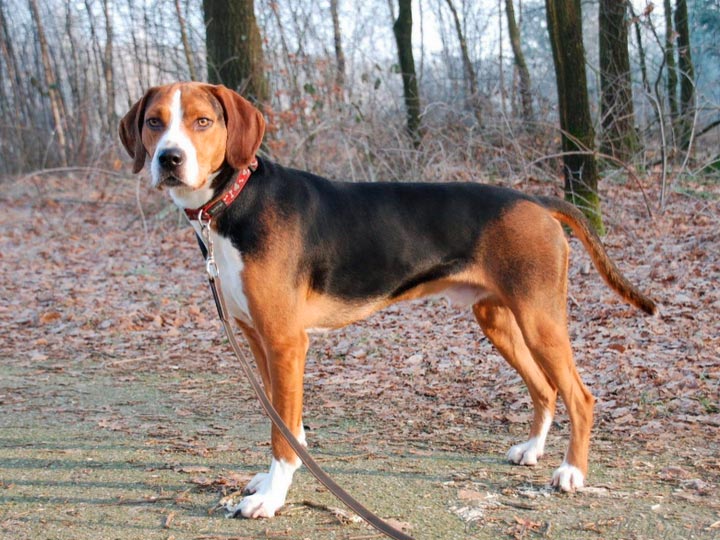
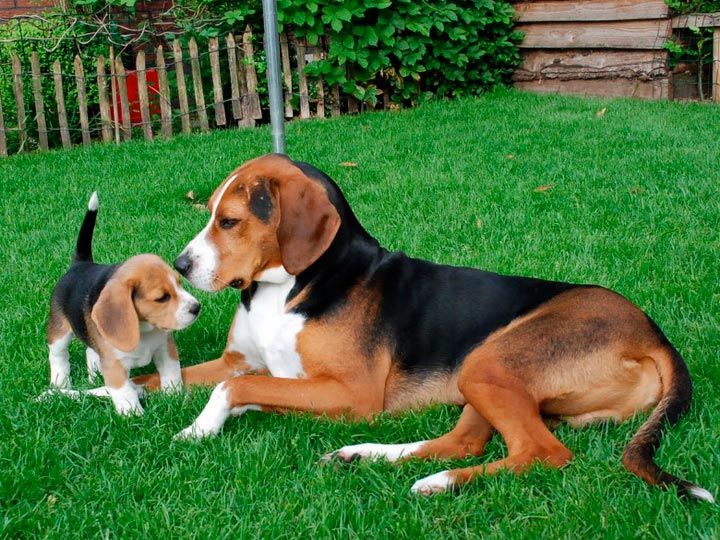
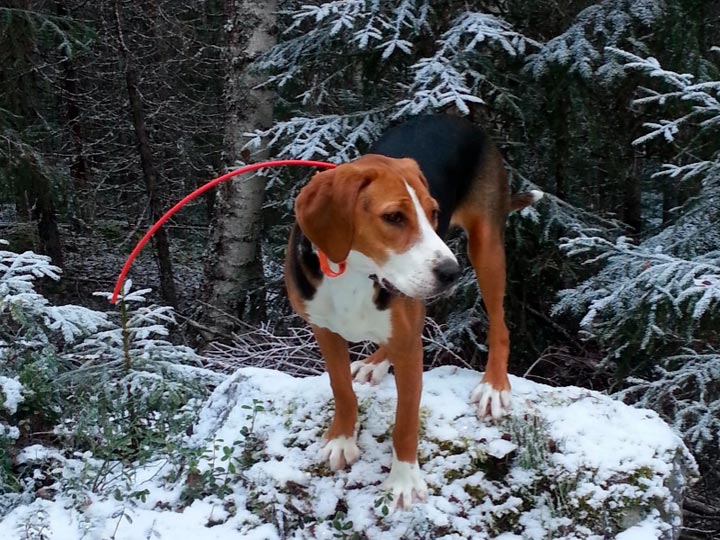
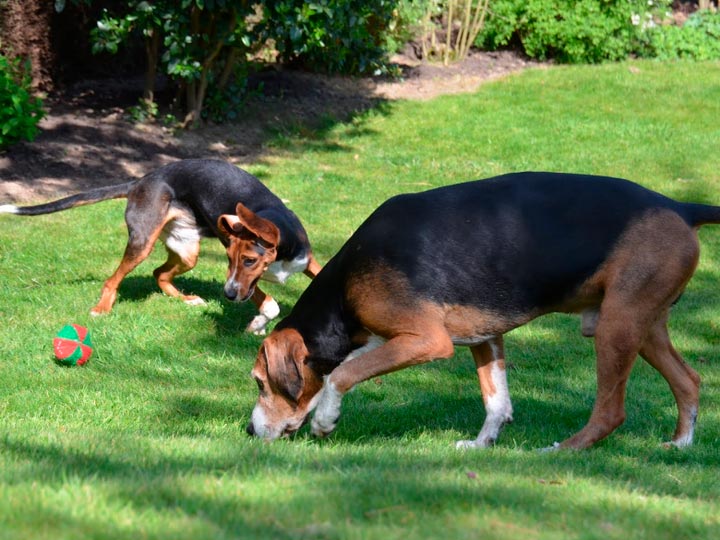
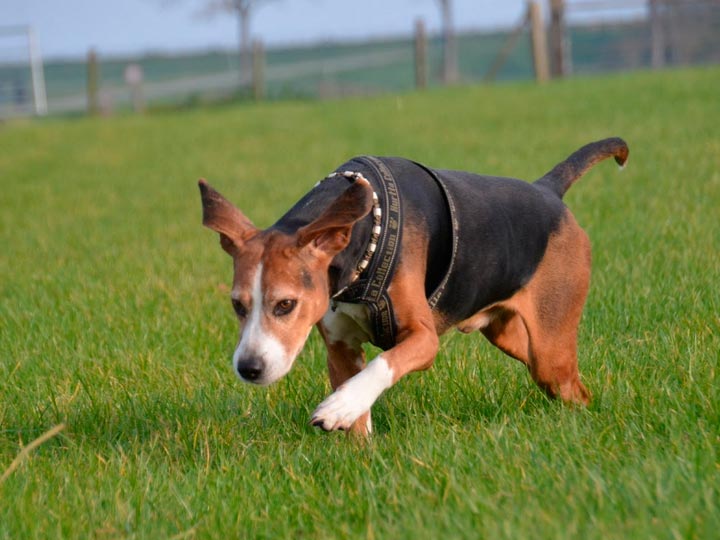
The coat is medium-length, coarse, and lies close to the body. It is shorter and smoother on the ears, head, and front of the legs. It is longer on the back of the thighs and underside of the tail. The coat is tricolor. The upper part of the neck, back, sides, and upper part of the tail are black. The coat on the head, ears, and legs is reddish-brown. The upper part of the muzzle, front of the neck, chest, tip of the tail, lower parts of the legs, and paws should be white.
Character and behavior
The Hamilton Hound is a balanced, friendly, and obedient dog, making it a wonderful companion. Its hunting instincts are strong. It forms a close bond with its owner and becomes strongly attached to other family members and the home. It does not tolerate being left alone for long periods of time. It loves attention and walks. It is cheerful, playful, and mischievous. It is quite tolerant and friendly with children.
Hamilton Stöware are relatively easy to train, but they are not a good choice for inexperienced owners or those unprepared to learn the intricacies of raising and caring for hounds. Typical service training, especially ZKS training, can be very damaging to the dog's psyche. By nature, they are very sensitive and independent individuals, remaining obedient and responsive until they decide to do things their own way.
Friendly and social, Hamilton hounds can be wary of strangers and avoid close contact, but aggression is not typical. They bark a lot. They have strong watchdog qualities, but lack protective tendencies. There are rare cases of Hamilton hounds defending their owners in critical situations. They get along well with other pets, but are known to be aggressive toward small animals and can be intolerant of unfamiliar dogs.
Content Features
The optimal option for a working dog would be to keep it in the yard of a private house or in a spacious enclosure. The Hamilton Hound is not the best choice for an apartment. She values freedom and needs good exercise. The yard where the dog lives should be well-fenced.
The Hamilton Hound is very physically fit and requires regular long walks, including in the countryside, to maintain its shape. On walks, the Hamilton Hound is very energetic and resilient, and its behavior clearly demonstrates a desire to track and pursue prey. This is a wonderful quality for a hunting dog, but in the city it often becomes a nuisance.
Care
The Hamilton Hound doesn't require extensive grooming. Regular brushing is recommended to maintain a neat appearance and promote shedding. Bathing is recommended as needed. Owners should also keep an eye on the dog's nails and eyes and ears clean.
Health and life expectancy
The Hamilton Hound is considered a healthy breed. Most dogs are strong, hardy, and rarely get sick. Life expectancy is 10-13 years. Hereditary diseases are rare and include:
- hip dysplasia;
- dislocation of the patella;
- epilepsy;
- gastric torsion;
- development of tumors.
Some Hamilton hounds may suffer from allergies, most often food-related. If they lack exercise and are fed an unbalanced diet, they are prone to obesity.
Where to buy a puppy
In Sweden, the Hamilton Hound is very popular and common not only among hunters but also as a companion dog. Significant populations are also currently concentrated in Germany, the UK, and the US. In the 1990s, many dogs were exported to Poland, New Zealand, and Australia. Elsewhere, the breed is small in number and little known.
Price
Puppy prices vary widely. The cost of a small hound from working parents good exterior Prices can reach 1,500 euros. Mediocre puppies and puppies without papers, but from working parents, usually cost no more than 200 euros.
Photos and videos
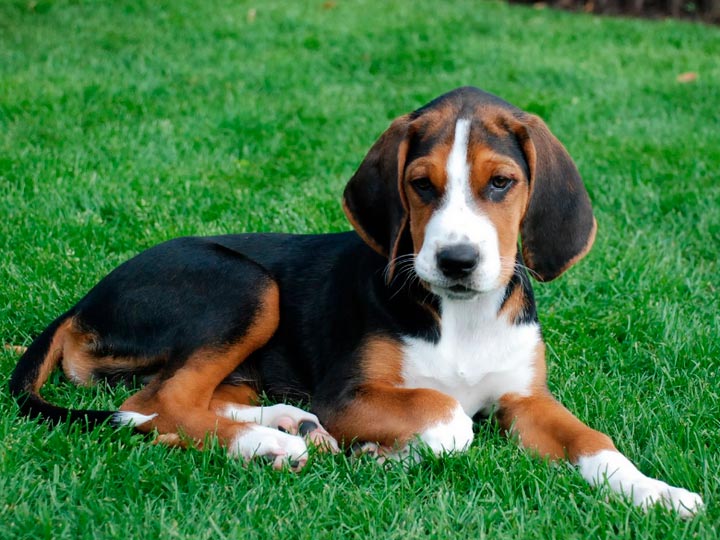
The gallery contains photos of dogs of the Hamilton Hound (Hamiltonstövare) breed.
Videos of Hamilton Hounds
Read also:


Add a comment