
Glycopin for cats
Glycopin is a safe immunomodulator used for the prevention and treatment of immunodeficiency in cats. Developed by the Moscow-based company Peptek, this medication has found wide application in veterinary medicine. It can be used in combination with other medications for acute and chronic viral, bacterial, or fungal pathologies, as well as in monotherapy.
Content
General description
Glycopin is produced as small, white tablets. Each tablet has a dividing line in the middle, making it easy to divide, which is especially helpful for cat owners. The tablets are packaged in blister packs of 10.
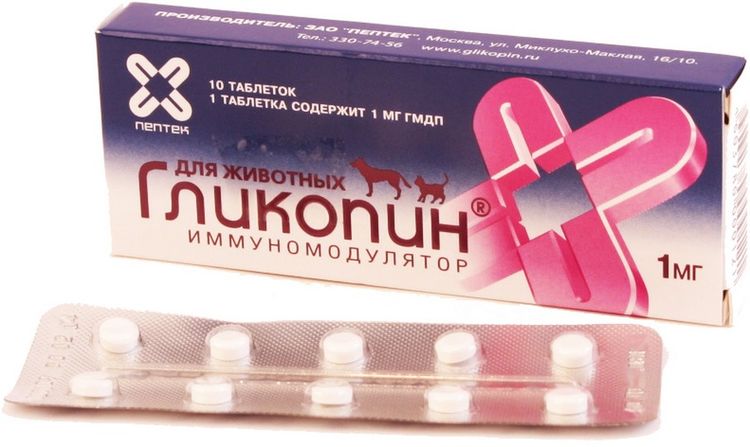
The main active ingredient is glucosaminylmuramyl dipeptide (GMDP), which is a minimal fragment of bacterial cell wall peptide glycan. The composition also includes components that perform auxiliary functions:
- potato starch;
- calcium stearate;
- lactose monohydrate;
- methylcellulose;
- sucrose.
The medicine should be stored at a positive temperature not exceeding 25˚C, away from sunlight, which can destroy the active substance.
How it works
The immunomodulator is a natural product, containing a "cell wall"—a cellular component that provides protection against external negative factors. The drug has the ability to boost immunity and mitigate the effects of severe reactions. The medication also has the following effects:
- eliminates inflammatory processes by reducing the production of substances that participate in them;
- destroys viruses, bacteria, fungi and other pathogenic microorganisms by increasing phagocytosis;
- stimulates tissue regeneration;
- relieves or prevents the negative effects of stressful situations;
- increases the overall resistance of the body;
- improves the effect of antitumor drugs;
- promotes the formation of immunity during vaccination.
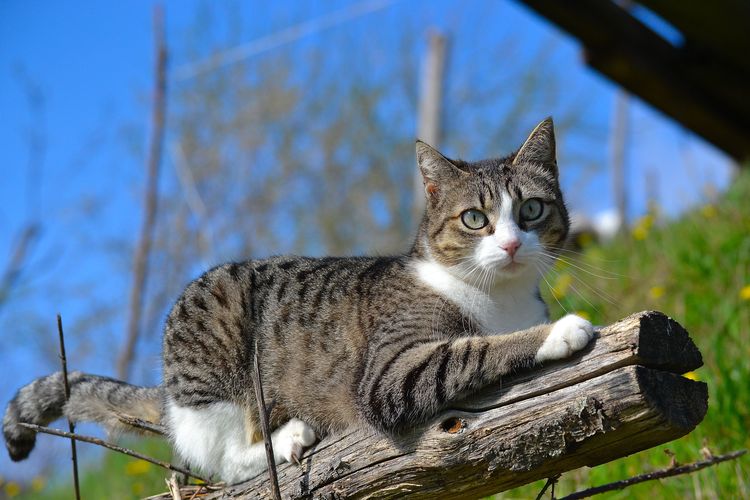
Glycopene is characterized by its gentle action on all parts of the immune system. Peak blood concentrations of the active substance are reached 4 hours after administration. Bioavailability is 77%. The medication is eliminated from the body through urine and feces.
Glycopin is a low-risk medication. It does not affect fetal development and does not cause mutations. It does not contain toxic substances that could cause poisoning. It does not accumulate in the body, and therefore is not addictive.
Indications for use
According to the instructions for use, Glycopin is prescribed to cats to boost immunity in the following diseases:
- at panleukopenia;
- at infectious hepatitis;
- at infectious rhinotracheitis;
- at demodicosis;
- for parvovirus enteritis and other viral pathologies;
- for diseases of fungal origin;
- for diseases accompanied by an inflammatory process.
The immunomodulator is also used:
- for the treatment and prevention of immunodeficiency conditions;
- in complex therapy for oncological diseases;
- during rehabilitation after surgery;
- to speed up the recovery of cats after giving birth;
- during the vaccination period to form long-term and stable immunity against viral diseases;
- for healing wounds after various injuries (fractures, dislocations, lacerations, etc.).
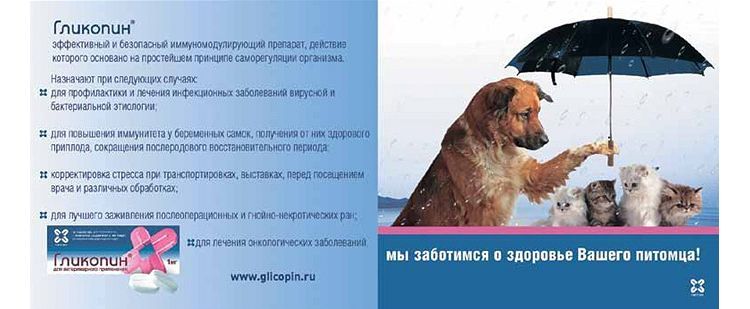
Glycopin can be used prophylactically in newborn and elderly animals whose immune systems are weakened by chronic diseases and other factors. It is also recommended for the prevention or relief of stressful situations. Tablets are also given to animals in the following cases:
- during transportation;
- when visiting a veterinary clinic;
- when guests arrive;
- when performing hygienic procedures (trimming claws, etc.);
- when the owner leaves and in other situations that may cause stress in the animal.
Instructions for use
Glycopin is administered to cats orally before or during meals. The tablet should be placed on the back of the tongue or diluted in water and administered using a needle-free syringe. The latter option is preferable for small kittens and severely weakened animals.
The dosage and treatment regimen depend on the pathology and the animal’s weight:
- For oncological and infectious diseases, cats weighing 1 to 3 kg are given 1/4 to 1/2 tablet once daily, while animals weighing over 3 kg are given 0.5 to 1 tablet. The course of treatment is 5 to 7 days. The immunomodulator is usually combined with symptomatic medications.
- If the medication is used to enhance the effectiveness of a vaccination, animals weighing up to 3 kg are given half a tablet, and pets weighing over 3 kg are given one tablet. The medication is administered once or twice, 24 hours apart. The same dosage regimen is used after surgery and for purulent wounds or injuries that take a long time to heal.
- To prevent the negative effects of stress, give your cat 1/4-1/2 tablet, depending on its size, 24 hours before the stressful event. The treatment can be repeated 24 hours later.
- To speed up postpartum recovery and prevent potential complications, the medication is administered as a single dose of one-quarter to one-half tablet. If necessary, the dose is repeated after 24 hours.
Please note! Failure to follow the recommended treatment regimen or missing a dose may negatively impact the effectiveness of the immunostimulant.
Contraindications and side effects
The instructions state that Glycopin has no contraindications and can be used for cats of all breeds. An exception is individual intolerance to the components, which manifests as allergic reactions, but this is rare. The drug is approved for use on newborn kittens, elderly pets with multiple chronic illnesses, and weakened and emaciated animals.
Important! Glycopin is considered a safe medication, but it should only be used on pregnant cats under veterinary supervision.
The immunostimulant can be used in conjunction with antibacterial agents, anesthetics, and other medications for symptomatic treatment. It is compatible with various types of feed from domestic and foreign manufacturers. It is not recommended to use Glycopin concurrently with high doses of glucocorticosteroids.
The drug is generally well-tolerated by animals of all breeds and ages and does not cause any side effects. In rare cases, a short-term increase in body temperature may occur. No special measures are required in this case. No adverse effects have been reported with overdose.
How much does it cost and where can I buy it?
The price of Glycopene ranges from 250 to 300 rubles in different pharmacies. Since it is produced by a domestic company and is popular among veterinarians, it is available in most veterinary pharmacies. It can also be purchased at pet stores or online pet pharmacies. This immunostimulant is available without a prescription.
Owner reviews
Vera, owner of a 7-month-old kitten:
"We used Glycopin for our kitten as part of a comprehensive treatment for mycoplasmosis. I can't say for sure that this medication was responsible for his quick recovery, as we were also taking other medications, but the cat hasn't had any infections or other illnesses for a year. The tablets don't have a bitter taste, so there were no difficulties administering them."
Evgeniya, owner of a Thai cat:
"When my cat was diagnosed with rhinotracheitis (she had small kittens at the time), we gave her Glycopin for 10 days. We were very worried about the kittens, as the infection is dangerous for them. The cat ate the tablets without any problems, along with her food. We managed to avoid any serious consequences, but I did notice a side effect—a decrease in appetite. Nyura started eating less, but after completing the course, her appetite returned."
Veterinarian Reviews
Regina, a veterinarian with 8 years of experience:
"I consider Glycopin to be one of the best immunomodulators on the domestic market. It's inexpensive compared to similar products, yet effective. I recommend it not only for infectious diseases but also for prevention. I often prescribe it after surgeries. I've seen in practice that tissue heals much faster in these cases. I haven't experienced any side effects since I started using it."
Dmitry, a veterinarian with 12 years of experience:
"I don't usually trust immunostimulants, as I've seen in practice how ineffective they are. An exception is Glycopin, which has no analogues anywhere in the world. This medication is a real help and a lifesaver in many situations. In my experience, it helped bring back to life small kittens with rhinotracheitis. Another case involved a dog with a laceration that had been festering for a long time after a fight with other dogs. A course of immunostimulants accelerated the healing process. Most importantly, the medication is completely safe. Furthermore, the manufacturer has conducted clinical trials."
Read also:


Add a comment