
Glen of Imaal Terrier
The Glen of Imaal Terrier is a strong, stocky, and extremely hardy dog, bred in Ireland for a variety of heavy work, including hunting badgers and foxes. Full of courage and a desire to be useful, the Glen is energetic and curious. He has many positive qualities, but for a number of reasons, he is not a dog for everyone.
Content
History of origin
The Glen of Imaal Terrier's history dates back to the 16th and 17th centuries, when many retired soldiers were awarded land in the remote mountain valley of Imaal, County Wicklow, Ireland, as a reward for their service to the British Crown. A new breed of small, yet very strong and sturdy dogs capable of heavy labor emerged from local and imported stock. They spent hours running along conveyor belts, powering machines such as butter churns and straw choppers. They also fought pests, periodically hunted burrowing animals (badgers and foxes), and on weekends, fought with other dogs. Some engravings depict dogs turning a spit of meat over a fire using a large wheel suspended from the ceiling. It is believed that Glen Terriers were also used for this purpose, but this cannot be conclusively stated, as the dogs depicted in paintings differ greatly from typical representatives of the breed.
Ireland has given the world four terriers: Wheat, Irish, Kerry Blue and Glen of Imaal. The latter is the rarest, even in its homeland.
Centuries of hard work have transformed the Glen into the robust and powerful dog it is today. The Glen of Imaal Terrier began appearing at dog shows in the mid-19th century. The Irish Kennel Club recognized the breed in 1934, and the Fédération Cynologique Internationale (FCI) recognized it in 1975 under the name Glen of Imaal Terrier.
Appearance
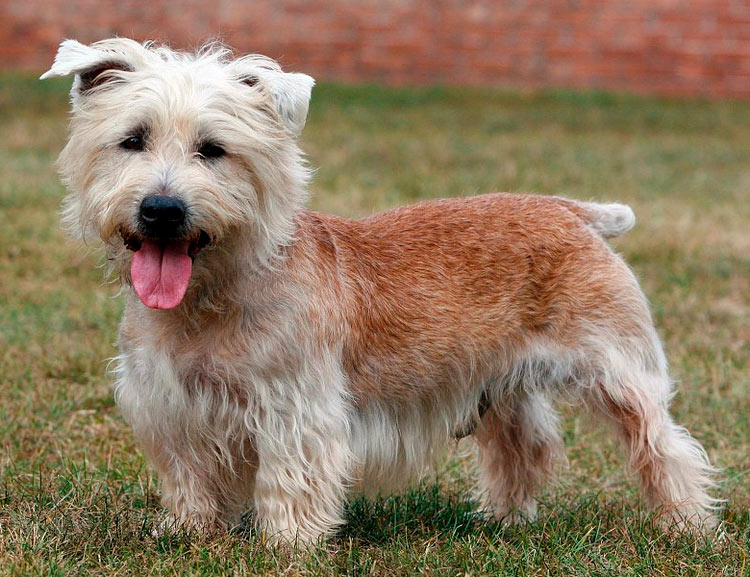
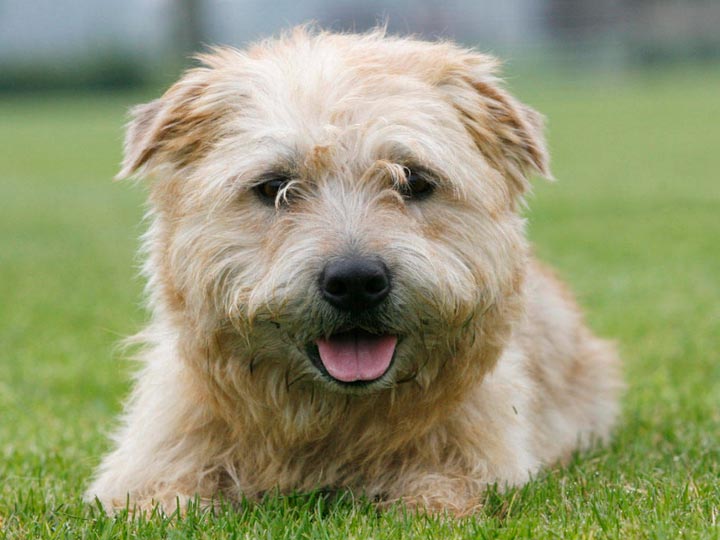
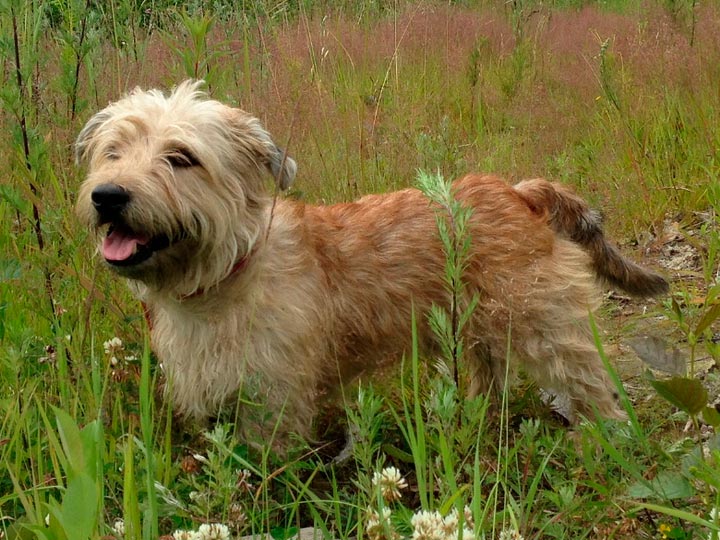
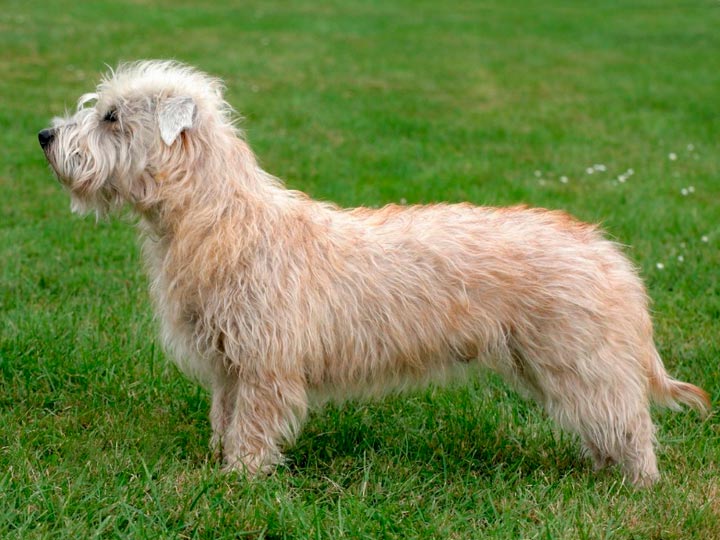
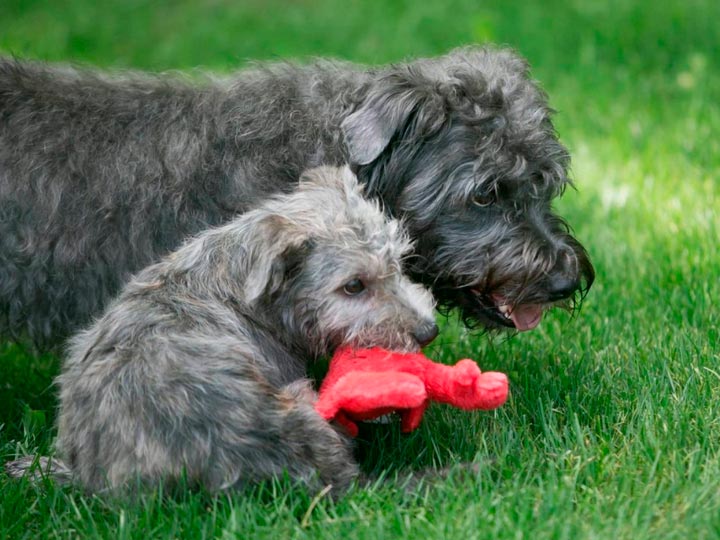
The Glen of Imaal Terrier is a very robust, medium-sized dog that gives the impression of great strength and endurance. It is stocky, somewhat elongated, and has a moderately long, wiry coat. Sexual dimorphism is well-defined. The average height at the withers is 35 cm, and the weight is approximately 16 kg.
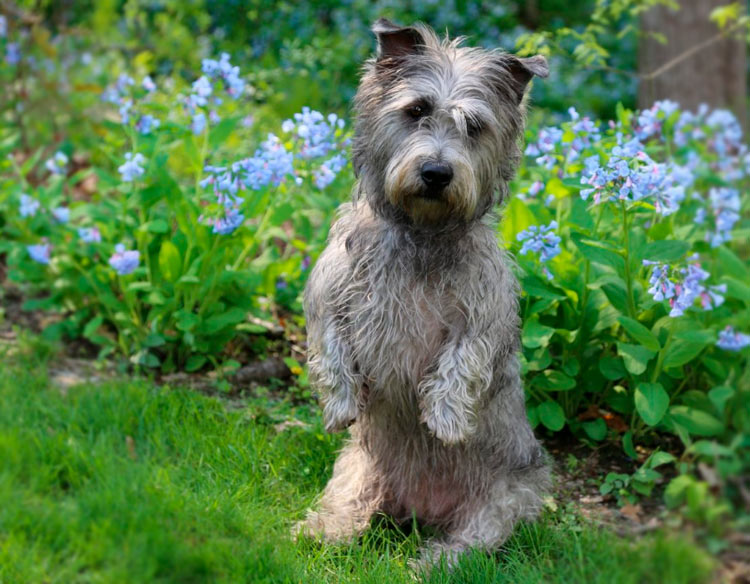
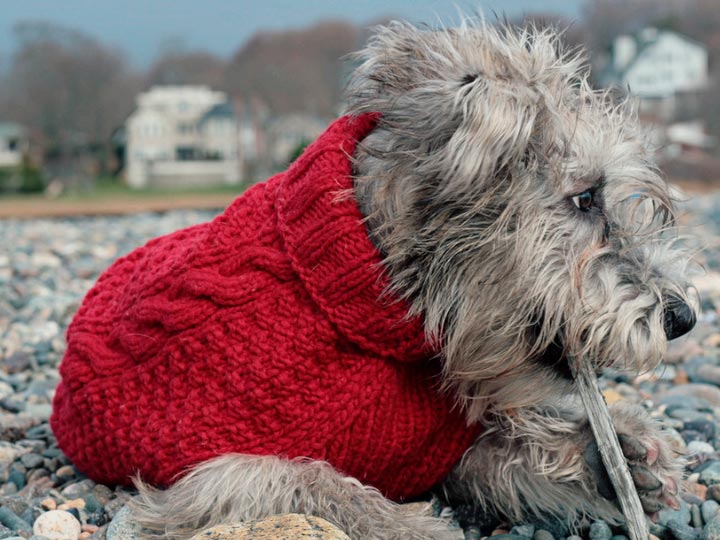
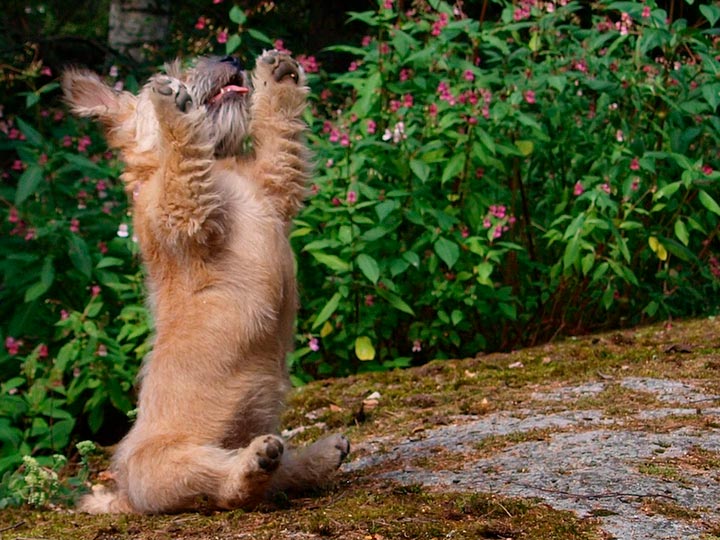
An interesting feature of the breed is its ability to "sit" while holding its body vertically (like the Glen of Imaal Terrier in the first photo).The skull is of good length and width. The stop is well defined. The muzzle tapers slightly toward the tip and is powerful. The nose is black. The jaws are strong. The teeth are strong and of good size. The bite is a scissor bite. The eyes are medium in size, set wide apart, round, and brown. The ears are pendant on cartilage or semi-erect, small, and carried back when at rest.
The neck is of moderate length, very strong, and muscular. The body is long and flexible. The topline is straight and horizontal. The loin is strong. The chest is broad and massive, with well-sprung ribs. The tail is thick at the base, set high, and docked at half length in countries where this is not prohibited. The legs are short, strong, with good bone, and slightly curved. The hind legs are well-muscled. The paws are strong and compact, with rounded pads.
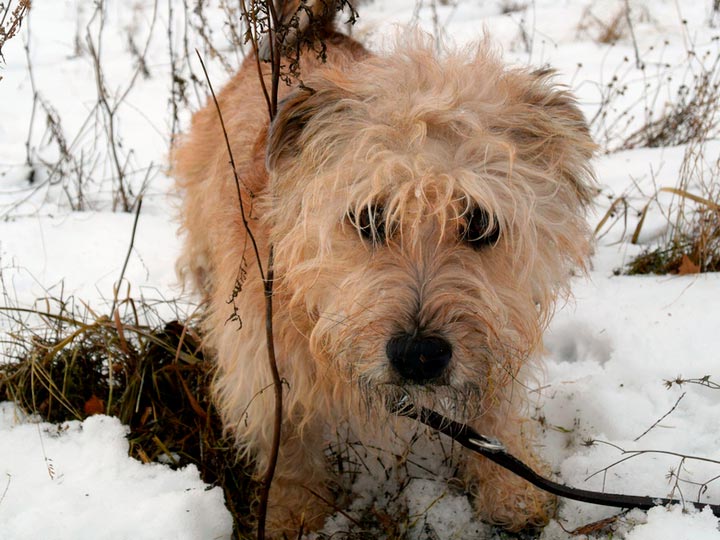
The coat is wiry and medium-length. The undercoat is soft. Several colors are possible:
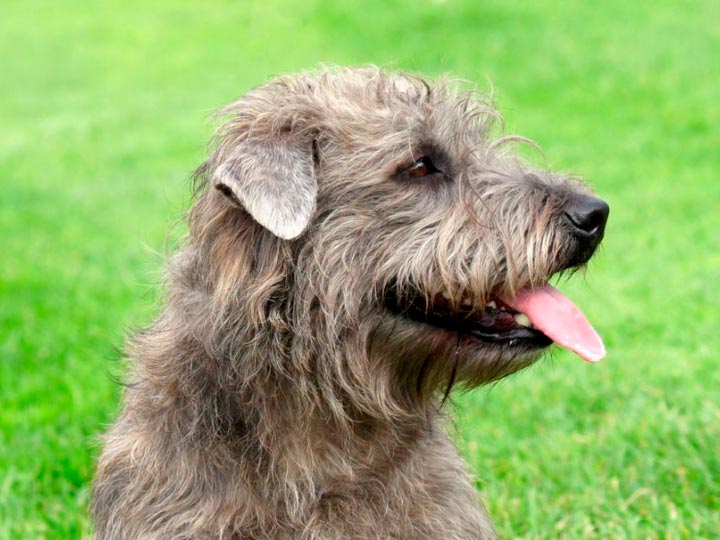
- Blue;
- Brindle (must not go into black);
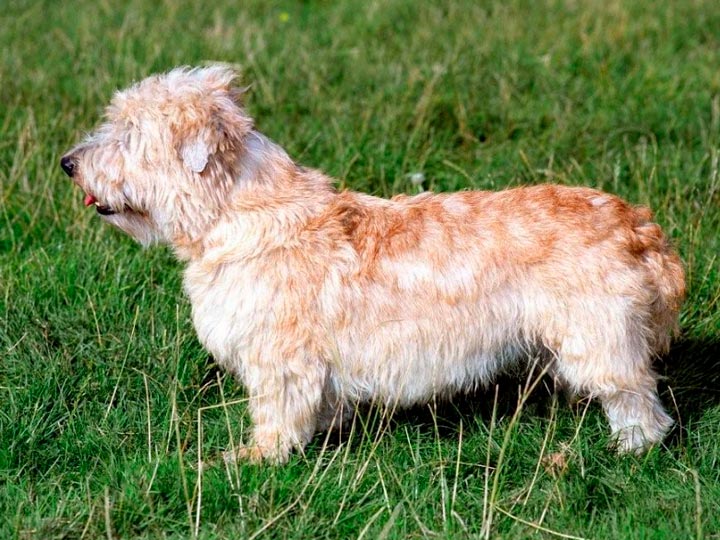
- Wheat of various shades (from very light to golden reddish).
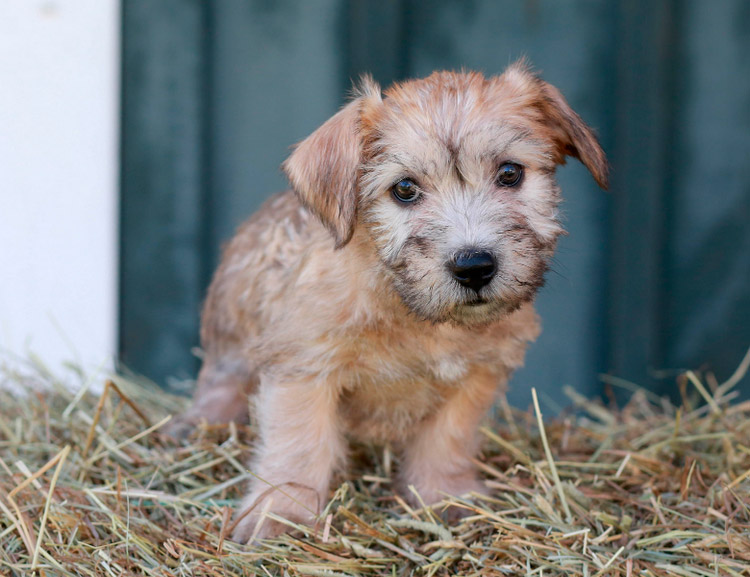
Puppies usually have a standard color (brindle, blue, wheaten or reddish), but often have an ink mask and darkening in certain areas of the body (along the back, on the tail, ears), which fade with age.
Character and behavior
The Glen of Imaal Terrier is active, very resilient, and agile. Everything he does exudes boundless energy, and his character is characterized by strength and courage. He forms strong bonds with loved ones. He is affectionate and obedient with family members. While not as easily excitable as other terriers, he is ready to chase at any opportunity.
The Glen of Imaal barks very little. While many other terriers prized their ability to communicate, the Glen Terrier was bred for silence. Even when hunting, when entering a burrow, the dog does not bark, so as not to scare off prey. Because of this, it was often excluded from various trials and competitions organized by hunting clubs. A Glen Terrier's voice can be heard when the dog is guarding or is highly excited. Interestingly, its bark is very deep, like that of a larger dog. The Glen of Imaal Terrier is a vigilant guard dog, usually not aggressive toward strangers, but always wary. If provoked, it may snap.
The Glen of Imaal Terrier is strong enough to single-handedly tackle a large badger, grab it, and drag it out of its burrow. While working, it usually remains silent, making it difficult for the hunter to locate the dog and dig it out if necessary.
Relationships with other pets vary. Much depends on the individual dog's personality and socialization. Glens are said to be less likely to start a fight, but more likely to finish one. However, most of these terriers live with other dogs and adapt peacefully. coexist with cats, especially if you grew up with them.
At times, the Glen of Imaal Terrier can be overly stubborn and independent. He's always very inquisitive, demands a lot of attention, and loves working with his owner. He'll support any initiative, but don't let him lie on the couch for days on end. Sometimes he may seem unreasonable in his actions. Some dogs enjoy running in circles. In fact, the Glen is quite intelligent and easily trained.
The modern Glen of Imaal Terrier is obedient and affectionate. It has proven itself as a family dog and companion. However, it's important to note that it retains varying degrees of hunting instinct, a dislike of rodents, and a desire to always be busy.
Generally good with children, he can knock little ones over while playing, and even older children may not always be able to keep him on a leash. He's usually not expected to obey anyone other than his owner.
Content Features
The Glen of Imaal Terrier is undemanding when it comes to living conditions. By origin and purpose, it is a working dog accustomed to living in a yard and ensuring that its territory is not encroached upon by enemies, neighbors' cats, other dogs, or pests. Today, Glens are increasingly being kept for house or apartment living, and they don't mind at all, as long as they get plenty of walks. At home, an adult dog is relatively calm. At a young age, they are likely to destroy a pair of slippers.
It is worth noting that Glens are not recommended to be given high-protein diets after one year of age.
Moderate exercise is essential. A daily 30-40-minute walk will help burn off pent-up energy. Long hikes and nature excursions will delight this dog, but he won't enjoy jogging, as his short legs aren't suited for it. Glens rarely make good swimmers, but many enjoy chasing frogs near the shore.
Care
The Glen of Imaal requires little grooming. Weekly brushing with a comb or a hair clipper is recommended, which will minimize shedding. The neck, back, tail, and ears are trimmed every 6-9 months for a neater appearance. Show dog grooming is somewhat more labor-intensive and requires regular maintenance. Other hygiene procedures include ear and teeth cleaning and nail trimming.
Health and life expectancy
The Glen of Imaal Terrier is considered a healthy breed. Life expectancy is 13-15 years. Not all, but most dogs are healthy, resilient, highly adaptable, and free from hereditary diseases, of which there are several in the breed:
- Progressive retinal atrophy;
- Heart disease (aortic stenosis);
- Allergy
- Hip dysplasia;
- Elbow dysplasia;
- A common dermatological problem for many Glens is itching, sores and redness on the paws during wet weather.
- Young dogs are susceptible to epiphyseal plate injuries, which can severely impact the development of the forelimb bones later in life. Therefore, at a young age, Glenn is advised to avoid jumping off beds, chairs, and sofas (at least until he's a year old).
Choosing a Glen of Imaal Terrier Puppy
Buying a Glen of Imaal Terrier puppy close to home will likely be problematic. There are no breeders in Russia. There are a few Glen of Imaal Terriers whose owners sometimes breed them for sale, but such ads are very rare. Large breeders exist in Finland and, of course, Ireland. Information about breeders in Poland can be found online, but it hasn't been updated in a while.
Price
In UK breeders, the average price for a Glen of Imaal Terrier puppy is £1,200. In Europe, it typically ranges from €800-€1,200.
Photos and videos
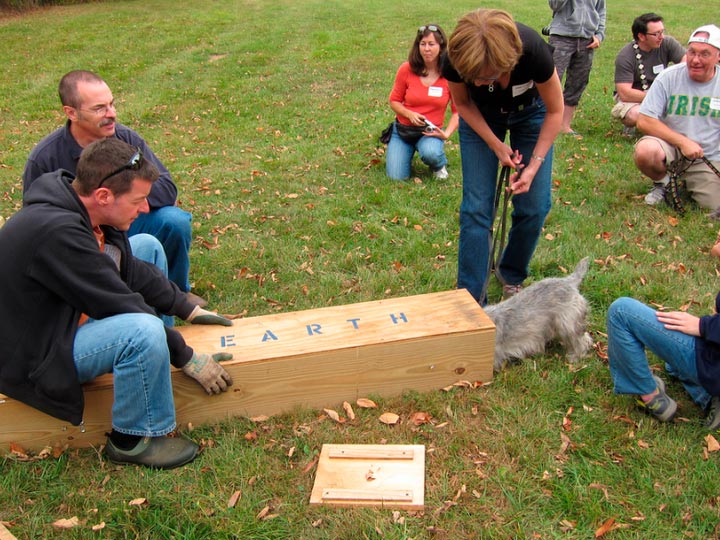
The photos in the gallery show what Glen of Imaal Terriers look like. They include images of dogs of different genders, ages, and colors.
Glen of Imaal Terrier on video
In this video, a Glen of Imaal Terrier chases a mechanical rat. The speed and agility with which the dogs move on their short legs is astonishing.
Read also:


1 comment
Olga Usoltseva
Who wrote these supposedly smart things)) How many years ago was this? 20-30 years?! Why reprint or copy information that is long outdated, for example, rare dog breeds, the Chinese Chongqing is no longer a rare breed in Russia and Ukraine, dozens of kennels have been breeding them for 10 years and the price of puppies is ordinary 40-60 thousand rubles, no more!! Thai Ridgebacks are in every large Russian city, kennels, also not uncommon))) Azawakhs, yes, in Russia they have just become interested, kennels of course, but Chongqings and Ridgebacks certainly outnumber Azawakhs! There is an overabundance of Tibetan Mastiff puppies in every city, litters, and since the breed is large, serious and shaggy, these grown puppies are given away almost for free, just to avoid feeding, some euthanize so as not to give away just like that, a bunch of breeders, kennels, who wanted has already bought, white Tibetans They're rare for now, that's true. The other breeds haven't caught anyone's attention due to their mediocre mongrels. They're facing extinction as breeds no one wants. Update the info, otherwise you're thinking your grandmother wrote it, and you've just been copying it every year.
Add a comment