
Eye drops for cats: a list of the best with reviews
Eye problems in cats are common. Redness, excessive tearing, purulent discharge, and photophobia may signal a developing condition. Sometimes these symptoms are accompanied by swelling and inflammation of the eyelids. To treat eye diseases, cats are prescribed eye drops: anti-inflammatory, antiseptic, antiviral, antibacterial, or antihistamine. Each type of medication is designed to treat a specific category of conditions.
Content
Antiseptic
Drops in this group are used for eye diseases caused by bacteria or fungi. They are made from chemicals that have a disinfecting effect. Antiseptics are effective against most pathogens. conjunctivitis And blepharitisMicroorganism resistance to such agents is very low. The following are considered the most effective and safe in veterinary medicine:
- Lacrican. The active ingredients are the antiseptic Polysept, anesthesin, and menthol. These feline eye drops have an antimicrobial and anesthetic effect and are indicated for acute and chronic infectious conjunctivitis and blepharitis in cats. A 10 ml bottle costs approximately 100 rubles.
- Lacrimin aseptic. The active ingredients are chloramphenicol and sodium sulfosalicylate. It is used to treat catarrhal, purulent, and follicular blepharitis and conjunctivitis, as well as postoperative complications. A single package of the drug (10 ml plastic bottle) costs 250 rubles.
- Barrier. An ophthalmic medication based on the antiseptic decamethoxin. It has excellent anti-inflammatory and antiallergic properties and is active against both gram-positive and gram-negative microorganisms. Packaging: 10 ml bottles with dropper caps, priced at 35-40 rubles.
- Oftalmosan. A complex preparation containing: the antiseptic chlorhexidine bigluconate, extracts of medicinal herbs (chamomile, calendula, eyebright), succinic acid, which has a local immunostimulating effect.
Oftalmosan drops are used for cats to prevent and treat bacterial eye diseases, and are also used for eye hygiene when tearing occurs. A 15 ml bottle costs 250 rubles.
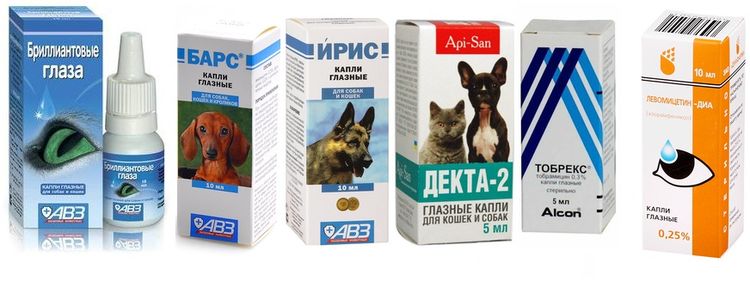
- Diamond eyes. The active ingredients are the antiseptic chlorhexidine bigluconate and the cell repair stimulant taurine. The product has effective antiseptic, anti-inflammatory, decongestant, and regenerative properties, and helps with conjunctivitis. The price per package (10 ml plastic dropper bottle) is 200 rubles.
Antibacterial
These semi-synthetic ophthalmic agents are derived from substances produced by molds, bacteria, and actinomycetes—microorganisms that combine the properties of bacteria and fungi. Antibiotic eye drops inhibit the growth and reproduction of pathogenic bacteria. Below, we'll learn about the best eye drops and their cost.
The best representatives of the group:
- Leopard – a combination product containing the antibiotic chloramphenicol (chloramphenicol) and the antiseptic furacilin (nitrofural). It is used for inflammatory eye diseases caused by bacterial infections and eye injuries. A standard package of Bars eye drops (10 ml) costs 196 rubles.
- Tsiprovet. A fluoroquinolone drug, the active ingredient is ciprofloxacin hydrochloride, which has bactericidal and anti-inflammatory properties. Ciprovet is active against most microorganisms, including mycoplasma, chlamydia, staphylococci, and Pseudomonas aeruginosa. According to the instructions, the drug is also used to prevent infections in the postoperative period. Price for 10 ml: 154 rubles.
- Iris. Eye drops based on the antibiotic gentamicin. Used in the treatment of infectious blepharitis, corneal ulcers, keratitis and conjunctivitis. When prescribing the medication, it should be taken into account that anaerobic bacteria and protozoa are not sensitive to gentamicin. The cost of a bottle of drops (10 ml) is approximately 170 rubles.
- Decta-2. A medication based on the broad-spectrum antibiotic Gentamicin and the antihistamine glucocorticosteroid Dexamethasone. It is prescribed for eye diseases of bacterial and allergic origin. Contraindications include corneal ulcers and erosions. A 5 ml bottle costs 132 rubles.
- TobrexThe active ingredient is the aminoglycoside antibiotic Tobramycin. In veterinary medicine, Tobrex is considered one of the fastest-acting bactericidal agents for the treatment of infectious eye diseases. A dropper bottle with a dispenser (30 ml) costs 180 rubles.
- Levomycetin (Chloramphenicol). A broad-spectrum antibacterial agent, effective for catarrhal and purulent conjunctivitis, blepharitis, keratitis, as well as for treating infected eye wounds and preventing postoperative complications. Available in 10 ml bottles, the price per bottle is 10-15 rubles.
All antibacterial agents act selectively against specific types of infectious agents. Therefore, they should be prescribed by a physician, taking into account laboratory diagnostic results.
Antiviral and immunomodulatory
Drugs in this group contain substances that suppress viral activity and stimulate cellular immunity. They inactivate non-cellular infectious agents, accelerate recovery, and reduce the likelihood of relapse and the risk of complications. These eye drops are typically prescribed in combination with ophthalmic antibacterial agents.
Most often, veterinarians prescribe for cats:
- Maxidin. The active ingredient of this medication is the organometallic compound germanium pyridine-2,6-dicarboxylate. It has anti-inflammatory, antiviral, and regenerative effects. Indications: infectious and allergic eye diseases, inflammatory processes resulting from eye trauma. The drops are packaged in 5 ml glass bottles; each bottle costs approximately 100 rubles.
- Anandin. Glucaminopropylcarbacridone, a component of the product, has antimicrobial, antiviral, anti-inflammatory, and wound-healing effects. It helps with cat eye infections.
Anandin is used in the complex treatment of conjunctivitis and rhinitis in cats and dogs; it has no contraindications and does not cause allergic reactions. A 5 ml bottle costs approximately 120 rubles.
How to use eye drops
Before the procedure, the cat's eyes should be cleaned. Any mucus or pus should be carefully removed with a damp cotton pad. Wipe the eye from the outer corner toward the nose. If the eye is inflamed, do this very gently. The medication is applied under the slightly retracted lower eyelid. The number of drops and frequency of application are determined by the instructions.
When treating ophthalmological diseases in cats, avoid allowing the animal to rub the affected eye with its paw, as your pet will inevitably try to do so. Therefore, during treatment, your cat will need to wear a protective collar designed to allow normal vision and feeding. The collar should be sized so that it doesn't press on the cat's throat but also doesn't dangle around the neck.
Owner reviews
Stepan:
"Our cat, Barsik, had red, watery eyes. The vet diagnosed infectious conjunctivitis and prescribed Barrier eye drops, which he should use three times a day for a week. We saw significant improvements by the third day, and within five days, the conjunctivitis symptoms had completely disappeared. They're excellent drops, and I highly recommend them."
Natalia:
"We have three cats. One of them developed a pus-filled eye, and his eyelids were severely swollen. He kept rubbing them with his paw, which, of course, only made things worse. A friend recommended Levomycetin drops; she said she'd once cured her cat with them. I tried them for several days, but they didn't seem to help, so I took him to the vet. The doctor said the eye condition was an allergic reaction and required a different medication. He prescribed Dekta-2 drops, which contain an antibiotic and an antihistamine. The cat felt better immediately after just a few drops, and by the fifth day, his eyes looked completely healthy. Bottom line: if your pet is sick, consult a doctor, not a friend."
Veterinarian Reviews
Tatyana Mikhailovna Kriyanovskaya, veterinarian:
"Cat owners often contact me about eye problems. The treatment prescribed varies from case to case, depending on the underlying cause. For bacterial eye diseases, if the pathogen is clearly identified, antibiotic-based eye drops, such as Iris or Tobrex, are very effective. If the infectious agent is undetectable or is antibiotic-resistant, I prescribe Tsoprovet or Barrier. I consider Maxidine to be the best treatment for allergic eye diseases. If the cat only has watery eyes and no noticeable inflammation (Manx, Persian, and Bengal cats are prone to this condition), I recommend periodically applying Oftalmosan eye drops, which, in addition to an antiseptic, contains medicinal herbal extracts."
Roman Petrovich Ivaschenko, veterinarian:
"I've been a veterinarian for over ten years and have treated cats for ophthalmological diseases numerous times. I strongly advise cat owners not to attempt to prescribe eye drops for their pets themselves; this could, at the very least, waste time and, at the very worst, cause harm to the animal's health. For example, while Ciprovet is very effective against bacterial eye diseases, it's completely useless if the cat's eye disease is allergic. Using "human" eye drops is also undesirable—the composition of veterinary medications differs from that of the same-named medications intended for humans. And eye drops like Albucid are strictly prohibited for cats; they can cause corneal burns."
Read also:
- Panophthalmitis in cats: symptoms and treatment
- Anthelmintic drugs for cats
- My cat has mucus in its eyes: what to do


Add a comment