
Where do raccoons live in the wild?
Raccoons are adorable little animals that are often found in zoos in Russia or kept as pets by breeders. In this article, we'll tell you where raccoons live, what varieties exist, and how they live in the wild.
Content
General information
The raccoon (Latin for Procyon) is a carnivorous mammal of the raccoon family, native to temperate and tropical climates. Their appearance, dietary preferences, and habitat may vary slightly, as there are four species of raccoons in the wild:
- Raccoon;
- Raccoon-eater;
- Cozumel raccoon;
- Guadalupe raccoon.
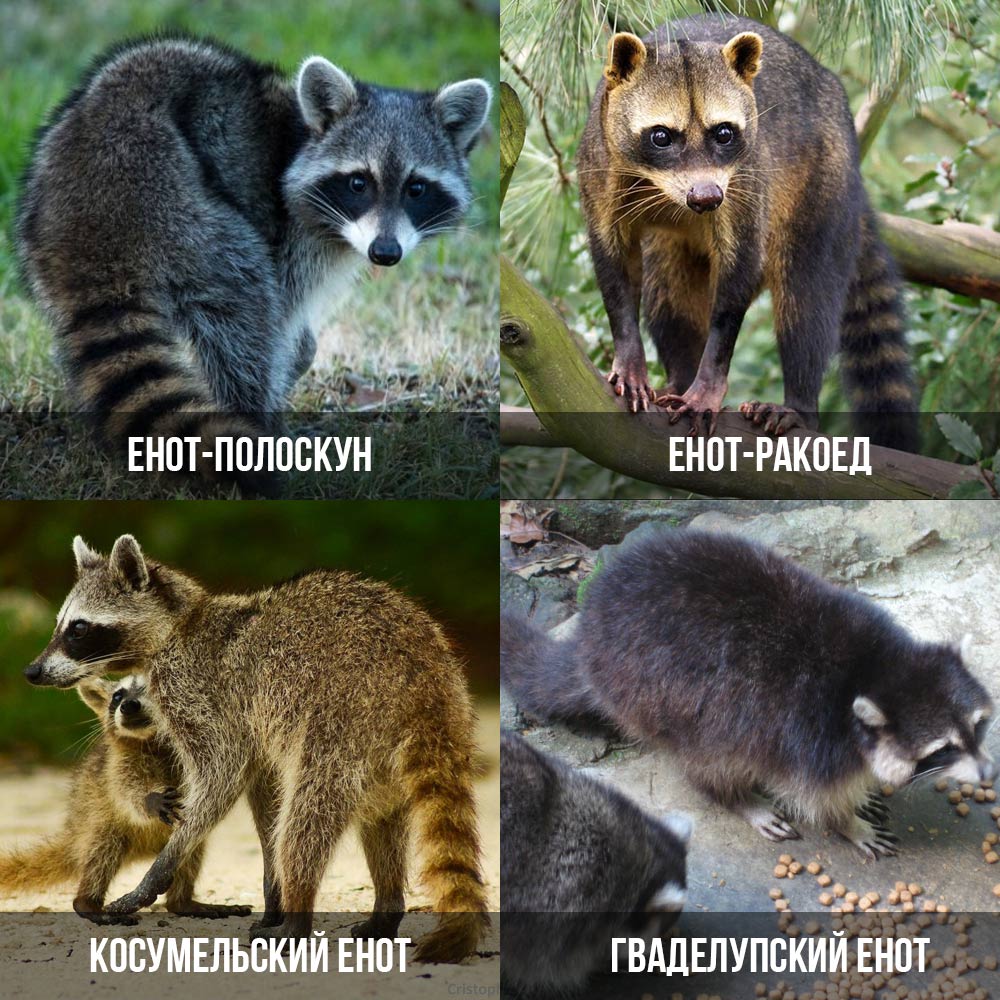
Initially, the raccoon's habitat was limited to the corresponding regions of South and North America, but with the help of humans, the animals successfully took root on the islands, as well as in many regions of Eurasia.
It is worth noting that only representatives of the first species can be found in Russia, since the habitat of the other three raccoons is too different from the climatic conditions of our country.
To understand where raccoons live, what they look like, and what they eat, we suggest discussing each of the four species in more detail.
Raccoon (Procyon lotor)
The most widespread species, it has successfully established itself in the Ciscaucasia and Western Caucasus, the walnut forests of Kyrgyzstan, and Primorye. It is this species that most Russians associate with the name "raccoon" and is depicted in various picturesThis furry North American visitor can now be found not only in Russia but also in many European countries.
Interesting fact! This raccoon got its name from its habit of washing any food, whether it's delicacies caught in a pond, insects caught on land, or fruit. The need to rinse food isn't a matter of cleanliness, but rather an unintentional behavior, shaped by evolution and ingrained as a reflex.
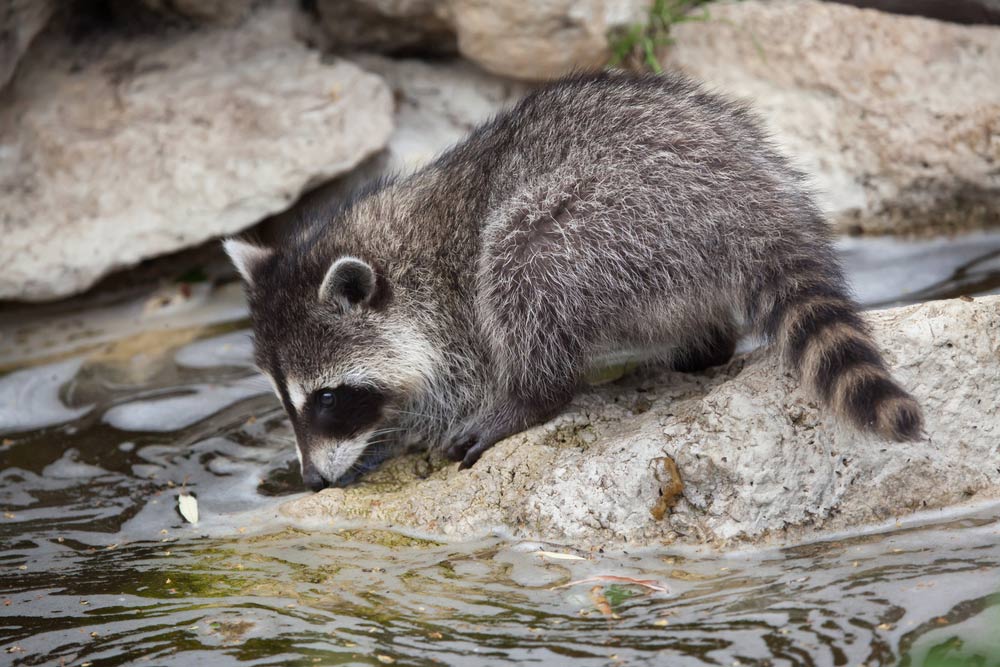
We recognize the raccoon by its fluffy brown-gray fur coat with a characteristic striped pattern and a dark "mask" on its face.
The raccoon is about the size of a typical house cat or medium-sized dog—an adult weighs between 5 and 9 kg, and its body length can reach 60 cm (plus a tail of about 20-25 cm). Their omnivorous nature, ability to adapt well to various climates, and the agile intelligence and mobility of these little creatures have contributed to a significant expansion of their habitat. Moreover, in many countries, this species is kept as pets, as they are easily tamed and can live up to 20 years in captivity.
Important! The raccoon is very good at defending itself against larger predators, so if you encounter one in its natural habitat, it's best not to frighten or disturb it. Not only can the small predator's sharp teeth pose a danger to humans, but also a wide range of diseases, often carried by wild animals.
Raccoon cannibal (Procyon cancrivorus)
A species of raccoon that lives exclusively in the jungles and swamps of South and Central America.
Unlike its relative, which has successfully established itself in Russia, Procyon cancrivorus has a more streamlined body. Its fur is shorter and lies more closely to the body, making the animal appear thinner. It has a standard coloration, with a classic "mask" on the face and a striped tail.
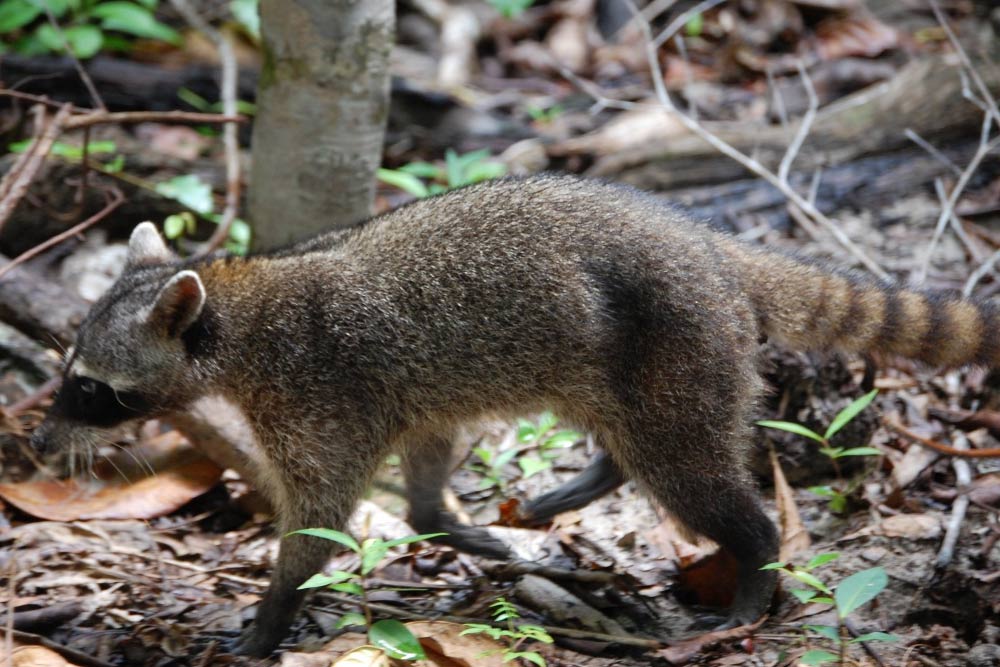
The name "crayfish" comes from its preferences: the animal loves to feast on seafood, although in its absence it will easily feed on any available food, hunting insects and small rodents, collecting berries and plant roots, and also destroying birds' nests.
Cozumel raccoon (Procyon pygmaeus)
Finding out where the rare Cozumel raccoons live in the wild is not difficult, as the species received its unusual name from the Mexican island of Cozumel, located in the Caribbean Sea.
Interesting! This is an endemic species found only in the island's mangrove forests, which cover an area of 475 km2.2.
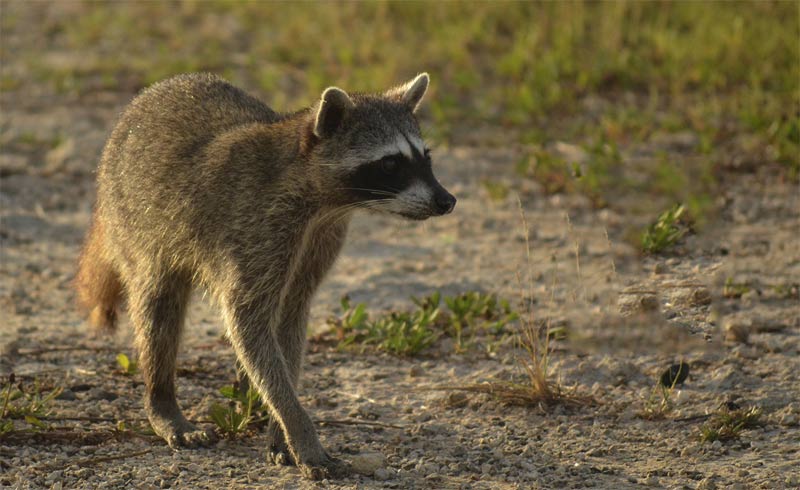
Procyon pygmaeus differs in appearance from its North American relatives. It is significantly smaller than the raccoon (typically weighing no more than 4 kg).
The Cozumel raccoons' diet consists primarily of crustaceans and amphibians, although when given the opportunity, they are not averse to feasting on the fruits of the tropical Manilkara or even the millet that grows on the island.
Guadalupe raccoon (Procyon minor)
It's not difficult to understand where Guadeloupe raccoons live, as these animals got their name from their habitat – the French department of the same name on the Caribbean islands.
Visually, the raccoons living in Guadeloupe are very similar to their North American relatives, leading many scientists to believe that the islands are not a separate species, but simply a raccoon adapted to island life. However, Procyon minor is now recognized as a distinct species due to a number of significant differences in its anatomy and biology.
Important! The Guadeloupe raccoon is listed as an endangered species because its habitat does not allow for colonization, and islanders actively hunted these animals for their beautiful fur and meat, which is widely used in local cuisine.
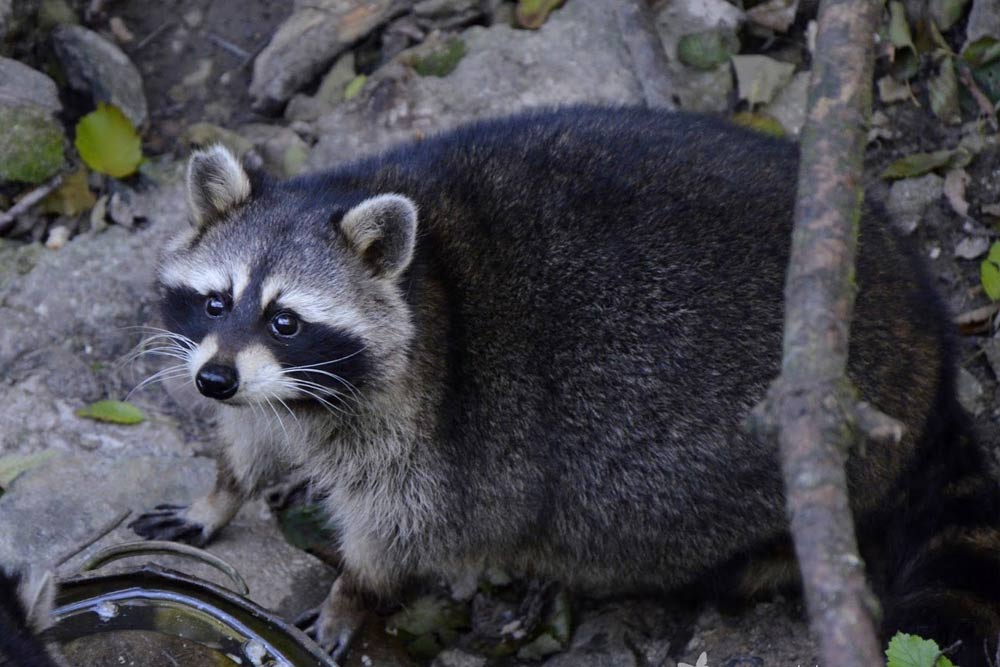
Raccoon dog
Important! Don't confuse a raccoon with a raccoon dog. Despite their similar appearance, they are two completely different animals. The raccoon belongs to the raccoon family, while the raccoon dog belongs to the canine family.
Other external differences include:
- paws: in raccoons they are similar to human ones, and in dogs they are similar to the paws of other canines familiar to us;
- tail: only raccoons have circular stripes, moreover, their tail is much longer than a dog's;
- wool: Canines are better adapted to cold weather, so their fur is thicker and longer, with a dense undercoat.
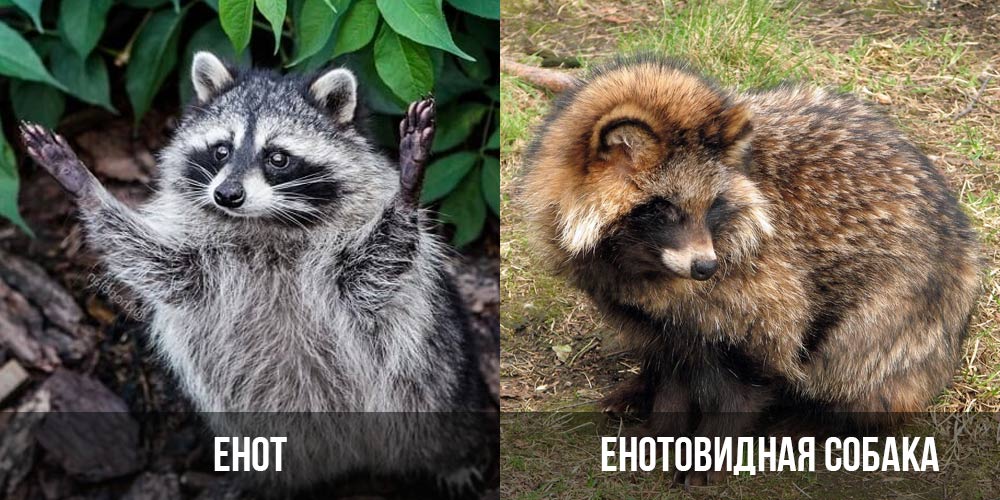
It's also worth noting that raccoons, both those found in America and Russia, are excellent tree climbers, while raccoon dogs are not. Their habitats also differ. We've already described where raccoons live in Russia and other countries. Raccoon dogs are found in the wild in northeastern Indochina, China, Japan, the Korean Peninsula, and the colder climates of Western Europe.
Read also:
- What is the difference between a raccoon and a raccoon dog?
- How long do raccoons live?
- Raccoon dog: can you keep one as a pet?


Add a comment