
Havana (Havana Brown)
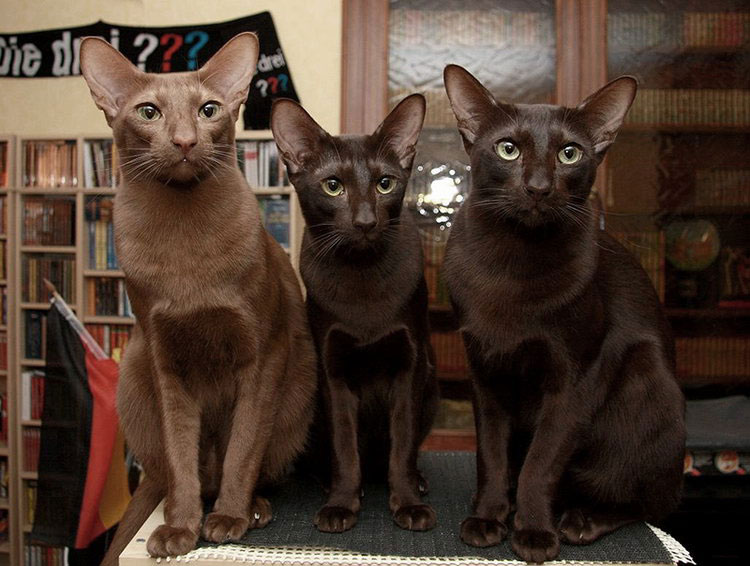
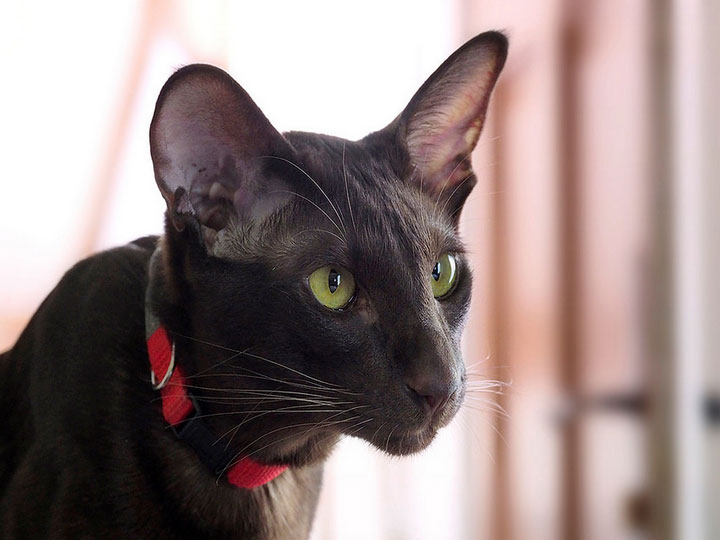
Havana – a rare cat breed with a rich history. It has Eastern roots, began to develop in England, and acquired its final form in America. It is in the United States that the breed is most popularThe Havana's distinctive features include a slender body, brown fur, and green eyes.
Content
History of origin
At the end of the 19th century, cats from Thailand began to be actively imported to England. Even then, among colorpoint cats Siamese Solid-colored cats were also seen. These diverse Asian beauties were exhibited together until, in the 1920s, the British Siamese Cat Club decided that solid-colored individuals with eyes other than blue should no longer be bred.
Breeders forgot about colored Siamese cats for a long time. Only thanks to a few enthusiasts did the type survive until the 1950s, when it was brought back into the spotlight. English breeders set themselves the task of developing a breed with a consistent brown color. Soon, they produced a chestnut-colored cat through crossbreeding. British Shorthair black cats and brown-pointed Siamese. Further selection was carried out by Russian blues cats and BurmeseThe Cat Fanciers' Association recognized the breed in 1964.
Thus, the only connection with Cuba is the similarity of the color of Havana to the thin cigars from the island of the same name in the Caribbean.Video review of the Havana (Haana Brown) breed:
Appearance
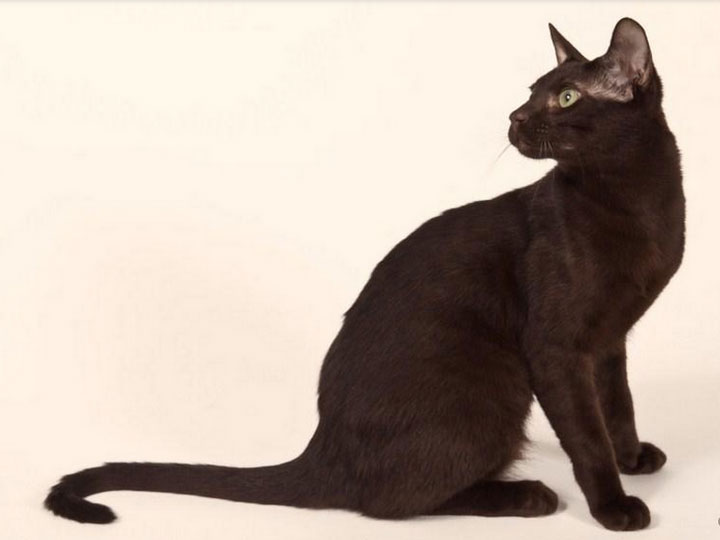
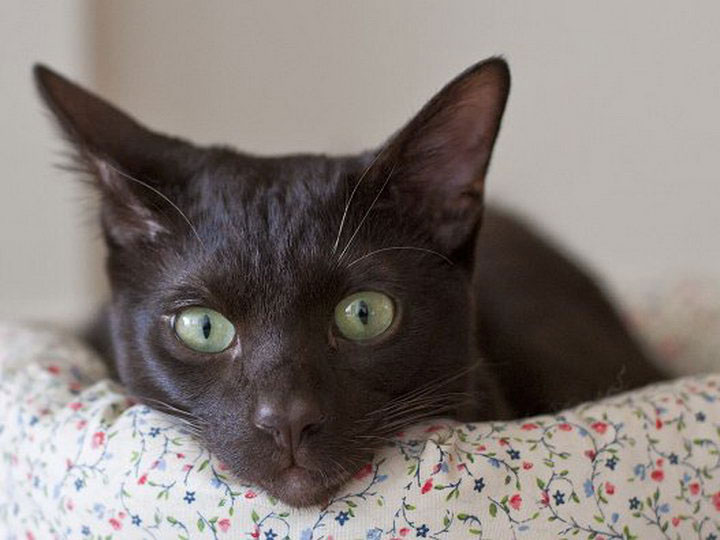
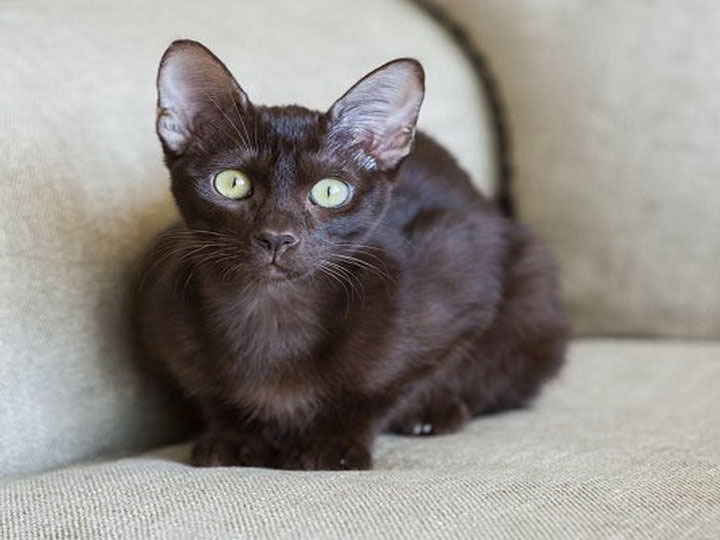
The Havana should give the impression of a strong, well-built, yet graceful cat with well-developed muscles and a short, solid brown coat. Among other breeds, the Havana is also distinguished by its distinctive muzzle shape, large ears, and expressive eyes. Havanas are often confused with chocolate-colored Oriental cats, but a glance at the photo reveals that the two breeds are only vaguely similar.
In the UK, the Havana Brown is considered a variety of the Oriental cat breed, while in the United States, it is simply called the Havana and recognized as a distinct breed. Cats from different continents vary slightly in appearance.
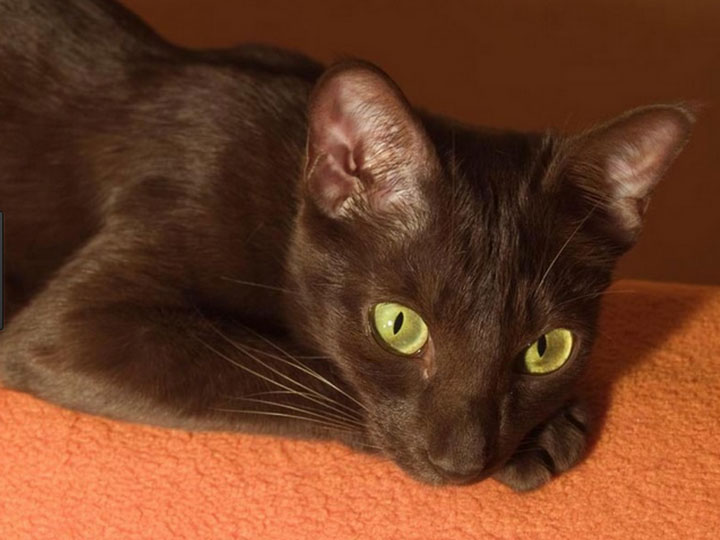
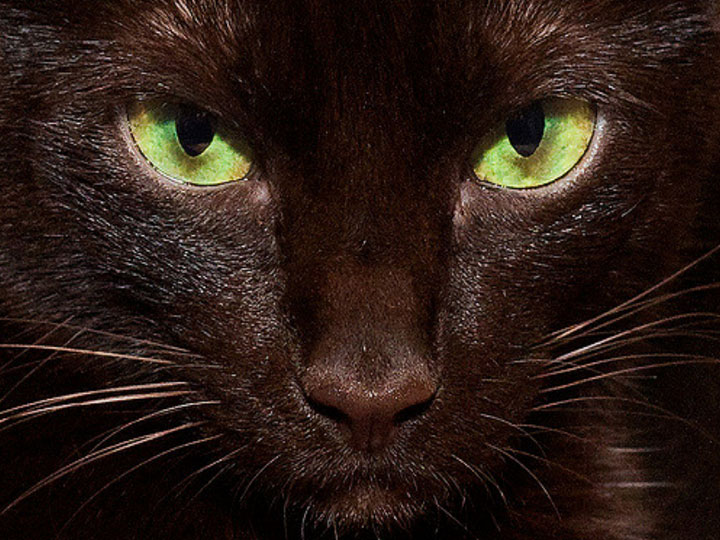
The head is wedge-shaped, tapering noticeably toward the nose. The muzzle is narrow, narrower than long. In profile, the curve where the forehead meets the nose is clearly visible. The contours are clear, with the tip of the nose and chin forming a perpendicular line, giving the muzzle the appearance of being square rather than round. The ears are large and rounded with a wide, cup-shaped base. The pinna is tilted forward and covered with fine hairs inside and out. The eyes are oval, medium in size, and wide open. The gaze is alert and expressive. The color of the eyes is green.
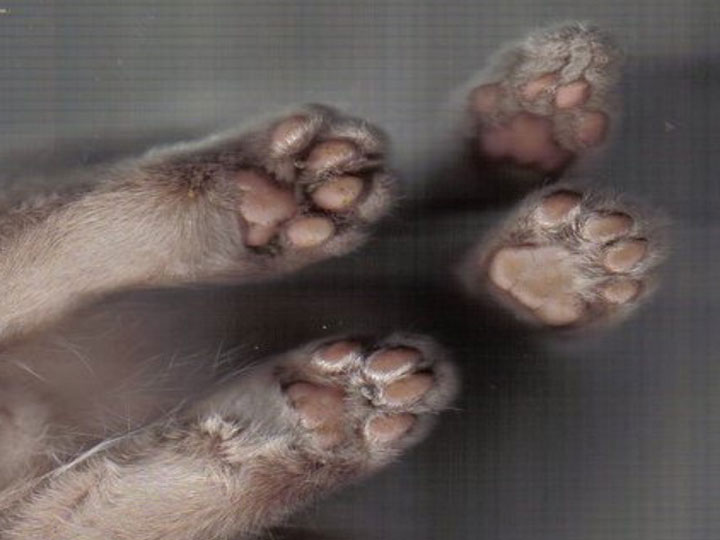
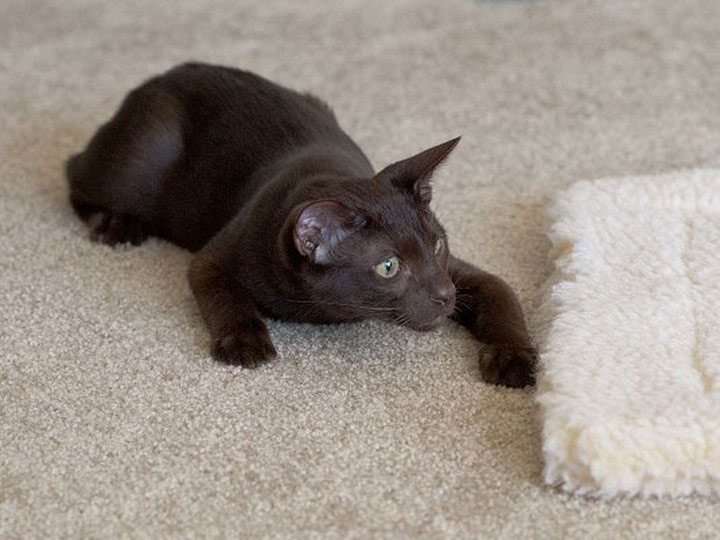
The medium-sized body is elongated, strong, and muscular. Sexual dimorphism is very pronounced. Males are noticeably larger than females. There are no strict height or weight limits. Balance and proportion are paramount in this breed. The legs are moderately long in relation to the body, straight and slender. The hind legs are slightly longer than the front ones. The paws are compact and oval. The front paws have 5 toes, the back paws have 4. The tail is proportionate to the body size, not too wide at the base, and tapers to a point.
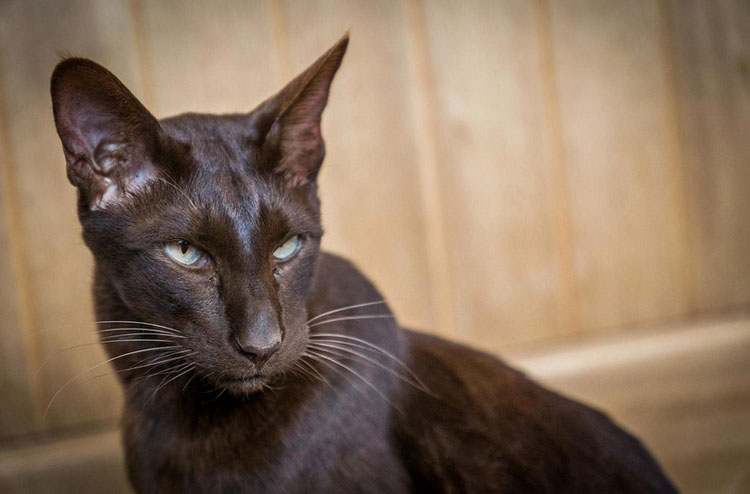
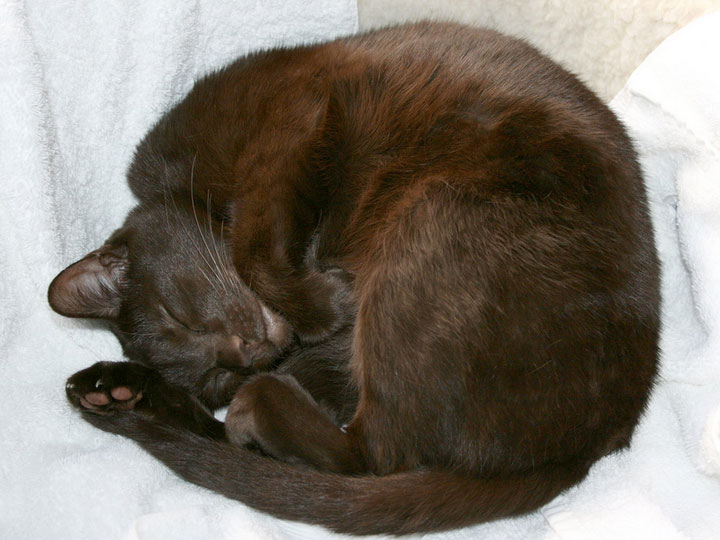
The coat is short, smooth, and shiny. The color is a rich, even shade of brown, leaning more toward reddish-brown than blackish-brown. The nose is brown. The tufts are pink. Havana is the only breed whose standard specifies the color of the bristles. Just like the wool, they should be brown.
Character
Havanas are very people-oriented. The breed is perfect for those who desire a sociable, affectionate, and intelligent companion in a feline form. Like other cats of the Siamese-Oriental group, Havanas are very talkative and boast a wide variety of vocalizations. In addition to verbal communication, they may use their paws to attract attention or when exploring a new object. They can be quite demanding if not given enough attention.
Most reviews of the breed are very positive. They describe Havanas as intelligent, active, kind, and sociable cats, designed for life in human company.
Curiosity drives the Havana to participate in all household chores. There's simply nothing that doesn't pique its interest. The Havana can be a good companion for a child who knows how to treat animals respectfully. It gets along well with other animals, cats, and friendly dogs.
Maintenance and care
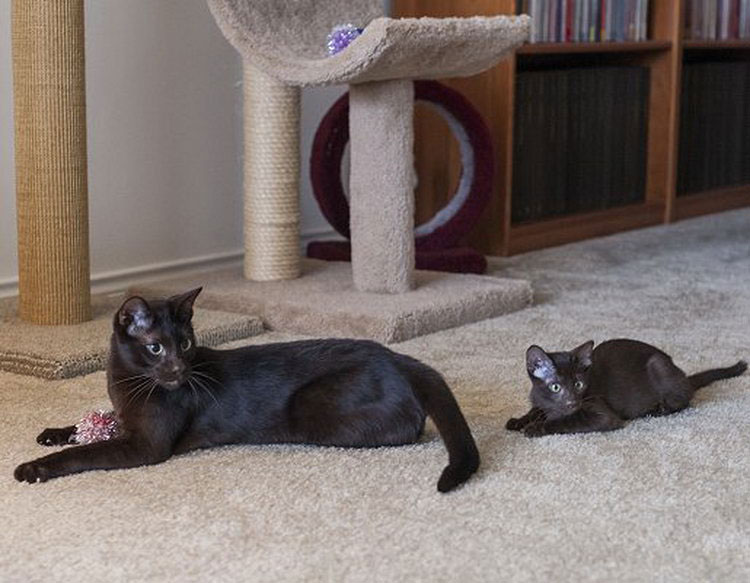
Havanas adapt to their owner's daily routine quite easily and quickly, and are rarely overly insistent or capricious. They are very clean, so their litter box needs to be cleaned very frequently. Walking outside is desirable, but not required. A Havana can only live peacefully in an apartment if it has toys and a play area where it can expend all its energy. Furthermore, a Havana that roams freely outside is at risk of being stolen.
Grooming is simple. Weekly brushing with a special, fine-toothed brush is sufficient. Polishing the coat with a chamois will give it a distinctive shine. Bathing is infrequent. To prevent oral diseases, it's advisable to accustom your kitten to having her teeth brushed at least once a week. Regularly inspect the ears and eyes, but only clean them as needed. If the cat doesn't go outside, trim the claws a few millimeters every 2-3 weeks.
Health and life expectancy
The Havana was developed using several breeds, and subsequent selection involved strict selection of breeders based on appearance and health. However, the breed is susceptible to various problems of a genetic nature. Young Havanas are prone to upper respiratory infections.
Choosing a Havana Brown kitten, price
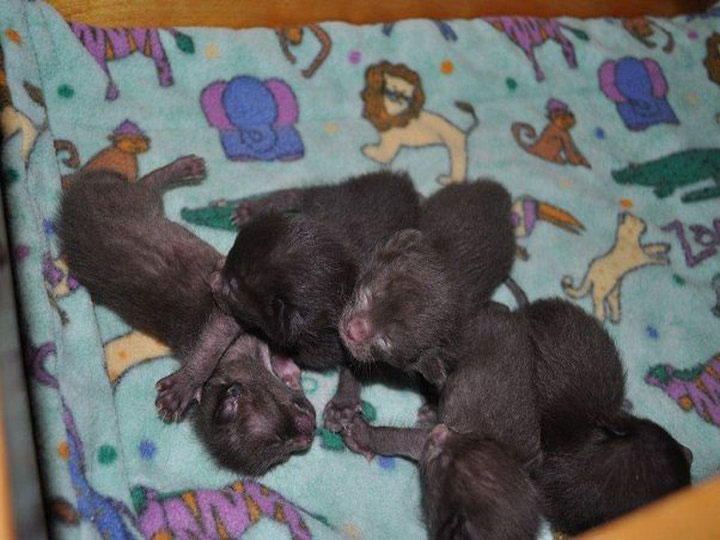
It's best to purchase kittens from a cattery registered with a feline association. Kittens must have documents confirming their origin. The living conditions and appearance of all cats in the cattery will demonstrate the breeder's responsibility and the health of the herd. Kittens and young Havanas may have faint tabby markings on their coats, such as rings on the tail or stripes or spots on the body. These markings disappear with age, and the coloring becomes clear and uniform.
The Havana is a very rare breed, with fewer than 1,000 cats in existence worldwide. The majority of the population is concentrated in the United States and Western Europe.
Many organizations, particularly the CFA, allow crossbreeding in their breeding programs to improve appearance and genetic diversity. Most often, these crosses involve Oriental cats. Kittens from such matings with standard coloring and appearance can be registered as Havanas.
The price of a Havana kitten in US and European catteries is roughly the same: $500 to $1,000. Kittens sold privately typically cost no more than $200.
Photos
In the gallery of collected photos of the rare Havana cat breed (Havana Brown):
Read also:


Add a comment