
Gastritis in dogs
Gastritis in dogs is not only inflammation but also irritation of the gastric lining. Both conditions are far from pleasant for the pet. Digestion becomes difficult, which only worsens the disease. It's a vicious cycle. Without treatment, gastritis quickly worsens. Ulcers and even gastritis can develop. enteritis.
Content
Reasons
Gastritis in dogs develops for a variety of reasons. Any one of these factors, or a combination of several, can worsen the pet's condition.
Wrong diet
Most often, veterinarians diagnose gastrointestinal diseases due to improper feeding. It all starts with indulgence. It could be a piece of sausage from the table, a chicken bone, smoked meat, spicy meat, or even letting your dog finish off your plate. All of these are contraindicated and can cause gastritis in dogs.
Unsuitable food for pets. Spicy, smoked, fried, spiced, fatty foods—all of these should be off-limits. Even for humans, such foods aren't ideal. They irritate the mucous membranes. But animals aren't naturally accustomed to such foods. In the wild, they don't add salt or pepper to their food. They don't need it. Dogs eat only to feel full, get energy, and get essential vitamins and minerals, not to overindulge. Their stomachs aren't designed for that. Cheap food can also cause gastritis in dogs.
An unbalanced diet is also bad. Even if you feed only cooked food and without seasonings, but the menu is poorly planned, the stomach lining can also become inflamed. A monotonous diet can be considered unbalanced. Feeding the same food day after day can lead to problems with enzymes and, ultimately, digestion. It's recommended to even alternate dry foods (we're talking about "flavors").
Other reasons
Other possible causes of gastritis in dogs:
- PoisoningBoth poisons and poor-quality food. The body always resists toxins.
- Infectious and parasitic diseasesThere are a huge number of them.
- Foreign body in the stomachAnything that can't be digested will inevitably damage the mucous membrane, leading to irritation and inflammation. This could be a bone that the owner didn't want to throw away, but the dog chewed on it. It could also be a hairball formed after licking (especially during shedding season). It could also be sausage skins, or metal staples attached to these skins, which the dog might retrieve from the trash.
- MedicinesMany medications are contraindicated for pets or require careful use! Therefore, you shouldn't give your pet anything from your medicine cabinet. The same aspirin can cause serious damage to the stomach lining. But the list of potentially dangerous medications is long.
Symptoms
The symptoms of gastritis in dogs can be confused with those of other digestive disorders, such as ulcers, enteritis (including viral infections), helminths, hepatitis, and others. Therefore, making a diagnosis without further testing is challenging even for the most experienced veterinarian. After all, gastritis may not be the underlying disease, but a symptom of another. How does gastritis manifest in dogs?
- Vomit;
- Diarrhea (loose stools) – if the stomach's acidity is low. Constipation can also occur if the stomach produces more than the normal amount of hydrochloric acid.
- Decreased or absent appetite;
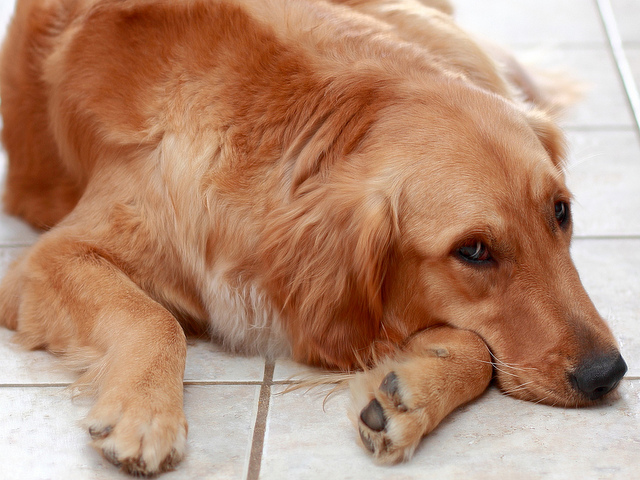
- Lethargy, apathy, and reluctance to play. The dog may sleep more and try to move less. It may adopt one body position and be reluctant to change it (the most pain-free position).
- Stomach pain. Palpation of the stomach area reveals pain. At home, the dog may whine and lick its belly, trying to get your attention.
If you notice one or more symptoms of gastritis in your dog, don't delay visiting a doctor, as the disease may worsen.
Treatment
How to treat gastritis in dogs? Gastritis can be acute or chronic. Both require immediate veterinary attention. Acute gastritis is easier because treatment begins immediately. With chronic gastritis, the doctor's initial actions are aimed specifically at aggravating the inflammatory process (as strange as that may sound). This is necessary to facilitate the treatment of a dog with gastritis. Otherwise, a chronic condition will flare up and then subside, and the dog will suffer constantly.
Fasting days
So, treatment for a dog with gastritis begins with a fasting diet, usually lasting 24 hours. During this "fasting" day, only water is allowed. Protect your dog from "caring" family members who might try to sneak treats. Don't give in to this temptation yourself. Your dog will beg for treats, but remember that a fasting diet is not a whim, but a necessity!
Special preparations
Special medications for the treatment of gastritis in dogs. Caution! Before using these medications, confirm your diagnosis and prescription with your doctor!
- Almagel A and its analogs. Prescribed medications protect the mucous membrane, "creating" a protective layer. This helps prevent further irritation of the mucous membrane by aggressive gastric juice. Inflamed tissue recovers more quickly. Almagel A and phosphalugel have proven effective.
- Analgesics and antispasmodics. Painkillers and antispasmodics also help speed up your pet's recovery.
- Antibiotics. Antibiotics prevent the proliferation of secondary microflora, which can complicate gastritis. However, they should not be prescribed without a doctor's permission. Only a veterinarian can decide whether to prescribe them.
- Antiemetics. If your pet is constantly vomiting, Cerucal and other medications with similar antiemetic properties are prescribed. However, if your pet is vomiting due to poisoning, vomiting actually helps remove the toxin from the gastrointestinal tract.
Intravenous infusions
IVs are essential if your dog has severe diarrhea and vomiting, dehydration, or exhaustion. Depending on the severity of the condition, different solutions are needed. Therefore, contact your veterinarian to have an IV administered.
Prevention
Eliminate contributing factors and direct causes of mucosal inflammation – that’s all there is to preventing gastritis in dogs.
- Be careful what you feed your pet.
- Don't give anything from your table.
- Do not self-medicate.
- Treat your animal (and all family members) for intestinal worms on time.
- Don't forget about vaccinations.
- Brush your pet to prevent it from swallowing its own hair after licking itself.
- And don't forget about preventive visits to the veterinarian.
Feeding a dog with gastritis
First, you need to review your dog's diet. Proper feeding of a dog with gastritis helps speed up the recovery process. Therefore, after a fasting diet, begin revising the menu. A sick dog needs something astringent and coating, as well as easily digestible: porridges (rice, oatmeal), jelly, and lean meat broths. Cook vegetable soups without adding salt or spices.
Feeding rules
What should you feed a dog with gastritis? The basic recommendations are as follows:
- You can't give your dog onions, garlic, or milk.
- Drinks should only be warm! Water is preferable. Fermented milk products are welcome.
- Feed your pet more frequently, but in small amounts. Feeding in small portions won't hurt anyone. Don't overfeed your pet. The more food you give, the more hydrochloric acid is produced, and the more severe the mucous membrane damage.
- Do not give raw vegetables and fruits during the treatment period.
- WITH meat be carefulOnly very lean, finely chopped food. The first time, administer it a week after starting therapy. And only if there's a noticeable improvement in the animal's well-being.
- We recommend preparing special porridge for dogs.
Any questions? You can ask our website's staff veterinarian in the comments below, who will answer them as quickly as possible.
Veterinarian's recommendations for feeding a dog with gastritis on video (watch from 1:47):
Read also:


8 comments
Evgeniya
Hello. My Yorkshire Terrier is 3 years old and has been diagnosed with chronic gastritis. I'd like to know how dogs with gastritis live. What should I know and do periodically to make her life easier? After we had an ultrasound and made the diagnosis, our vet told us that we simply need to periodically administer a course of treatment. This includes Cerucal for vomiting and omeprazole for 10 days. We sometimes have diarrhea, but most often it's vomiting. What should I give her for diarrhea? Purina Gastrointestinal food.
Daria is a veterinarian
Hello! People do live with gastritis, and pets are no exception. It's possible to live a full life, but you'll have to watch your diet. Feed frequently (small meals often) to reduce the strain on the stomach (less gastric juice will need to be produced, which means less irritation). You can give Almagel A (available at a human pharmacy) half an hour before meals; it coats the stomach, relieves pain, and reduces nausea, allowing the animal to eat. If Cerucal is unavailable, then Serenia or Meclopramide can be used. And always have water available! You can add chamomile tea to the water; it will also soothe the stomach.
Oksana
A 3-year-old German cat lost her appetite and became apathetic about 2 weeks ago.
She's been completely starved for the last five days; she won't even go near her bowl. She's lost a lot of weight, her fur is falling out, her eyes are oozing pus, and she has trouble standing on her hind legs. She mostly lies down, rarely getting up. She drinks water, but not much. She's had diarrhea twice, with black stool, and has vomited three times. She vomits frequently, but has nothing left to vomit.
The veterinarian prescribed a sodium chloride IV, antibiotic injections, Almagel, and pancreatitis. After the Almagel, he vomited.
Today is the second day of IV and injection, and he still won't go near the bowl. What should I do? Are these similar to gastritis symptoms?
Daria is a veterinarian
Hello! Gastritis doesn't cause pus in the eyes. How are your dog's vaccinations? Has the dog recently been running alone outside or in contact with other animals? Have the neighbors poisoned rodents? The dog definitely needs IV fluids because it's starving and dehydrated. Also, give it small amounts of water, but often with special saline solutions (you can buy Regidron or Vetom 1.1 at a human pharmacy). Don't force-feed. Don't overfeed, otherwise you'll trigger vomiting again. Have you prescribed antiemetics? Have you had an ultrasound? Has a foreign body in the gastrointestinal tract been ruled out? Black stools could be due to bleeding somewhere in the intestines.
Tatiana
Hello! My 1.3-year-old Toy Terrier has developed grunting, sometimes prolonged, with squatting, facial spasms (like a smile), salivation (with a wet face), even on the neck, and frequent vomiting of mucus and foam. Sometimes the puddle is small, sometimes large. This occurs without food. Several times a day, twice at night. The grunting and body spasms intensify with movement. These can last for a long time. The symptoms subside when he sleeps. He eats six times a day at regular intervals. What could this be?
Daria is a veterinarian
Hello! And you still haven't seen your pet? Still haven't had it examined? See a neurologist! Urgent! The grunting is caused by a spasm of the nasopharynx. The animal's muscles are in constant muscle tension, so we need to determine the cause of this condition. It could be a pinched nerve, an injury, or an infection. But it's clearly time to sound the alarm and begin medication!
Catherine
Good afternoon! Our West Highland White Terrier was diagnosed with gastritis by the vet without any tests. Symptoms include vomiting (bile) at night approximately twice a week. The puppy weighs 3.5 kg, and it turns out we weren't feeding him enough—we were feeding him Monge with lamb for puppies, 120-130 grams per day, instead of 167 grams. Feeding intervals were also uneven: we fed at 7:00, 15:00, 19:00, and 22:00. After seeing the vet, we switched to Monge Gastrointestinal + lamb, for a total of 180-200 grams. We give him 1/5 capsule of Omez at night and Enerosgel in the morning. The puppy didn't vomit for almost a week, but on the fifth day of treatment, he vomited again. Could you tell me if you would also diagnose gastritis based on these symptoms?
Dasha is a veterinarian
I think the vet not only listened to you but also examined the puppy (felt his abdomen and noted any tenderness). You chose a good food, so with proper treatment, the puppy will recover. Have you dewormed him lately? Is he getting enough water? Is there any diarrhea (it often occurs with gastritis). In addition to gastritis, I would also suspect pancreatitis. An ultrasound would be advisable for a more accurate diagnosis, along with blood tests. Perhaps you could also give him probiotics to repopulate the gut with microflora and improve digestion?
Add a comment