
Gangrenous stomatitis in cats: symptoms and treatment
Stomatitis is an inflammation of the mucous epithelium of the oral cavity. In both humans and animals, this disease can take catarrhal, ulcerative, or gangrenous forms. The most dangerous form of stomatitis is characterized by necrosis (progressive tissue breakdown)—gangrenous stomatitis. It affects the gums, cheeks, tongue, and sometimes even the jawbone. Furthermore, during necrotic processes, bacteria enter the bloodstream and spread rapidly throughout the body. Without prompt, qualified medical attention, a cat suffering from gangrenous stomatitis can lose all its teeth and even die.
Reasons for development
The following factors can cause the development of stomatitis:
- Injuries. An animal's gums or tongue can be injured when eating meat or fish with a lot of bones.
- Chemical and thermal burns of the oral cavity.
- Diseases of teeth and gums (caries, gingivitis).
- Chronic diseases of the digestive system (gastritis, gastroenteritis).
- Fungal infections. Most often, inflammation of the oral mucosa is caused by Candida fungi.
- Deficiency of microelements in the body or vitaminsThus, a lack of vitamin C leads to the development of scurvy, which can be complicated by stomatitis.
Important! Cases of stomatitis spreading from animals to humans are extremely rare. However, if your cat has been diagnosed with this condition, you should thoroughly wash your hands with soap after any contact with them.
Symptoms of gangrenous stomatitis
Although cats don't vocalize pain, it's easy to recognize an animal suffering from stomatitis. A cat with gangrenous stomatitis suddenly loses activity and stops eating. Initially, the hungry animal tries to take food from the bowl, but immediately drops it, as if the food were too hot.
Trying to relieve the pain in the mouth, the cat rubs its muzzle against the floor or furniture. It stops playing with toys and licking its fur, as these movements cause severe pain. Another typical sign of inflammation of the oral mucosa is excessive salivation and fever. In most cases, an unpleasant, putrid odor is observed from the mouth.
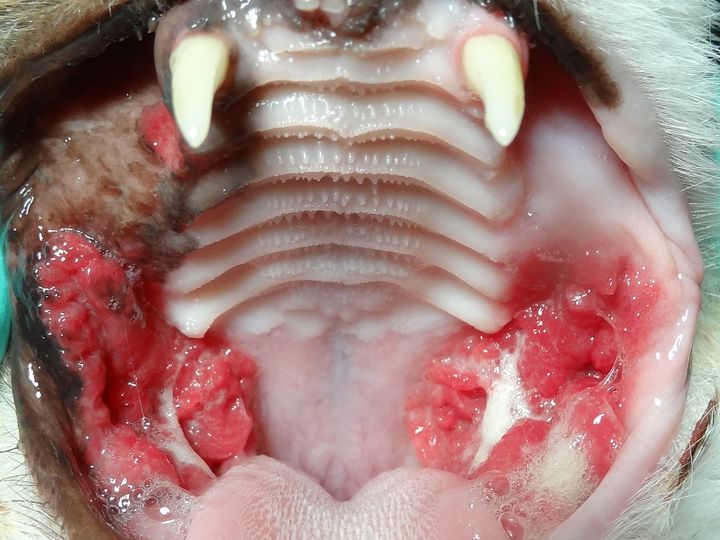
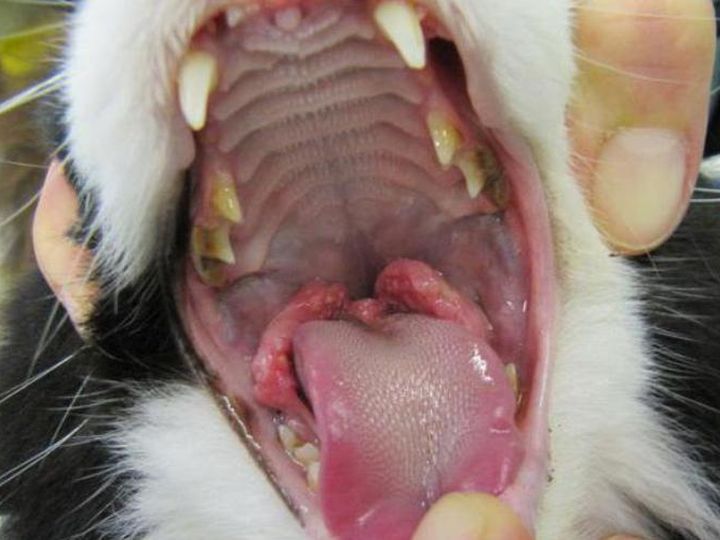
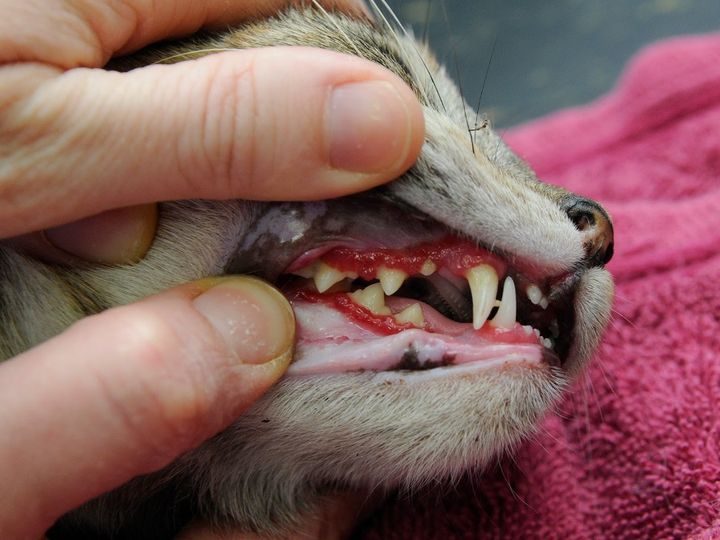
If you try to open the cat's mouth, it will resist, even becoming aggressive, but an examination is necessary. With gangrenous stomatitis, the oral cavity (the palate, tongue, inner cheeks, and especially the gums) becomes swollen and red. Necrotic areas resembling bleeding wounds are visible on the mucous membranes. In severe cases, the submandibular lymph nodes may be enlarged.
Treatment
Gangrenous stomatitis requires long-term treatment. In severe cases, surgical intervention is necessary: damaged areas are cleaned, completely damaged teeth are extracted, and necrotic soft tissue is excised. In mild cases, measures to eliminate inflammation and thoroughly disinfect the oral cavity may be sufficient.
To suppress the pathogenic microflora causing the mucosal inflammation, the cat is prescribed a course of bactericidal antibiotic therapy. These may include:
- penicillins;
- macrolides;
- chloramphenicol;
- tetracyclines;
- cephalosporins.
Such drugs are available in the form of tablets, injection solutions, and aerosols or gels for external use.

Treating your pet's mouth with antibacterial solutions is mandatory. This should be done after each feeding. First, gently brush your teeth Remove any food debris from the cat's gums, then irrigate the oral mucosa with a warm medicinal solution or herbal infusion. This is a difficult procedure, as it's painful and uncomfortable for the cat, and it will likely resist. Therefore, it's best to perform this sanitization with a partner.
The following medications can be used for antibacterial treatment:
- 3% hydrogen peroxide solution;
- 1% sodium bicarbonate solution (baking soda);
- furacilin solution (1 tablet per 100 ml of water);
- potassium permanganate solution (1-2 crystals of potassium permanganate per 50 ml of warm water).
To prepare herbal decoctions that can be used to irrigate the mucous membrane of a cat's mouth, plants with anti-inflammatory, astringent and antibacterial properties are suitable: calendula, chamomile, oak bark, sage, and succession.
Important! Never treat a cat for stomatitis with medications intended for humans. "Human" medications have different compositions than veterinary medications and can cause serious complications or even act as poison.
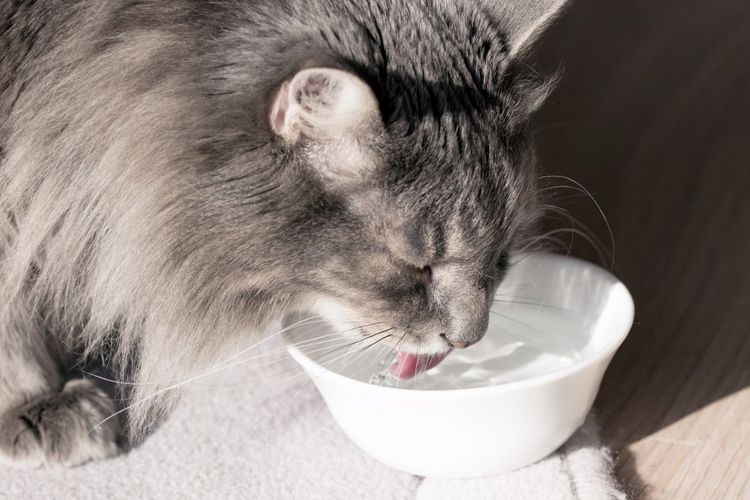
A cat with gangrenous stomatitis should be fed warm, semi-liquid or pureed food until all the sores in the mouth have healed. The water in the bowl should be clean and changed daily.
Preventive measures
To prevent your cat from developing stomatitis, especially its severe form, gangrenous, always adhere to the following rules:
- Provide your pet with a complete diet that contains all the substances necessary for the cat’s body;
- From a very early age, brush your cat's teeth. To do this, you need to buy a special toothbrush for animals;
- periodically inspect your cat's mouth to check for inflammation or decayed teeth;
- Get regular veterinary checkups on time; this will help identify and treat diseases that can lead to the development of stomatitis;
If you have multiple cats in your home and one of them has stomatitis, be sure to keep it away from healthy cats. After contact with the cat (it needs to be fed and treated), use the necessary hygiene measures.
Read also:
- My cat's lower lip is swollen: causes and what to do
- Why does a cat drink a lot of water?
- My cat broke its tail: what to do


Add a comment