
Frontline for cats and cats
Frontline for cats is an antiparasitic solution that provides fast, effective, and convenient control of fleas and ticks. It's important to check your pet daily for blood-sucking insects, especially if your pet is frequently outdoors. Fleas can live in the environment (without a host), so cats are at risk of infection whenever they venture outside. Ticks are common in forests, city parks, and dense lawns and can transmit piroplasmosis or ehrlichiosis. Therefore, preventative treatment will not only relieve your pet's discomfort from itching but also protect them from dangerous diseases.
Content
Frontline for cats: types and benefits of the drug
There are 3 types of Frontline that can be used to treat cats:
- Spot On.
- Combo.
- Spray.
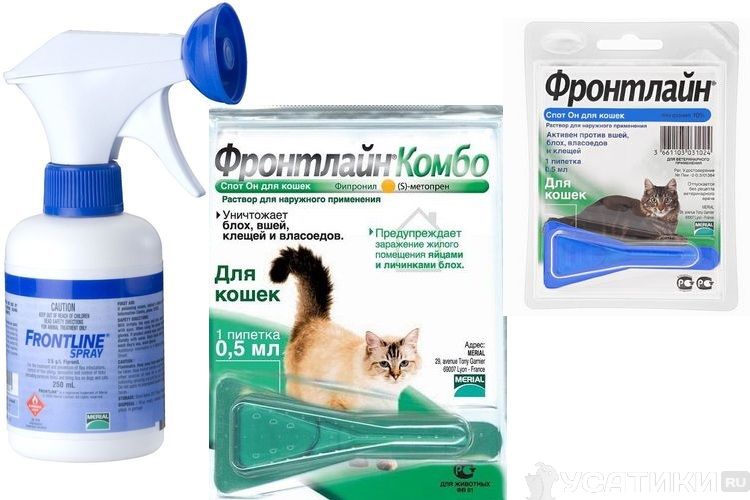
The difference between Spot-On and Combo is that the former only affects the animal, while the latter (enhanced) is waterproof and prevents infestation in the home. After applying Spot-On drops, fleas begin actively migrating from the animal's fur. The remaining larvae (if not re-treated within two months) can survive and reinfest the animal. Frontline Combo, on the other hand, disrupts the parasite's reproductive cycle and kills both eggs and larvae.
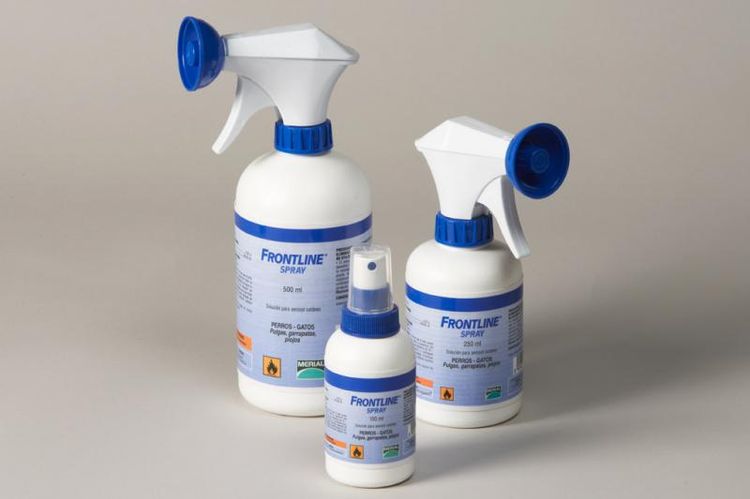
Frontline Spray is designed for treating small kittens and animals suffering from allergic reactions. The spray is applied only to the fur, while Spot-On and Combo penetrate the skin's fatty layer (down to the hair follicles) and provide comprehensive protection against parasites.
The price of Frontline for cats depends on the type of product chosen. The spray costs 800-900 rubles; Spot-On costs 300-400 rubles; and Combo costs 500 rubles.
If your kitten is 8 weeks old and has no known allergies, Combo is the best choice. This product offers numerous advantages:
- not only cleans fur from fleas, but also prevents infestation of the apartment;
- kills eggs and larvae of parasites;
- prevents flea dermatitis;
- kills most known types of ticks;
- relieves itching associated with bites.
But the most important advantage of this product is its rapid action and water resistance. You can bathe your cat as early as 48 hours after treatment. This is especially convenient if your cat is frequently outdoors. Even if your pet gets wet in the rain, you won't need to re-treat.
Frontline for cats: instructions for use
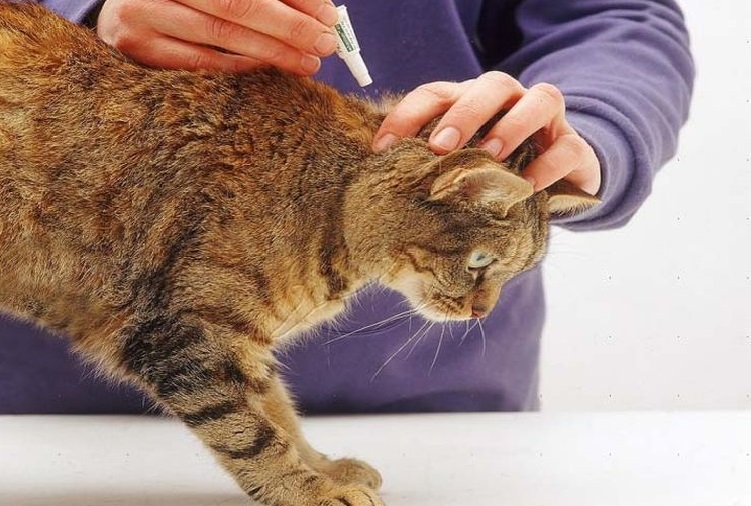
Although the drops may seem simple to apply, it's important to follow the manufacturer's instructions. The instructions for use for Frontline Combo for cats and Frontline Spot-On are the same.
Bathe your pet 24 hours before treatment, using a special antiparasitic shampoo. Do not apply Frontline drops immediately after bathing. Your pet's skin should be completely dry and free of open wounds and visible abnormalities (swelling, redness). Remove the applicator from the outer packaging. Hold the dropper vertically and snap off the tip with a sharp movement. Part the animal's fur at the withers (between the shoulder blades). Squeeze the applicator firmly and apply the entire contents to one area. It is important to hold the animal firmly to prevent the solution from spilling or from only treating the fur and not the skin. The contents of one applicator are sufficient for a single application.
Since Frontline Spray can be used on pregnant cats and young kittens, its application method is completely different from the one described above. There is no need to bathe the animal before using the spray. You will also need to calculate the dosage yourself. To do this, weigh the animal, estimate the amount of fur, and use the chart to determine the number of pumps to apply. Protect the animal's head with a special collar, then brush against the grain. Spray the back and abdomen, not exceeding the recommended number of pumps. Adult pregnant cats can be sprayed on the forehead and chin.
The product may cause an allergic reaction (as with any chemical). Animals may also experience temporary itching at the site of application. If the treated cat behaves aggressively, scratches constantly, or rolls on the floor, consult a veterinarian.
How often can drops and spray be used?
Frontline drops for cats should be used monthly. This is the only way the active ingredient, fipronil, can disrupt the flea life cycle and kill all ticks. The effect can be observed for up to six weeks, but the risk of re-infestation and flea dermatitis begins after just four weeks. It's also important to remember that the Spot-On solution's effectiveness wears off after bathing, immersion in water, or exposure to harsh sunlight. However, the Spray and Combo are weather-resistant.
Some owners refuse to treat their pets monthly, arguing that fleas and ticks develop immunity to the medication. There is no scientific evidence to support this claim. Difficulties in flea control may be due to changing weather conditions or poor home hygiene. Effective flea control involves not only continuous year-round treatment but also regular washing of bedding and floors.
How to distinguish the original Frontline from a fake?
Frontline drops are sold in most countries worldwide. Like any other effective medication, it is often counterfeited. To avoid paying for a counterfeit product, it's important to pay attention to important details.

Firstly, even single doses of the product are sold in individual cardboard packaging. If the seller offers to buy a separate plastic pipette (citing that the store ordered bulk packaging to reduce the price), it's best to refuse the purchase. Secondly, the box must indicate the batch number and expiration date. The batch number must also be duplicated on the plastic applicator. Each box contains a leaflet with first aid information (in case of an allergic reaction) and instructions for use. The applicator itself is additionally sealed in plastic (to protect it from small children). There should be no additional stickers, inserts, or holograms in the packaging.
The following information is indicated on the back of the applicator itself:
- Manufacturer: Merial;
- name and type of product;
- marking "for external veterinary use only";
- concentration of active ingredient;
- the amount of liquid in the pipette.
Frontline products are manufactured in France, but since they are packaged in accordance with the rules and regulations of the consumer countries, Russian versions may be marked "PCT." The appearance of cardboard boxes from different batches may vary, including color schemes and cat photos.
Are Frontline drugs safe?
Many owners are also concerned about whether using Frontline will harm their cat's health. The manufacturers claim that if the application instructions are followed, the risk of side effects (other than individual tolerance) is extremely low. However, when using the spray, the animal may inhale excessive amounts of the liquid, leading to short-term shortness of breath.
It is also prohibited to alter the recommended dosage. Some owners, wishing to enhance the product's effect, apply a double dose to their cat's fur. An overdose of the active ingredient (fipronil) causes tremors, seizures, and ataxia. Even if a kitten is treated with a single dose of the product, there is a risk of poisoning. To prevent your pet from licking the chemical off its fur, it is recommended to place a special protective collar on it for at least a few hours.
If you suspect your pet has been poisoned by fipronil, you should immediately contact a veterinarian. If this is not possible, thoroughly wash your pet with clean running water and feed it powdered activated charcoal.
Real reviews
Anna, 25 years old
"I live in a private house, so fleas are a real nuisance to my pets. I regularly buy Spot-On for the adults; it gets rid of the parasites very quickly. When my cat gave birth to kittens, I decided to buy Frontline spray, as the liquid from the ampoules can only be used after the kittens are two months old. I followed the instructions, but didn't notice any effect. Now I'll wait until the kittens are older and then treat them with the standard Spot-On."
Evgeniya, 42 years old
"I breed fold-eared kittens. Antiparasitic treatment is a standard monthly procedure in our house. Until eight weeks, I simply brush the kittens' fur and treat them with Frontline spray. And starting at two months, I apply Combo drops to the withers. But I don't forget about house hygiene either! I wet-clean the house daily and vacuum the bedding. I can't even remember what fleas look like anymore. I definitely recommend Frontline treatments to new kitten owners. But I always remind you that without regular house cleaning, you'll have to deal with parasites constantly."
Victoria, 33 years old
"Don't make the same mistake I did! Before applying drops to the withers, always check for allergies. A couple of drops on exposed skin is enough. I immediately poured out the entire contents of the dropper. Ultimately, I had to rush the cat to the vet. It turned out he was allergic to fipronil. Now we only use Frontline spray. It's perfect for cats with allergies!"
Read also:


Add a comment