
Frisbee for dogs: what it is and how to teach them to play
In this article, we'll explore Frisbee. It's a popular game and professional sport for dogs. Teaching your dog Frisbee is easy; all you need to do is spend plenty of time training, rewarding successful attempts, and following the recommended training plan.
Content
What is a dog frisbee?
A Frisbee is a toy often used to train and entertain dogs. It's a disc, like the one pictured, that flies low over the ground for a long distance when thrown. Frisbees are used in sporting competitions and outdoor games.
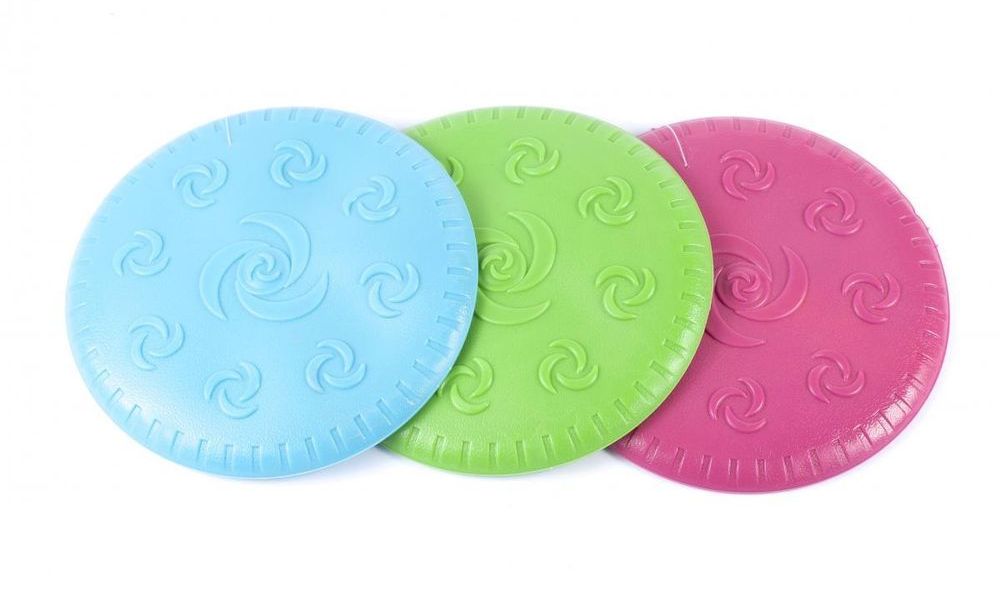
Dog Frisbee was first demonstrated in 1974 at a Los Angeles stadium. During halftime of a sports match, Ashley the whippet made an unscheduled appearance, catching a disc thrown with force in mid-air, leaping 2.7 meters and reaching speeds of up to 56 km/h. The demonstration was impressive and attracted the interest of a prominent businessman, who decided to develop dog sports. A year later, the first "Lander Cup" for Dog Frisbee was held.
Benefits of Frisbee
Recreational play or professional sports are beneficial for dogs. Regular training is aimed at improving:
- animal reaction speed;
- strength and endurance of the muscular skeleton;
- the pet's intelligence, forced to adapt to the situation;
- mutual understanding between the animal and the owner.
In the process, the animal realizes its natural instincts, pursues and grabs the toy, which improves its mental state.
Frisbees that are too heavy or of a non-standard size can cause injury. Jump training is dangerous for puppies under one year old, as their skeletons are not fully formed.
How to choose the best flying saucer
The choice is influenced by the pet's age, height, grip strength, and speed. There are certain standards:
- For puppies and adults under 40 cm, frisbees with a diameter of 12–18 cm are suitable;
- more than 40 cm 22–23.5 cm.
Dogs should not play with human-grade objects, such as the discs sold at sporting goods stores. Discs made of flexible plastic or thick rubber are safe; they won't crack or damage gums, jaws, or eyes when squeezed by their canines. The paint used for the coating should be non-toxic.
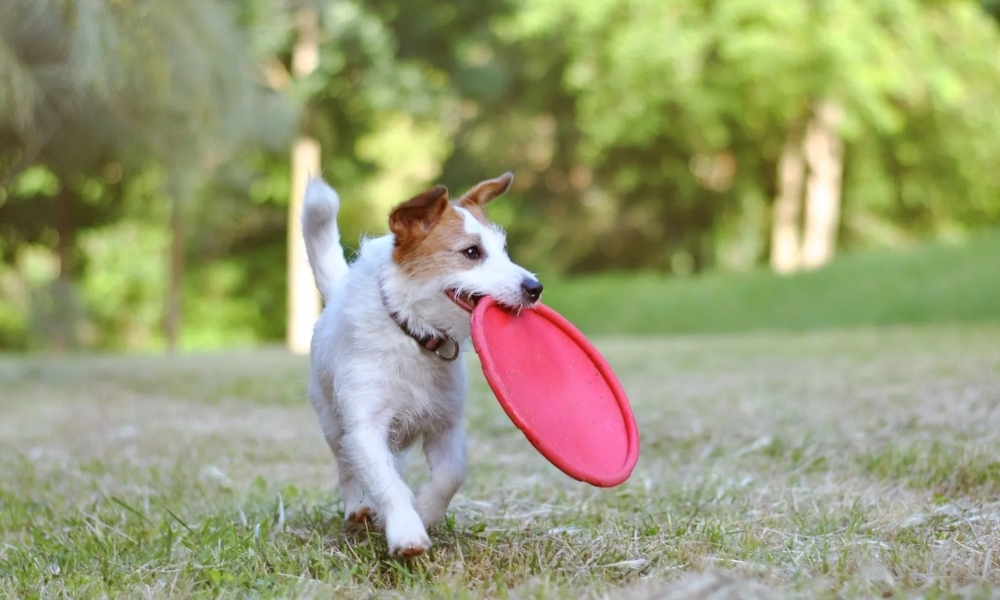
Specialty stores offer a variety of soft rubber plates for teething puppies, or professional-grade ones designed for firm jaw clamping. It's best to buy two sets—a lightweight one for fair weather and a heavier one for windy conditions.
Where to start training
The game consists of two stages, which require the development of certain skills:
- A person throws a disc. To ensure the object flies in the desired direction and at a comfortable height for the dog, it's necessary to "position" the hand. Beforehand, you'll need to master throwing the disc without a dog.
- The pet chases the plate, jumps up, grabs it, and brings it back to its owner. To ensure your dog enjoys playing, you need to teach it basic commands.
Before a game, warm-up exercises are performed to strengthen the muscles. You can run a lap around the stadium with your four-legged friend or walk at a leisurely pace for at least half a kilometer. Exercises such as "snake around the legs" and "pulling" are helpful. Warm-ups should last 30–40 minutes in warm weather. In winter, warm-ups are necessary before every training session.
How to train a dog to play Frisbee
The plate should evoke a pleasant impression. Therefore, when showing the toy, the owner should reward it by offering a treat as a bonus. It's best to offer treats on the plate. Once the dog gets used to the plate, introduce a game element: tease the dog with a Frisbee until it grabs the object with its teeth. Once the toy is caught, gently pull it back, moving it slightly from side to side. To speed up the dog's adaptation, assign a command to the game.
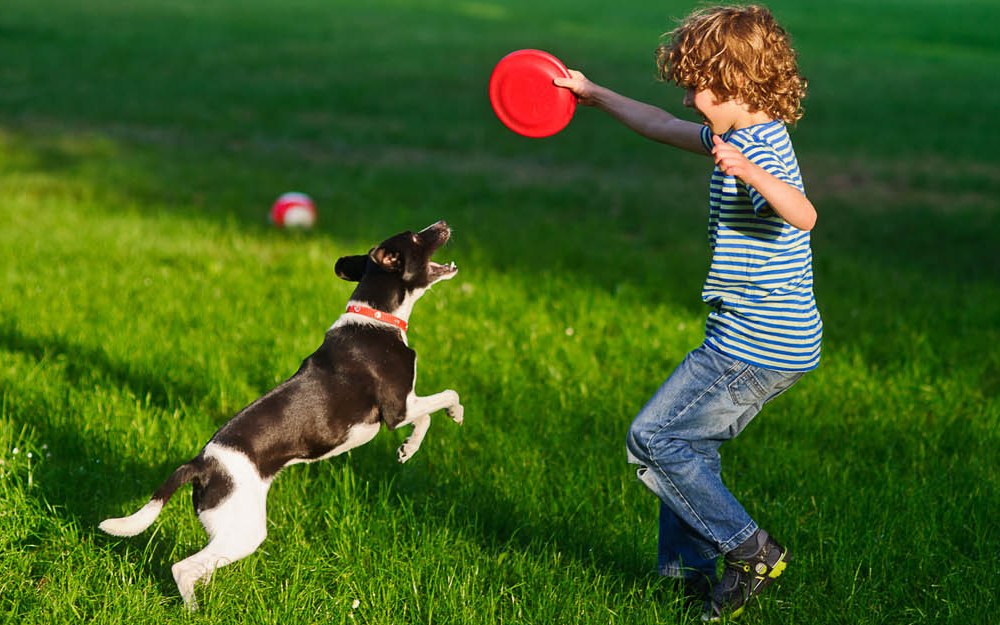
The first training sessions are conducted by throwing the toy a short distance, low to the ground. Reward the dog with a treat only for attempts to catch the toy with its mouth, not for attempts to knock it down with a paw or chest. To teach the dog to grab the Frisbee by the edge, use the "roll" exercise:
- the plate rolls along the ground, standing on its edge;
- The dog tries to grab a rolling object.
At first, the dog will try to knock the plate over—such attempts are not counted and are not rewarded. If the dog loses interest, take a break and try again.
Once the "roll" is mastered, they move on to the chase. The plate flies at high speed, so if the pet starts moving with it, it won't have time to catch the toy. It's important to train the dog to run before the throw:
- the frisbee is moved from one hand to the other behind the back;
- the dog walks around the person on command;
- perform a "roll".
After several attempts, the animal understands that it must, on command, go around the owner and immediately rush in pursuit of the object that the person is about to throw.
The final stage of training involves tossing the Frisbee a short distance while squatting. The pet is rewarded for each successful catch.
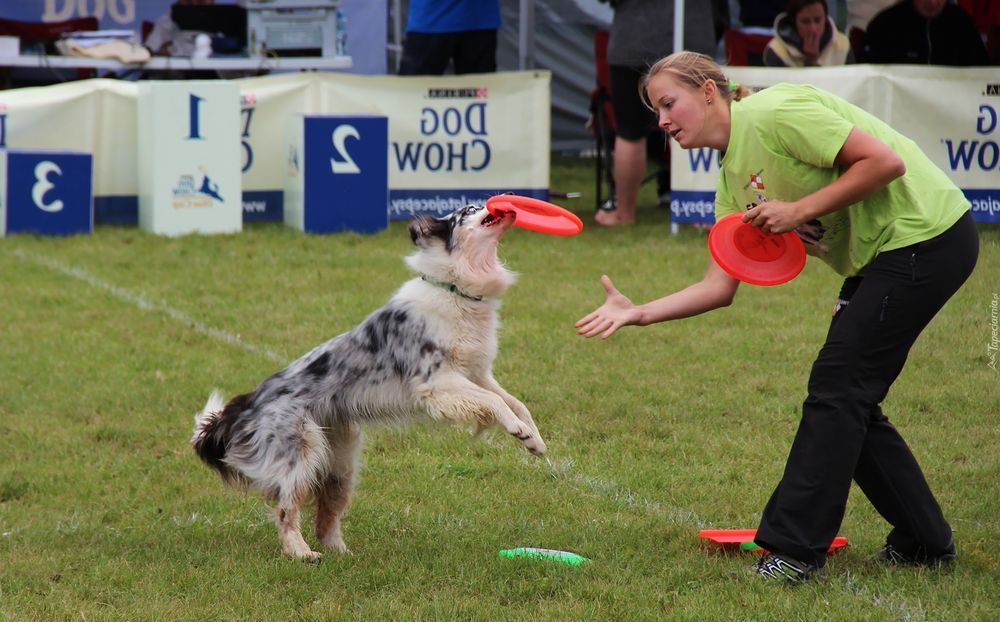
Jump training
To participate in competitions for large breeds, they practice the technique of skillfully performing a "bumblebee" jump over a hoop or barrier:
- the animal is seated at a distance of 50 cm from the barrier or hoop;
- the barrier bar or the bottom of the hoop is at the level of the dog's chest;
- The frisbee is held in the hand on the other side of the barrier, slightly above the muzzle, at a distance of approximately 20 cm from the punk;
- When jumping, the pet must tuck its hind legs in and group itself together, landing on all limbs at the same time.
For two to three months, the Frisbee is simply given away, accompanied by praise and a treat. Gradually, the distance and height are increased, ensuring the animal performs the jump correctly. To practice tuck training, the Frisbee is raised, and when the dog jumps and grabs the object with its teeth, the hand is dropped sharply, forcing the dog to tuck in.
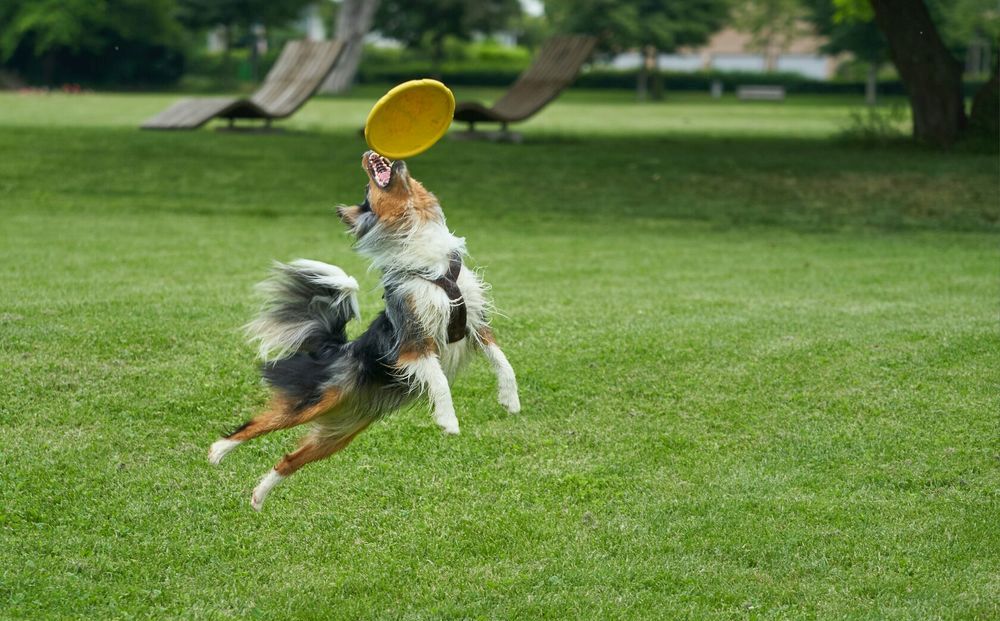
Although most dog frisbees are simply a game, it's important to monitor your pet's well-being. After physical activity, wait for the animal to catch its breath and then give it some water. Before returning home, take it for a few minutes for a leisurely walk.
Read also:
- Obedience for dogs: what it is, where to start, and training rules
- Bikejoring for dogs: what it is and how to do it correctly
- What commands should a dog know?


Add a comment