
Foreign White: Cats and Tomcats
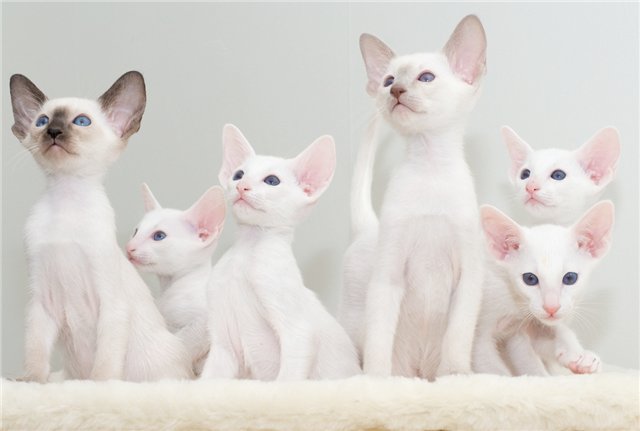
Foreign White These are stunningly beautiful white cats with blue eyes. These adorable creatures shouldn't be confused with the similar-looking Oriental breed. The main difference is their eye color.
Content
History of origin
Back in the 1960s, geneticist Pet Turner conceived the idea of breeding a white cat with beautiful blue eyes and excellent hearing. She approached the matter with the utmost seriousness and began intensively working on breeding programs for the intended breed. Pet was well aware that most white cats have hearing problems, the cause of which remains unknown. Therefore, another of the geneticist's goals was to cure the cat's hearing loss.
Her fruitful work resulted in a successful cross between a Siamese and a European Shorthair, the offspring of which produced the first Foreign White. In the 1970s, the Foreign White breed was registered by virtually all international cat associations: ACF, CCCA, GCCF, and WCF.
General characteristics
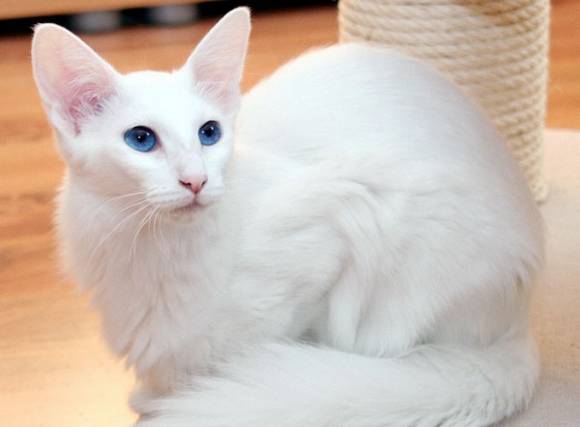
Foreign White is an incredibly beautiful, large, smooth-haired white cat with blue eyes, genetically close to representatives of the Siamese cat breed.
Appearance
They have a graceful, slender body with strong muscles. They have a long, slender neck and a tucked-up abdomen. Their hind legs are noticeably longer than their front legs, with small, oval-shaped feet. The Foreign White's head is wedge-shaped with a perfectly flat profile.
The cats' forehead and nose form a straight line, so a depression in the bridge of the nose or a snub nose are considered a fault. Their ears are quite large, triangular in shape, and beautifully set on the sides of their heads. Particularly striking are their unusually beautiful almond-shaped eyes, a beautiful blue color. They fit perfectly into the lines of their muzzle.
Character
Foreign Whites are intelligent cats. They get along well with other pets in the house and are loyal and affectionate. Foreign Whites are great with children and can play with them for hours. They are talkative cats and have a loud, varied voice, allowing them to express their emotions perfectly. They love freedom—running, playing, exploring. At the same time, they remain independent and free-spirited.
Therefore, be careful when you take her for a walk - she may run away to explore new places, meet other cats and may want to play with them.
There's a risk that aggression could arise from another cat! This doesn't apply to animals that live in the same house with her, with whom she can quickly find common ground, but in the wild, this risk is high.
Rules of care and feeding
The rules for caring for Foreign White cats are no different from the rules for caring for cats of other breeds.
Care
Keep in mind that Whites have fairly large ears, so there's a risk of bacteria accumulating in them. Clean their ears regularly with cotton swabs. Purchase a special ointment from your veterinarian and apply it regularly. This will help prevent ear mites from developing in your pet. Also, regularly rinse your cat's eyes with a warm herbal infusion using cotton pads and brush their fur. Bathe your cat as needed.
Feeding
Foreign Whites aren't prone to obesity, but they have a good appetite. This is likely due to their high energy levels. Provide them with a comfortable sleeping area, give them attention, and play with them as often as possible, and they'll delight you with their playful and sweet nature for years to come. When it comes to feeding, ensure they're fed a balanced diet, and consult your veterinarian about their diet beforehand. If you prefer dry food, the manufacturer will already have provided a balanced diet. In this case, choose premium or super-premium foods, and always ensure fresh water is available.
Health
Foreign White cats are considered healthy and do not have any particular health problems if they are properly cared for.
These cats have fairly strong immune systems, so vaccinations should be kept up to date. Also, for preventative purposes, take your pet to the veterinarian regularly, who can spot any health issues early and take appropriate measures.
Remember that cats are no strangers to feline behavior, especially if your cat is frequently in contact with other animals.
Read also:


Add a comment