
Fox Terrier (smooth and wirehaired)
The Fox Terrier was developed in Great Britain to hunt burrowing animals and exterminate rodents. But it can also be an athlete, a show star, or simply a family pet. The Fox Terrier has a multifaceted personality, offering something for everyone. It possesses enthusiasm, a desire and ability to work, courage, warmth, a love of life, and sociability. On the other hand, the breed is considered quite complex and not suitable for everyone.
Content
The Origin of the Fox Terrier
According to historical references, dogs known as fox terriers (from the English "fox" and "terrier" meaning "burrow dog") were noted by travelers and conquerors as early as the heyday of the Roman Empire. There is virtually no information about the subsequent development of this category. It is known that in the Middle Ages, these small, vicious dogs were the primary rodent hunters and aided in hunting. They played an important role in human life, but were not subject to any classification, much less targeted breeding. Beginning in the 17th century, small dogs capable of flushing foxes out of burrows began to be used for foxhound hunting. This form of entertainment became increasingly popular, and the number of fox terriers grew rapidly.
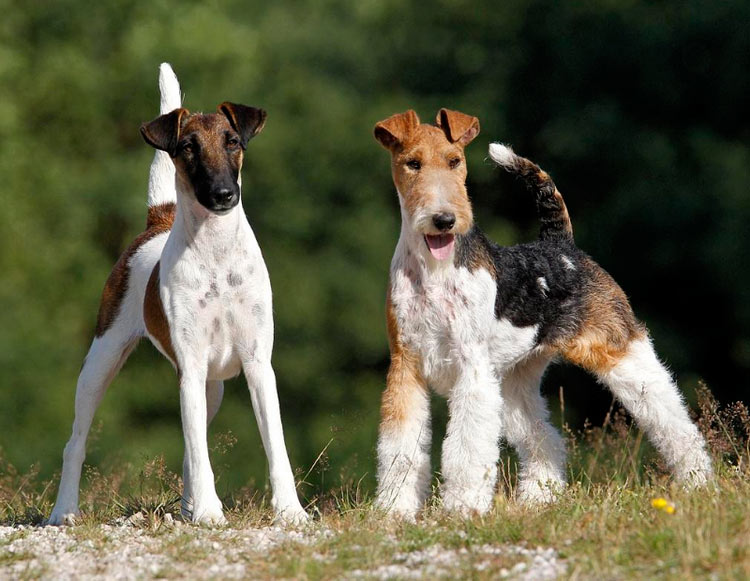
The Smooth Fox Terrier and the Wire Fox Terrier are two separate breeds, each developing along its own path.
Smooth Fox Terrier
Smooth Fox Terriers developed earlier. According to the prevailing theory, their ancestors were Black and Tan Terriers, with some Bulldog, Beagle, and Greyhound blood mixed in. Uniformity was achieved by the end of the 19th century. In 1876, the first standard was drawn up and a breed club was founded. This period can also be considered the peak of their popularity.
At the end of the 19th century, there were approximately 20,000 Smooth Fox Terriers in Britain alone. Wire-haired dogs were just beginning to be recognized.
Wire Fox Terrier
The first Wirehaired Fox Terriers recorded in the Stud Book were bred at the Sinnington Kennels in Yorkshire, England, in 1866. Hunting dogs of this type likely existed earlier, but were never shown. The fanciers' association was founded in England in 1913.
Regular matings of Wirehaired Fox Terriers with Smooth Fox Terriers resulted in a significant similarity in appearance between the two breeds. Until the 1960s, the dogs were shown together and met the same standard.
Following the release of the film "The Thin Man" (1934), the Wire Fox Terrier became a popular family dog and companion. The comic strip "The Adventures of Tintin" (1929-1976), in which the main character's friend was also a Wire Fox Terrier, played a significant role in their popularity. Russian audiences are primarily familiar with the breed from the film adaptation of J.K. Jerome's book "Three Men in a Boat." Jerome himself explains that the original image of the dog was a composite and no specific breed was intended. It was only after the book's publication that friends gave him a Fox Terrier puppy.
By the mid-20th century, the Wirehaired Fox Terrier companion dog significantly outnumbered and outsold its smooth-coated counterpart, which was more widely bred and prized by hunters.
The Wire Fox Terrier is equal to the Smooth Fox Terrier in working ability and even outperforms it in some areas, but finding a breeder with a truly working line is more difficult. Most Wire Fox Terriers are bred as companions and show dogs, without working trials.
Purpose
The Fox Terrier is a hunting breed developed for hunting burrowing game (foxes, badgers, raccoon dogs) and pest control (mice, rats, moles). Recently, it has proven itself to be more versatile. Fox Terriers are used to locate and flush game from thickets, as well as for blood trailing. They are trained to hunt field and forest game, as well as brown and white hares.
In the late 19th century, Wire Fox Terriers were often used for otter hunting. However, according to the English Kennel Club's classification until 1878, only the Smooth Fox Terrier was considered a sporting dog, while the Wire Fox Terrier was considered a toy.
Hunters say they really like the fox's working style. In the burrow, it is neat, patient, and obedient. It doesn't have the same pronounced malice as Jagdterrier, so he's less likely to get injured during contractions. He's much more resilient. dachshund, which often have to be carried in arms and have a greater hunting ability than Jack Russells and other "burrowers" that have now become companions and show dogs.
Hunting with a well-trained and well-drilled Fox Terrier is a pleasure. They possess toughness, tenacity, ferocity, and a desire to win, and they are very hardy.
The cheerful and energetic Fox Terrier makes a loyal friend and companion for active people who enjoy long walks. They can be seen at various sporting competitions and, of course, in the show ring.
Appearance
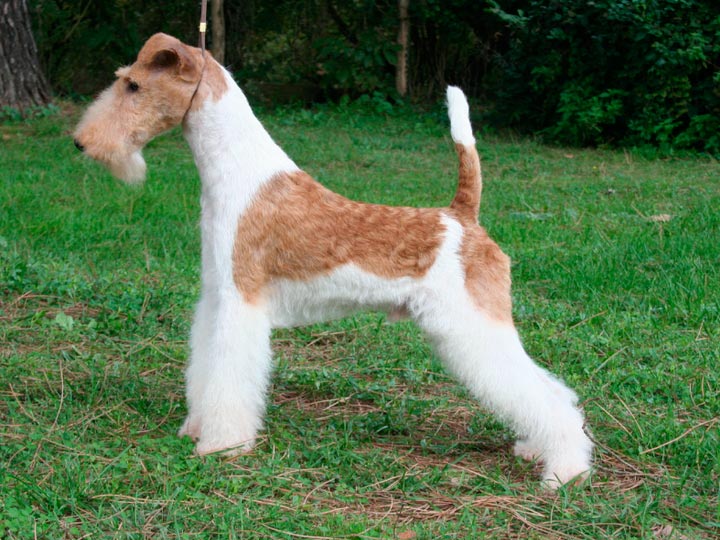
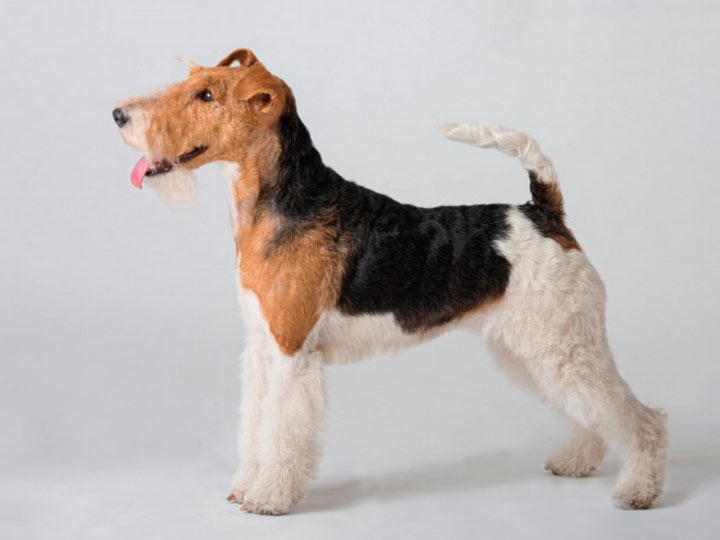
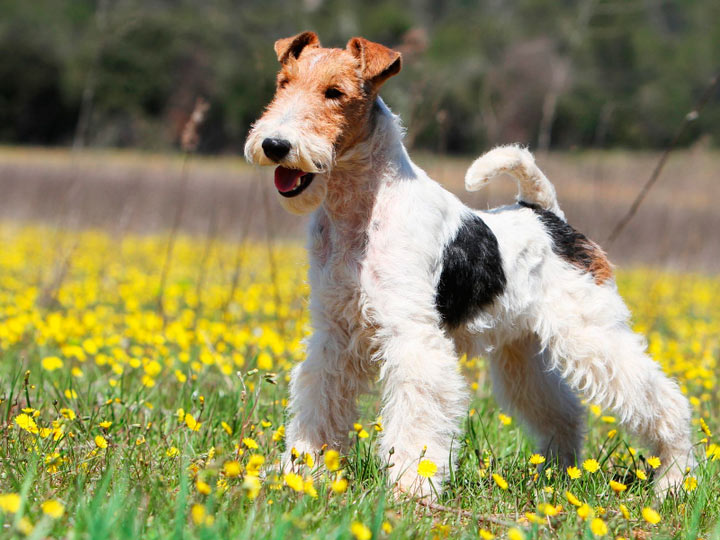
The Fox Terrier is a small but very strong and hardy dog. Its limbs are of medium length. When standing, the dog resembles a well-built hunting horse, with a short back and a large support surface. Sexual dimorphism is pronounced.
- Height at the withers for males: 35–39 cm; females: 34–38 cm.
- Weight of males: 7.3–8.2 kg; females: 6.8–7.7 kg.
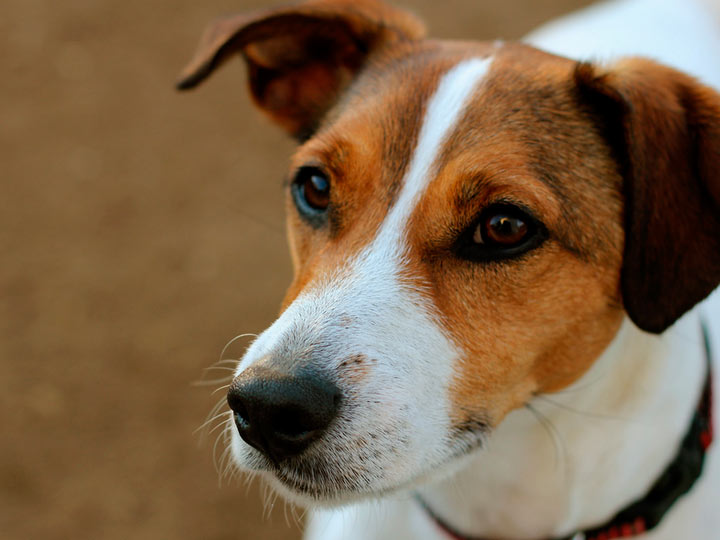
The head is proportionate to the body. The forehead tapers toward the eyes and is flat. The stop is slightly defined, and in the wirehaired variety, it is barely noticeable. The muzzle is beautifully chiseled. The jaws are strong and muscular. The bite is a scissor bite. The eyes are small, dark, and round. The expression is lively and intelligent. The ears are V-shaped, set high, and hang forward, close to the temples. The ear arch is above the line of the skull. The neck is muscular, dry, and gradually widens toward the shoulders.
Separate FCI standards have been developed and recognized for the Smooth Fox Terrier and Wire Fox Terrier, numbers 12 and 169, respectively. The descriptions are virtually identical, except for the coat. Crossbreeding between the breeds is not permitted.
The body is proportionate, muscular, and square. The back is straight and short. The loin is slightly arched and powerful. The chest is narrow and deep. The tail is set high, carried vigorously, and as straight as possible. Tail docking is done in countries where it is not prohibited. Docking is especially important for a hunting dog, as it is by the tail that the dog is pulled out of a hole. The forelimbs are straight, with a slight stop at the pastern. They have good bone throughout their length. The hindquarters are strong and muscular, with long, powerful thighs, well-angled stifles, and low-set hocks. The paws are small, round, and compact.
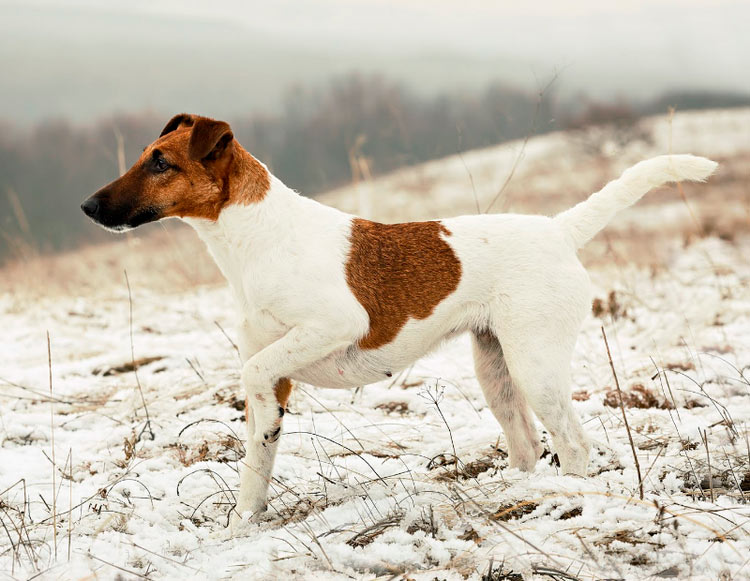
- Shorthaired Fox Terrier. The coat is straight, smooth, dense, and thick. It feels rough to the touch. The inner thighs and belly are free of bald spots.
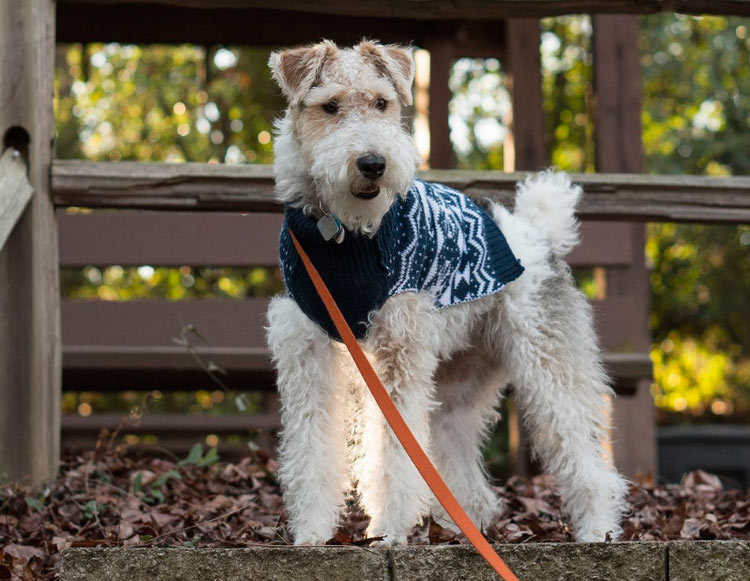
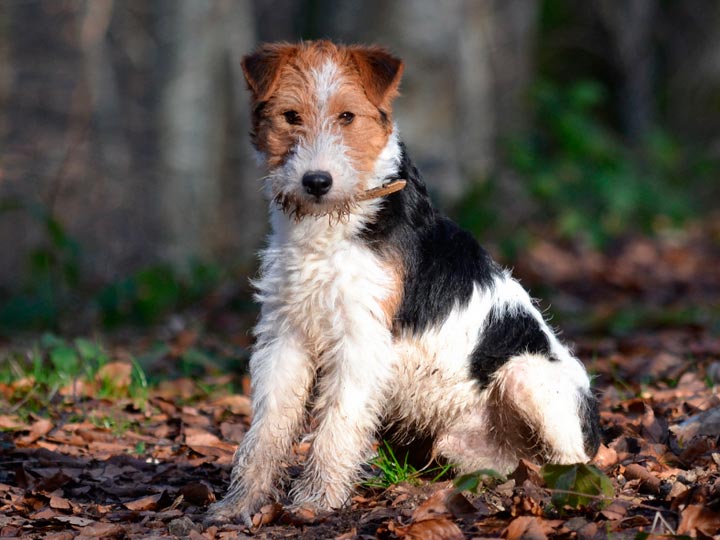
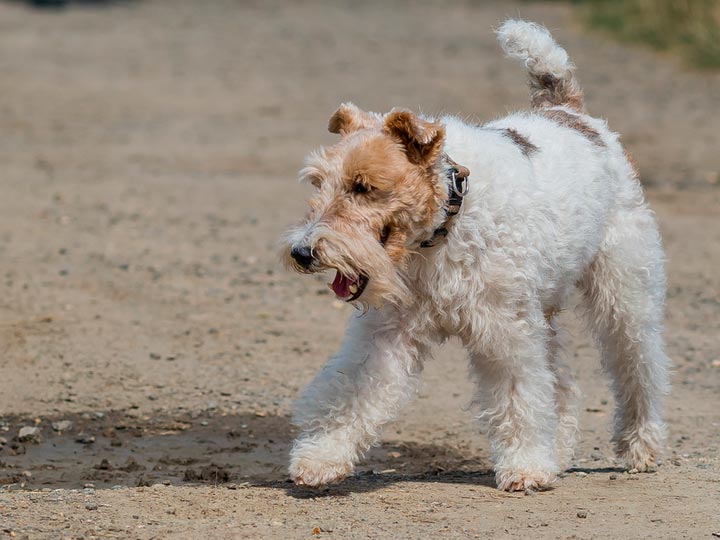
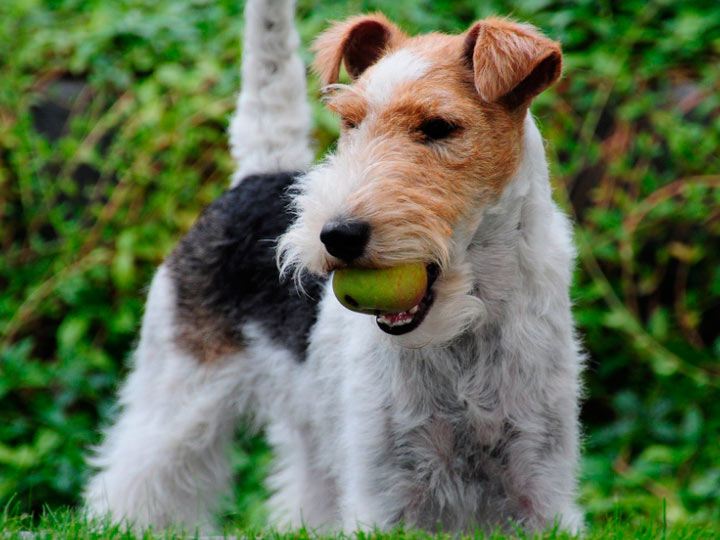
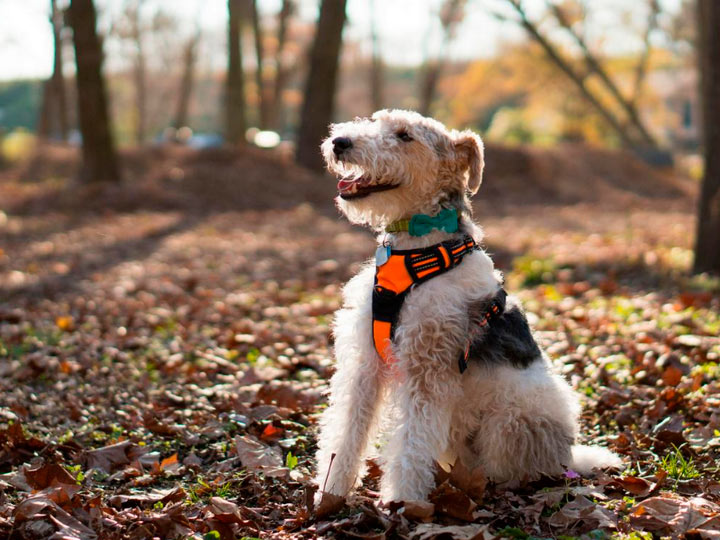
- Wirehaired Fox Terrier. The coat is very harsh, wiry, and dense. The undercoat is short and softer. The hair on the limbs and back is harsher than on the sides. The hair on the jaws is quite long, giving the impression of greater strength.
Color: Solid white or predominantly white with red, black, or red and black markings. Red, brindle, and liver markings are undesirable.
Character and behavior
The Fox Terrier is friendly, easygoing, and fearless. It has a lively temperament and is always optimistic. It is cheerful, active, curious, and impatient. Its natural intelligence and independence help it make its own decisions. It is devoid of flattery and servility. It possesses individuality and dignity, rarely loses its composure, and will not tolerate disdain. These qualities have earned it the nickname "a gentleman in the dog world."
The Fox Terrier has a complex personality. While it could be called stubborn, it's more likely that it's persistent in its decisions and able to achieve its goals. This tenacity is valuable in a working dog, but not always desirable in a companion. The Fox Terrier forms a close bond with its owner. It avoids familiarity with strangers but rarely displays aggression toward people. It finds it easy to get along with children and quickly becomes involved in play.
The lively and energetic Fox Terrier is always ready to follow its owner on any adventure.
Most fox terriers are prone to zoo-aggression. They have difficulty getting along with other fox terriers and show hostile interest in strange cats, dogs, and small animals. They are always ready to defend themselves and will not hesitate to start a fight.
Fox terriers require a lot of attention. If they feel neglected or mistreated, they experience stress, which often results in behavioral problems. These can also be caused by a sense of entitlement. If you allow a fox terrier to dominate the home, their dominance will be felt everywhere. Unwanted behavior is not always preventable and is very difficult to correct on your own. Most owners in such situations resort to the help of a dog trainer.
Training
The Fox Terrier is very energetic and restless. It can be trained to obey commands with consistent training, but engaging a dog in training is not easy, especially a young one. Patience and the use of treats or toys are essential.
Training and raising a fox terrier should be a gradual and systematic process of developing the necessary qualities. The owner will need patience and experience, or a willingness to learn the basics of raising and training hunting dogs.If a fox terrier lives in a house or apartment, as it matures, it will learn to understand its owner's phrases and gestures and become quite obedient in everyday life. However, without regular training, obedience outside, in situations where the owner needs something, is often out of the question.
For a pet, training is usually limited to a set of standard commands. For a working dog, further training will be required. It is recommended to begin this no earlier than 10 months and only when the dog can perform a set of standard commands well, including in unfamiliar environments.
It's always important to consider the dog's personality. A dog that's aggressive and dominant requires firmer handling, while a shy and quiet dog requires a gentle approach, otherwise it might become withdrawn.
Content Features
The Fox Terrier is suitable for keeping in a house, apartment, or kennel. Each situation has its pros and cons. The Wire Fox Terrier does not shed, making it a better choice for an apartment. It is also better suited for winter hunting. Working dogs are recommended to be kept in a kennel. Under these conditions, they become more resilient and less susceptible to colds. To prevent the Wire Fox Terrier from freezing in cold weather, its coat is allowed to grow long in the summer. An unplucked dog cannot be shown, so you must choose between hunting or shows. Smooth Fox Terriers develop a thicker undercoat when kept outdoors than when kept in an apartment. Free-range living is only possible if the yard is well-fenced. Otherwise, the dog will constantly run off in search of adventure. Electric fencing is usually insufficient to deter a persistent burrower.
A Fox Terrier requires a daily, intensive walk of at least 1.5 hours. Training should be varied. They quickly become accustomed to monotony and become bored. It's best to keep them on a leash during walks. If they spot someone's scent, they may run away.
Fox terriers do not tolerate loneliness or prolonged confinement. Their potential bad habits include excessive barking, a penchant for digging holes, including in the apartment floor, and excessive activity in an attempt to release energy (running in circles, jumping, and damaging things).
Nutrition
With adequate exercise and no illnesses, a Fox Terrier is not prone to obesity. Avoid leaving food out all day; it's best to divide the daily portion into 2-3 meals. It's possible for a Fox Terrier to eat everything at once and be hungry the rest of the time. You can feed them natural foods, following general recommendations, or a ready-made balanced diet.
Care
Regardless of the coat type, dog grooming includes basic hygiene procedures:
- Trim nails as they grow. Dogs kept indoors usually don't need this;
- Inspection and cleaning of ears once a week;
- Bathe as needed, but not more than once a month;
Smooth Fox Terriers require regular brushing and combing. They shed moderately seasonally and lightly the rest of the year.
You'd think a dog with this coloring would get very dirty on walks, but that's not the case. A dirty fox, just emerging from a den in rainy weather, only needs to shake and dry for its coat to become relatively clean again.
Wirehaired cats' wiry hair grows to a certain length and then dies, but it doesn't fall out, remaining attached to the skin among other hairs. Trimming helps remove it. Failure to trim can lead to the development of skin conditions (exyma, urticaria, etc.).
It's important to accustom your dog to having its fur plucked from an early age. Initially, the procedure is quite unpleasant and even slightly painful. The first plucking is performed at 2-3.5 months, then at 5-6.5 months. If the dog is not shown, it should be trimmed 2-3 times a year; if kept indoors, it should be trimmed once or twice a year. Show dogs begin ring preparation 2.5 months before the show. The decorative hair on the muzzle is allowed to grow for at least 6 months.
The use of cutting tools (scissors, knives, clippers) on wire-haired terriers is not allowed.
Health and life expectancy
Most Fox Terriers are strong and hardy dogs that remain active into old age. Life expectancy is 12-15 years. Health and genetic studies have identified a number of hereditary diseases that can be found in fox terriers:
- Pathologies of the musculoskeletal system (limited calcification, cleft palate, cleft lip, hip dysplasia, knee dislocation, shoulder dislocation, osteochondrosis of the spine, malocclusion, cervical spondylolisthesis);
- Diseases of the nervous system (cerebellar hypoplasia, cerebellar degeneration, bulbospinal palsy, hereditary ataxia, Scottish terrier seizures, epilepsy, spinal muscular atrophy);
- Ophthalmological diseases (iris erosion, corneal dystrophy, glaucoma, entropion, lens dislocation, trichiasis, progressive retinal atrophy);
- Diseases of the digestive tract (achalasia of the cardia, esophageal diverticulum, decreased esophageal motility, copper toxicosis);
- Immune diseases (T-cell defect, atopic dermatitis);
- Thyroid diseases (goiter, hypothyroidism);
- Pathologies of the reproductive system in male dogs (hypospadias, cryptorchidism);
- Cardiovascular diseases (ventricular septal defect, endocarditis, pulmonary artery stenosis, aortic stenosis);
- Diseases of the mucous membranes and skin (inguinal/umbilical hernia, contact dermatitis, seborrheic adenitis);
- Deafness (more common in smooth-haired dogs);
- In adulthood, the development of tumor diseases (histiocytosis, sarcoma) is possible;
To maintain your dog's health, it is essential to adhere to a schedule of veterinary and preventative measures, promptly treat for parasites, get vaccinations, and undergo an annual medical examination.
Choosing a Fox Terrier Puppy
When choosing a puppy, you need to start with a clear understanding of your goals: what is the dog being acquired for? If you need a hunting companion, consider working lines, while if you're looking for a companion or show dog, consider decorative lines. Most show-bred dogs are unsuitable for hunting. After several generations of "conformation" breeding, they lose their essential working qualities, often lack the necessary vigor and tenacity, lack stamina, and reach their upper height limit, which, along with their broad chest, makes them unsuitable for burrow hunting.
Hunters rarely worry about shows and titles. Often, a dog is shown in the ring only once, to obtain a hunting passport. It's ideal if the parents of a litter have working certificates with a minimum score of 23 points for "viciousness" and 25 points for "toughness." A certificate for versatility in males is welcome. In regions with harsh winters, hunters prefer wire-haired dogs. They adapt more easily to year-round kennel conditions and work longer in freezing temperatures.
Gender is also important. If you need a dog for a family with children, a female is best. Males are better for hunting. Some females are equally good working dogs, but if the season coincides with a heat cycle, the dog is "out of the game."
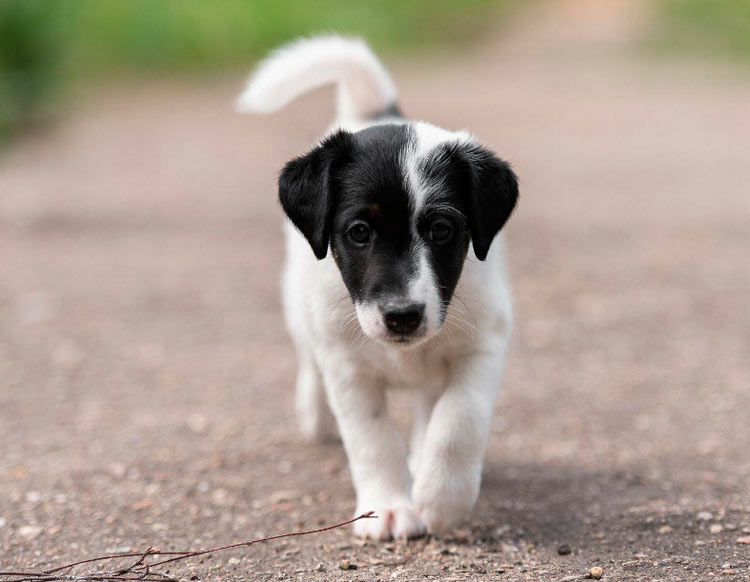
The next, no less important step, is choosing a puppy. If possible, observe the puppies while they feed, sleep, and play. At two months, puppies should be active, compete for food, strive to be leaders, and not be afraid of people. Identifying a good den dog, just like a show dog, at this age is difficult, so the first step is to choose one that is physically and psychologically healthy.
They pay attention to compliance with the standard and the absence of pathologies that can be identified with the naked eye (hernias, cryptorchidism, malocclusion, abnormal limb structure, rashes, discharge, bald spots). The skeleton should be strong, the paws powerful, the tail thick (docked for a hunting dog), the coat thick and harsh, with clearly contrasting spots.
A puppy from high-quality parents may have good potential, but its future achievements largely depend on proper upbringing and training.
Price
Smooth and wirehaired fox terriers range in price from about the same price range. Puppies from breeders rarely cost more than 40,000 rubles. Puppies without papers of origin are usually less expensive at 10,000 rubles. The average price for a promising fox terrier puppy from reputable parents is 35,000 rubles.
Photos and videos
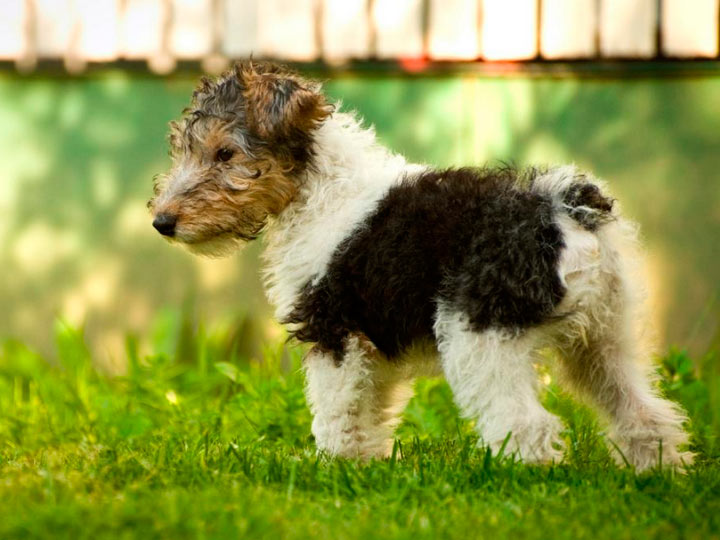
The gallery is dedicated to smooth-haired and wire-haired fox terriers.
Video about the Fox Terrier dog breed


Add a comment