
Flexoprofen for dogs
Flexoprofen is a veterinary analgesic and anti-inflammatory drug developed by the Russian company "VIK – Animal Health." It effectively relieves pain and inflammation associated with acute and chronic illnesses and various injuries in dogs.
Content
Release form and composition features
Flexoprofen is an injection solution. It appears as a colorless, transparent liquid, sometimes with a slight yellow tint. The manufacturer uses dark glass bottles for packaging. Their capacity varies from 5 to 100 ml. When purchasing the medication from a pharmacy, consider the pet's size. Rubber stoppers and aluminum caps are used to seal the bottles. These ensure a hermetic seal, essential for long-term storage.
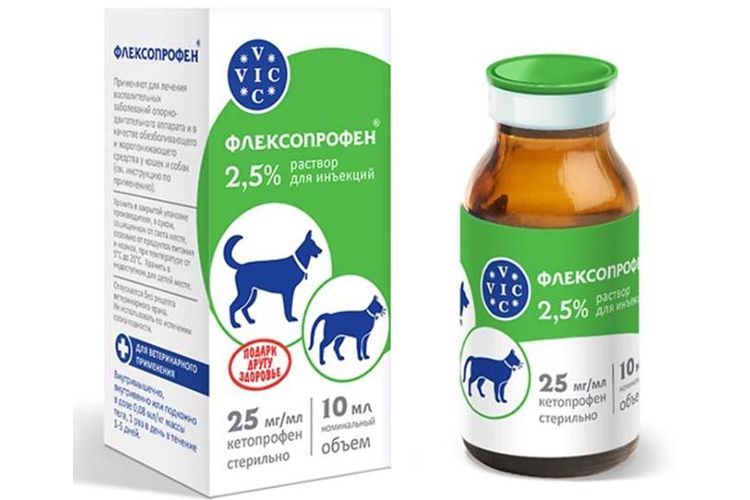
The active ingredient in this medication is ketoprofen. It is available in various concentrations of the active ingredient: 2.5%, 5%, and 10%. The medication also contains additional components that perform auxiliary functions:
- citric acid;
- amino acid L-arginine;
- gasoline alcohol;
- purified water.
How much does it cost and where can I buy it?
The price of Flexoprofen depends on the concentration and packaging size. A 10 ml bottle of 2.5% solution costs approximately 300 rubles, while a 50 ml bottle of 5% solution costs 670 rubles. The weakest solution is typically purchased for dogs. It can be purchased at a regular veterinary pharmacy or online. Since the medication is produced in Moscow, there are usually no shortages.
Properties and operating principle
Flexoprofen is a nonsteroidal anti-inflammatory drug. It has the following pharmacological properties:
- relieves pain of various types;
- has an antipyretic effect;
- eliminates inflammatory processes;
- reduces swelling.
The drug works because its active ingredient, ketoprofen, blocks the production of prostaglandins, substances involved in inflammatory processes. It begins to act within minutes, and the active substance concentration reaches its maximum within half an hour. Depending on the animal's size, breed, and other characteristics, the body can absorb 85-100% of the drug. It does not accumulate in the body or cause addiction.

The drug is eliminated from the body primarily through the kidneys. Although Flexoprofen is classified as a low-hazard substance, it is important to follow the instructions when using it in dogs.
When and how is it applied?
Regarding indications, the medication is prescribed to suppress pain and inflammation in the following diseases of the musculoskeletal system:
- for arthritis;
- for arthrosis;
- with intervertebral disc herniation;
- in degenerative changes;
- for synovitis;
- for tenosynovitis, etc.
The medicine is also used:
- in case of injuries – fractures, dislocations, cracks, sprains;
- in the postoperative period;
- for colic;
- for pain of other etiology;
- in case of hyperthermia;
- for swelling and in other situations.
Important! This medication is considered safe and should not be used without a doctor's prescription. Incorrect dosage may result in an overdose and worsen your pet's condition.
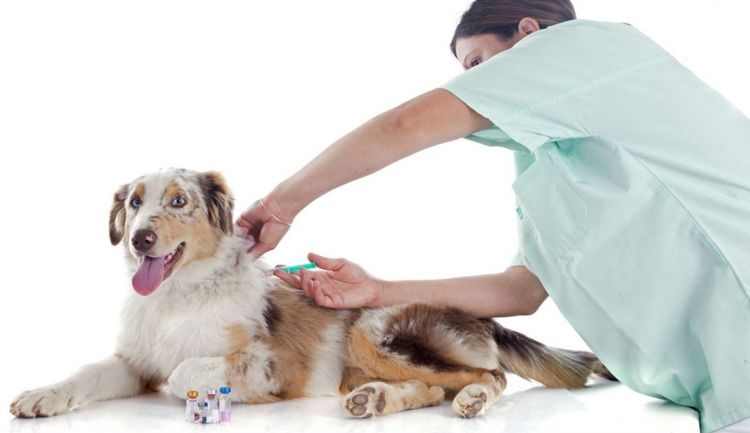
According to the veterinary instructions, Flexoprofen injections are administered to dogs intramuscularly, intravenously, or subcutaneously. The injection is administered once daily for 1-5 days, depending on the severity of pain, the severity of the condition, and other factors.
The dosage is calculated as follows: 2 mg of active ingredient per 1 kg of animal weight. To avoid miscalculating the dosage, it's important to pay attention to the active ingredient content of the product. For example, 1 ml of a 2.5% solution contains 25 mg of ketoprofen, while 1 ml of a 5% solution contains 50 mg.
Take the medication as prescribed by your doctor. Missing doses may affect the drug's effectiveness. No side effects have been observed with first-time use or discontinuation of the medication, as per the instructions.
Please note! Flexoprofen is used to relieve symptoms (pain, swelling, fever), but it cannot address the underlying cause of the condition, so it is often used in conjunction with other treatments.
Contraindications and side effects
The instructions state that Flexoprofen should not be used to treat dogs in the following cases:
- during pregnancy;
- in case of liver failure;
- in case of renal failure and other serious kidney diseases;
- for gastric ulcer or duodenal ulcer;
- in hemorrhagic syndrome.
If the medication is used in animals with chronic internal organ diseases, clinical blood and urine tests are regularly performed to help monitor liver and kidney function.
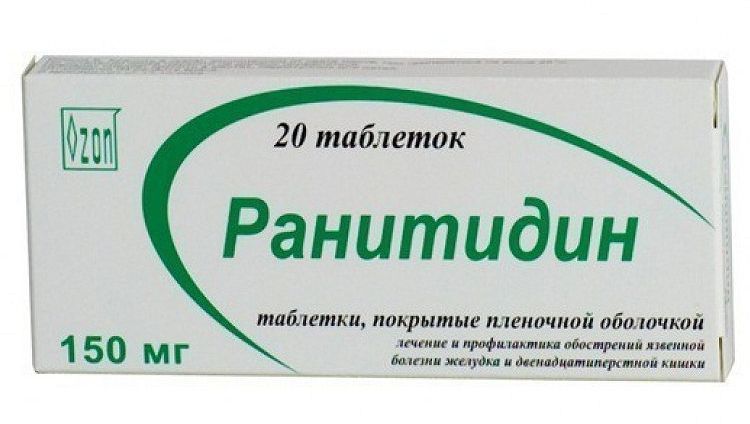
When taken at the recommended dose, the drug rarely causes side effects. To reduce the potential negative impact of the active ingredient on the digestive system and protect the lining of the stomach and intestines, it is prescribed in combination with ranitidine or another medication with a similar effect.
In case of overdose the following symptoms occur:
- vomit;
- nausea;
- indigestion.
If these occur, discontinue use of the medication. Individual intolerance to the medication may cause allergic reactions. These can manifest in various ways, including itching, redness, rash, and other symptoms. In such cases, discontinue use of the medication. The animal is prescribed antiallergic medications and symptomatic treatment as needed.
Flexoprofen should not be used for treatment in combination with the following groups of drugs:
- nonsteroidal anti-inflammatory drugs;
- diuretics;
- blood thinning medications;
- glucocorticoids.
Important! Do not mix the injection solution with other medications.
How to store properly
Flexoprofen can retain its pharmacological properties only if stored properly. It's important to follow a few simple rules:
- The medicine should be stored in its original, sealed packaging.
- The storage location should be away from direct sunlight.
- Air temperature: from 5 to 25 degrees Celsius.
- Moderate air humidity (no more than 75%).
- The drug should be stored away from food and pet food.
Keep this medication out of reach of children. If stored at 5°C, white crystals may form. These crystals disappear spontaneously when the temperature rises. This does not prevent the medication from being used in animals.

The medication's shelf life is 3 years from the date of manufacture. Please pay attention to expiration dates. Discard any spoiled medication.
Security measures
When administering Flexoprofen injections, the general rules for working with veterinary drugs should be followed:
- After contact with the medicine, be sure to wash your hands.
- People with hypersensitivity or a tendency toward allergic reactions should exercise extreme caution and avoid direct contact with the medication. Rubber gloves are recommended for this purpose.
- If the drug gets into your eyes or skin, rinse them with running water.
- If an allergy occurs, seek medical attention.
Empty bottles must not be used for any purpose at home. They must be recycled.
Owner reviews
Valentina, the spaniel's owner:
"Due to a pinched nerve after jumping from a height of 1.5 meters, the dog constantly yelped in pain. Flexoprofen injections effectively relieved the pain. While the medication was taking effect, the dog became active and cheerful. We found no side effects. A good product from a domestic manufacturer."
Mikhail, the boxer's owner:
"The dog started having joint problems. Initially, they tried to treat them with Chondrotron, but the pain was so severe that Jack refused to even get up. The doctor prescribed a painkiller. After five days of treatment, the dog was running around the apartment again. The pain never returned, but the medications to support his joint function were continued for an extended period."
Veterinarian Reviews
Evgeny Aleksandrovich, head physician of the veterinary clinic:
"Flexoprofen is a good domestic medication. Its main advantage is its relative safety, although it does sometimes cause side effects like other nonsteroidal anti-inflammatory drugs. Personally, I rarely prescribe it, usually using foreign medications in my practice, but many of my colleagues have spoken highly of it."
Marina, a veterinarian with 8 years of experience:
"This product relieves pain well, but I wouldn't overuse it. It has a negative impact on the gastrointestinal tract. I use it occasionally because I consider it safer than other painkillers. I've had cases of digestive problems in dogs. It's important to calculate the dosage correctly and avoid overdosing."
Read also:


3 comments
Natalia
I injured my paw on a walk. The vet gave me a shot, and then prescribed a second one the next day. Vomiting started in the evening, continued overnight, but turned black, and by the morning it was just blood. I called the clinic, and they said it happens (where had they been before?), there was nothing to do, just come back, it'll pass, and that's it. They're not answering my calls anymore.
Daria is a veterinarian
Hello!
Such side effects should not normally occur!
I really hope that you didn’t listen to them and turned to another clinic for help!
This medication is often used for both injuries and inflammation. It provides rapid relief and is safe when used in the correct doses.
However! Depending on your pet's individual sensitivity, or if the dose is incorrect, side effects may occur, including vomiting and gastrointestinal bleeding. Stop taking this medication at the first sign of side effects. You should also seek medical attention for symptomatic relief, as this could lead to serious consequences, including death.
We hope you managed to contact another clinic for help, and your little one is healthy!
Paul
This medication is powerful! By the end of the day, within 4-6 hours, pain already appears. Be careful with the dosage! This is very important! Before prescribing, don't be lazy and weigh your dog again! Never give this medication to someone with liver failure! If your dog is older and has cerebrovascular problems, or if there was a hint of a stroke, the medication can numb all the nerve endings. First, you'll lose your appetite, then your sense of smell, then your tongue and jaw. With your eyes open, you'll have a completely lost gaze, as if you've been under anesthesia...
My most faithful and beloved friend, Nash, a German Shepherd, left me after the second injection in 4 hours, his whole body convulsed with cardiac arrest...
The doctor prescribed a strong painkiller for my dog's severely swollen paw. Since my dog is 12 years old, we were initially advised against x-rays, as anesthesia would be needed to correct a dislocation or fracture, which he wouldn't have been able to handle. On the second day, the paw swelled even more, and the injection didn't relieve the swelling. We did x-rays and found no dislocation or fracture. It's likely a ligament or a pinched nerve, but we don't know.
The drug almost put the dog into anesthesia... Use the drug with extreme caution. If the dog is old, extra precautions are essential!!!
Add a comment