
Finnish Hound
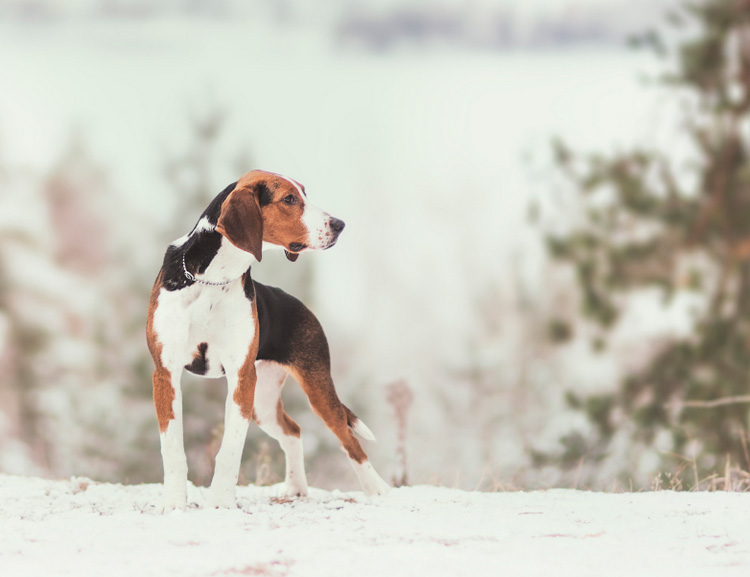
The Finnish Hound (Suomenajokoira) is one of the most popular hunting breeds in Finland. Outside of its homeland, it is little known and rare. Passionate, tenacious, and hardy, it hunts hare and fox with relish and tenacity. In a domestic environment, it is calm and friendly. It requires little grooming and is relatively easy to train. Potential owners who do not plan to hunt with a Finnish Hound should consider another breed.
Content
History of origin
The Finnish Hound was developed by enthusiastic hunters from numerous breeds imported to Finland in the late 17th and early 18th centuries. These were primarily English foxhounds, Kerry Beagles, Swiss, English, and German hounds, some terriers, Kostroma hounds, and Russian harlequins. By the mid-19th century, Finnish Hounds were being considered a distinct breed. A jeweler named Tammelin from Pori played a significant role in their fate. In 1870, he began targeted breeding, ultimately producing 23 generations, totaling 1,762 dogs. The main selection criteria were working ability and adaptability to the harsh snowy winter conditions. Appearance played a lesser role in the selection of breeders.
The Finnish name of the breed, Suomenajokoira (suomenajokoira), which is difficult for the Slavic language, literally means “Finnish hound”.
In 1932, the Finnish Kennel Club officially published a breed standard, which allowed for uniformity in phenotype, including color. In 1954, the Finnish Hound was recognized by the International Cynological Association (FCI).
Hunting with the Finnish Hound
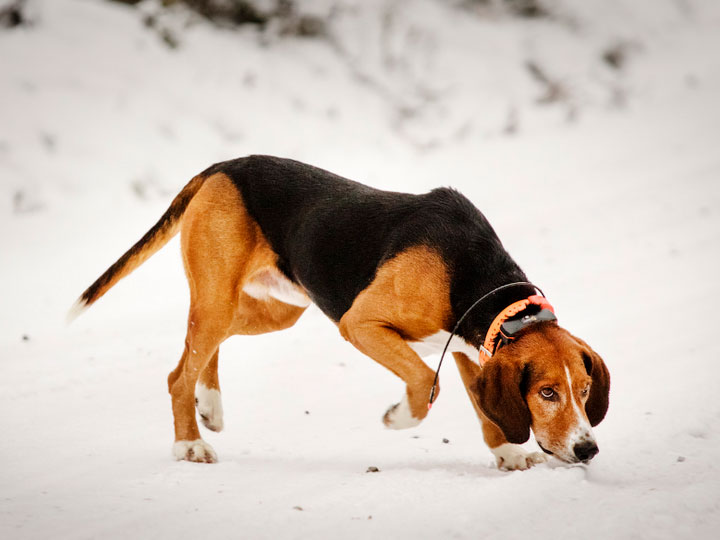
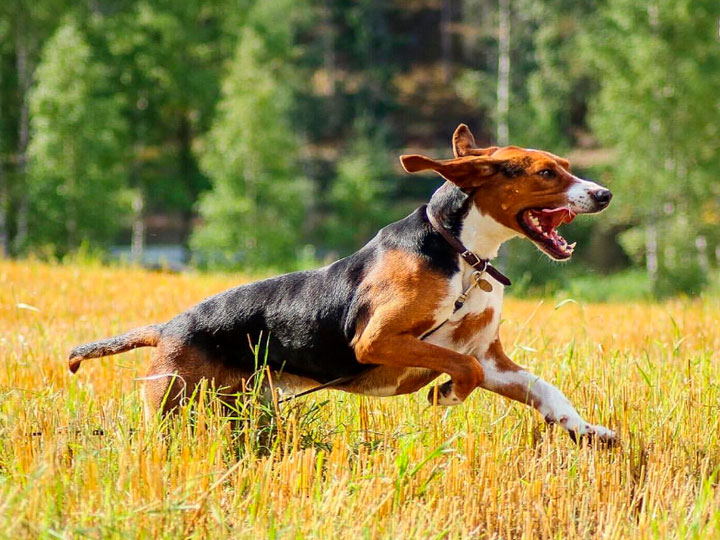
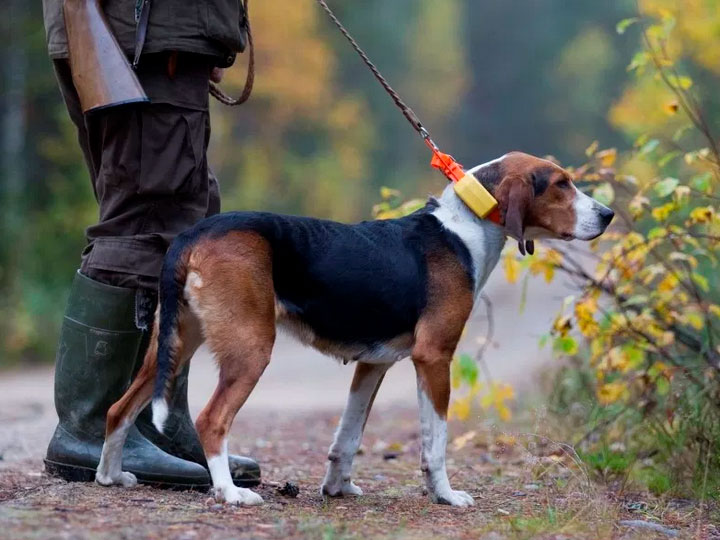
The Finnish Hound is a hunting dog adapted for hunting hare and fox. It follows a scent with gusto, even in difficult conditions. It pursues its prey with a passionate bark, the louder the closer it gets to the trophy. The Finnish Hound is a solitary dog, refusing to be part of a pack. It works independently and can wander several kilometers from the hunter. Once it finds a scent, it follows it with gusto, possessing excellent tenacity. When it finds a bed (usually during daytime hunts) or an animal, it roars with a loud bark and drives it toward the hunter. It usually moves at a trot or gallop, using its scent and sight.
Most Finns consider the breed to be the best in the large family of hounds.
The Finnish Hound is a virtually universal dog. It can be used to hunt raccoon dogs, badgers, deer, roe deer, other ungulates, ermines, and martens. Many puppies and young dogs are interested in tracking birds, and some bark at squirrels.
Appearance
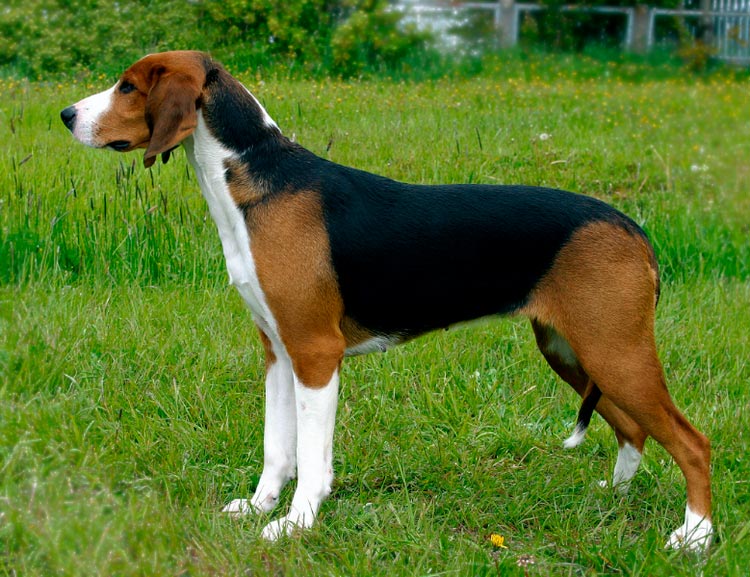
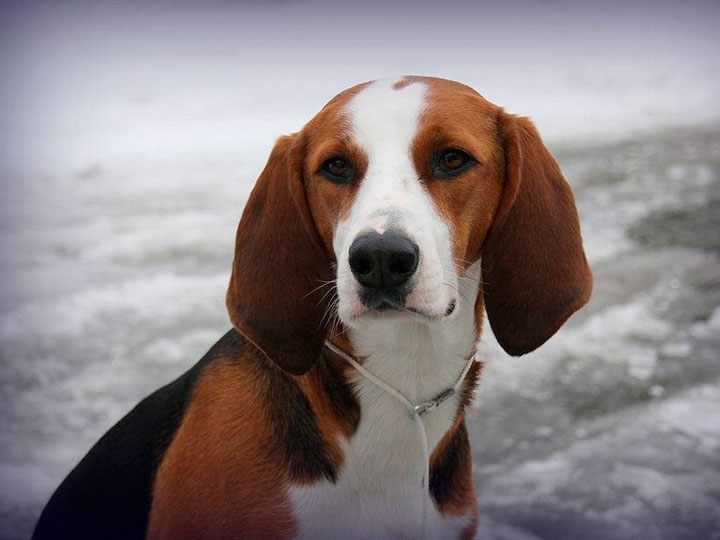
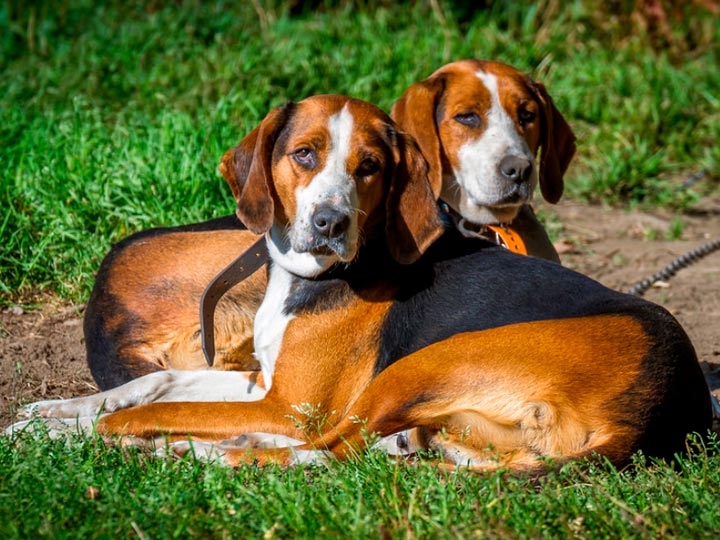
The Finnish Hound is a medium-sized, tricolor dog with a strong, lean build, fairly long legs, and a slightly elongated frame. Sexual dimorphism is pronounced. Males stand 55-61 cm at the withers, while females stand 52-58 cm. Weight ranges from 20-25 kg.
The skull is broad and domed, with a slightly convex forehead and distinct occipital protuberance and superciliary ridges. The stop is noticeable but not abrupt. The muzzle is equal in length to the skull, tapering slightly toward the tip of the nose, moderately deep, and has a straight bridge. The lips are well developed and pigmented. The upper lip is beautifully arched. The jaws are strong, well developed, and symmetrical. The bite is scissor-like. The eyes are medium in size, almost oval, and dark brown. The eyelids are black.
The neck is of medium length, dry, and slightly arched. The back is straight and of medium length. The loin is short and powerful. The croup is strong, long, and slightly sloping. The chest is deep and long. The ribs are well sprung. The belly is slightly tucked up. The tail is set low, slightly curved, reaching to the hocks, and noticeably tapers towards the tip. When at rest, it is lowered; when moving, it is raised no higher than the topline. The limbs are well-angulated, parallel and straight, somewhat dry, fairly long, and have well-developed muscles. The paws are oval, with narrow, well-knit toes. The nails are black and strong. The pads are springy, preferably black, and covered with dense hair on the sides.
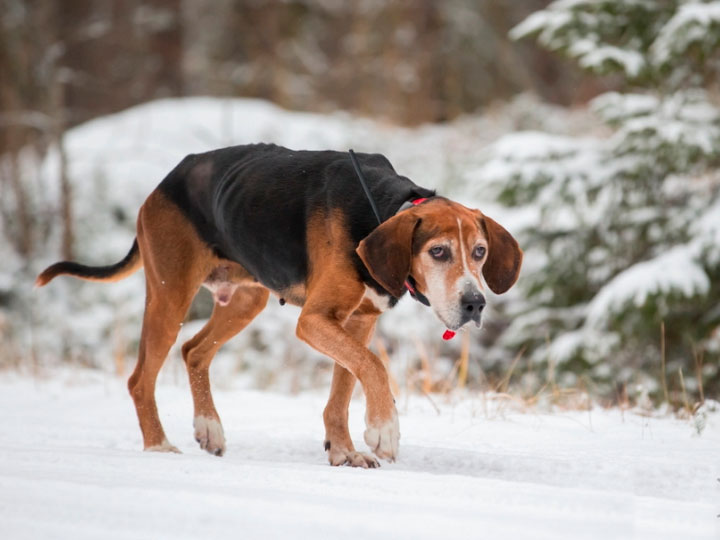
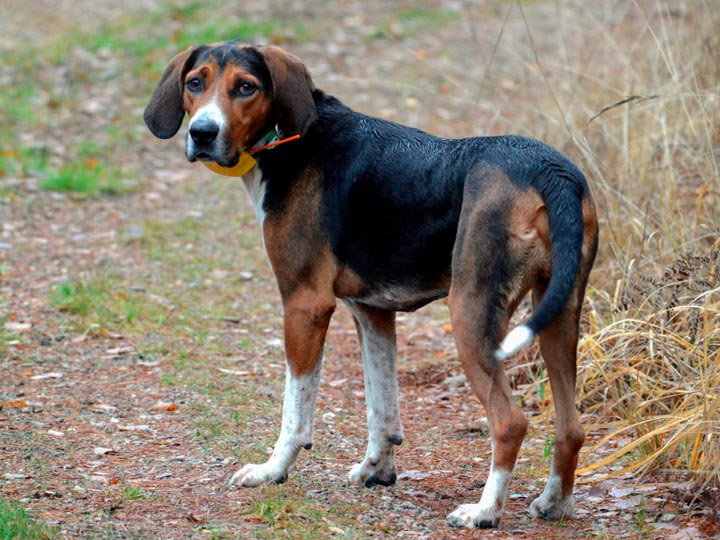
The coat is medium-length, close-lying, straight, and rather coarse and dense. The undercoat is short, soft, and dense, not visible beneath the outer coat. The coat is tricolor. The hair on the head, shoulders, legs, and lower chest is dark red. The back is covered with a black saddle. There are white markings on the head, neck, throat, forechest, tip of the tail, and lower extremities.
Character and behavior
The Finnish Hound is a calm, friendly, moderately energetic dog that should never be aggressive toward people or animals. It gets along well with dogs of various breeds. Friendships with other pets are rare, but peaceful coexistence is quite possible with proper training. The Finnish Hound is not the best friend for children; it is not aggressive, but often shows no interest in playing with a child. It is too large and active for small children.
The main characteristics of the Finnish Hound are endurance and a desire to work.
When hunting, the Finnish Hound is very energetic, eager, resilient, and vocal. At home, it is calm, even a little phlegmatic. Because the breed was bred for solo work, it has a stubborn and independent nature, but these traits are expressed most during the hunt. At home, a properly trained dog is obedient and docile.
The Finnish Hound is best suited for active people and hunters who can provide it with work and give it the opportunity to realize its natural instincts: tracking and loud barking.
Education and training
Training and education of a Finnish Hound puppy should begin the moment it arrives at its new home. Comprehensive socialization, familiarization with the home environment, and practicing the first simple commands through play are crucial. Subsequent training sessions are conducted in various locations, ensuring control in any situation. During the first few months, it's important for the owner to build a trusting relationship with the dog while remaining the leader. Commands should be taught using positive reinforcement only, avoiding aggression, yelling, or physical punishment. This will cause the puppy to become withdrawn and unwilling to work.
The Finnish Hound's working environment is the forest. Regular free walks, familiarization with the environment, and working with the owner are essential for further training and development. The hunting instinct awakens at around six months of age. Owners without experience working with hounds are advised to seek professional help. However, even then, reading up on the subject is a good idea.
Maintenance and care
The Finnish Hound is suitable for both indoor and outdoor living (in a kennel). Although seemingly cold, its smooth coat grows a very thick, warm undercoat in winter. Of course, the kennel should be well-insulated, the enclosure spacious enough, and the diet high in calories during cold weather and hunting season. A hound is not the best choice for an apartment. Although this is debatable, considering that apartment dwellers often devote more attention to walking and training their dog than those living in the countryside. Seasonal shedding is heavy, but moderate during the rest of the year.
The Finnish Hound requires a great deal of exercise and should be given plenty of outdoor exercise to fulfill its natural urge to retrieve. Daily long walks are recommended. During these walks, the dog should be positioned next to or behind its owner; a forward position indicates that it is in control, which is unacceptable in everyday life.
Grooming is simple. To maintain a neat appearance, the Finnish Hound only needs to be brushed occasionally with a fine-toothed brush. More frequently during the shedding season. A full bath is only necessary if the coat is heavily soiled. Dry shampoo can be used occasionally. Owners should also monitor the condition of the dog's ears, eyes, and teeth; weekly brushing is recommended. Nails are normally self-wearing, but should be trimmed as needed.
Health and life expectancy
The Finnish Hound is considered a healthy breed. Most dogs are healthy and immune, hardy, and adapt well to a variety of living conditions. However, it's worth noting that several hereditary diseases have been reported in the breed, some of which are quite serious:
- hip dysplasia;
- elbow dysplasia;
- dislocation of the patella;
- heart defects;
- umbilical hernia;
- cryptorchidism;
- cleft palate;
- cerebellar ataxia;
- eye diseases (progressive retinal atrophy, cataracts);
- lymphoma;
- atopic dermatitis;
- black hair follicular dysplasia.
Life expectancy is usually 11-12 years. Mandatory veterinary preventative measures include vaccinations and parasite treatment. Breeders are also advised to screen their breeding stock for common hereditary diseases.
Choosing a Finnish Hound Puppy
The majority of Finnish Hounds are concentrated in Finland. The breed has become popular in Sweden and Norway, and a significant number of dogs and kennels also exist in Switzerland. In Canada and America, the breed is marketed as a family dog and companion, which negatively impacts its working abilities. Finnish Hounds are not numerous in the CIS countries, but the population is generally of high quality, with most dogs imported from renowned Finnish kennels. Professional kennels are rare, but most owners occasionally breed their dogs through national and international clubs, so finding a puppy is relatively close. Often, a puppy must be reserved in advance. The easiest way to find a Finnish Hound breeder is through a national hunting club or specialized forums.
There are no significant differences in character or work habits between male and female Vizshlians. As with any other breed, females are generally more docile and better suited for families with children and owners with limited experience training hunting dogs.
According to FCI requirements, Finnish Hounds used for breeding must not only receive good show scores but also working diplomas. This is important to consider when choosing a puppyBuying a Finnish Hound without papers is a risky gamble.
Price
The average price of a Finnish Hound puppy in Finland and Scandinavia is 700 euros. The price is primarily influenced by the breeder's location and the quality of the breeding stock.
Photos and videos
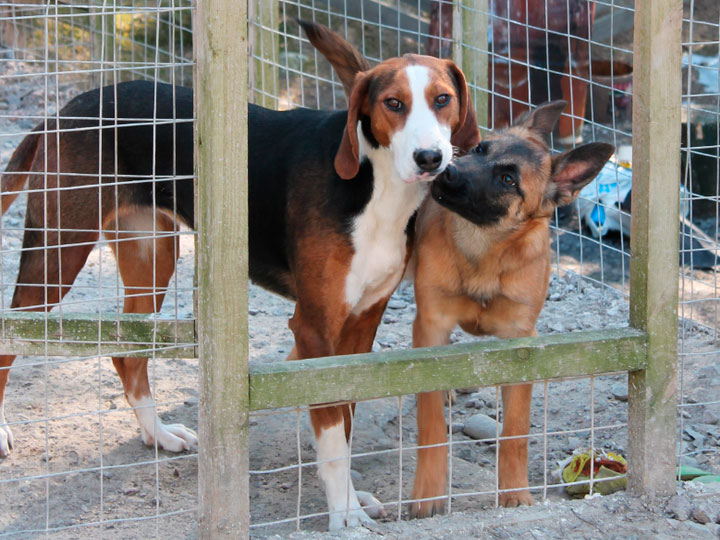
The gallery contains photos of Finnish Hounds (Suomenajokoira) of different sexes and ages.
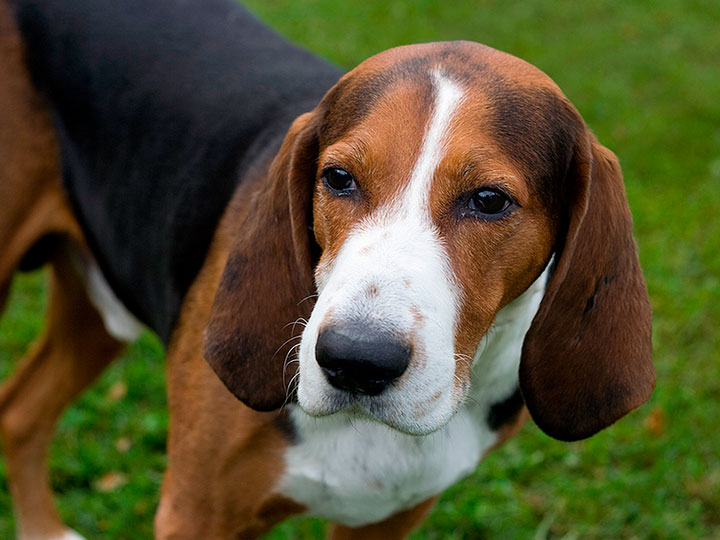
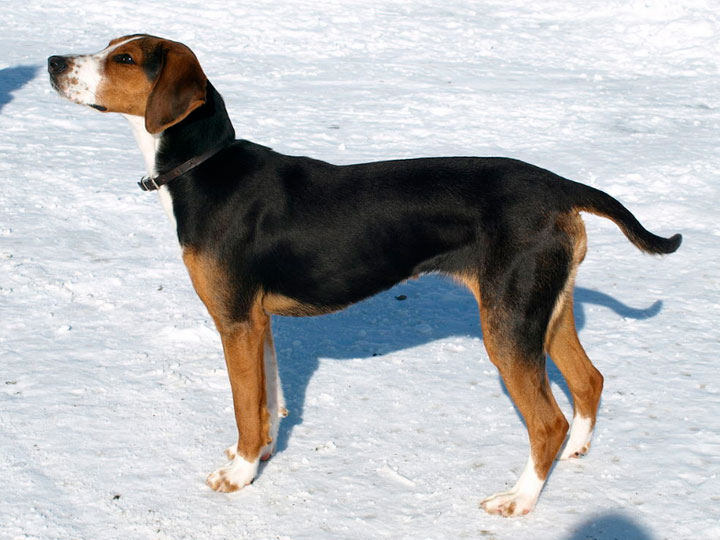
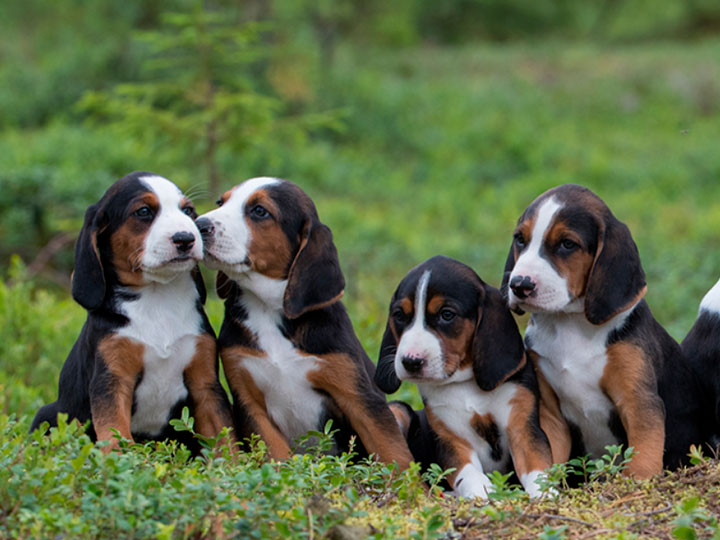
Video about the Finnish Hound (Suomenajokoira) dog breed
Read also:


Add a comment