
Feliferon for cats
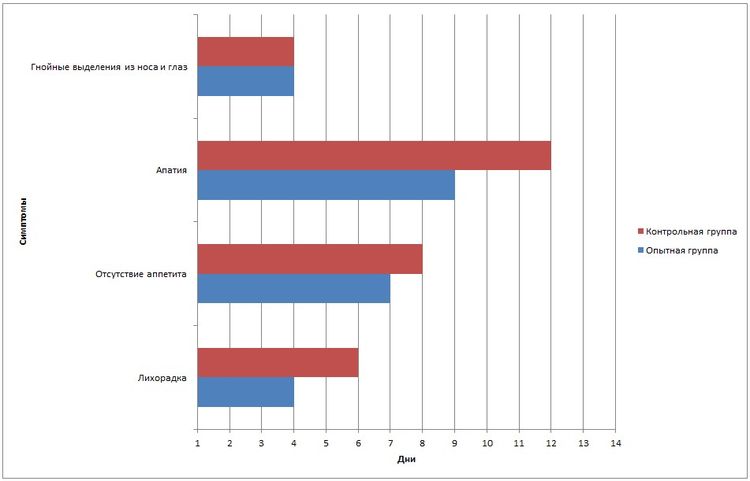
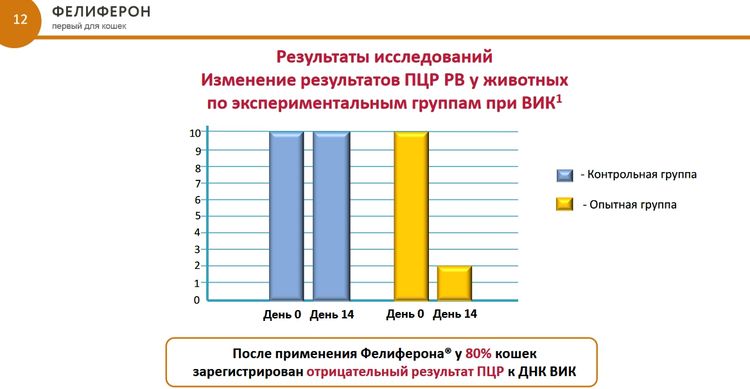
Feliferon is used in cats as an antiviral and immunostimulant. The medication was developed by the Russian company BioInvest. Its high efficacy was confirmed in clinical trials. The results showed that animals treated with this medication, in addition to their primary treatment, recovered more quickly. The medication can also be used prophylactically.
Content
General description
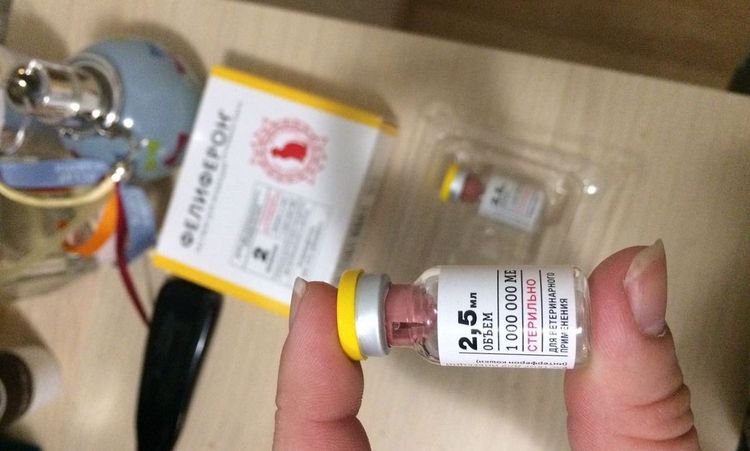
Feliferon is an immunomodulator available as an injection solution. It is typically clear and colorless, occasionally with a slight turbidity. The medicinal solution is odorless. It is packaged in 3 ml glass vials, each containing 2.5 ml of liquid. To store the medication in an airtight container, the vials are sealed with rubber stoppers, which are then sealed with aluminum caps.
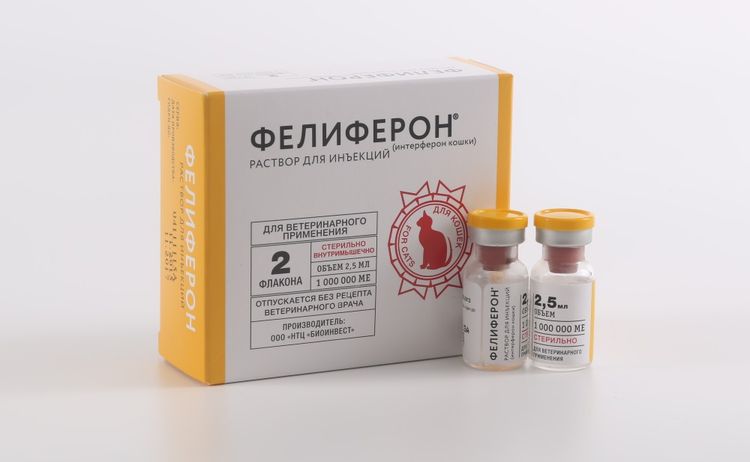
The main ingredient of this medication is feline interferon, which has an antiviral activity of 400,000 IU (international units). Interferon is a protein produced in the body in response to viral attacks. It also contains acetic acid, which maintains a pH of 4.5-5.0, and other auxiliary components:
- sodium acetate;
- polysorbate;
- sodium chloride;
- dextran;
- purified water, etc.
The medicinal properties can only be preserved if certain storage conditions are met. Storage temperatures should be between 2 and 8 degrees Celsius. Single freezing is permitted, but at a temperature of at least -25 degrees Celsius. Store in a dry place, away from direct sunlight.
Please note! If the bottle is opened, the medication is only good for 5 days. After that, it should be discarded. No special precautions are required.
Principle of action and indications for use
The drug's mechanism of action is based on its ability to suppress the proliferation of virally infected cells upon administration. Furthermore, the immunostimulant increases cellular resistance to attack by harmful microorganisms. The drug boosts immunity at the cellular level. Animals are able to resist viral diseases because, upon infection, they begin to produce antibodies that suppress the infection and prevent viral replication.
Feliferon is considered a low-hazard drug because it has no toxic effects on the body and does not cause local irritation at the injection site. It is approved for use in animals of any age and breed.
The instructions for use indicate that Feliferon is prescribed to cats in the following cases:
- for anemia;
- in case of hypovitaminosis;
- in acute respiratory diseases;
- in infectious pathologies;
- in case of food and chemical poisoning;
- for helminthic infestations;
- for diseases of the digestive system;
- in secondary immunodeficiency;
- in pathologies of other origin.
This immunostimulant can also be used to prevent viral infections, especially during high-risk periods, such as epidemics. The medication is often prescribed prophylactically during the postpartum period and after surgery to reduce the risk of complications.
Please note! Do not use an immunomodulator for 10 days after vaccination, as it will suppress the vaccine's effectiveness and prevent the development of lasting immunity against viral diseases.
How to apply
According to the instructions, Feliferon injections for cats are administered intramuscularly. The dosage and administration schedule depend on the condition and its severity:
- If there is a risk of infection, injections are given twice, 48 hours apart, to boost immunity. A single dose is 200,000 IU or 0.5 ml per animal.
- If the immunostimulant is used to treat bacterial, viral, and other diseases, it is administered at a dose of 0.5 ml per day. Treatment usually lasts 5-7 days. In this case, the medication is combined with antibiotics, antiviral drugs, and medications aimed at relieving symptoms.
- If the disease is severe, the daily dose may be doubled, to 1 ml. Treatment lasts about a week, but the course is usually determined by the doctor on an individual basis.
It is recommended to administer the medication at approximately the same time and at regular intervals. It is advisable not to miss a dose. If an injection is missed on time, treatment should be resumed as soon as possible. In this case, no changes to the treatment regimen are necessary.
Please note! Do not mix the immunomodulator with other medications in the same syringe.
Contraindications and side effects
Although Feliferon is considered safe for cats, it has contraindications. It can cause more harm than good in the following cases:
- in autoimmune diseases;
- in case of allergic pathologies occurring in severe forms;
- in case of intolerance to the components.
This immunostimulant is generally well-tolerated by pets and can be used in cats of all ages, including kittens. When using the medication on kittens or pregnant cats, consult a veterinarian. Even exceeding the recommended dose usually does not cause adverse effects.
If the animal is intolerant to any of the ingredients, an allergic reaction may develop, manifesting as a rash, vomiting, itching, or other unpleasant symptoms. In this case, discontinue Feliferon. To alleviate the animal's suffering, administer an antiallergic medication and, if necessary, prescribe symptomatic treatment.
Advantages and disadvantages
The main advantages of Feliferon include:
- Highly effective. Animals begin to recover after just one injection.
- Safety. Non-toxic and has no side effects.
- Availability. Available at any veterinary clinic or pharmacy.
- Easy to use. The dosage is calculated regardless of weight and age. Can be used in combination with other medications.
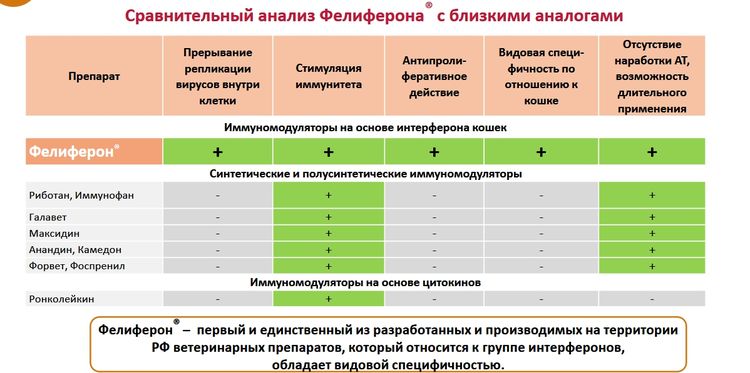
The drug has the following disadvantages:
- requires special storage conditions;
- the dosage form is an injection solution, and some owners do not know how to give injections;
- may cause an allergic reaction;
- has contraindications.
What is the price
The price of one bottle of Feliferon for cats ranges from 280 to 300 rubles. In some pharmacies, the price range can be even greater. Although the drug first appeared on the market just a couple of years ago, it is now readily available at almost any veterinary pharmacy, pet store, or online store.
Owner reviews
Sonya, the owner of a Persian cat:
"Our Basya caught a cold very similar to a human cold. She lay motionless, her nose was hot and constantly dripping. The doctor said she had a viral infection and prescribed several medications, including Feliferon. On the second day, she started eating on her own, and a day later, she was running around the apartment again."
Svetlana, owner of a 5-year-old cat:
"While we were at the dacha, our cat became ill. At first, we thought it was poisoning, as she was vomiting profusely and had diarrhea. But she kept getting worse, so we had to rush to the city. Later, we learned our beloved cat had feline distemper. In addition to a number of medications, we were prescribed Feliferon, and I believe it was this that helped our cat recover. She was reviving right before our eyes. She felt better after just the first injection. We gave her five 1ml injections in total."
Rinata, owner of two cats:
"When my cats started sneezing and coughing, I immediately called the vet. He diagnosed rhinotracheitis. For treatment, he prescribed Feliferon along with vitamins, antibiotics, and other medications. The vet highly recommended this injection and explained why. The results were impressive. The cats recovered quite quickly, so I can judge the effectiveness of this medication."
Veterinarian Reviews
Alexandra, a veterinarian at a Moscow clinic:
"Our clinic doesn't use Feliferon, or other similar medications, because there are doubts about their effectiveness. Personally, I sometimes prescribe Vibergen. Although it's expensive, it works. I've heard positive reviews about this immunomodulator from colleagues and patients, but I personally don't trust products from domestic manufacturers."
Ekaterina, a veterinarian with 8 years of experience:
"Feliferon is the latest development on the domestic market. I use it successfully to treat viral infections. This drug has already helped me save three cats from leukemia, although the manufacturer's representatives claimed that clinical trials of the drug's effectiveness against this disease had not been conducted. The drug works, and that's the main thing. It helps me save adult cats, male cats, and small kittens from deadly viral infections. Therefore, I would like to sincerely thank the developers for this medicine."
Read also:


20 comments
Tatiana
We used Feliferon when our cat, Kuzya, fell ill, as prescribed by the veterinarian. We noticed he was lethargic, his nose was hot, and his eyes were watery. He also started eating slowly and reluctantly. The vet diagnosed a viral infection and recommended not only symptom management but also Feliferon treatment. We started treatment with this medication, and by the second day, Kuzya had "revived," and within five days, all symptoms of the disease had disappeared. I've made a note of this medication.
Nastya
I've been treating my animals for two months now; they have three viral infections, one of which is calicivirus. Feliferon helped three kittens after the first course (0.5 ml each for five days), but the adults had to be given a second injection two weeks later. My cat couldn't even stand on his paws, so I bought more Feliferon and started giving him the injections. After the first injection, he recovered and started walking better, and this was within an hour! I only gave Feliferon without antibiotics. I recommend it to everyone. If you have a severe viral infection, give it a 7-day course; the first course was a bit short for us. This is an excellent product!
Nina
A friend asked for a male cat to mate with their female cat. We decided not to take the female cat home because we have a small child. The cat was on a specific diet, and when we returned him a couple of days later, we noticed something was wrong. He started eating less and vomiting after meals. He threw up everything he didn't eat. We immediately went to the vet. They prescribed Feleferon, which needed to be injected. At first, I was afraid to buy it and asked for other medications to be prescribed. They explained how to use the medication correctly. After five days of use, the cat felt much better. It took almost two weeks for the full recovery. The medication helped our cat greatly.
Andrey
My cat had Rhinotracheitis. For those who don't know, feline rhinotracheitis is an acute disease characterized by damage to the eyes and respiratory system. All breeds of cats, regardless of age, are affected. The incidence rate reaches 50%, with a mortality rate of 5-20%. Animals that recover from the disease develop immunity. All the medications I tried to treat the cat weren't helping, so I was offered Feliferon for cats. After just a few doses, the results were noticeable. The cat felt much better and is on the mend! This medication is worth the money.
Daria is a veterinarian
Hello! You described the illness correctly. It's great that your pet has recovered. However, Feliferon wasn't the only treatment used. The veterinarian likely also prescribed antibiotics and symptomatic treatments (eye and nasal drops). Feliferon is a supplement that helps speed recovery (by boosting the body's immune response). Feliferon should not be used alone to treat cats with viral diseases; it should be used in combination with other medications. This makes recovery much easier.
Denis
Recently, my cat went for a walk and started feeling a little sick after coming home. I didn't know why. After treating it myself, I decided to make an appointment with the veterinarian. The vet examined her thoroughly and diagnosed a viral infection. He prescribed the antiviral drug Feliferon. After completing the course, my cat gradually improved, and after a week, she was feeling better, which was immediately noticeable. The medication was a great help, just when it was needed. It's great that my cat recovered, and I'm happy.
Andrey
My cat had Rhinotracheitis. For those who don't know, this is a common, general, sudden (acute), contagious disease in cats. All the medications I tried didn't help, so I was offered Feliferon for cats. After a few doses, the results were noticeable. My cat felt much better and is on the mend!
Olga
Our cat was given 2.5 ml subcutaneously right away, and now we're waiting for him to kick the bucket. That's the kind of quacks we have.
Daria is a veterinarian
Hello! Will Feliferon kill him? Nonsense. But, indeed, it's too much to administer the entire bottle at once. It's designed for a course of treatment – 5 injections. Well, it's acceptable to administer 400,000 IU (1 ml each) for a severe infection (divided into two 0.5 ml doses twice a day). Okay, if you didn't know how much to administer, but the package insert explains everything in detail. At a pinch, there's the internet, where you can look up the dosage for almost all veterinary medications if you can't remember the information. But don't worry about overdosing. If you're really worried, give antihistamines (for allergies).
Tatiana
Are you serious? Does this antiviral drug work and have proven efficacy? What nonsense and nonsense is this? If the clinical group hadn't been given this water as an "immune stimulant," they would have recovered anyway! But if they had been treated solely with this liquid, without antibiotics or other medications, and they had recovered, then there would have been talk and claims about its effectiveness! To everyone who has benefited, thank your immune system and Alexander Fleming!
Ramil
Tatyana, I can confirm that this medication really works without antibiotics. I have eight cats, and between January and March of this year, four of them contracted some kind of virus, which I apparently "brought home" from the vet. The illness began and progressed differently for each cat: some only had watery eyes, while others also sneezed. Initially, we treated them with Fosprenil, Sinulox, and vitamin B12. Two of the four recovered, but the other two relapsed three times until I suggested to the vet that they try Feliferon, following the advice of a friend who had cured her cat of rhinotracheitis with it. And it really did help. Thank God, it hasn't happened again, and everyone is healthy now!
Elena
I would like to
Reply to veterinarian Alexandra's review of this drug. If she's a doctor at all, of course, and not a fake. Virbagen is the drug, not Vibergen, as you wrote here!!!
There's no way you can trust a doctor who mixes up medication names!!! You're a bad veterinarian. And your review of the medication here is just empty words.
LENA
We treated our cat for a viral illness. He was sneezing and his eyes were running. After a few injections, everything cleared up. They gave him Feliferon and some antibiotic.
Dasha is a veterinarian
Hello! That's right, you administered immunomodulators, which boosted the immune system's response and allowed it to better fight the infection. And antibiotics prevented the development of secondary pathogenic microflora, because most often, animals die not from the virus, but from a superimposed secondary bacterial infection. Bacteria multiply rapidly, as the immune system struggles to produce antibodies to the virus and is unable to fight the bacteria. Therefore, for viral infections (but not for all!!! Sometimes antibiotics for viral infections lead to serious complications), it is recommended to also administer antimicrobials. However, comprehensive treatment should always be prescribed by a veterinarian after an in-person examination and diagnosis. Self-medication is extremely dangerous.
Natalia
Feliferon saved our Musenka's life)
Lyudmila
Feliferon, used in combination treatment for rhinotracheitis in a cat, showed remarkable results. It spurred our cat's body to fight the virus.
Anna
We used this remedy on our cat. He recovered!!
Pauline
My cat has leukemia. We've been giving her feliferon for a few days. Her condition is improving. Of course, we can't cure the disease completely, and we're prepared for that, but we're already seeing results from the treatment.
Catherine
Our cat Nyusya suddenly started sneezing, her nose started running, and her eyes started watering. Nyusya lost her appetite, and at the hospital, they told us she had a viral infection. They prescribed Feliferon as an antiviral medication. Within five days, all signs of illness had disappeared.
Svetlana
The vet prescribed Feliferon for my cats. Their eyes were watering, their noses were runny, and they were coughing. I thought they had a cold, but it wasn't a virus: it turned out I'd brought it into the house myself. After the injections, the cats quickly recovered. Thank God, they recovered.
Add a comment