
Pharaoh Hound
The breed with the misleading name Pharaoh Hound has little connection with Ancient Egypt. The dogs' historical homeland is Malta. These graceful animals were former hunters; they are highly intelligent, determined, and inquisitive, friendly, and sociable. Pharaoh Hounds are quite rare and expensive.
Content
History of origin
In Malta, the pharaohs are considered a national treasure and are called Klieb tal-Fenek, which translates as "rabbit dog." Previously, experts unanimously believed that they arrived on the island from Egypt with Phoenician traders and sailors at the beginning of the Common Era, and had existed in the Nile Valley since time immemorial. Various drawings and figurines of dogs resembling the pharaohs serve as evidence. Recently, opinions have become divided. The theory of an ancient Egyptian origin has been refuted by a series of DNA tests.
The first mention of Mediterranean greyhounds dates back to 1647 and was made by a member of the Order of Malta. For a long time, even if they were known abroad, they were not given much attention. Only in the early 20th century did they begin to be exported to Europe.
In the 1950s, the International Sighthound Federation took the initiative and developed a standard for Mediterranean hunting breeds. The project was submitted to the FCI in 1962 and came into effect in 1963. The standard description included a note stating that the name "Pharaoh Hound" was not intended to emphasize their dubious ancient Egyptian origins.
Confusion arose almost immediately. Various breeds from different regions, which had been handled separately (the Ibiza Hound, the Canary and Portuguese Podenco, and the Pharaoh Hound), were accepted into a single standard. In 1977, the association decided to put an end to the confusion and annulled the standard adopted in Zurich 14 years earlier. This decision allowed for clear differentiation between the various indigenous breeds.
At the same time, work on the breed was underway in England. In the 1960s, shortly before the end of British colonial rule in Malta, some military families "discovered" the Klieb tal-Fenek's qualities as a pet and began importing single hounds to the UK. Enthusiasts began actively breeding the hounds to gain official recognition by the British Kennel Club. Pauline Block, one of the first breeders, applied for registration of a new breed under the name "Maltese Rabbit Hound," but her application was denied. When she applied to the FCI for Mediterranean dogs, she received the following response: "...the group bred in Malta is recognized by the FCI as Pharaoh Hounds." Pauline returned to the Kennel Club with a petition to register the dogs as Pharaoh Hounds, and her proposal was accepted. The UK Kennel Club recognized the breed in 1975.
The name "Pharaoh Hound", which is used worldwide for the Maltese Kelb tal-Fenek, is derived from the old FCI standard No. 248 for the sighthound group, for which the Ibizan Hound served as the model.
By the time the FCI revoked the old standard, the Kelb tal-Fenek had already become firmly established in England under the name "Pharaoh Hound." A breed club had existed since 1963, and a standard had been developed and recognized. The breed was registered with the American Association in 1983. The International Cynological Association had no choice but to reinstate the old standard, but this time it applied only to one breed—the Pharaoh Hound. The official publication date was 1987.
The largest populations of these dogs are found in Sweden, Finland, and the United States; some countries don't have them at all. Buying one is not only prestigious but also quite difficult.
Video review of Maltese sighthounds, also known as Pharaoh Hounds:
Appearance and standards
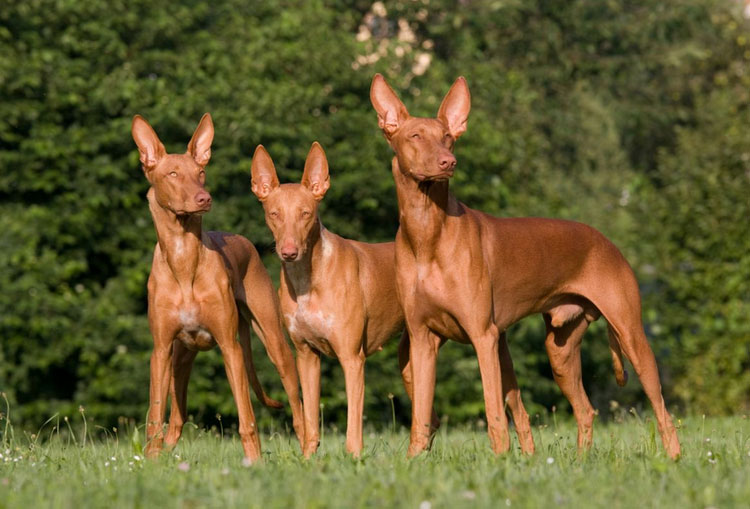
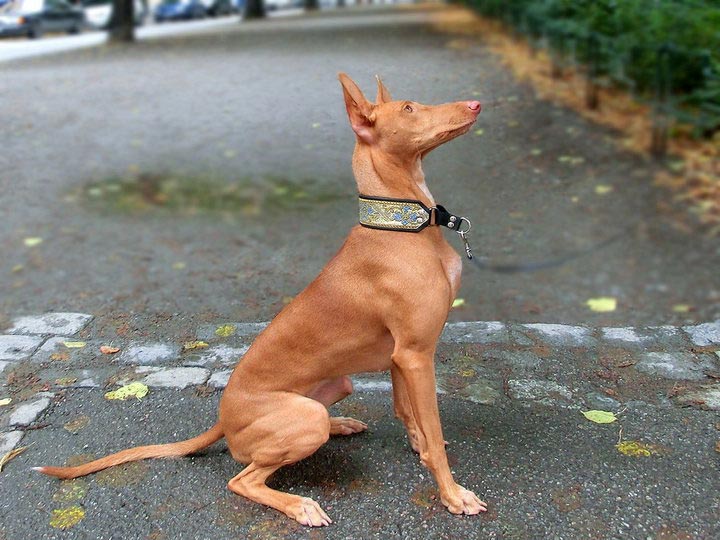
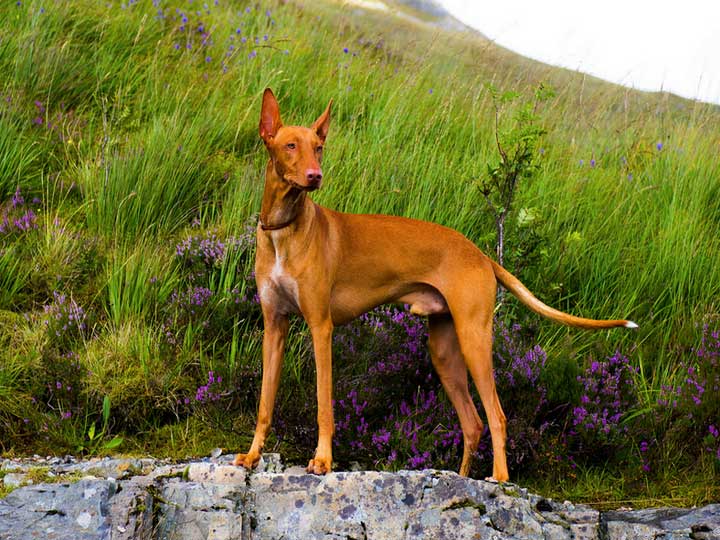
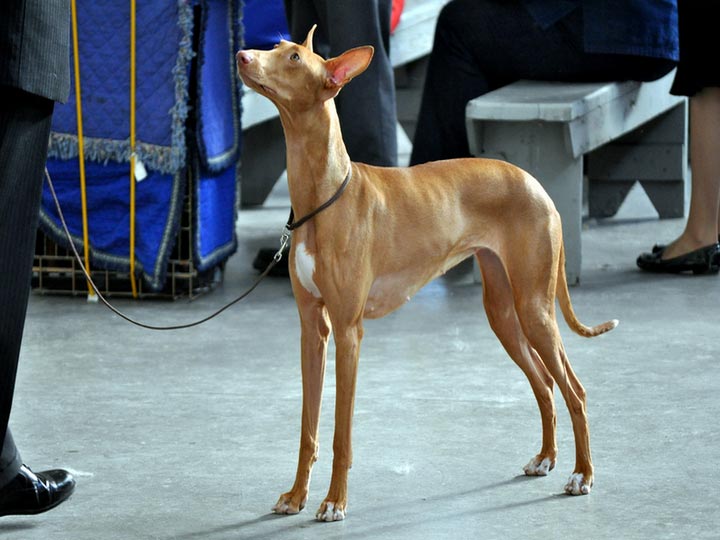
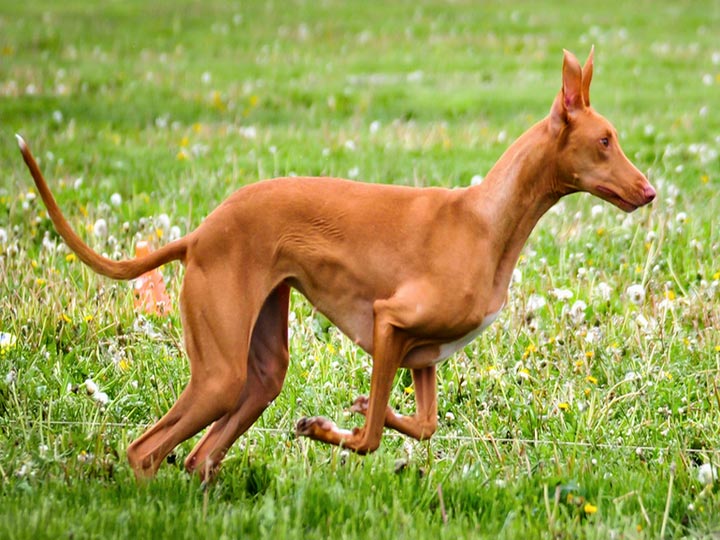
Pharaohs have a striking appearance and unique features. When happy, they stretch their lips into a playful smile, while embarrassment sometimes causes the rims of their eyes and ears to blush. The breed's remarkable agility and flexibility resembles a cat's grace. Their movements are light and free, their body is graceful, and their lines are perfectly defined. Height: 53-64 cm, weight: 20-25 kg.
Head and muzzle
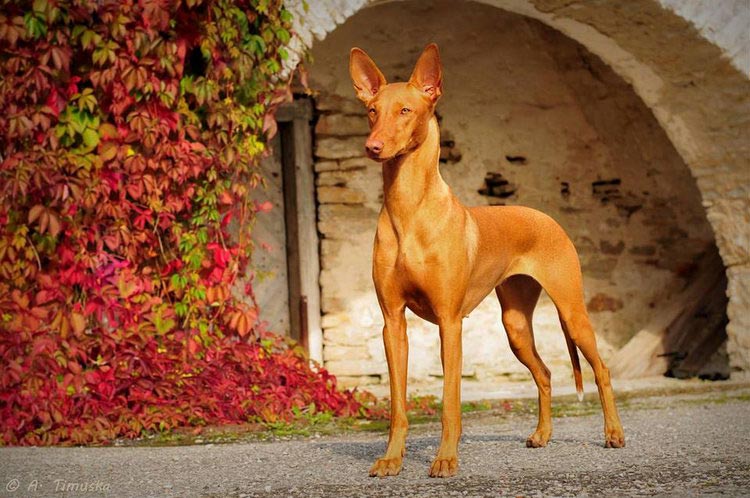
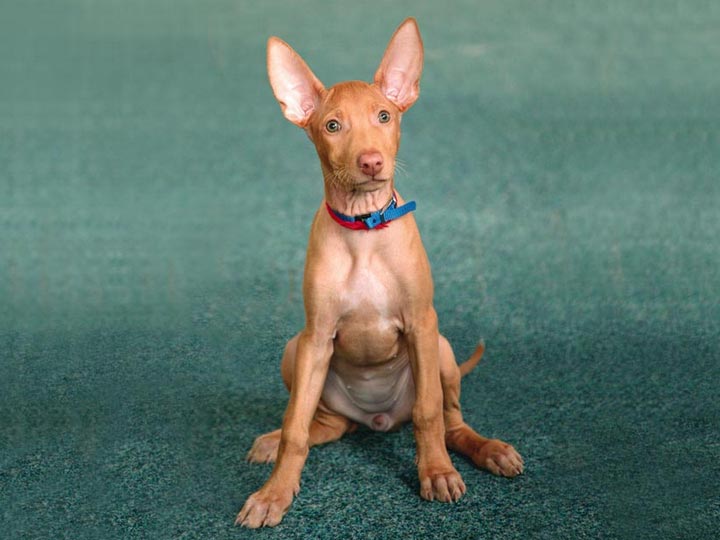
The head, viewed from above and in profile, is a blunt wedge. The skull is long and lean, slightly shorter than the muzzle. The stop is slight. The eyes are amber, oval, and moderately deep-set. The ears are set fairly high, erect, and very mobile. The auricle is thin and wide at the base. The nose is unpigmented and matches the coat color. The jaws are strong, with strong teeth and a correct bite.
Physique
The neck is dry and long, slightly arched. The body is flexible. The topline is level. The croup slopes slightly downward. The chest is deep. The belly is tucked up. The tail is thick at the base and whip-like. When at rest, it is carried below the hock; when moving, it is raised high and held arched. The limbs are straight, strong, and muscular.
In photos on the Internet, you can increasingly see a similar black dog, but in reality, it is anyone but a Pharaoh.
Coat and colors
The coat is very short, glossy, and lacks an undercoat. It's not too soft to the touch and lies close to the skin. Color ranges from light brown to chestnut. White markings are permitted.
- at the tip of the tail;
- spot on chest;
- on the toes.
Character and psychological portrait
Pharaoh Hounds are sociable and outgoing, very curious, but somewhat wary of strangers. They are not nervous or timid, nor are they aggressive or prone to conflict. They rarely demand dominance, are very devoted to their owners, reliable, and patient. They are moderately active and playful. Pharaoh Hounds are intelligent, well-balanced companions who, when properly trained, are completely trouble-free.
Children of all ages are treated with gentleness and care. Because Pharaohs are very strong, especially when it comes to pulling, the breed is not recommended for small children who plan to take them for walks together.
The Pharaoh Hound rarely displays unprovoked aggression, and if well socialized as a puppy, its exemplary behavior can be relied upon. However, if a dominant male crosses the pet, a conflict may arise.
Pharaoh Hounds are independent, quite self-sufficient, and can be stubborn. Barking is also a drawback. While barking is perfectly normal, boredom can lead to Pharaohs singing serenades. They're definitely not a good guard dog, being too gentle and kind, but they will answer the doorbell with a firm voice.
Training and exercise
With the right approach, the Pharaoh Hound is highly trainable, quickly learns house rules, and strives to adhere to them. As for training and following commands, the Pharaoh Hound is a quick learner, but in certain situations, it may refuse to obey unquestioningly.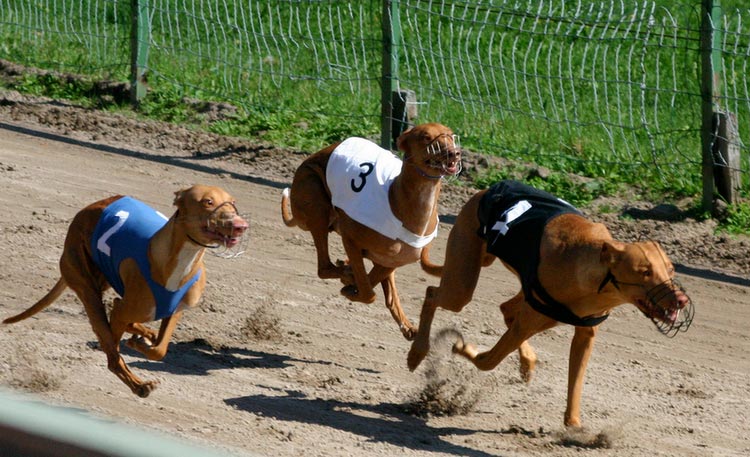
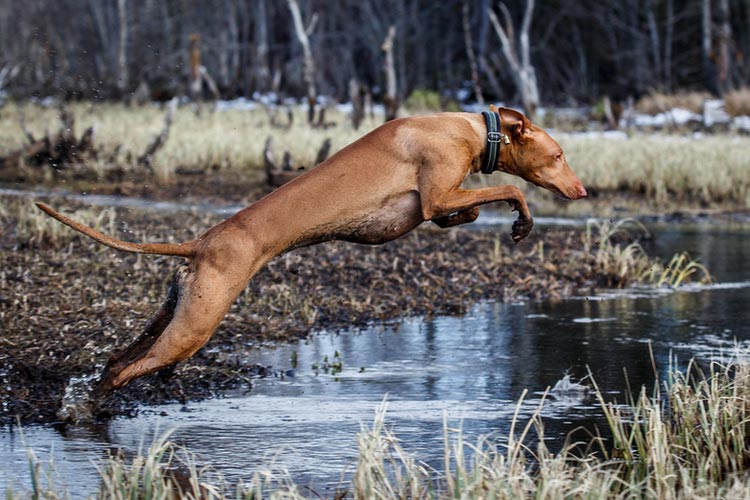
Pharaoh Hounds were once used for tracking game. Today, they are primarily companions, racing favorites, and active participants in agility and Frisbee. They require daily exercise and are happy to join you on jogs and bike rides. Whenever possible, they should be given the opportunity to run freely in open spaces. Due to their hunting instinct, regardless of their nature and level of training, it is not recommended to let Pharaohs off-leash in potentially dangerous areas or near roads and highways.
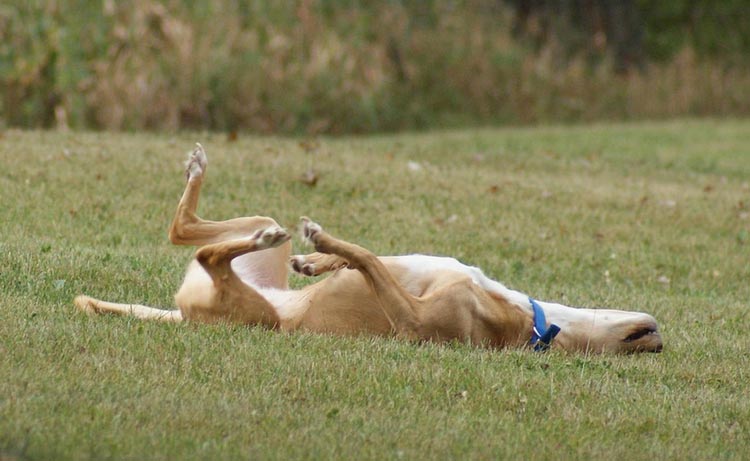
Any walk is good for the Pharaoh Hound. However, no matter how much you walk, it's usually not enough. This dog has so much pent-up energy that it really takes some effort to exhaust it and keep him happy.
Maintenance and care
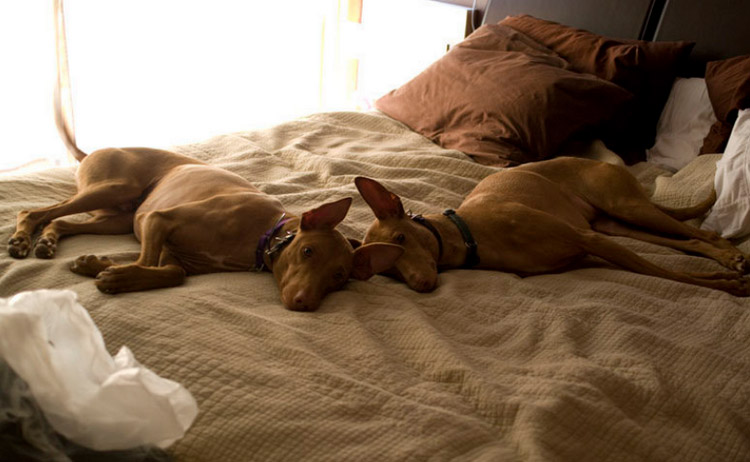
Pharaohs are ideal for indoor or apartment living. They are neat and calm, and are also very clean. If the dog lives in a private home, keep in mind that a meter-high fence won't hinder a good jumper. Pharaohs get along well with other pets, dogs, and cats, but not with strays, as they will chase them with abandon.
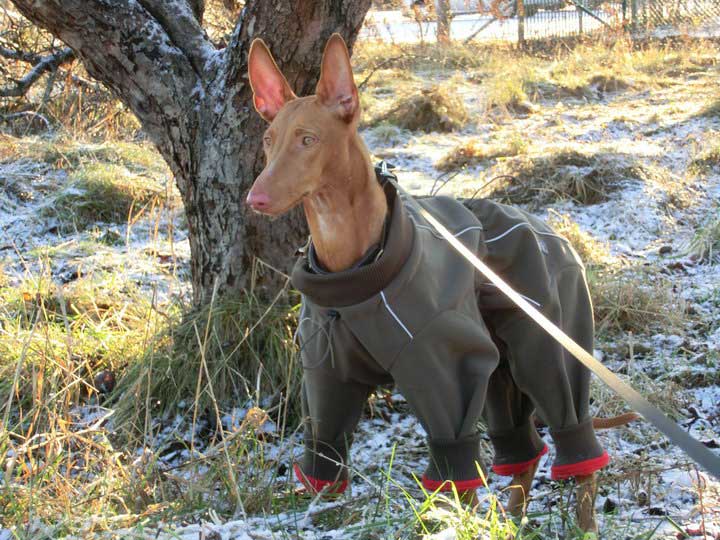
Due to their minimal fat layer and short coat, they are very sensitive to cold weather and therefore require seasonal clothing.
Pharaohs often exhibit coprophagia, or eating their own feces. This behavior is often not associated with mineral deficiencies or worm infestations; however, it requires close attention from owners and prompt removal of feces.
Care
Grooming this challenging breed is surprisingly easy. Bathing the dog as it gets dirty and brushing it occasionally to remove dead hair is sufficient. As for bathing frequency, it's important to know that Pharaohs are a clean breed. Therefore, they need to be washed infrequently. However, they should be washed with high-quality shampoos that don't strip the skin and coat of oils, although bathing can be done quite regularly if desired.
Keeping a Pharaoh Hound's ears clean involves infrequent ear examinations. After all, the dog has erect, well-ventilated ears. They accumulate little wax and are rarely susceptible to parasites.
Diet
The natural diet is no different from high-quality balanced nutrition for other breeds and is formulated taking into account:
- age;
- physiological state;
- activities;
- presence of diseases.
It is based on meat, offal, cereals with added vegetables and fruits, fermented milk products and eggs.
Pharaohs have an excellent appetite, so it is important to feed them on a schedule and not exceed the normal portions.
Many Pharaoh owners, for convenience, prefer dry industrial super-premium food and holistic class, which are absolutely complete, convenient in use and dosage.
Health and life expectancy
The breed is genetically predisposed to luxating patellas, hip dysplasia, and flatulence. Allergies and sensitivities to chemicals (shampoos, flea repellents, etc.) are common.
Pharaoh Hounds live an average of 12-13 years. They remain in excellent shape well into old age, looking alert and fit; only their graying muzzle and papers betray their true age.
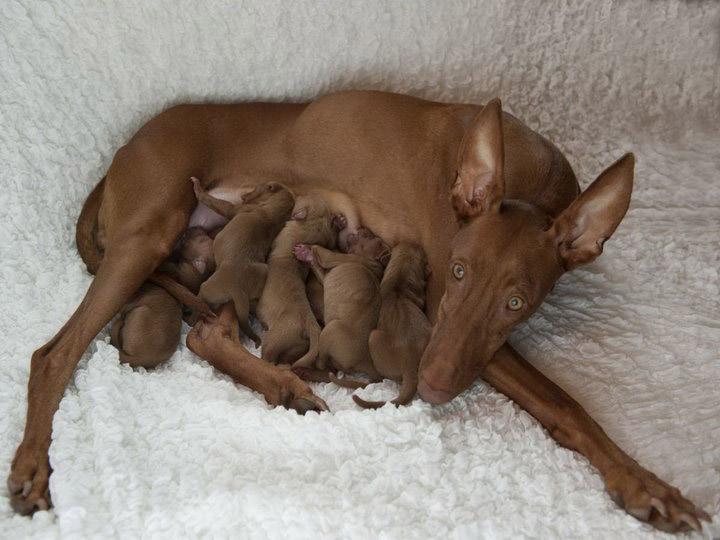
Pharaoh Hound pregnancy
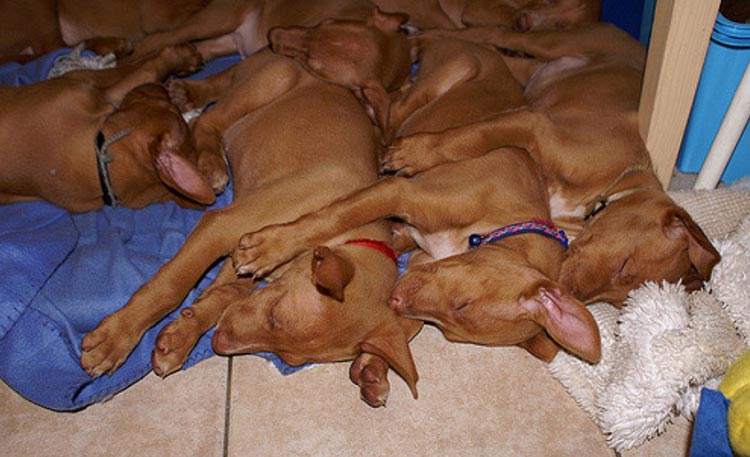
On average, 8-10 weeks pass from the day of mating to the birth. It's best to remember the day of mating to monitor the gestation period. If the dog gives birth too early or too late, the litter will likely not be viable. Therefore, any unusual birth should be considered by a qualified clinic. However, if a Pharaoh Hound is pregnant with a small litter, her gestation period can be shortened without harming the health of the puppies.
Typically, young female dogs produce a small number of puppies. The largest litter occurs in the third or fourth year of life. After this, litter size begins to decline again.
A pregnant dog doesn't remain pregnant for long, so identifying pregnancy in the early stages is difficult. Obvious signs of impending labor appear late in the pregnancy. However, before this, the pet won't even show any signs of impending labor by her appearance. Palpation is also ineffective in the early stages.
One of the obvious early signs affects not so much the Pharaoh Hound's appearance as its mental state, which naturally begins to affect the pregnant bitch's behavior. The following behavioral changes are noted:
- the animal becomes calm;
- constantly cuddles with others;
- demands reciprocal affection.
In some cases, it may seem that the Pharaoh Hound is sick with something.
If the pregnancy is proceeding normally, a specialist will be able to detect the presence of puppies by palpation by the third week. A month after mating, the signs become more characteristic. The animal's abdomen begins to enlarge, and the mammary glands begin to swell and lighten. During the pre-labor period, the abdomen descends. Greenish or yellowish discharge from the vagina is also considered one of the signs of impending labor.
Choosing a Pharaoh Hound Puppy and Cost
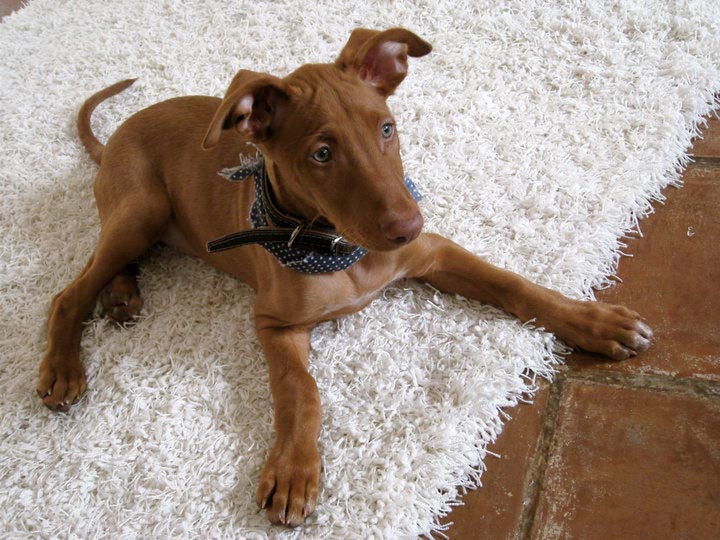
Pharaoh Hound puppies are quite expensive, with prices from many breeders being virtually identical, but the quality of the litters varies greatly. Therefore, choosing a kennel and parents should be a top priority for a potential owner.
Recently, it has become common in cynology to divide puppies into classes: show, breed, and pet. Regardless of the class, a dog must have a pedigree. Breed and show-class dogs have good appearance and the potential for a show or breeding career. Pet-class dogs are for family homes. Typically, this means a larger litter of puppies at an average price. While not always the case, some dogs may have some appearance defects that don't affect their health but prevent them from participating in shows or breeding.
Once you've chosen a kennel and a breeder, and the litter arrives, you can head to the long-awaited viewing. The first thing to consider is the living conditions of the puppies and their parents. After that, make sure they have all the necessary documents before you begin inspecting and choosing your puppy.
Price
In Europe, Pharaoh Hounds cost 1200-1500 Euro.
In Russia and the CIS countries, the average price for a pet-class puppy is $600-800, while breed and show-class dogs cost from $1,000 and up.
A Pharaoh Hound is not a cheap pet, but this fact rarely deters those who, like the Pharaoh, love all things fine, refined, and elegant. Even in photographs, the Pharaoh Hound appears majestic and regal, to say nothing of life, where the animal's grace and positive qualities have earned it a place of honor among many dog breeds.
If you love highly active and physically strong dogs, the Pharaoh is the perfect choice. Add to this their extraordinary gracefulness, and you'll be lucky to have found this well-rounded, flexible, and agile dog. Over time, you'll also appreciate their independence and intellectual development.
They also don't require special care or nutrition, and are loyal and affectionate with others. Overall, it's safe to say that the Pharaoh Hound is an excellent companion for any occasion.
Photos
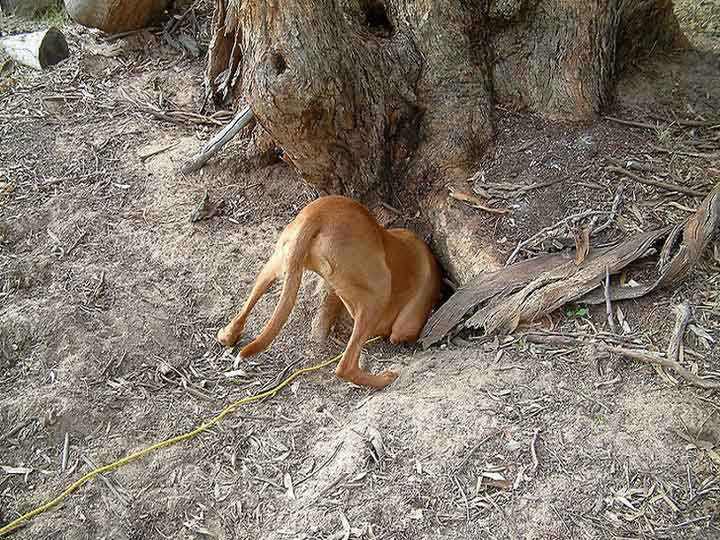
Photos of Pharaoh Hound puppies and adults
Read also:


Add a comment