
Phantom and Harlequin are dog breeds.
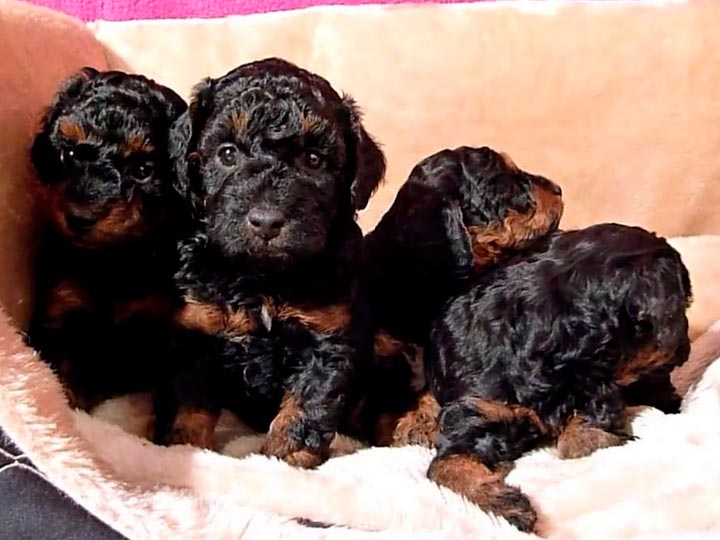
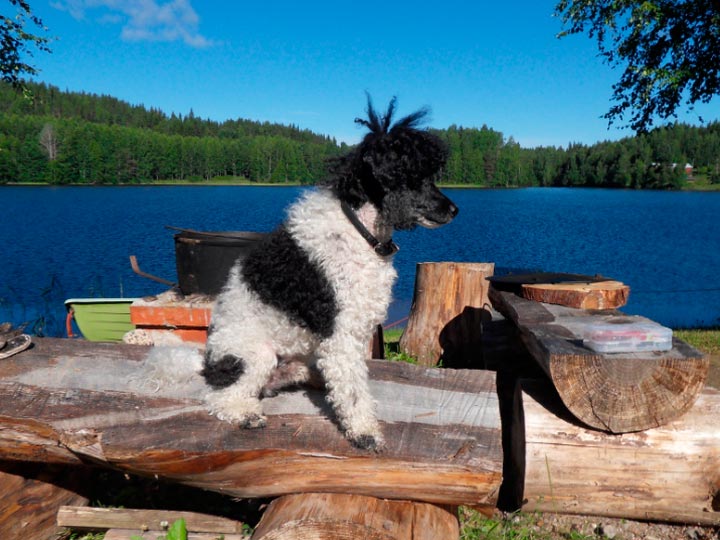
The Harlequin and Phantom are the same well-known, intelligent, springy poodles, but their colors are not recognized. These dogs are officially bred in many European countries and the United States. The Phantom Poodle is black and tan, while the Harlequin is black and white. Some kennel clubs have recognized standards for the Phantom and Harlequin, but for most international associations, they remain color-deficient.
Content
History of origin
In the FCI basic standard for the breed poodle There are six recognized solid colors. Sometimes, when crossing them, dogs with non-standard coat colors are born: spotted, brindle, black and tan. Targeted selection of such colors is a very difficult task.
The popularity of Phantoms and Harlequins in France led to the decision to separate them into a separate breed. This has provoked outrage among Russian breeders, who understand that in the future they will have to breed Phantoms and Harlequins exclusively within the breed, which risks degenerating the desired traits.
A collective appeal was created by the alternative group of the National Breeding Club "Union of Poodle Clubs in Russia," in which breeders opposed the recognition of the Chien Particolor à Poile Frisé breed, similar to the French approach. In 2019, the commission considered all the information and ruled to recognize two new colors for the poodle breed, allow them for breeding, and issue pedigrees with the notation "color not recognized by the FCI, but recognized by the RKF."
Appearance
The Phantom and Harlequin are elegant dogs with distinctive corded or curly coats. Sexual dimorphism is pronounced. Weight is not specified in the standard. There are four varieties based on height:
- Large - 45-65 cm;
- Small - 35-45 cm;
- Dwarf - 28-35 cm;
- Toy - 24-28 cm.
The head is refined, proportional, and well-sculpted. The skull is slightly convex in profile. The muzzle appears strong and dry. The eyes are almond-shaped, black or dark brown, with black eyelids. The ears are fairly long, falling along the cheekbones. The neck is strong and of medium length.
The body is well proportioned. The back is straight and strong. The loin is strong. The croup is rounded. The forelimbs are slender, parallel, and well muscled and boned. The hindquarters are parallel, well angulated, and well muscled. Correct limb structure gives the dog the light, springy gait characteristic of the poodle.
The standards for the Poodle, Harlequin and Phantom breeds are absolutely identical, with the exception of the point about color.
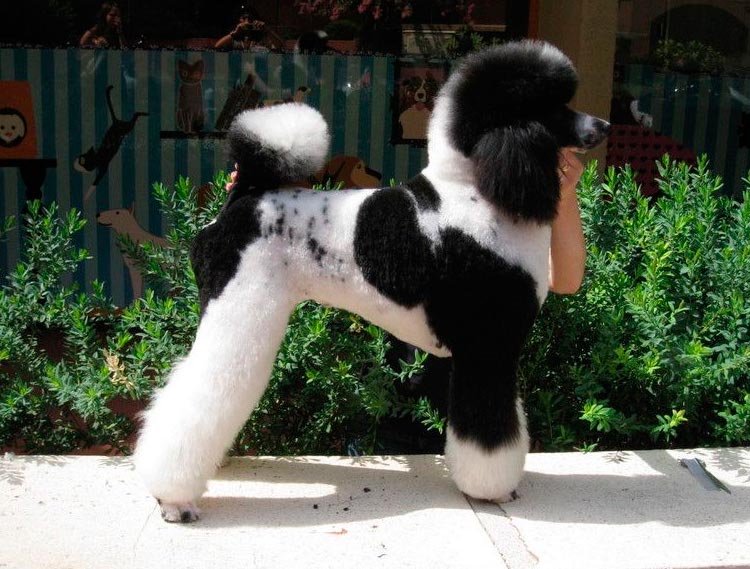
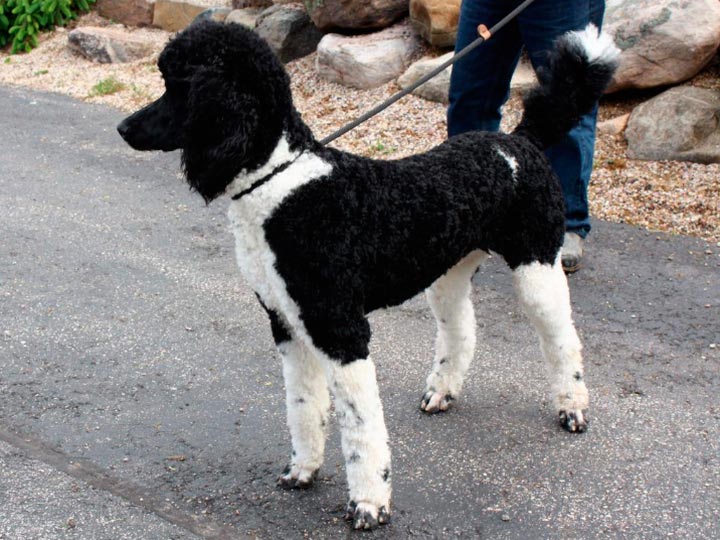
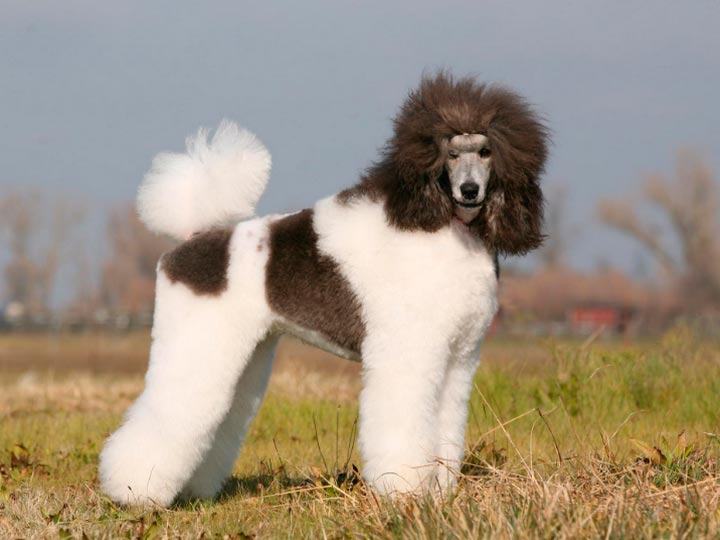
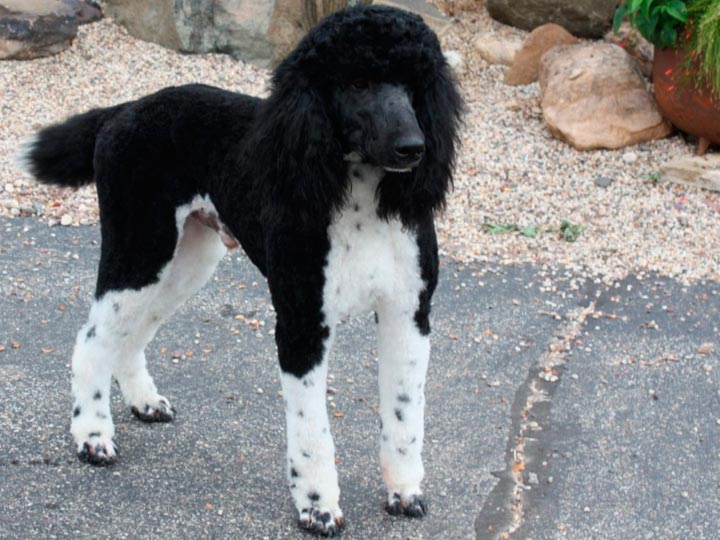
- Harlequin color: white is the dominant color. It is clearly delineated from the black markings. White on the limbs, chest, and belly is desirable. The skin is well pigmented.
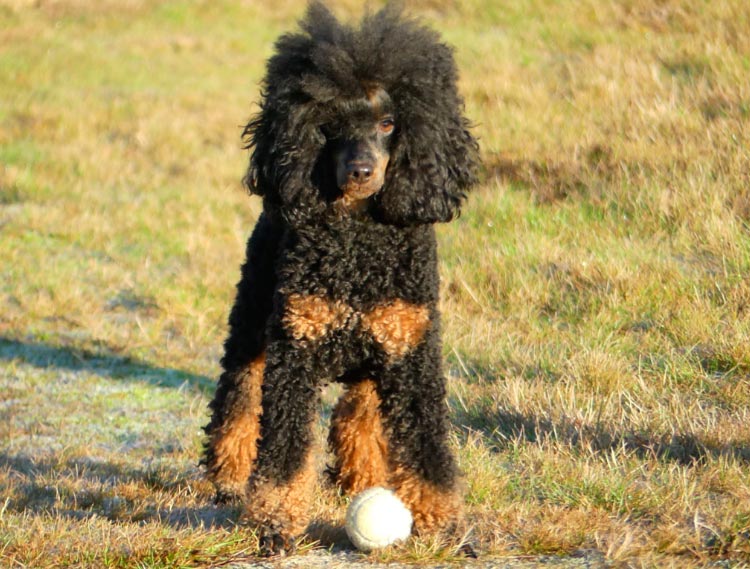
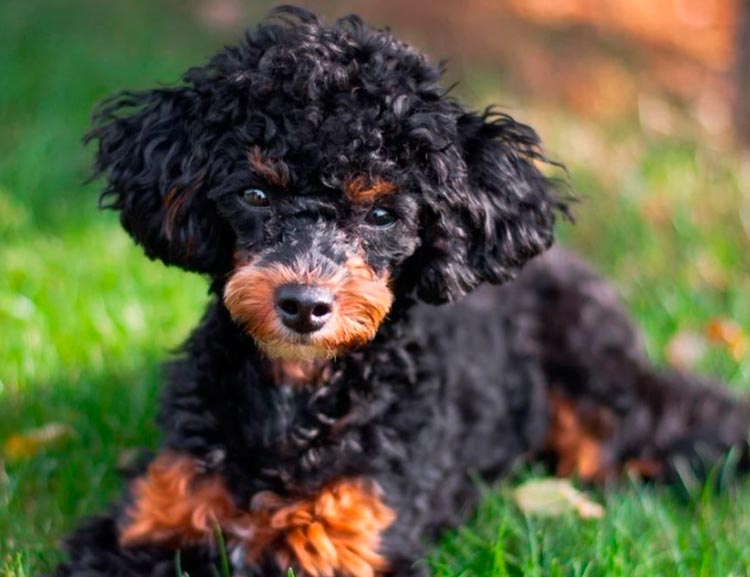
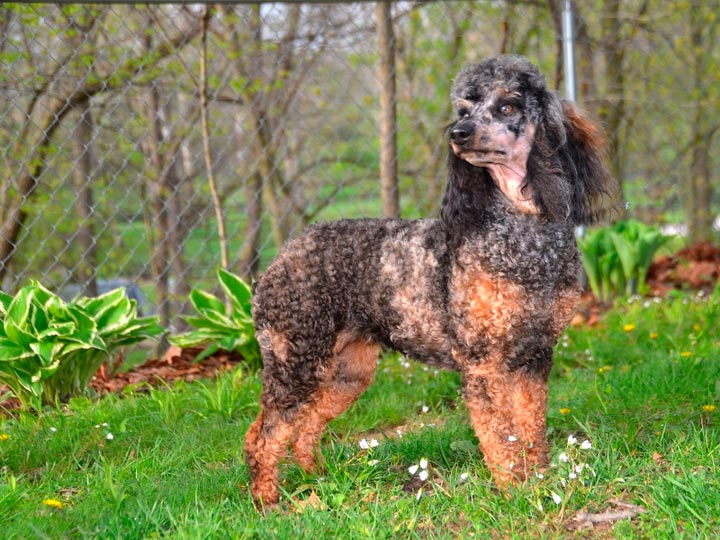
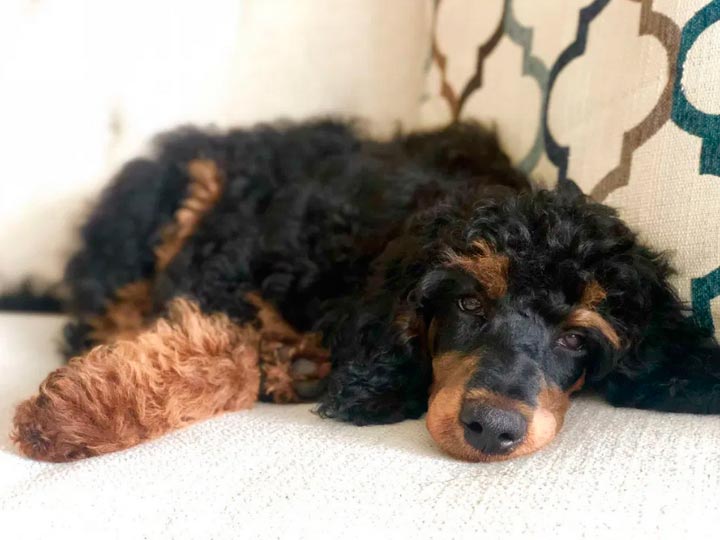
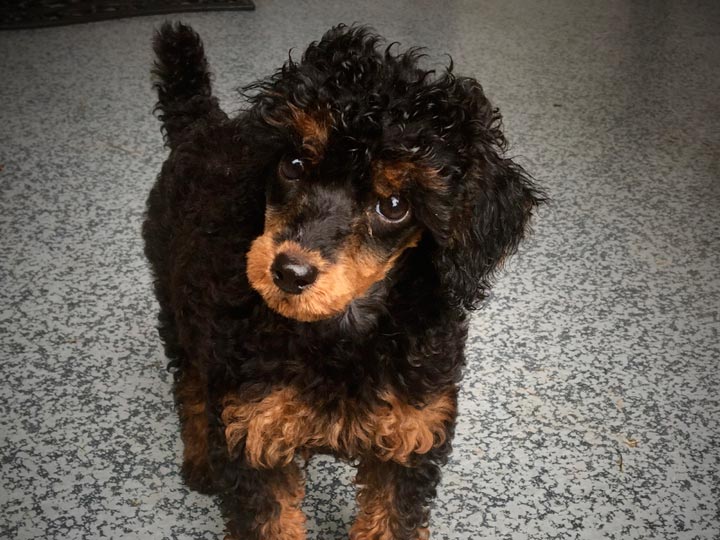
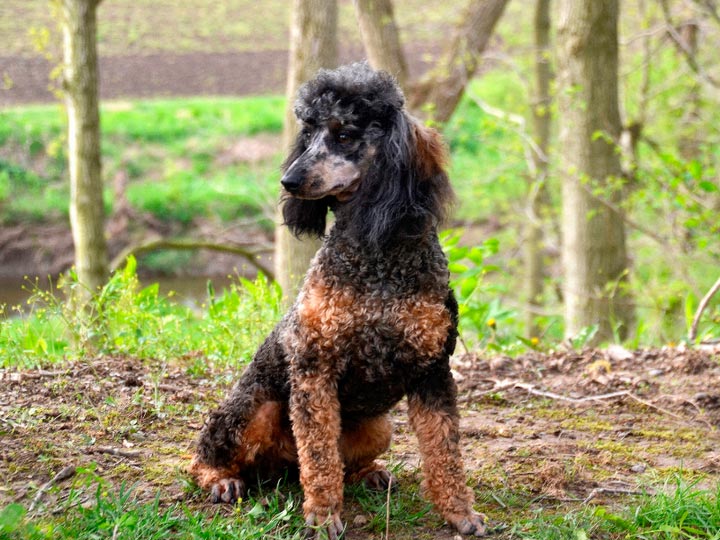
- Phantom color: black is the dominant color. It is fairly evenly covered with tan (apricot) in symmetrical patterns: on the ears, above the eyes, throat, on all limbs, and under the tail.
The FCI standard recognizes only solid colors: black, white, brown, apricot, silver, red.
Character and behavior
The Poodle is renowned for its intelligence, energy, and exceptional people-orientation. Elegant and dignified, this dog is highly trainable and a true companion—loyal, intelligent, and capable. Poodles are excellent with children of all ages, and their curly coat rarely causes allergies. Therefore, the breed is considered one of the best family dogs for both indoor and apartment living.
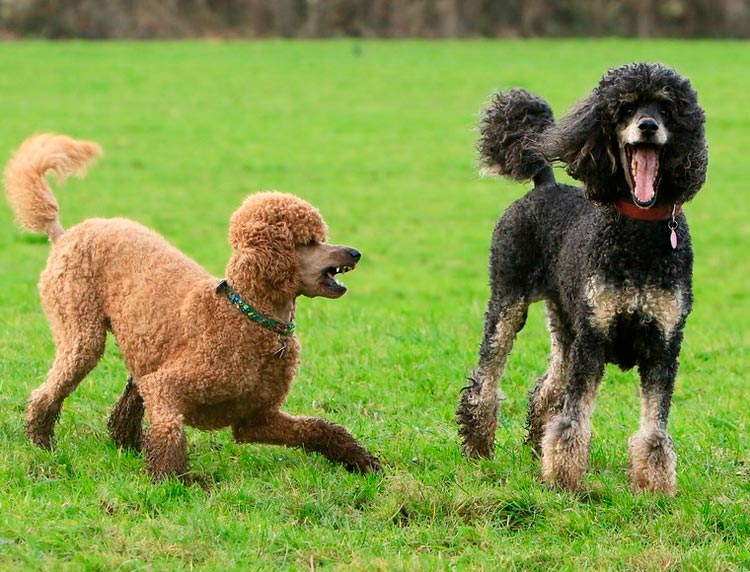
Regardless of size, Phantoms and Harlequins are playful, curious, and energetic. They will always happily respond to the call of play and provide companionship during quiet moments. They get along well with other pets.
As a vigilant watchdog, he considers it his duty to announce the arrival of guests with a loud bark, but is completely unsuited to the role of guard or bodyguard. Many poodles are not affectionate with strangers, but are also completely non-aggressive.
Content Features
Phantom and Harlequin poodles, like other poodles, are ideal for indoor living. They shed virtually nothing and are considered hypoallergenic, although they can cause a reaction in rare cases. Clean and tidy, they adapt to the rhythm of family life and are absolutely not suitable for being a stray dog abandoned in a yard.
A poodle needs socialization, playtime, and walks. The duration and intensity of this activity depends on the dog's size. While a large poodle needs about 2-3 hours of daily walks, a miniature harlequin can get by with leisurely walks around the house lasting about 30 minutes. The remaining energy can be released by running around the apartment with a ball.
Care
Poodle grooming includes regular brushing, clipping, bathing, nail trimming, and ear and teeth cleaning. Careful attention should be paid to the condition of the skin and eyes. Grooming a poodle with specialized products is not cheap.
The Poodle is the ideal breed for those who enjoy experimenting with their appearance. It boasts the widest variety of hairstyles and cuts. Its curly coat can even be braided if desired.
Health and life expectancy
Unfortunately, the breed isn't the happiest. However, life expectancy remains quite high, averaging 12 years. Regardless of size, they are predisposed to:
- Legg-Calve-Perthes disease;
- progressive retinal atrophy;
- Addison's disease;
- skin tumors;
- sebaceous adenitis;
- tracheal collapse;
- hip dysplasia;
- thyroid diseases;
- epilepsy;
- von Willebrand disease;
- bloating And gastric torsion;
- dental diseases;
- puppies often develop hypoglycemia.
To maintain health, it is important to provide your pet with high-quality, nutritious nutrition, exercise, timely vaccinations, antiparasitic treatments, careful monitoring of oral health, and annual medical examinations.
According to research in the field of genetics and physiology, non-standard colors of poodles do not pose any health risks and are not markers of hereditary defects.
Buying a puppy, price
In Russia and many other countries, there are kennels and breeders who specialize in breeding poodles of non-standard colors based on compatibility. The bulk of their stock is usually made up of standard solid-colored poodles. Breeding harlequins and phantoms is undesirable, as it leads to the degeneration of the desired traits.
- Harlequins are produced by crossing white poodles with dark skin and black or silver poodles that carry the spotting gene.
- Phantoms are produced by mating apricot or red poodles with black ones.
Price
Phantom and harlequin poodles don't appear on online classifieds as often as poodles of recognized solid colors. Their price depends on their pedigree, color accuracy, and other breed characteristics. The average price is 25,000 rubles.
Photos and videos
You can see more photos of Phantom and Harlequin dogs in the gallery.
Video about the Phantom Poodle and Harlequin Poodle breeds
Read also:


Add a comment