
Phalene (Continental Toy Spaniel)
The Phalène is a variety of the Continental Toy Spaniel breed, a small toy dog with floppy ears and a thick coat. Cheerful, intelligent, and friendly, it adapts well to its owner's lifestyle and requires little grooming.
Content
Breed characteristics
The Continental Toy Phalene Spaniel is a harmoniously built miniature dog with spectacular long feathering on its hanging ears and impressive intelligence.
|
Original title |
Japanese Spitz |
|
Country of origin |
Japan |
|
Weight |
1.5-5 kg |
|
Height (at withers) |
20-28 cm |
|
Life expectancy |
14-16 years old |
|
Price of a puppy (with pedigree) |
80,000 – 100,000 rubles |
|
Price of a puppy (without pedigree) |
30,000 – 50,000 rubles |

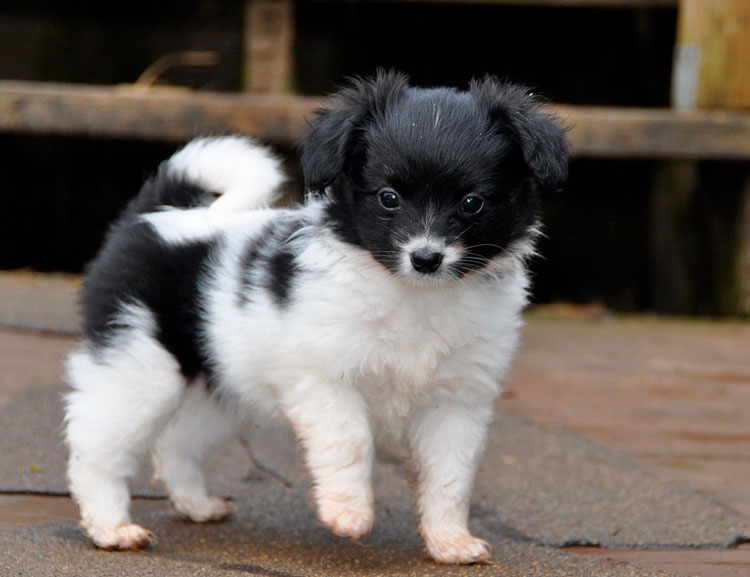
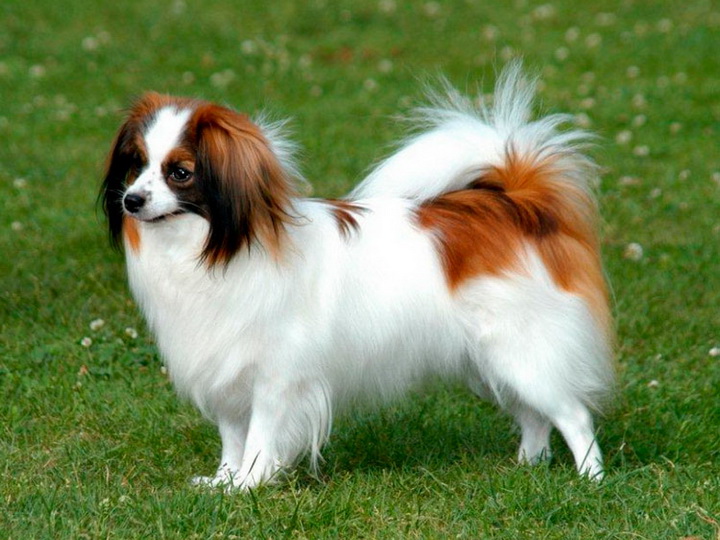
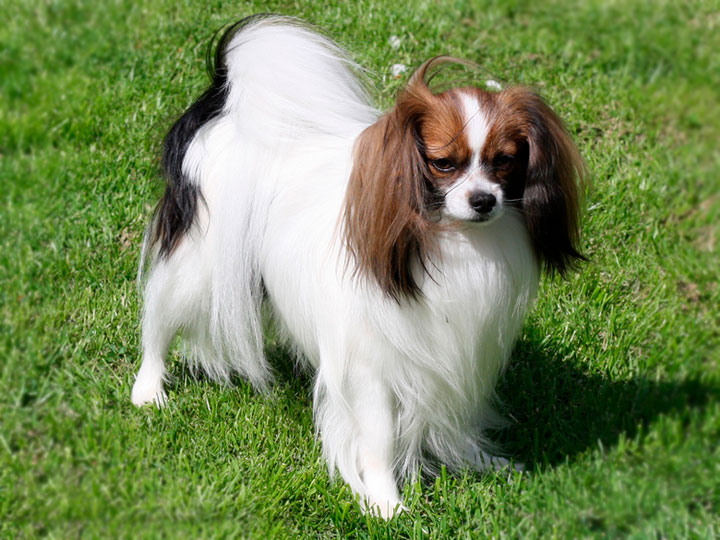
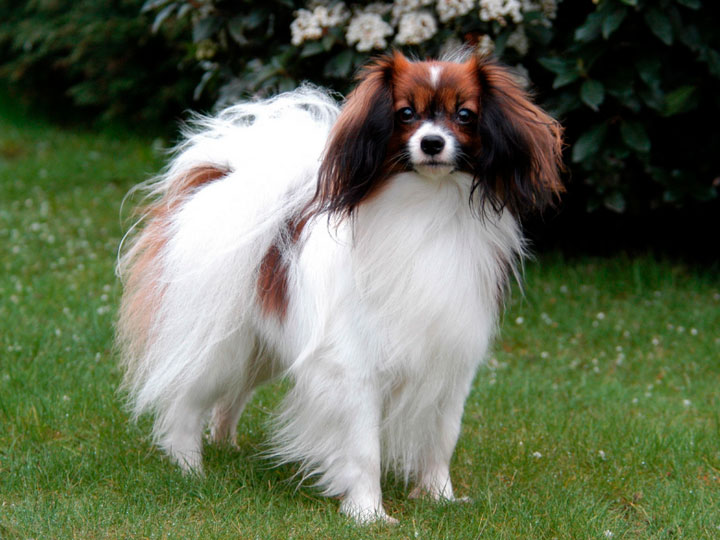
The breed differs from its close relative, the Papillon, in the shape of its ears. Phalènes have ears that hang down, giving the muzzle a distinctive expression.
To determine if a Phalene is right for you, we suggest you read a brief description of the Continental Toy Spaniel, based on reviews from owners and breeders.
|
Parameter |
Level |
Points |
|
Size |
|
2 out of 5 |
|
Intelligence |
|
5 out of 5 |
|
Training |
|
5 out of 5 |
|
Noisiness |
|
5 out of 5 |
|
Health |
|
4 out of 5 |
|
Picky eating habits |
|
3 out of 5 |
|
Activity |
|
5 out of 5 |
|
Aggressiveness |
|
5 out of 5 |
|
The need for communication |
|
5 out of 5 |
|
Molting |
|
3 out of 5 |
|
Attitude towards children |
|
3 out of 5 |
|
Attitude towards strangers |
|
3 out of 5 |
|
Cost of maintenance |
|
2 out of 5 |




History of origin
The history of the Phalène, known in the Middle Ages as the Royal Toy Spaniel, is primarily traced through paintings and chronicles of European royal families from the 14th to 19th centuries. The origins of these miniature dogs are unknown. According to one theory, their ancestors were Tibetan Spaniels, according to another - Belgian Nan Spaniels.
At the end of the 19th century, phalenes with erect ears began to appear as a result of crossbreeding with Spitz and Chihuahuas (no reliable data remains). At that time, the breed was already widely known as the Continental Toy Spaniel. In France, the erect-eared dogs began to be called Papillon (butterfly), and the lop-eared ones are called phalene (moth).
In the early 20th century, the breed lost its former popularity due to its association with monarchy among the European bourgeoisie. In the late 20th century, with the rise in popularity of small breeds and the recognition of the Continental Toy Spaniel by the International Cynological Association in 1990, interest in the breed increased significantly. Nevertheless, the Phalène remains significantly outnumbered by the butterfly-eared Papillon.
Appearance
The Phalène is a harmoniously built, small, graceful dog with an elongated muzzle and long hair. Height at the withers up to 28 cm.
According to weight, the breed is divided into two categories:
- Mini - from 1.5 to 2.5 kg;
- Standard - from 2.5 to 5 kg.
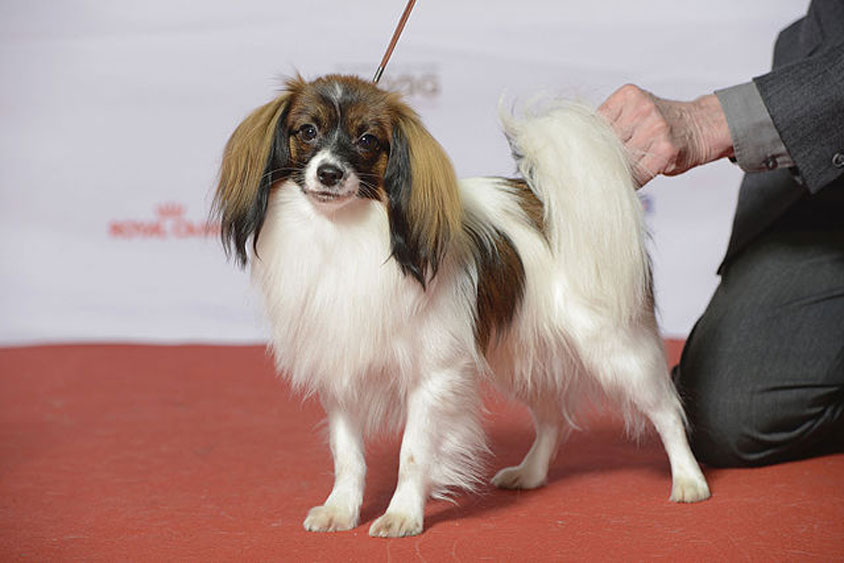
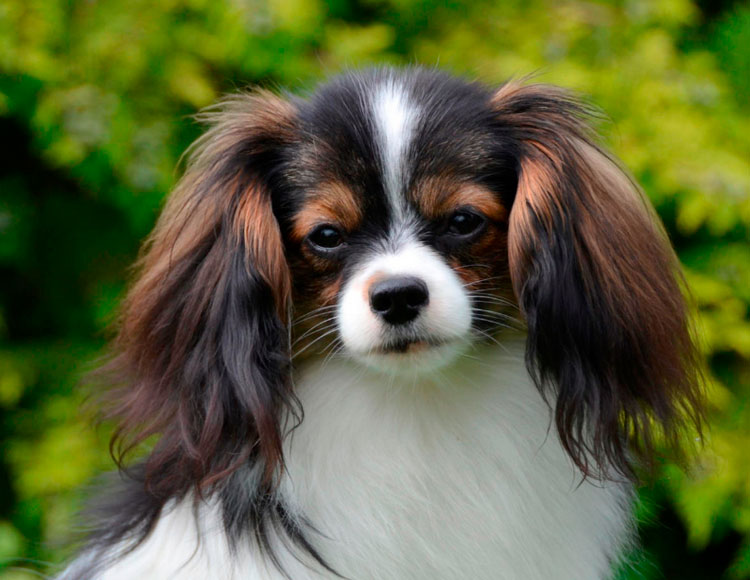
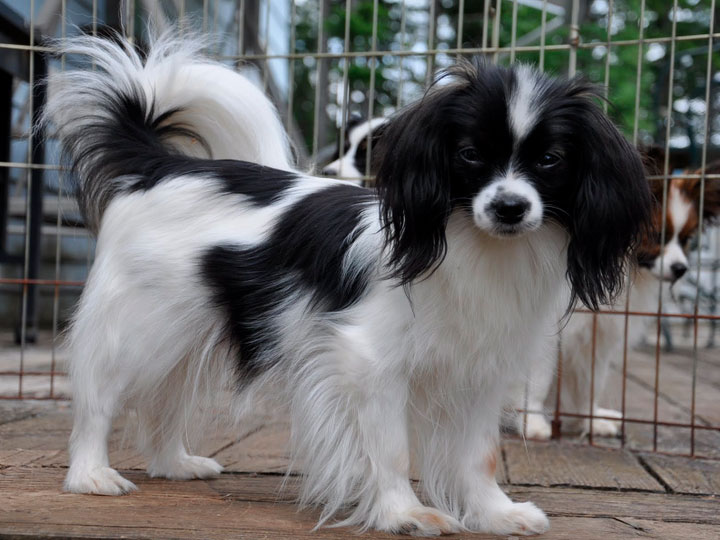
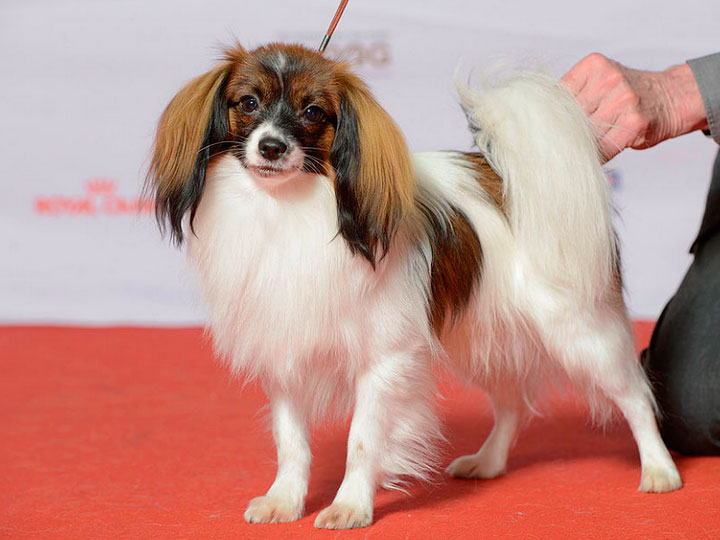
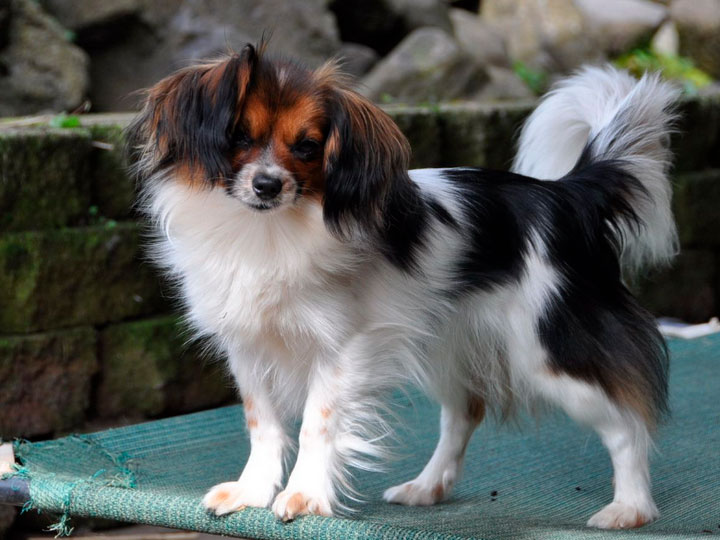
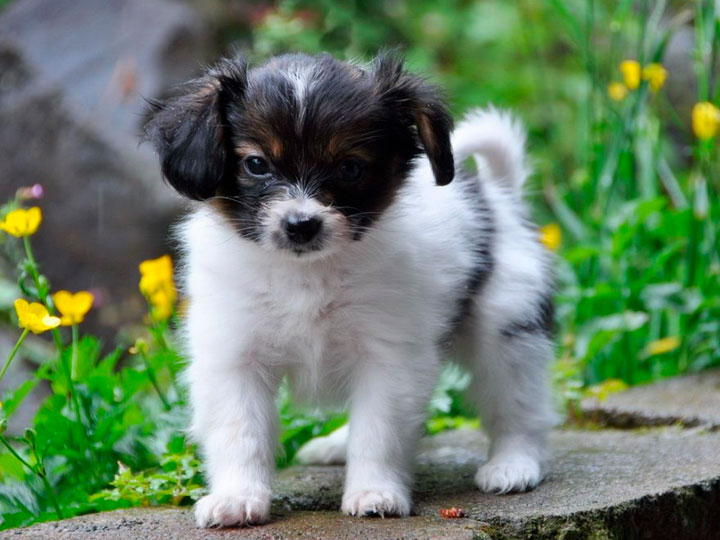
The head is proportionate to the body size. The stop is well defined. The muzzle is pointed, shorter than the skull. The bridge of the nose is straight. The nose leather is small, round, and black. The lips are well pigmented, fit tightly to the jaws, and narrow. The bite is scissor-like. The eyes are relatively large, almond-shaped, set low, wide open, and very expressive. The eyelids are well pigmented. The ears are pendant, fairly mobile, with rounded tips, large, with dense wavy fringe, set fairly wide and low, which clearly shows the roundness of the skull.
Based on the position of the ears, the Continental Toy Spaniel breed is divided into two varieties: the Papillon (butterfly) with erect ears and the Phalène (moth) with drooping ears.
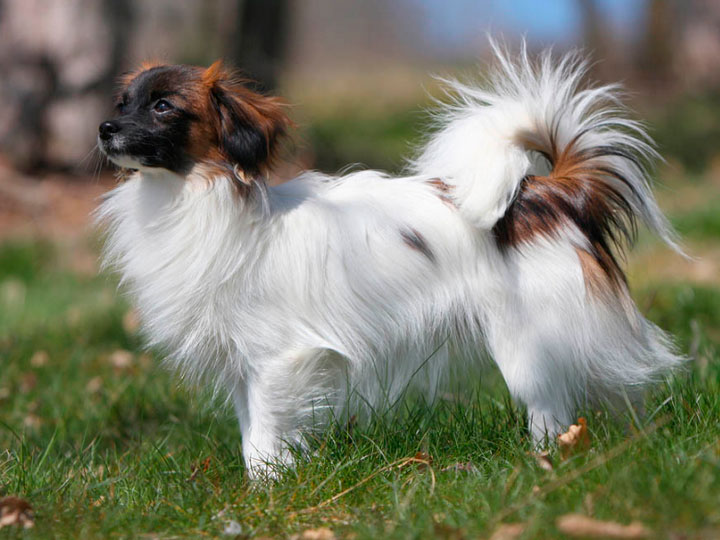
The neck is of medium length, slightly arched. The body is somewhat elongated. The topline is straight. The strong loin is slightly arched. The chest is fairly deep and broad. The belly line is slightly tucked up. The tail is fairly long, set high, and adorned with long hair. The legs are of medium length, parallel. The paws are fairly long, "hare-like." There are tufts of hair between the toes. The claws are pigmented according to the color.
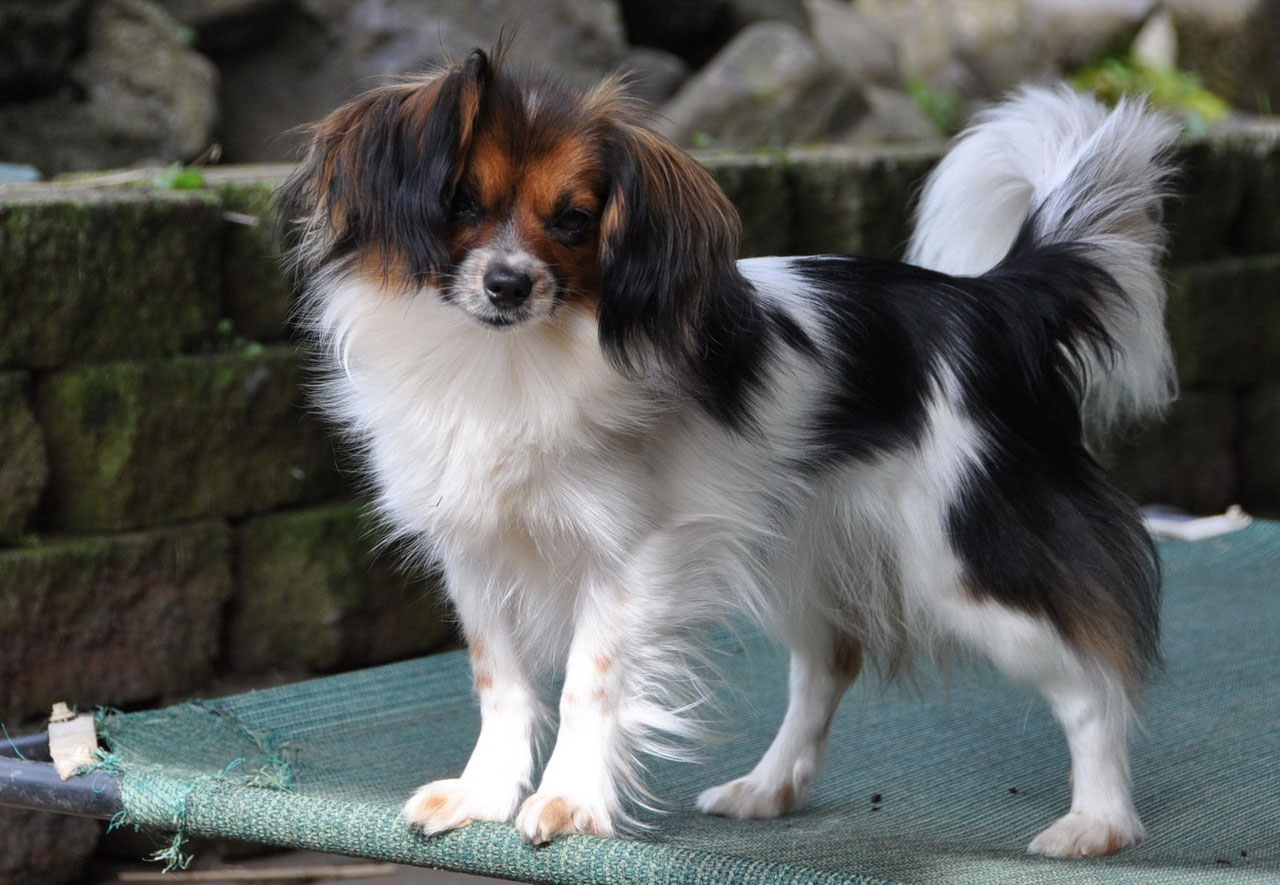
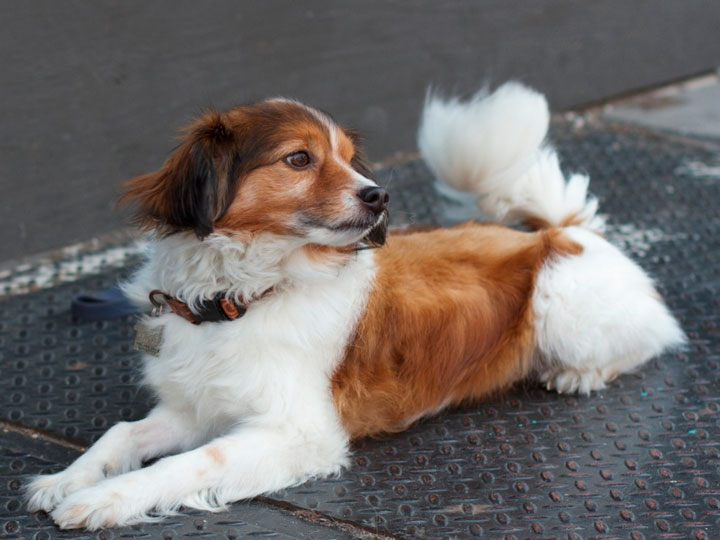
The coat is thick, long, slightly wavy, and without an undercoat. It has a silky sheen, but is not overly soft. It is short on the head, muzzle, and legs. It is longer on the body. There is a collar around the neck. The back of the front and hind legs are feathered. The coat length reaches 7.5 cm on the body and 15 cm on the tail. Color: white with spots of any color. White should not predominate on the body, paws, or head. The head is symmetrically colored; a narrow white blaze is welcome.
 Character and behavior
The Phalene is very friendly and intelligent, its regal dignity and calm remarkably balanced by its energy and liveliness. It gets along well with other animals, but socializing with its fellows is not enough. This toy dog requires close human contact and is very owner-oriented. It can be somewhat shy with strangers, but is generally trusting. It adores loved ones and is very attached to its family. It loves children, happily participates in all children's games, and will not bite, even in self-defense.
The Phalène has a balanced temperament and lacks the nervousness of many small breeds.
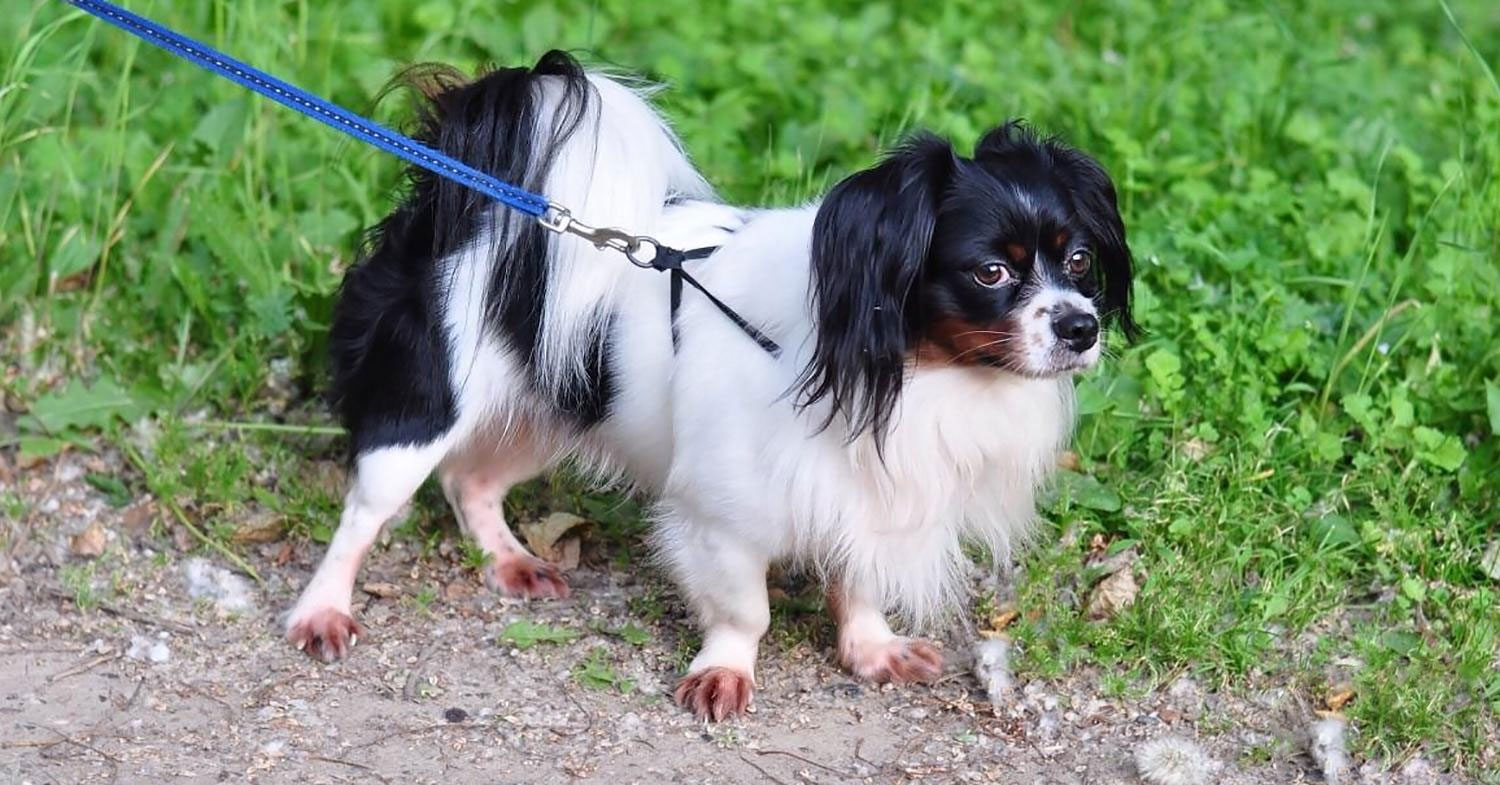
The Continental Toy Spaniel is very intelligent and practically guileless. Sensitive and devoted, it is willing to share any of its owner's interests and dislikes being alone, yet is not overly clingy. It is suitable for single young and elderly people, as well as families with children.
Education and training
79 Continental Toy Spaniels took the highly popular Coren test of intelligence and quick wit in Europe. The results were excellent – first place among toy breeds! The Phalène, like the Papillon, is eager to learn and please its owner, and is very inquisitive. It enjoys tasks that require memorizing words and finding solutions to various problems.
Content Features
Thanks to its small size and calm nature, the Phalène is ideal for keeping even in a small apartment. Furthermore, it is not destructive, so puppies can be safely brought into an apartment with expensive furnishings. Phalènes will calmly wait for their owners to return from work, but are not suitable for families where no one is home for days on end; without attention, they will wither and may develop bad habits.
The Phalène's undeniable advantage is that it is as energetic as its owner requires. With an active person, it will enjoy nature walks or training for competitions. The most suitable disciplines are agility, flyball, and freestyle. With someone who leads a moderate lifestyle, it will be content with short walks. In cold weather or inclement weather, it will easily sit indoors for a day or two if it has been potty trained. It tolerates various temperatures well and does not require additional clothing in temperatures as low as -15°C.
Care
The Phalène's coat consists of long guard hairs. There is no undercoat, meaning seasonal shedding is minimal. With regular grooming, there will be no shedding at all. The Toy Spaniel's guard hair is tangle-free. Trimming is not required.
In general, care is not complicated, but it must be regular.
- It is recommended to brush the coat at least once a week.
- A full hair wash is recommended 1-2 times a month. Use high-quality cosmetics and oils that moisturize and nourish the hair.
- Claws grow quite quickly, so they need to be trimmed 1-2 times a month.
- The hair between the pads and in the genital area is trimmed for convenience and hygiene.
- The eyes are examined and cleaned daily. Sometimes the tear ducts become reddish-brown due to tears. Special bleaching agents are used to brighten the color.
- Brush your teeth weekly.
- The ears are cleaned once a week using special liquid or powder cleaners. The long hairs inside the ears are plucked periodically.
- Some Phalenes require regular anal gland cleaning.
Nutrition
Phalenes generally have a good appetite and rarely have digestive issues or food allergies. Most breeders and owners prefer to feed their dogs high-quality commercial dry or wet food. A diet suitable for small breeds with a normal (moderately active) lifestyle is suitable for the Phalene. If desired, it can be introduced to homemade food. A standard diet includes meat and offal, cereals (rice, buckwheat), vegetables, fruits, and fermented milk products (as tolerated).
Health and life expectancy
Phalenes are considered healthy dogs, maintaining their energy into old age. Typically, at 10-12 years of age, only a slight graying of the muzzle reveals their age. The most common hereditary diseases of the Phalene include:
- Patellar dislocation;
- Progressive retinal atrophy.
Less frequently, other diseases that are inherited are recorded in the breed:
- neuroaxonal dystrophy (progressive ataxia) appears at 6 weeks of age;
- dental problems;
- cryptorchidism;
- In adulthood, the development of cataracts and deafness is not uncommon.
Health is established early in a dog's development and involves consistent supplementation with vitamins, microelements, and amino acids, a balanced diet, and good care. Vaccinations are necessary annually and throughout life. Regular parasite treatment is equally important. The lifespan of a Phalene often exceeds 13-14 years.
Choosing a Phalene Puppy
In all countries where continental toy spaniels are bred, the Phalène is less popular than the Papillon. The search for a puppy should begin with choosing a breeder or kennel that breeds this particular variety, possibly alongside the Papillon variety. The national breed club unites Phalène breeders and enthusiasts but does not oversee breeding, so information about planned matings is most easily obtained from breed associations or shows.
When choosing a puppy, pay attention to its behavior and appearance. The puppy should be well-balanced, curious, not shy, and in perfect health. It's recommended that the litter's parents be tested for common breed-specific diseases. Also, pay attention to the dogs' living conditions and feeding.
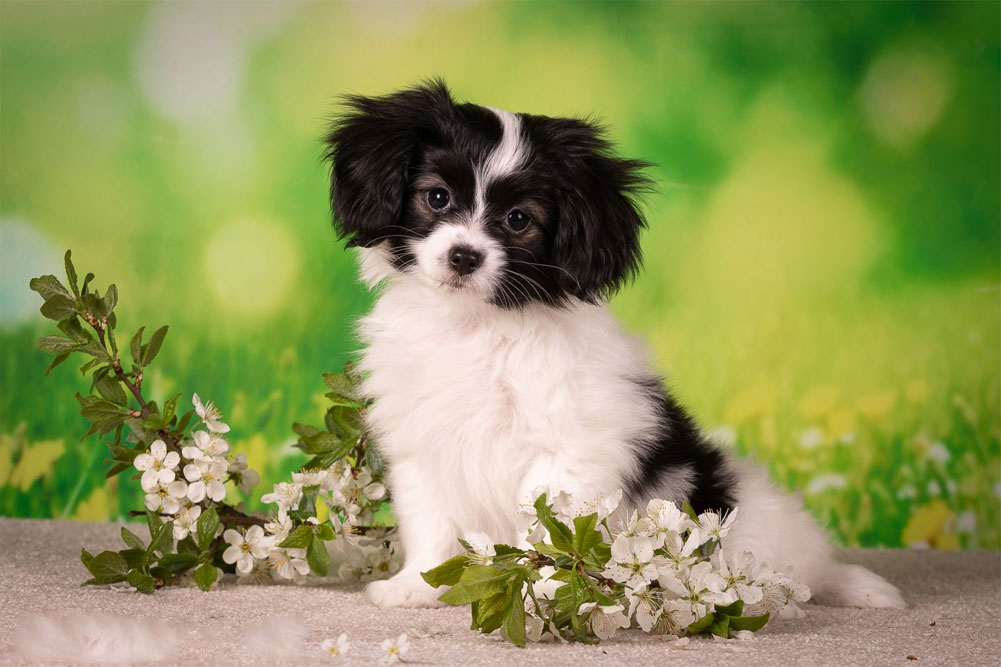
If you plan to show or breed your Phalène puppy, it's important to evaluate it for compliance with the standard. However, keep in mind that at 2-3 months of age, it's difficult to recognize a champion in a puppy. Before the puppy reaches a year, many unpleasant surprises can cut short its show career.
If you're only looking for a companion and pet, the appearance requirements aren't as high. In any case, the dog must have documentation proving its origin (birth certificate and tattoo). A veterinary passport is required to document preventative treatments (vaccinations, etc.). It's best to pick up a small puppy no earlier than 2.5 months old.
Breeding Features
The Papillon and Phalène are a variety of the same breed—the Continental Toy Spaniel. They can mate, but breeders try to prevent this. Crossing Papillons and Phalènes often results in dogs with semi-erect ears, which is a disqualifying factor in the breed. Even without this, Phalènes are sometimes born in a litter of two Papillons.
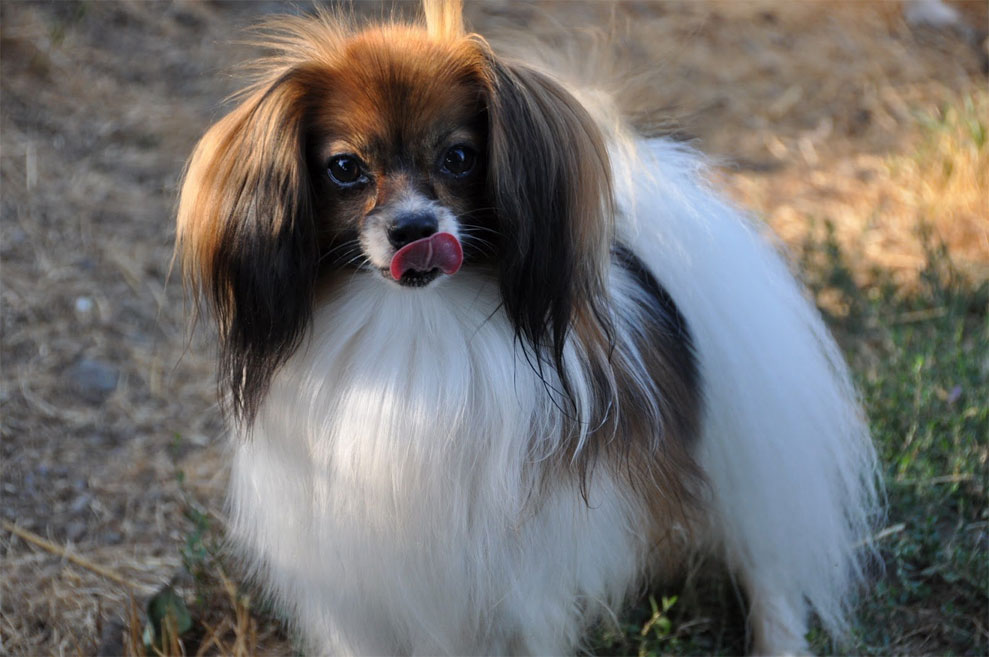
If both Phalene parents are Papillons, registered in the FCI system, then the “moth” will have to go through the breed determination ring and receive a new Phalene pedigree.
Price
The price of a Phalène puppy varies widely. Purebred puppies from show and breeding kennels typically start at 60,000 rubles. Pedigree puppies with a breeding defect, such as color, sell for significantly less. You can also find ads for babies for 15,000-20,000 rubles. These puppies usually don't have papers, but they may be from purebred parents.
Photos
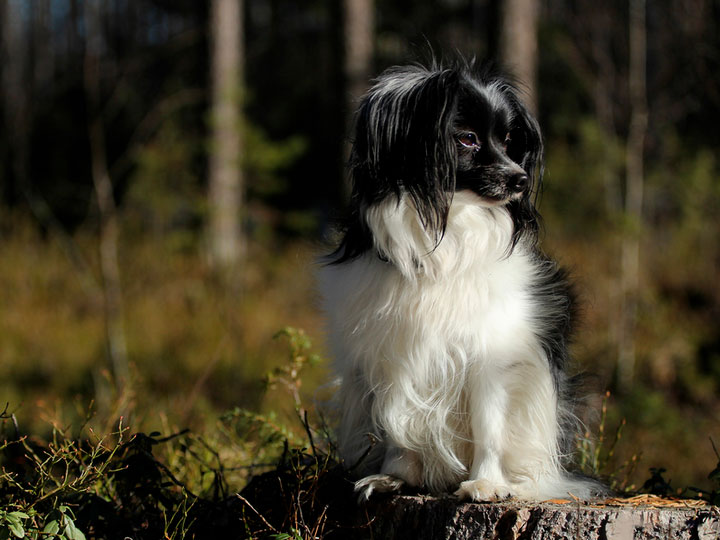
The gallery contains photos of moth dogs of different ages and colors.
Video about the Continental Toy Spaniel (Phalene) breed
Read also:


Add a comment