
Do cats have belly buttons?
Few people know that cats have a belly button because it's usually invisible. Even with a thorough examination, it's often impossible to spot, or it can be mistaken for signs of a skin condition. Furthermore, there's a myth that cats don't have a scar on their abdomen from the umbilical cord. To dispel this myth, it's enough to understand your pet's physiological characteristics.
Content
What is the reason for the interest?
The question of whether cats have belly buttons often arises because some owners treat their pets like children. Therefore, they constantly inspect their pets for various abnormalities. Noticing anything unusual can raise the alarm and lead them to the vet. In reality, these abnormalities may turn out to be physiological differences in their body structure. Understanding the peculiarities of cats' bodies can help avoid such mishaps.
Knowing the location of a scar on the animal's abdomen can be useful for owners, as this knowledge can help them detect an umbilical hernia or other abnormalities early.
Physiological features
In all mammals, including cats, the navel is a natural result of embryonic development. During pregnancy, the fetus receives nutrition and oxygen through the umbilical cord, which is connected to the placenta. After birth, the mother cat bites off the umbilical cord, leaving a small remnant that later heals and becomes an inconspicuous scar. This scar is the cat's navel.
However, unlike humans, cats' navels are virtually invisible—they're neither retracted nor convex, and are not noticeable visually or tactilely. They appear as a small, smooth point, often hidden under the fur on the lower abdomen.
All cats have a navel, like other mammals. This special scar on their belly is due to the fact that kittens receive nourishment from their mother during pregnancy. All nutrients and oxygen are supplied to their bodies through the umbilical cord, which connects each kitten to its mother.
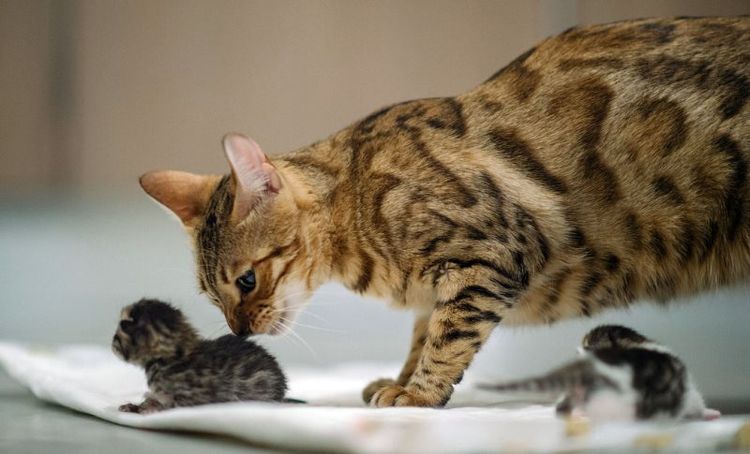
After the birth of the litter and the delivery of the placenta, the cat chews off the umbilical cord itself. She then licks the wounds. Because the animal's saliva contains substances with antiseptic properties, they heal quickly. After the umbilical cord remnants fall off, the scar becomes virtually invisible, so it may not be visible during examination.
Only in rare cases does a kitten's navel remain large for a long time. Redness or purulent discharge may be observed. This is caused by infection in an open wound. Even human intervention can trigger the inflammatory process. in the process childbirth or improper care of babies after their birth.
Where is it located?
Some people have trouble locating a cat's belly button. This is because it's completely different from a human belly button. It's a small scar. In young kittens, it may be pink and more noticeable, but over time, it fades and becomes tiny. Furthermore, animals are covered in fur, making scars difficult to spot.
To find where a cat's belly button is, follow these simple steps:
- Place the animal on its back.
- Carefully examine the abdomen, paying attention to the lower part.
- The small, pale, hairless area is the navel. In cats, it is located between the lower nipples.
It's easier to spot a scar on pets without fur. Since hair doesn't grow over the umbilical cord scar, owners who accidentally discover it often confuse it with deprived or other dermatological diseases.
Typically, a scar causes no discomfort to its owner and merely serves as a reminder of the intrauterine connection with the mother's body. In rare cases, it may change shape, size, or color. If you notice any changes, don't delay a visit to the doctor, as they could be a sign of an umbilical hernia or other medical condition.
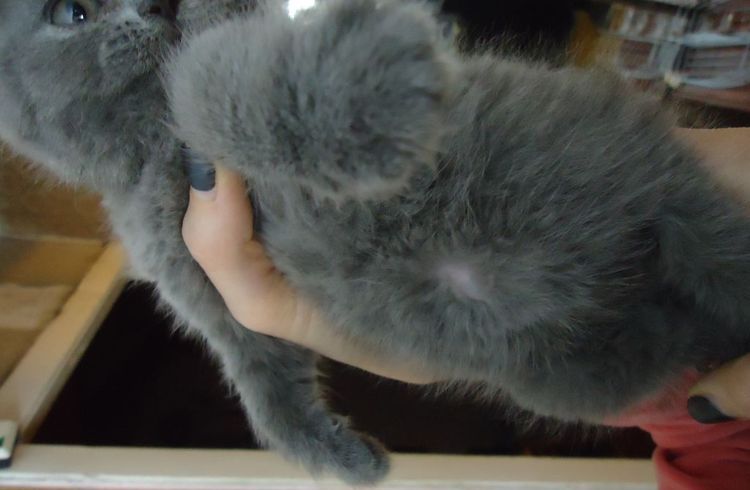
Table: Comparison of the navel in cats and other mammals
| Animal species | Is there a belly button? | What does it look like? | Peculiarities |
|---|---|---|---|
| Cat | Yes | Flat scar, hidden by hair | Not visually noticeable |
| Dog | Yes | A small spot | It is also difficult to determine |
| Human | Yes | Concave or convex | We see at any age |
| Cow, horse | Yes | More pronounced scar | In calves it may be noticeable immediately |
Can a cat's belly button become inflamed or cause problems?
Although the belly button in cats is not very noticeable, in rare cases it can be a source of problems:
-
Umbilical hernia— a condition in which internal organs or fatty tissue protrude through an incompletely healed umbilical ring. Visually, it appears as a soft lump on the abdomen. It is more common in kittens.
-
Inflammation of the navel- possible with injuries or infections in newborn kittens, if the healing site becomes contaminated.
For an adult cat, such problems are unlikely, but in kittens with improper care or a weakened immune system, the risk is higher.
What to do if your kitten's belly button looks unusual
If a kitten is born with a stump of umbilical cord (which usually falls off within 2-5 days), it is important to:
-
keep the area clean;
-
do not treat with iodine or brilliant green unless necessary - the skin is too delicate;
-
do not touch the remaining umbilical cord with your hands;
-
Contact your veterinarian if you notice redness, odor, discharge, or swelling.
Kitten Navel Development: Stages of Healing
After birth, the kitten has a visible remnant of the umbilical cord, which goes through the following stages:
-
First day— the umbilical cord is moist, but gradually dries out.
-
Days 2–3— the area becomes brown and hard.
-
Day 4–5— the remainder falls off on its own, leaving a small scar.
-
Days 7–10— the navel heals completely and becomes almost invisible.
In a healthy kitten, this process occurs without complications.
Table: Stages of kitten navel healing
| Day in the life | Condition of the umbilical cord |
|---|---|
| 1 | Soft, whitish or pink |
| 2–3 | It dries and becomes harder. |
| 4–5 | Falls off spontaneously |
| 7–10 | An inconspicuous scar is formed |
In cats, regardless of gender, the navel is formed in the same way. It is not connected to the genitals and does not indicate the kitten's gender in any way. This makes it an anatomically neutral structure. Moreover, in most males and females, it is visually indistinguishable even upon close inspection.
Read also:


Add a comment