
Eshkin cat - who is it and where does it live?
People often mention "Yoshkin Kot" in conversations, but they don't know who he is or where he lives. Today, the euphemism "Yoshkin Kot" is used as an emotional expression of frustration and despair, but all idioms have a basis in reality.
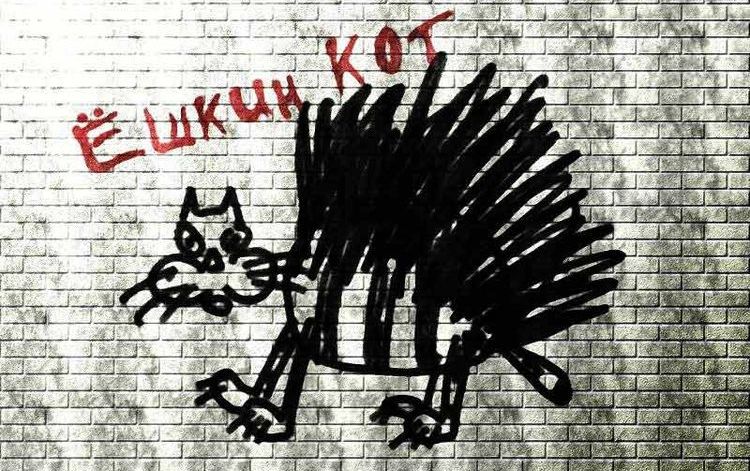
Where are the roots?
Perhaps it's not Eshkin, but Ezhkin—the fairytale cat who lives with Baba Yaga? This is the version philologists are considering when studying the etymology of the euphemism. If you read the fairy tales carefully, especially without the author's adaptations, you'll notice that not only Yaga but also a black cat lives in the hut on chicken legs. According to legend, this is Bayun the Cat, the son of Mother Earth, who escorts people to the other world. Baba Yaga decided to outwit fate and become immortal. She took Bayun in and treated him to human bones. Since then, Eshkin the Cat has lived with Yaga.
This is just speculation, but a study of myths about the animal also supports it. It is cats that witches most often transform into. The sudden appearance of a strange cat in the house foretells misfortune, and if Yezhka's cat appears, misfortune will follow the family for years to come. This theory is supported by the singling out of the cat, although many animals always hang around Yaga. Secondly, the expression "bitchy cat" (sorceress cat) meaning "scoundrel" or "scoundrel" (sorceress cat) is another proof. Moreover, it was this character that pagans invoked when trying to protect the home from evil spirits. And this is understandable: although Yezhka's cat is evil and can cast the evil eye, it also possesses the power to neutralize enemies.
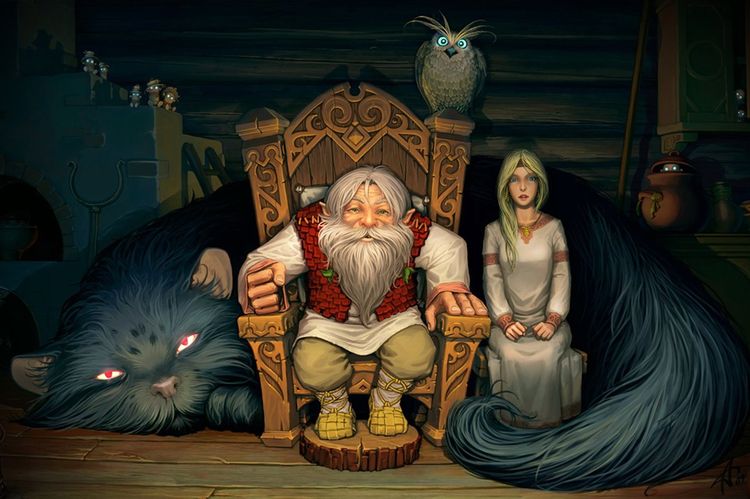
The negative emotional component is embedded in this expression and in the first letter "Ё." Compare "E-moe," "Ekarny (ehanny) bogeyman," "Yolki-palki," "Eprst," "Yezh tvoyu med" (Hedgehog's copper). Perhaps this letter of the Russian alphabet is a protector from evil forces.
The euphemism literally burst into the modern lexicon after the release of the film "Love and Doves." The main character often used this expression with great emotion. It became a popular substitute for swear words to make speech more harmonious, although this expression is not included in the dictionary of "Russian Mat."
Monuments to an unusual cat
For some reason, people imagine Eshkin the Cat as a shaggy tomcat with huge, bulging eyes. But according to fairy tales, he was an ordinary cat, only a little plump. Sculptors from the Mari El Republic decided to try to bring this folkloric character to life. The first monument to Eshkin the Cat is located in Yoshkar-Ola. The creators had to work hard to cast a bronze cat that would reveal the attitude of an ordinary person to extraordinary circumstances. And they succeeded: the Yoshkar-Ola cat turned out very emotional, with a sly twinkle in his eye. An additional emotional component is the newspaper "Naked Truth" and the fish skeleton on it.
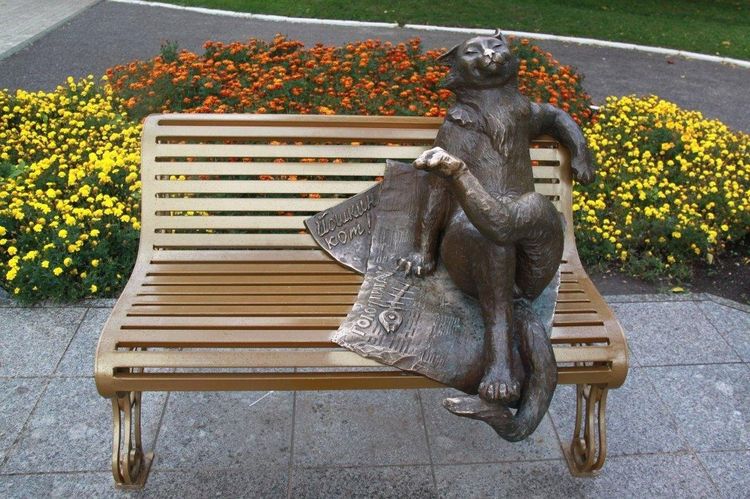
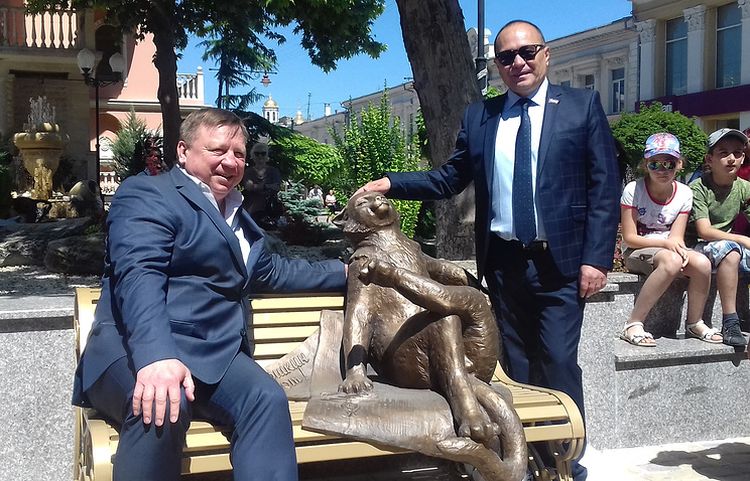
The cat's name also had to be changed, from Eshkin to Yoshkin: the creators borrowed the first letter of the city's name. Thus, the bronze cat became the symbol of Yoshkar-Ola, protecting residents from evil and misfortune. He was especially beloved by students at Mari University, where a bench was installed next to the university, where the cat now sits. Just sitting down next to him and rubbing Yoshkin's paw immediately dispels all bad thoughts, leaving behind a feeling of frustration.
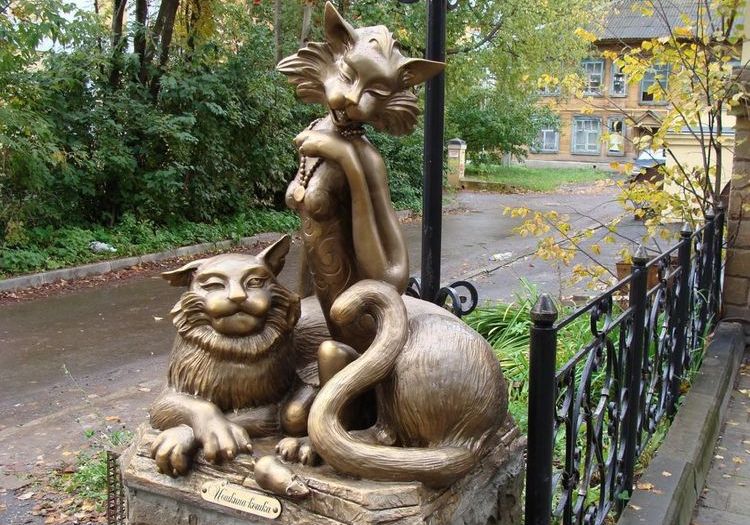
The success of the first monument inspired the sculptors to create a new composition. In 2013, the sculpture "Yoshkina Koshka" appeared on Gagarin Avenue. It was installed near the café of the same name. The new monument features a large, cunning cat holding a mouse in its paw, and a flirtatious female cat. It's precisely with this cunning that people should respond to failure and frustration, uttering the phrase "Yoshkin Koshka."
In 2015, the cat appeared on the city streets in a new guise. He's a furry intellectual in a tailcoat, holding a coin in his paw. He lives on Voinov-Internationalistov Street near a store. Perhaps this is what Yoshka the Cat looked like, and Baba Yaga might have had her own black stray named Eshka?
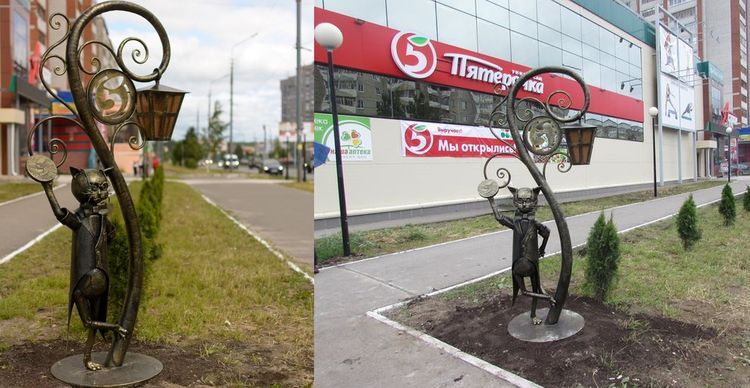
The humorous sculpture was so beloved by the public that in 2018, a replica was donated to Simferopol. Now, the Crimean Yoshka lives on Karl Marx Street near the entertainment center. City residents hope this monument will mark the beginning of a whole series of humorous sculptures that will decorate the streets and lift the spirits of the city's residents.
Read also:


Add a comment