
Airedale Terrier is a dog breed
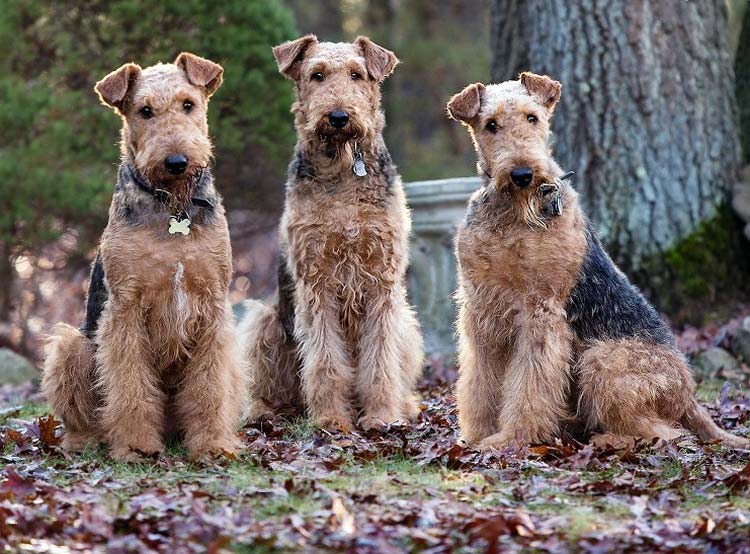
The Airedale Terrier is a versatile breed. They combine all the qualities needed for a hunter, guard, and companion. They are energetic, curious, intelligent, and moderately fierce. They thrive in forests, meadows, swamps, and mountains, in both hot and cold conditions. Airedales are fully-fledged service dogs and loyal companions. But their uses don't end there. During World War I, they served as messengers, delivered mail, and found the wounded on the battlefield and brought them medicine. In their relatively short existence, they successfully proved their worth and won the hearts of their fans.
Content
History of origin
Airedale Terriers were developed in Great Britain relatively recently. The breed was created out of the need for a hunter who could be used for hunting otters. The dog must be hardy, energetic, intelligent, and loyal, with a strong hunting instinct.
The breed's name commemorates its origins in the Aire Valley in Yorkshire, a region renowned for its hunting. To create the new breed, it was decided to cross the Otterhound (an otterhound) with the Black and Tan Terrier. Other dogs were also involved in the breeding process, but little information remains about them. In 1873, the first Airedale Terriers were registered in the stud book of the Kennel Club of England. By the end of the 19th century, the first standard was developed and adopted. The breed continued to be refined in terms of exterior appearance and working ability, and by the beginning of the 20th century, the dogs had become more compact and had a consistent color pattern.
It's difficult to say exactly when the Airedale Terrier first appeared in Russia. It is known for certain that during the Russo-Japanese War, the Red Cross donated four Airedale Terriers to the army. Later, in Leningrad, two Airedales survived the siege, a shining example of how humans remain loyal to those they've tamed.
Video review of the Airedale Terrier dog breed:
Purpose and performance characteristics
In Russia, Airedale Terriers haven't gained widespread popularity as hunting dogs. Only a few amateurs hunt wild boar with them. In India, Africa, the United States, and Canada, Airedales are still used to hunt a variety of game, from marmots to bears. Their ability to navigate through thickets is comparable to that of spaniels, but they are more successful at finding and chasing game along riverbanks and in swamps.
Their well-developed protective instincts make them excellent watchdogs, while their keen sense of smell and intelligence allow them to be used as guide dogs and in ore prospecting. Erdelies are capable of detecting ore at depths of up to 12 meters.
The Airedale Terrier is a unique service dog used by the military, police, and customs in many countries around the world. They began their careers in law enforcement as patrol dogs in their native Yorkshire. During the war, Airedales carried messages through occupied territory, searched for wounded soldiers, brought aid or helped get to hospitals, and were used as mine detectors.
After World War II, the Airedale Terrier's popularity peaked thanks to stories of its intelligence and unrivaled bravery at the front. Furthermore, dogs of this breed were kept by several American presidents, including Theodore Roosevelt, Calvin Coolidge, Woodrow Wilson, and Warren Harding. Interest in the breed then waned somewhat. In Russia, the Airedale Terrier was revived after the release of the film "Electronic," but soon faded into obscurity among other breeds.
Appearance and standards
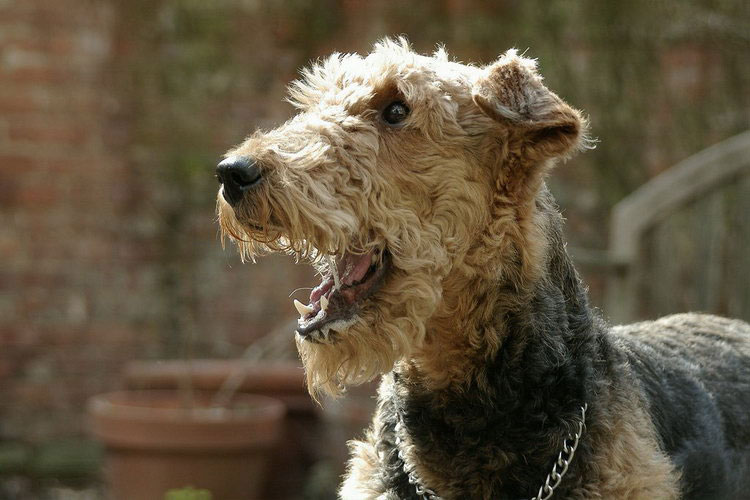
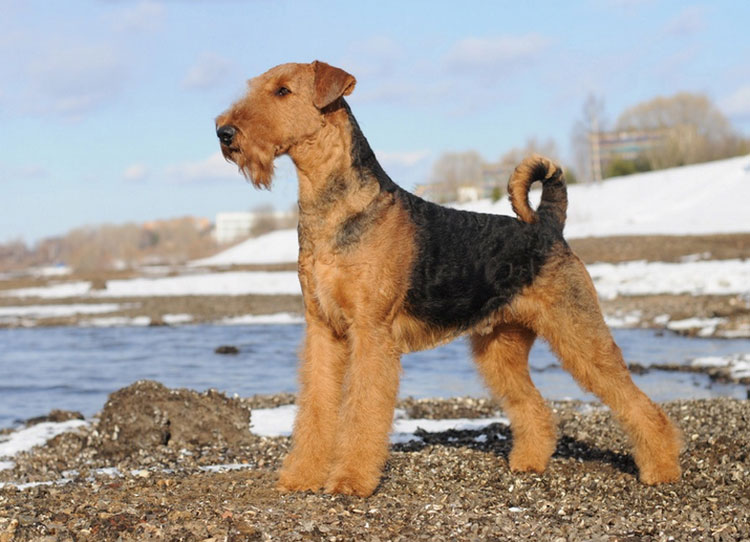
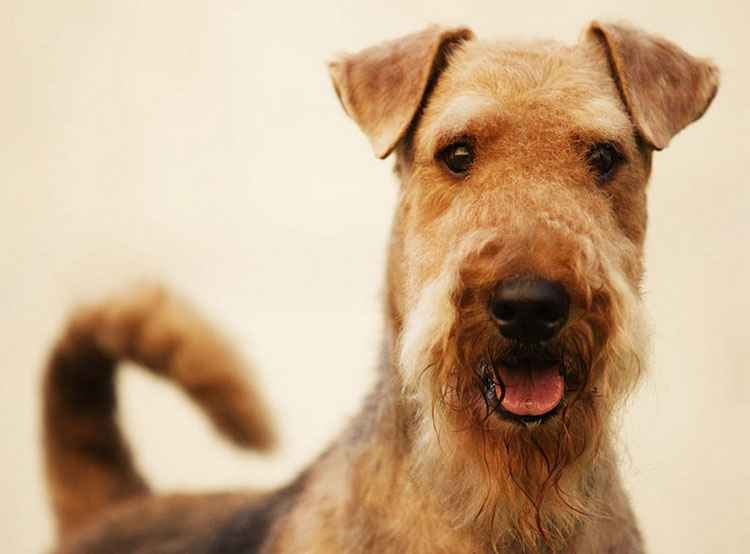
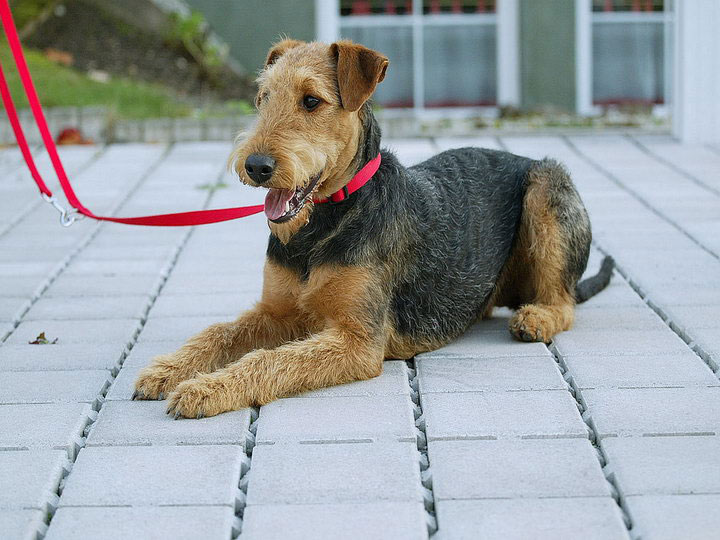
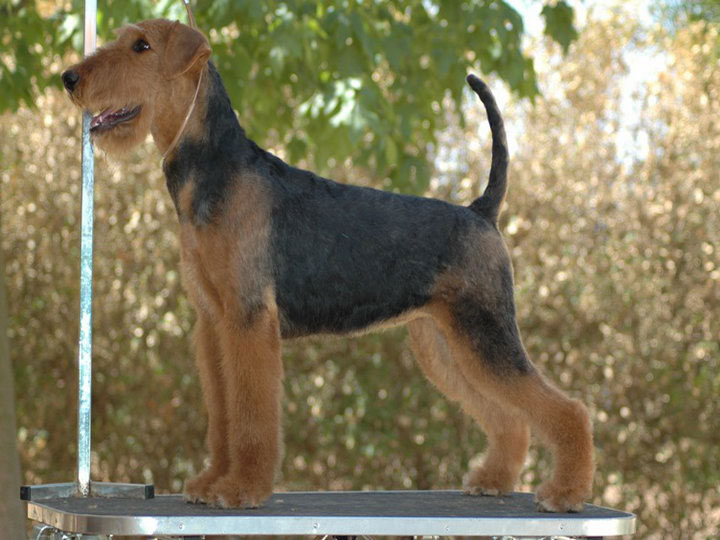
The Airedale Terrier is an active, muscular, medium-sized dog. The mouth measures 58-62 cm (22-24 in) and weighs 20-27 kg (44-60 lb). The head is proportionate and slightly elongated. The junction of the forehead and bridge of the nose is smooth. The nose is black. The lips are tight. The bite is scissor-like, but a pincer bite is also acceptable. The eyes are small, oval or triangular, set slightly obliquely, and dark in color. The triangular ears hang on cartilage. The neck is medium in length, lean, and muscular.
The nape line is beautifully defined. The back is straight. The croup is nearly horizontal. The tail is set high and straight. It can be docked to two-thirds of its length, making it almost vertical when standing. The chest is moderately wide and deep. The belly is tucked up. The legs are parallel, straight, and close together. Dewclaws are recommended to be removed at an early age.
The coat is thick, harsh, slightly wavy, and lies close to the skin. The undercoat is soft and short. On the muzzle, decorative hair forms a beard and mustache. The coat is a saddle-brown color—the base color is red, with scattered black or highlighted spots. Individual white hairs on the chest and between the toes are permitted. The ears, back, and neck should be a richer color.
Character and psychological portrait
The Airedale Terrier is a confident, intelligent, courageous, and friendly dog. It is always eagerly awaiting and remains vigilant, regardless of the circumstances. It is wary of strangers. While not aggressive, the Airedale Terrier will display its fearlessness when called upon. Dogs of this breed are energetic and active, with a lively temperament, curious, and attentive. At times, they can be very stubborn and independent. They often strive to dominate within the family, but if the animal recognizes the owner's absolute authority, there will be no problems.
Airedale Terriers are emotional, sociable, and self-assured. They are sensitive to their owner's mood, and their mood is easily discerned by their eyes and the position of their tail and ears. Airedale Terriers are very energetic and curious, interested in everything: birds, passersby, their bags, other dogs, everything on the ground and in the air. At the same time, they are very intelligent, patient, and loving. Of course, there are more cunning specimens, but compared to all their positive qualities, their pranks are rather amusing.
Airedale Terriers require targeted training; if they are neglected during puppyhood, they will likely grow up to be cunning and prone to problems both at home and outdoors. It's crucial to teach Airedales how to handle small dogs from an early age. As true hunters, they often grab and tame them like prey.
Who is the Airedale Terrier breed suitable for?
This breed is not recommended for people with limited experience with hunting dogs. An Airedale owner must be confident that they can be the dog's unquestioning leader. An Airedale Terrier is also not the best choice for older people, as they may not have the energy to handle an overly active toddler, who could become overly dependent on them. The breed is definitely not suitable for sedentary or busy people. The owner should be not only the dog's leader, but also a friend and playmate. If the dog enjoys its owner, it will never run after the neighbor's cat.
Overall, this is a wonderful family breed that gets along well with children of all ages. However, it can sometimes be possessive about food and toys, so it's important to teach children to respect their dog's habits.
Training and education
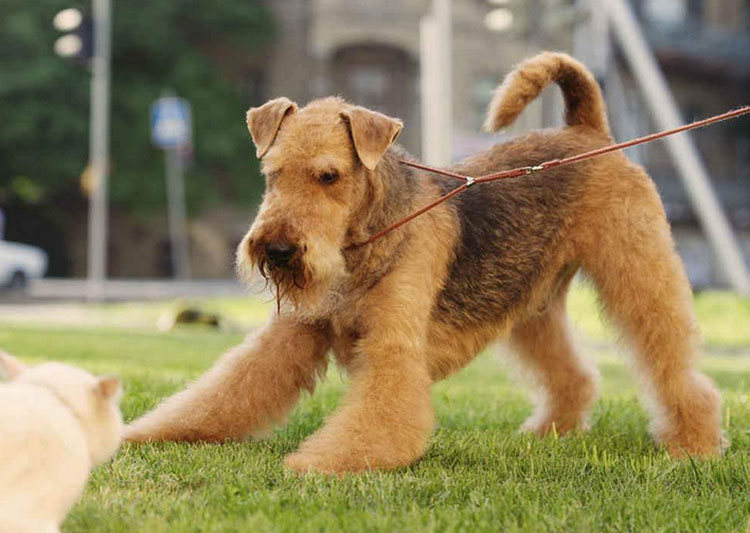
The most common problem terrier owners face is stubbornness. Airedale terriers are highly trainable, and if you engage an inquisitive and intelligent puppy in training from an early age, you can achieve amazing results. However, if a pet is unwilling to do anything, it's almost impossible to get them to do anything. This often happens when the dog is bored. It will be difficult to find common ground with them if you don't let them off the leash during walks. Airedales quickly become accustomed to familiar routes and smells, and they lose appreciation for praise and treats.
Puppy training begins at home. In a familiar environment, the little hunter won't be distracted by extraneous objects, smells, or sounds. If the dog gets restless, wants to sleep, or wants to eat, stop training. When working with this breed, be generous with rewards, but at the same time, give instructions in a firm, insistent tone.
Multi-sport training with service dogs opened up new possibilities for Airedale Terriers. Compact, fast, and agile, they proved to be excellent partners for humans in sport.
Starting at two months of age, they begin learning basic commands: "sit," "walk," and "give me a paw." At four months, they begin practicing the commands "place" and "wait." Until six months, training should focus on play and distraction from unwanted behavior. An Airedale Terrier requires moderate exercise. To maintain good shape, short morning walks and longer evening walks, supplemented by training and active play, are sufficient.
Maintenance and care
Unpretentious Airedale Terriers are suitable for both apartment and house living. Those planning to keep the dog in a yard should provide them with a place to dig holes, as this is one of their favorite activities. Airedale Terriers are well-suited to city life and do well in apartments. They are completely unobtrusive, able to remain unnoticed, and their coat sheds little and is virtually odorless.
The Airedale Terrier is not picky about food. Dry food or natural foods can be the mainstay of their diet. After feeding, it's recommended to wipe the dog's beard to prevent food debris from accumulating in its fur.
Care
To keep your dog comfortable and looking well-groomed, you need to brush it regularly. The breed doesn't have a specific odor. At least twice a year, the Airedale is trimmed, usually in the fall and spring.Trimming is the plucking of dead hairs throughout the entire coat or in specific areas. Show dogs are trimmed almost year-round. The mustache and beard are only slightly trimmed and left at a natural length, which helps highlight the distinctive characteristics of the breed.
Regularly inspect your dog's ears and teeth. Clean ears as needed, and teeth at least once a week. Don't wait until plaque builds up. Nails usually wear down on their own with enough exercise; if this doesn't happen, they need to be trimmed.
Health and life expectancy
Free access to clean drinking water is essential. It's also important to strictly follow the regimen. Airedale Terriers are generally a healthy breed, distinguished by their endurance and good health. Congenital defects and hereditary diseases include the following:
- Perthes disease;
- Displacement of the lens;
- Breast tumors;
- Allergies (often appear on the skin);
- Hip dysplasia;
- Knee dislocation;
- Skin growths.
Average life expectancy is 12-13 years.
Choosing an Airedale Terrier Puppy and Price
When choosing an Airedale Terrier puppy, the most important rule is to avoid wasting time on litters of dubious origin. A breed is not just about appearance; it also includes character, working ability, and intelligence. Therefore, if you're looking for an Airedale Terrier as a companion, it's best to purchase a puppy from a reputable breeder. It's important to evaluate the dogs' living conditions, the mother's condition and temperament, and the health, pedigree, and achievements of both parents.
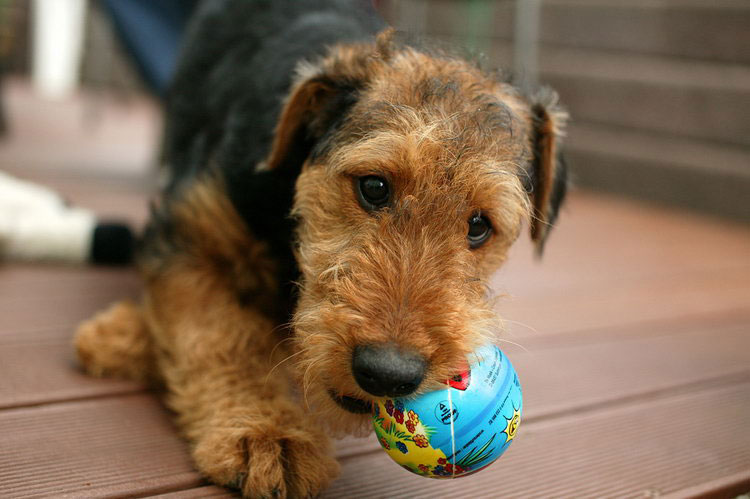
A puppy is chosen at 1.5-2 months of age. At this age, puppies become more independent and begin to develop their character. Healthy puppies at this age weigh 4-6 kg. The paws should be strong and straight, the head almost flat and not too long.
It is difficult to predict the type of coat; it acquires its final structure after shedding. A dog of either gender is suitable as a pet. Males and females differ little in temperament.
Swollen joints or rib bumps indicate the onset of rickets. Babies should be neat and clean in appearance. The eyes, nose, ears, anus, and urogenital openings are examined for any discharge, redness, or any other abnormal changes.
The price of an Airedale Terrier puppy depends on its class and prospects, and ranges from $500-$1,000. Mixed breeds are often sold under the guise of Airedale Terriers, with the price being lowered under false pretenses.
Photos
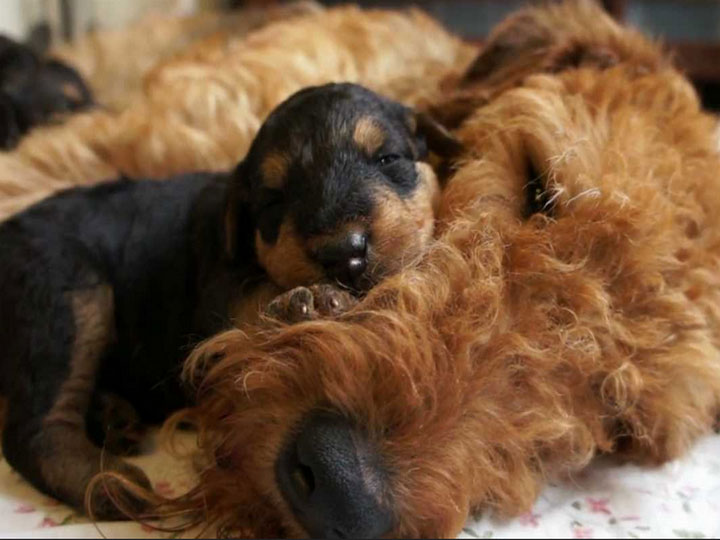
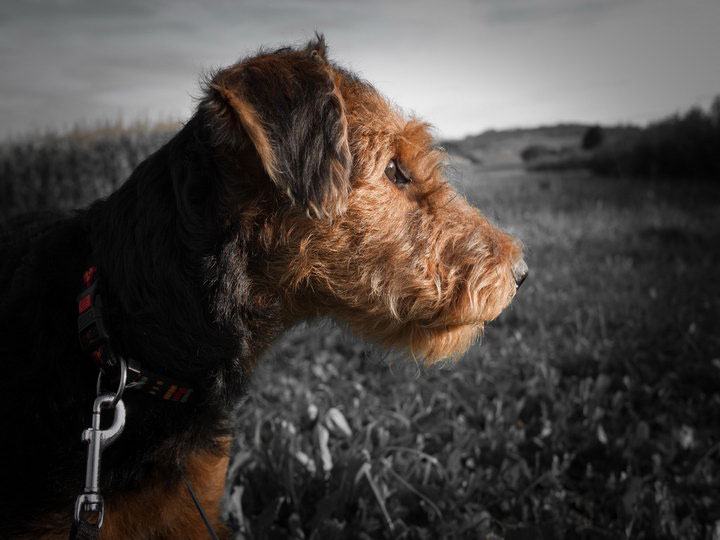
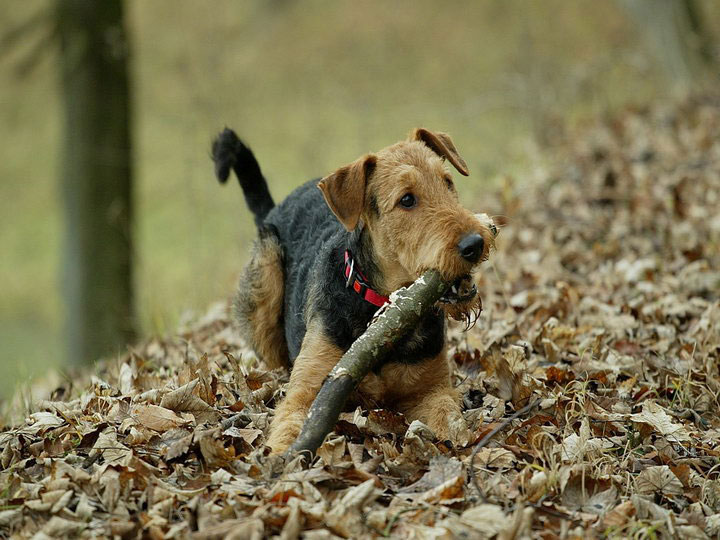
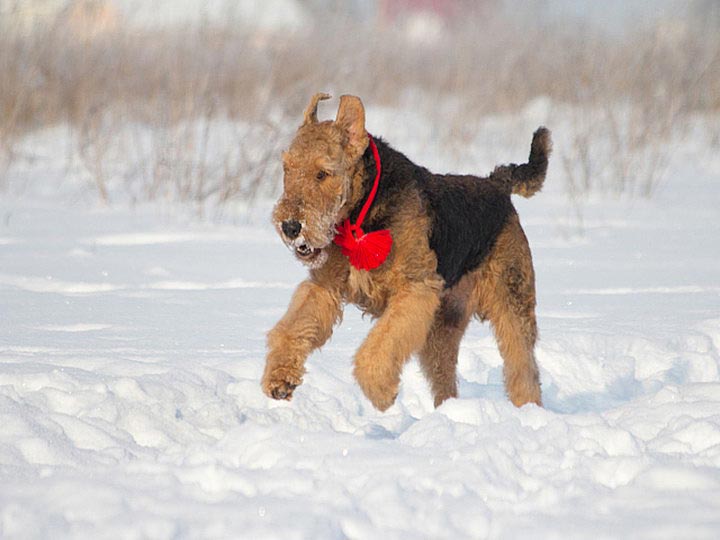
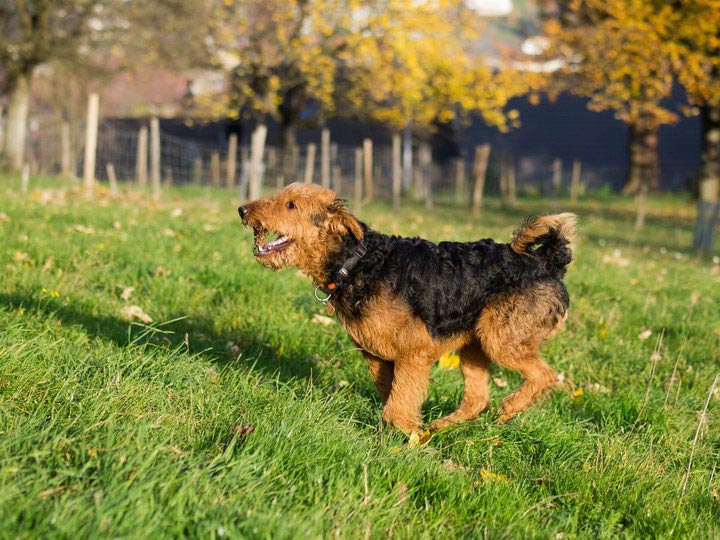
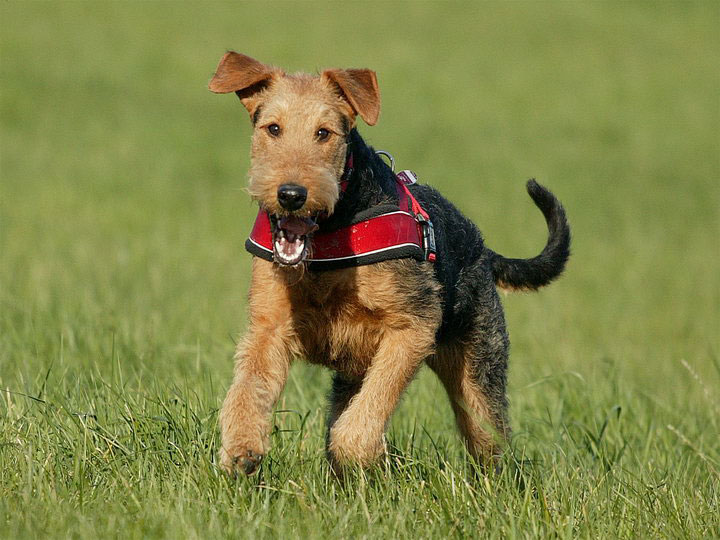
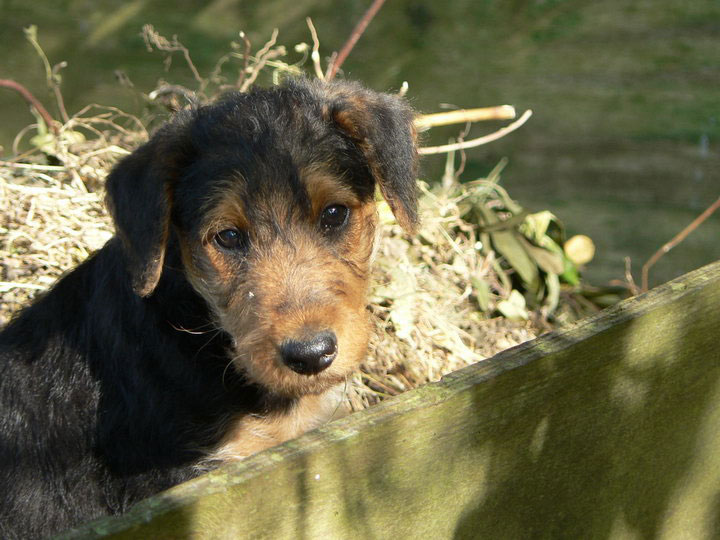
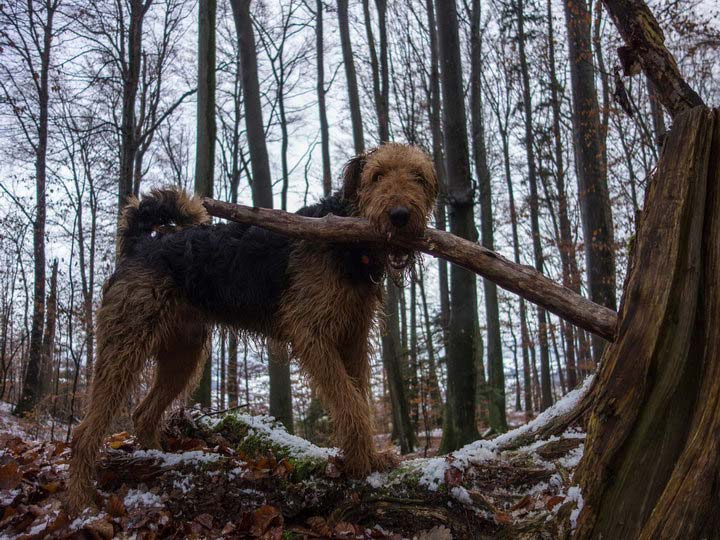
Airedale Terrier photos in the gallery:
Read also:


Add a comment