
Epocrin for cats
Cats with chronic renal failure are often prescribed Epocrin to increase hemoglobin levels. This medication is especially important during the postoperative period, when red blood cell counts drop and the cat becomes lethargic.
Content
Operating principle
Epocrinum is an erythropoiesis stimulator, promoting myotosis and red blood cell maturation. Epoetin alpha (Epocrinum's international name) is identical to natural erythropoietin, a hormone produced by the kidneys that controls red blood cell production. Epocrinum helps quickly increase hemoglobin and hematocrit, improving overall blood flow to tissues and organs and supporting cardiac function.
Indications for use
Veterinarians' opinions on the advisability of EpoCrin for cats vary. Some believe it can increase red blood cell production, while others oppose it, arguing that EpoCrin is a recombinantly produced human erythropoietin, and mammalian cells contain the gene that encodes it. Statistically, antibody production to this hormone occurs in 30% of cases where the drug is prescribed. However, the remaining 70% of animals are successfully treated with it. Indications for its use include:
- Anemia in chronic renal failure, including hemodialysis.
- Toxic depression of bone marrow due to decreased synthesis of endogenous erythropoietin in the kidneys.
- Hypovitaminosis B6 and B
- Dysfunction of iron absorption in the intestine.
- Anemia in tumor development.
Epocrin is not a cure-all for anemia. To determine the appropriateness of this medication, a blood chemistry test is required. Knowing your iron levels is crucial. In the early stages, less drastic measures can be tried: iron supplements, vitamin B12, and folic acid. Epoetin alfa is used when the hematocrit drops below 19.
Release form
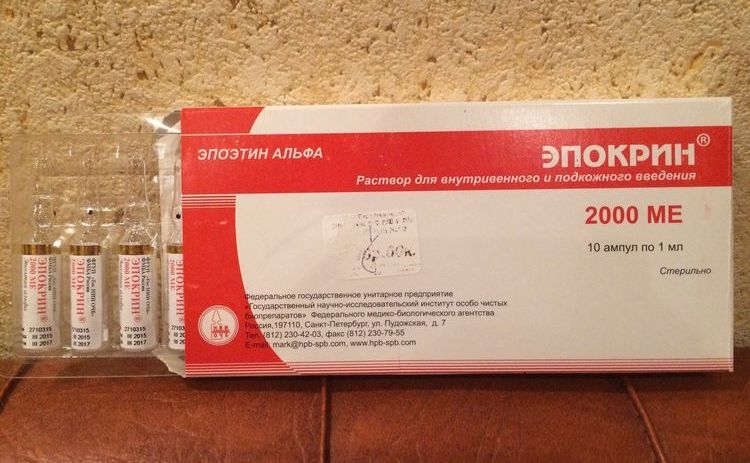
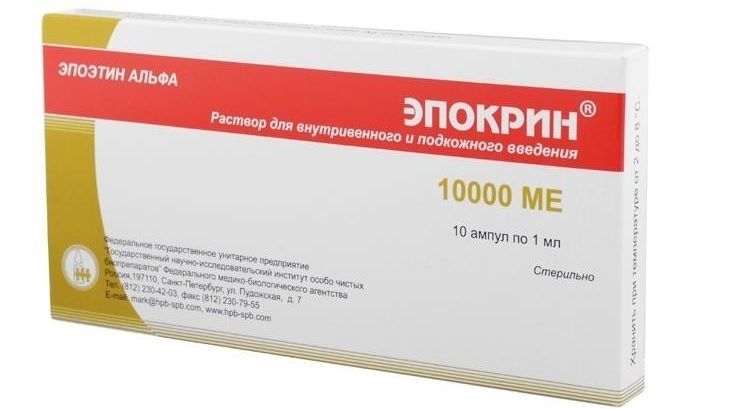
The drug is available only as a solution for subcutaneous and intravenous administration. Epocrin is administered to cats only subcutaneously. One ampoule contains 1 ml of solution. The active ingredient, epoetin alfa, is available in doses of 1000, 2000, 4000, or 10,000 IU.
Dosage
The instructions for EpoCrin do not specify use in cats, so the drug should only be prescribed by a veterinarian after the cat has undergone laboratory tests. The average dosage is 50-200 units/kg every 3-4 days. For example, if the active ingredient is at a concentration of 1000 IU, then a 6 kg cat would require one injection of 0.3 ml. On average, if the hematocrit and hemoglobin levels are half the normal range, the recommended dose is 150 units/kg. Three to four injections are required, followed by repeated laboratory tests.
The medication should be stored and transported only at low temperatures. An opened ampoule is sufficient for 2-3 uses, depending on the prescribed dosage. To prevent the medication from spoiling, it can be drawn up into an insulin syringe and refrigerated.
Treatment Features
Epocrinum is prescribed in combination with iron supplements. These may include Hemobalance or Ferum Lek. The latter is administered in combination with vitamin B12. However, this regimen does not guarantee a 100% improvement in blood counts. Weekly monitoring of the cat's health is essential. Because animals often develop antibodies to the drug, the hematocrit may initially increase, then begin to drop sharply. The positive effect may last for two to three months, after which the results will begin to deteriorate.
Epocrinum should not be discontinued abruptly. If a cat is diagnosed with chronic renal failure and iron therapy is ineffective, prophylactic injections should be administered once a week, with monitoring of reticulocyte, red blood cell, and hemoglobin levels.
In veterinary practice, two treatment regimens have been developed:
- A course of 3-4 injections, repeated after two months. This regimen is suitable for animals in whom sustained remission in hemoglobin levels is not achieved.
- A course of EpoCrin at a dosage of 100-150 units/kg (for 3-4 days), followed by blood tests and an attempt to raise the hematocrit to 30-35. If positive results are observed, prophylactic administration of the drug is given once a week. Repeat testing is performed after 20 days. If the results are normal (and the cat has been diagnosed with chronic renal failure or cancer), the maintenance dose is maintained.
Price
Epocrin is quite expensive. For cats, a dosage of 1000-2000 IU of epoetin alfa is sufficient. A pack of 10 ampoules will cost between 2,500 and 4,000 rubles. Ideally, the medication should be purchased individually at a pharmacy.
Veterinarian Reviews
Maxim Petrovich, a veterinarian with 5 years of experience:
"I often prescribe Epocrin for cats. Despite the statistics (this drug is not suitable for every animal), it's difficult to find a substitute. Thanks to it, I save the lives of my patients."
Margarita, a veterinarian with 7 years of experience:
"I prescribe this medication to my cats to increase hemoglobin levels; the effect is usually noticeable after one course. For patients intolerant to epoetin alfa, I use darbepoetin; these medications are less expensive and have a gentle, once-weekly treatment regimen."
Owner reviews
Zhanna:
"My 2.5 kg cat's red blood cell count was 2.05 million/μL and hematocrit was 0.1. She was prescribed a course of treatment. The schedule was one dose every three days. Before treatment, she was very lethargic; I noticed the effect after the second injection. The only downside is that the injection is very painful."
Boris:
"My cat has been on a prophylactic dose of this medication for six months now. First, we urgently checked her blood counts. We regularly get her iron levels, reticulocytes, and red blood cells checked. Everything is normal. On our vet's advice, we administer iron supplements a week before EpoCrin."
Read also:
- Hemobartonellosis in cats: symptoms and treatment
- Chronic renal failure in cats: symptoms and treatment
- Anemia in cats


1 comment
Evgeniya Anikina, Voronezh
We've been on Epocrin for three months now, and the diagnosis hasn't been made yet. A bone marrow biopsy is risky in his current condition.
The first time, I had acute anemia (hematocrit was 6) and EpoCrin raised it to normal. Now it's happening again. It seems like the anemia is chronic (hematocrit is 12 now) and I'm completely stumped. It doesn't help as much as it did the first time. We've been injecting ampoules for the third time, every 48 hours, 0.2 ml each time with a new ampoule. I'm afraid to store it in a syringe. The second course had no effect at all because I stored EpoCrin in a syringe and had to give two injections from one ampoule.
If anyone knows a way out of this situation, please write.
Add a comment