
Brittany Spaniel (Breton Spaniel)
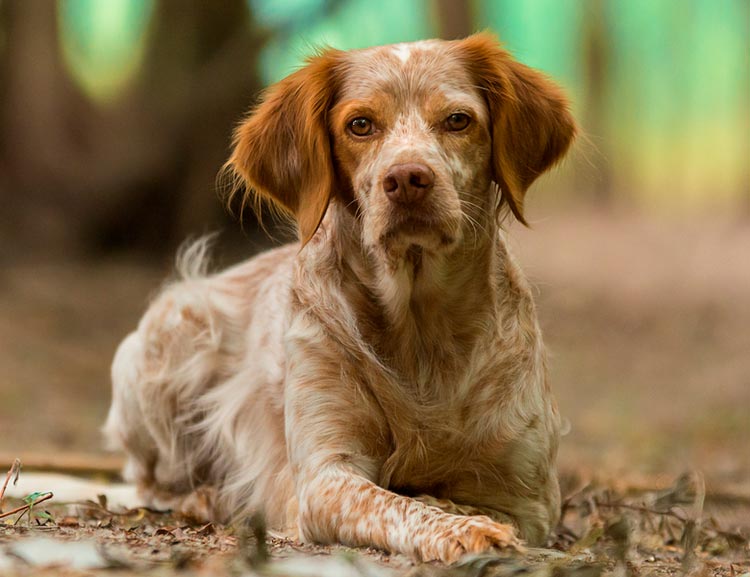
The Brittany Spaniel, or Brittany Spaniel, is a continental pointer bred in France. It is the most common hunting breed in its homeland. It is the smallest of the pointer breeds, but is equally adept at working. It has a docile, friendly disposition and exceptional intelligence.
Content
History of origin
The Brittany Spaniel originates from Brittany, France. In its native land, it is one of the most popular hunting dogs and likely one of the oldest. References to dogs of this type date back to the 15th century. Since the 17th century, Brittanys have been depicted in tapestries and paintings as recognizable.
According to one theory, the word "spaniel" is Spanish, indicating a relationship with Spanish bird dogs. Another theory holds that it comes from the verb "s'espaignir," which means "to stretch out, to lie down," and describes the working style.
In the early 20th century, the Breton's appearance and working qualities were improved. This was achieved through targeted selection and the selection of the best specimens. According to some reports, the Spaniel breed received an infusion of blood. springer spaniels And English SettersThe first standard was drawn up in 1907. The Brittany Spaniel (French: Épagneul breton) was recognized by the International Cynological Association in 1954.
Purpose
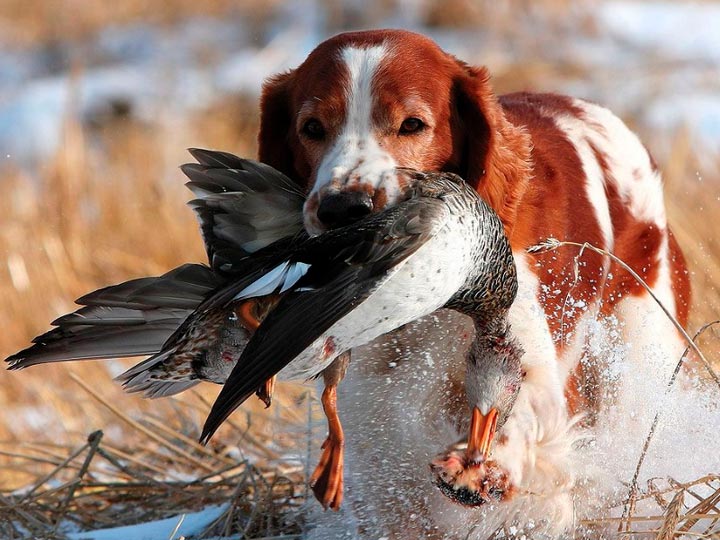
Brittany Spaniel dogs are very passionate and hardy pointers with a firm, long stance, a precise retrieve, and a fast, wide (150-200 m) search using their upper scent. Their good character and ability to work in all conditions and all seasons have made these dogs popular. Brittany Spaniel dogs have excellent navigation, are good search dogs, have a keen sense of smell, and quick reflexes. They quickly recover from work.
The motto of the National Club of the Brittany Epagne breed in France is “Maximum quality with minimum volume”.
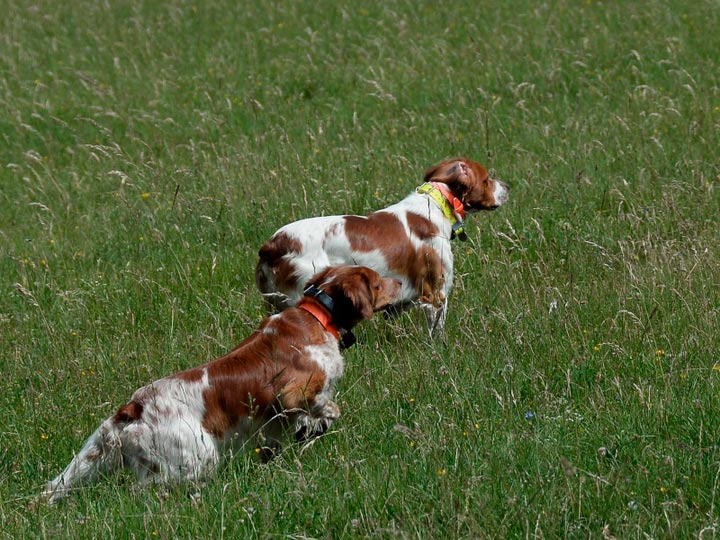
The Brittany spaniel can work in any terrain, including mountainous and rocky ones. Its working style in the field is somewhat reminiscent of setterIn tall grass, the Breton, like a hare, periodically leaps upward, so the hunter never loses sight of it. When working in dense undergrowth, the dog is given a bell; if it stops, the Breton is alert. While hunting, it often suffers injuries and bruises, but in the excitement of the hunt, it doesn't notice them. It also has an unusual gait. At a constant speed, the dog seems to bounce like a spring, its body forming a solid ball. From a Breton's perspective, it can be compared to a wheel spinning on a smooth road.
Appearance
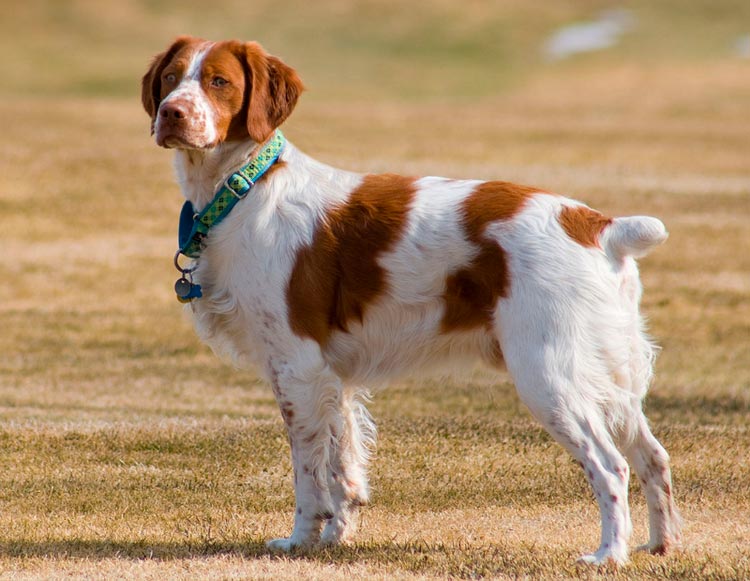
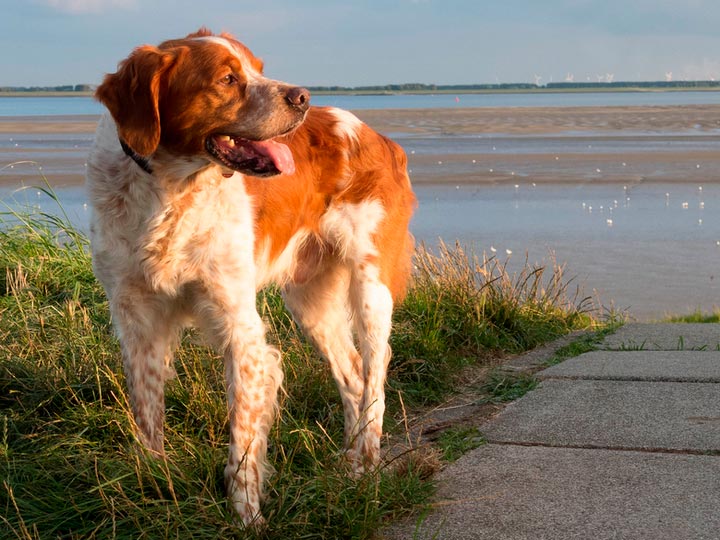
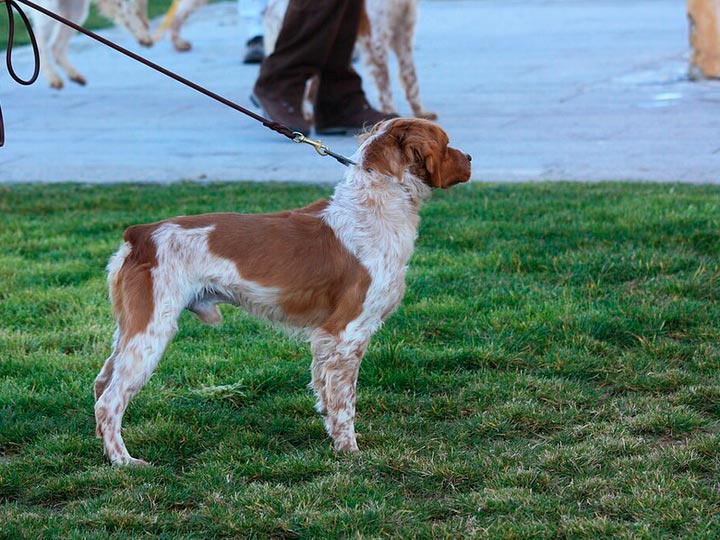
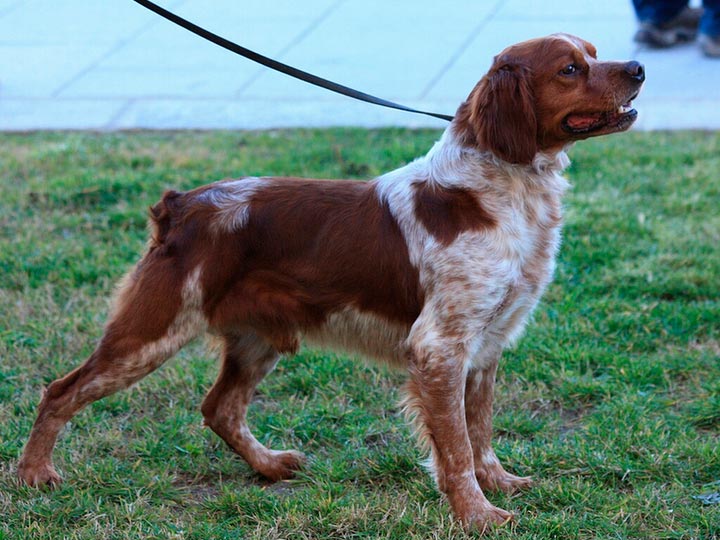
The Brittany Spaniel is the smallest of the pointing dogs. Its silhouette fits perfectly into a square, yet is very harmonious with smooth lines. Its constitution is strong. Sexual dimorphism is moderate.
- The height at the withers of males is 47-52 cm; weight is 14-18 kg.
- The height at the withers of bitches is 46-51 cm; weight is 14-18 kg.
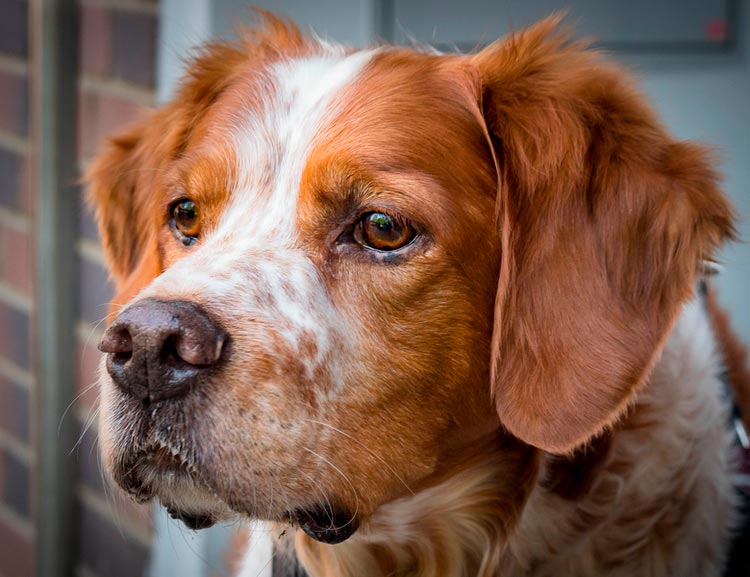
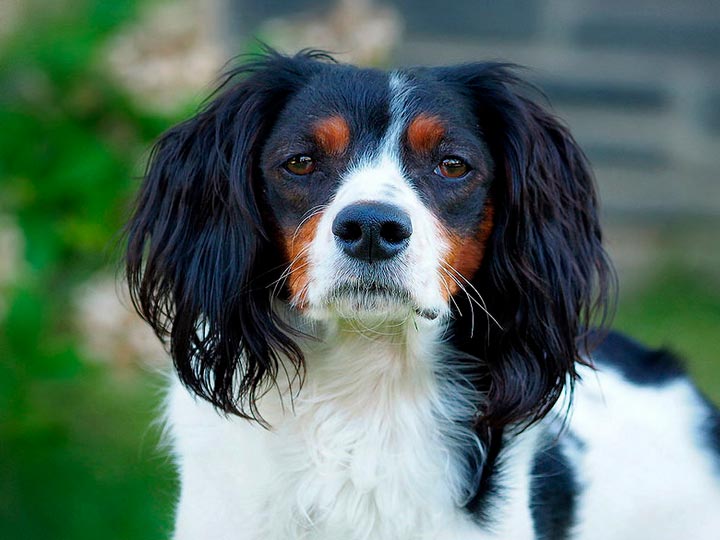
The head is proportional, prominent, and lean. The skull is slightly rounded. The muzzle is straight, with the lateral surfaces almost parallel. The earlobe is large and the color matches the coat color. The jaws are strong, with a scissor bite. The lips are well defined, not very large, relatively thin, and tightly pressed together, with the lower lip sometimes overlapping the upper. The eyes are slanted, with a soft, frank, and intelligent expression, oval in shape, and the color of an iris. The ears are set high, pendulous, triangular, and mobile. The neck is conical, of medium length, and without a dewlap.
The body is square, strong, yet well-balanced and elegant. The back is straight. The loin is broad and short. The croup is straight and strong, flowing smoothly into the tail. The tail is short, set high, and carried low or horizontally. The limbs are well-balanced, with flexible and strong joints. The paws are round and well-knit.
The Brittany Spaniel can be born tailless or with a short tail. In countries where this is not prohibited, the tail can be docked, in which case its length will be 3-6 cm, but no longer than 10 cm.
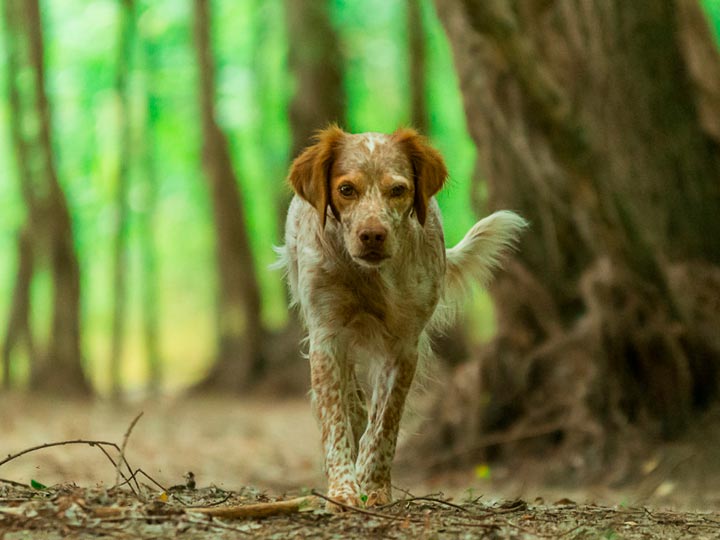
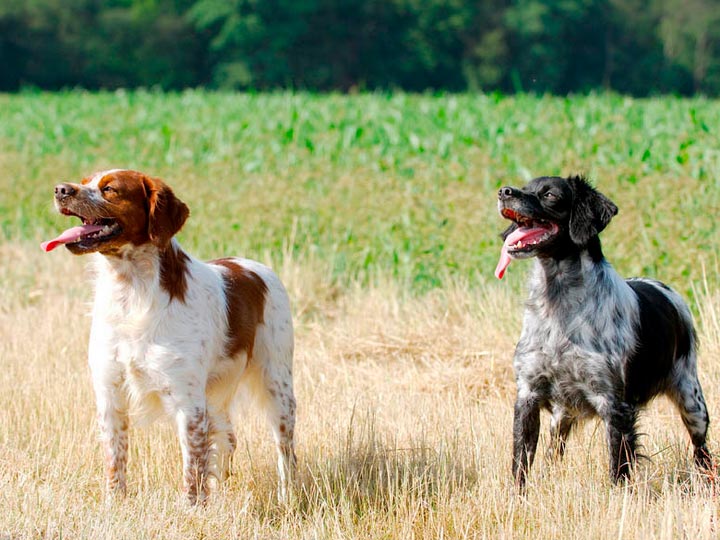
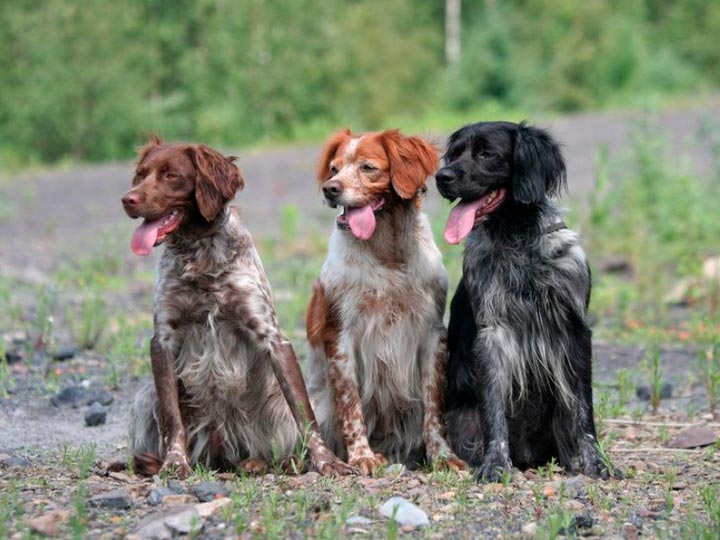
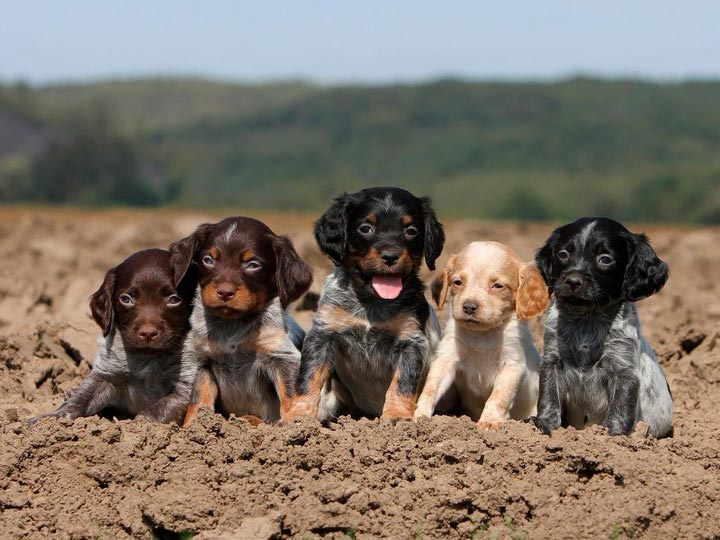
The skin is thin and well pigmented. The coat is fine, close to the body, and slightly wavy. It is short on the front of the legs and head, and feathered on the back of the legs. There is no undercoat. Colors:
- White and orange;
- Black and white;
- White-brown;
- Piebald;
- Tricolor (white-red-black).
Character and behavior
The Brittany Spaniel has a balanced, friendly character, a strong hunting instinct, and is highly trainable. It is very attached to its owner and other family members, and is sociable and docile.
The Breton is a cheerful and intelligent dog that skillfully exploits its owner's weaknesses and never ceases to amaze with its resourcefulness. No owner has ever complained that their dog is stupid. And this applies not only to owners but also to trainers. The Breton has a fairly strong, firm character. It can be stubborn.
The Brittany Spaniel is a true companion. He greatly appreciates human company, will participate in children's games, and will share any of his owner's hobbies, but his primary passion will always be hunting. He requires an owner who will devote time to daily interaction with the dog. He tolerates moderate solitude well. He gets along well with other pets if well socialized.
Education and training
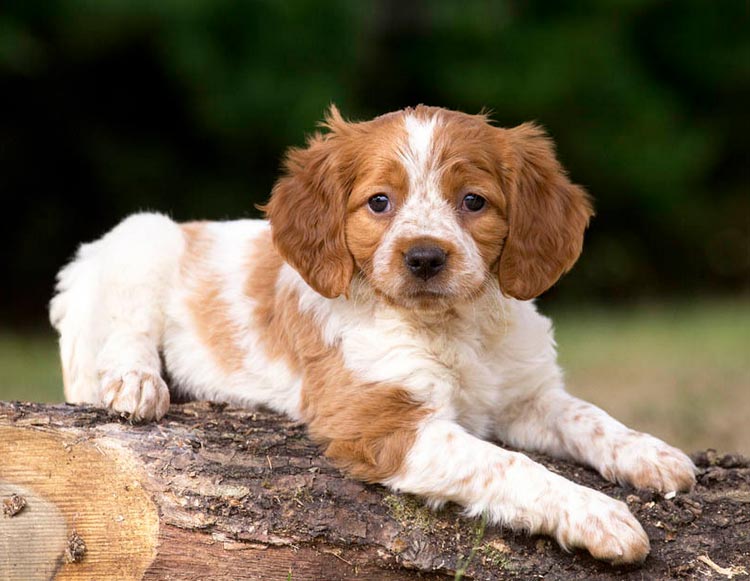
The Brittany Spaniel is a precocious dog. As early as 6-7 months old, it can show good results in trials and earn its first working certificates. Training should begin very early. At a young age, it's important to firmly, but gently, nip any attempts at disobedience in the bud.
Owners should remember that the Brittany Spaniel is very emotional. Training is best done gently and with positive reinforcement.
The Brittany Spaniel is characterized by independence and self-reliance. When properly trained, it is very obedient and owner-oriented, but will only obey when it wants to, and will periodically test its mastery throughout its life.
Content Features
The Brittany spaniel can work in virtually any climate, but it cannot live in a cage year-round. It lacks an undercoat to protect it from severe frosts. Furthermore, it requires close contact with its owner. Its entire purpose in life is to satisfy its owner's desires, bond closely with them, and hunt together. The Brittany's coat sheds moderately in the off-season, lightly the rest of the year, and has virtually no odor even when wet.
The Brittany Spaniel is an intelligent and quick-witted dog that can easily adapt to city life if it gets enough exercise. This includes long daily walks with regular outings. However, the Brittany Spaniel greatly appreciates comfort and will happily lounge in its owner's chair when not on walks. If the dog lives outdoors, it may occasionally bring surprises, such as a neighbor's cat or mouse, or even escape, attracted by its scent.
Care
The Brittany Spaniel's coat lacks an undercoat, so it requires minimal grooming. Grooming consists of standard procedures:
- Combing the coat 1-2 times a week, paying special attention to the fringes, where tangles and plant seeds most often form;
- Bathe as needed, once a month or less often;
- The auricle is inspected and cleaned weekly. Make sure it is dry after bathing;
- Claws normally wear down on their own, otherwise they are regularly trimmed to prevent the paw from becoming unraveled;
- Weekly teeth cleaning is recommended.
Health and life expectancy
The Brittany Spaniel is generally a healthy, hardy dog, remaining productive for up to 11-12 years. One in five dogs dies of old age at 14-15 years of age. Hereditary health problems common to the breed include:
- Hip dysplasia;
- Lupus;
- Epilepsy.
Working dogs often suffer various types of injuries. In old age, they can develop any number of age-related diseases, including tumors. Their life expectancy is 12-14 years.
Where to buy a Brittany Spaniel dog
In 2010, approximately 15 Brittany Spaniel dogs were registered in Russia, but since then, their numbers have grown significantly. The first kennels professionally breeding high-quality working dogs have emerged, and a National Breed Club has been established. Abroad, excellent breeding stock can be found in France, Italy, and Canada.
When choosing a puppy, it's crucial to ensure it's been properly socialized and raised in good conditions, is fed an age-appropriate diet, is in perfect health, and has a healthy temperament. Gender is a matter of personal preference, as both males and females perform equally well; the dog's pedigree is more important.
Price
In Russia, the price range is quite wide. A Brittany Spaniel puppy costs between 15,000 and 50,000 rubles, rarely more. Private breeders typically sell puppies for no more than 15,000 rubles. Puppies at lower prices often lack documentation confirming their origin. Kennels ask for 35,000 rubles or more for a puppy with good bloodlines and potential.
Photos and videos
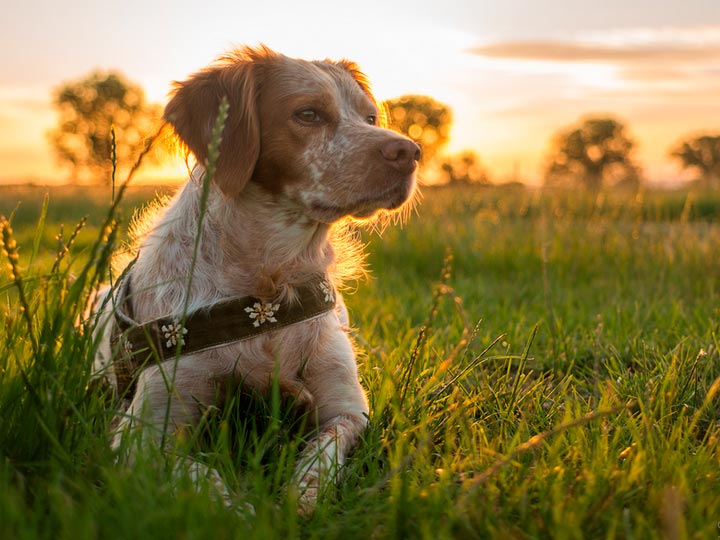
Photos of Brittany Spaniel dogs can be viewed in the gallery. The photos feature dogs of different sexes, ages, and colors.
Video about the Brittany Spaniel dog breed
Read also:


Add a comment