
Entlebucher Mountain Dog (Swiss Mountain Cattle Dog)
Don't let this dog's size fool you. The Entlebucher Sennenhund (Small Swiss Mountain Dog) is a serious, multi-functional working breed. It is used as a herding, guard, and watchdog. Its pleasant disposition, devotion, and lively temperament make it a wonderful family dog and companion.
Content
History of origin
The breed's origin is Switzerland, specifically the Entlebuch district. The first description of dogs called Entlebucherhunds dates back to 1889. At that time, no distinction was made between the now-separate Entlebucher and Appenzeller Sennenhund breeds. Professor Heim, a great fan of Swiss Mountain Dogs, showed four small herding dogs with shortened tails at a show in 1913. Judges subsequently entered them into the Swiss Stud Book as a fourth variety.
Thus, within the Sennenhund group, four separate breeds are distinguished: the Bernese Mountain Dog, the Swiss Mountain Dog, the Appenzeller Mountain Dog and the Entlebucher Mountain Dog.
Only since 1926 has the Entlebucher been bred in its pure form. Therefore, the standard was compiled significantly later than the first show, in 1927. The breed developed slowly, and today its population remains modest.
Video about the Entlebucher Mountain Dog breed:
https://youtu.be/YW1jruWJsEQ
Appearance
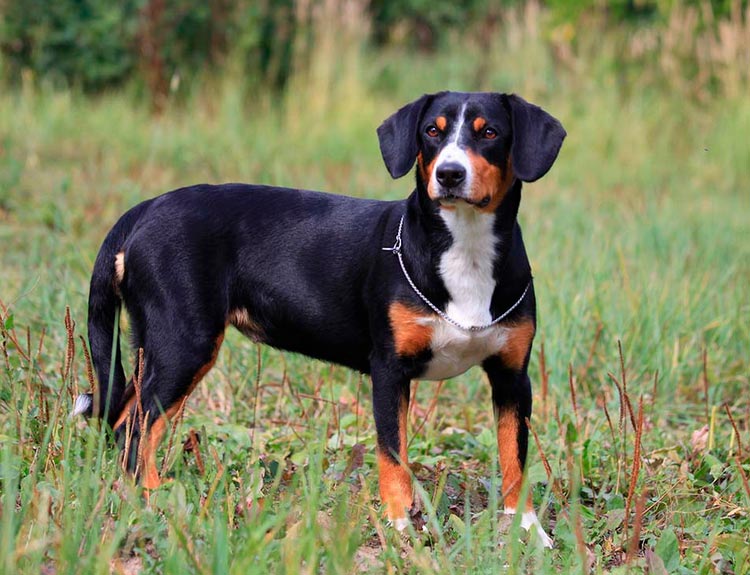
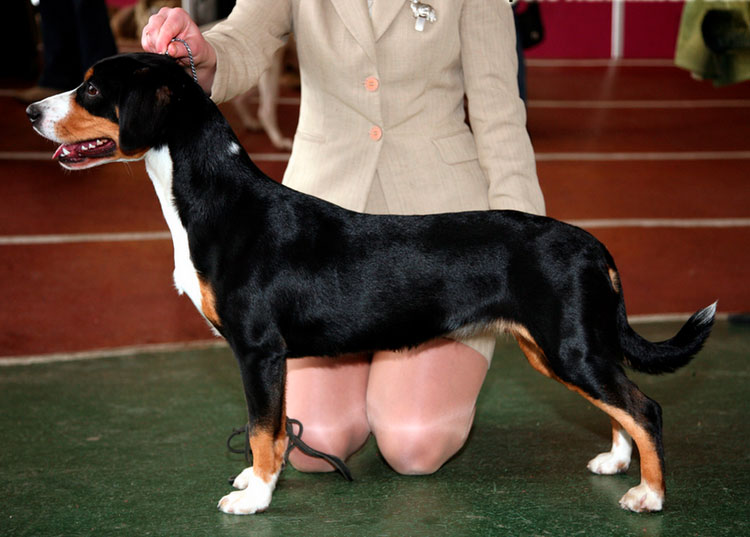
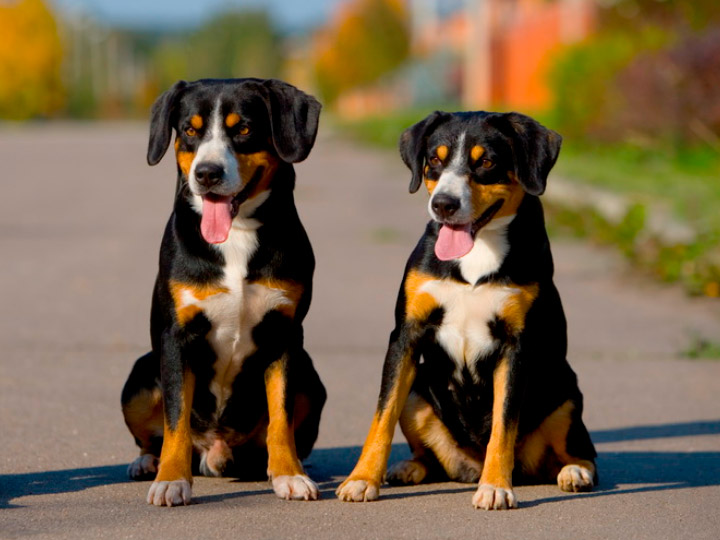
Of the four Swiss Mountain Dogs, the Entlebucher is the smallest. It is a medium-sized dog with a slightly elongated build, compactly built, and a distinctive tricolor coat. It is agile and agile. Sexual dimorphism is pronounced. The height at the withers for males is 44-50 cm, and for females, 42-48 cm. The standard does not specify a weight limit; the dog must be proportionately built. Typical weight ranges from 15-25 kg.
The head is slightly wedge-shaped and dry. The longitudinal axes of the muzzle and the top of the head are almost parallel. The skull is flat, broad, and tapers slightly toward the muzzle. The stop is weakly defined. The black nose protrudes beyond the front line of the lip. The muzzle is powerful, tapering evenly, but not pointed. The bridge of the nose is straight. The lips are weakly defined, fitting tightly to the jaws. A scissor bite is also allowed, a pincer bite is also allowed. The cheeks are weakly defined. The eyes are small, rounded, dark in color, with a lively and friendly expression. The black eyelids fit tightly. The ears are not very large, set high and wide apart, hanging, triangular in shape, and well rounded at the tips. The base of the ears is slightly raised, the shell pointing forward.
The neck is medium in length, lean, and powerful, with no protrusions. The body is elongated, with a height-to-length ratio of 8:9. The back is straight, broad, and relatively long. The loin is flexible and not too short. The croup is sloping and long. The chest is deep and broad. The ribcage is elongated and rounded-oval in shape. The underline is slightly tucked up. The tail may be long or short from birth. The legs are powerful, well-muscled, but not too heavy. They are set straight and parallel. The paws are rounded with well-knit toes. The nails are short, and the pads are strong.
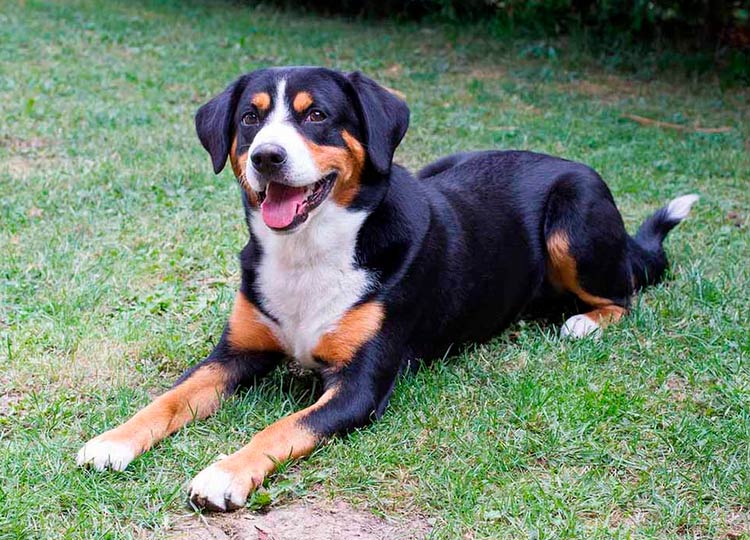
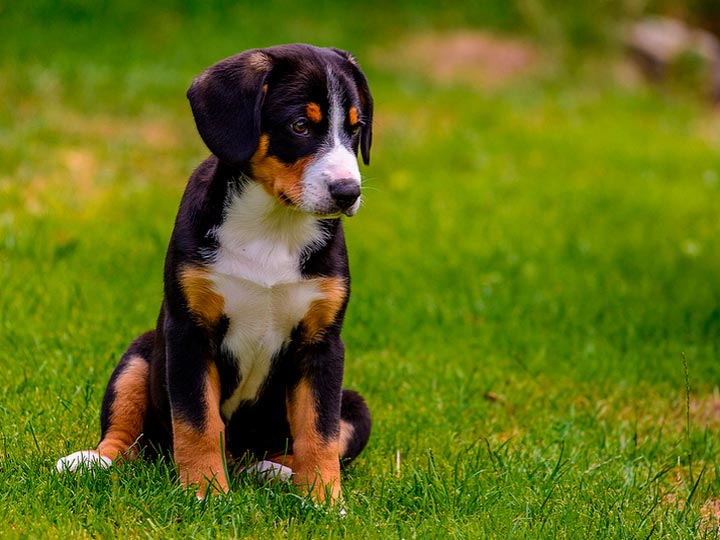
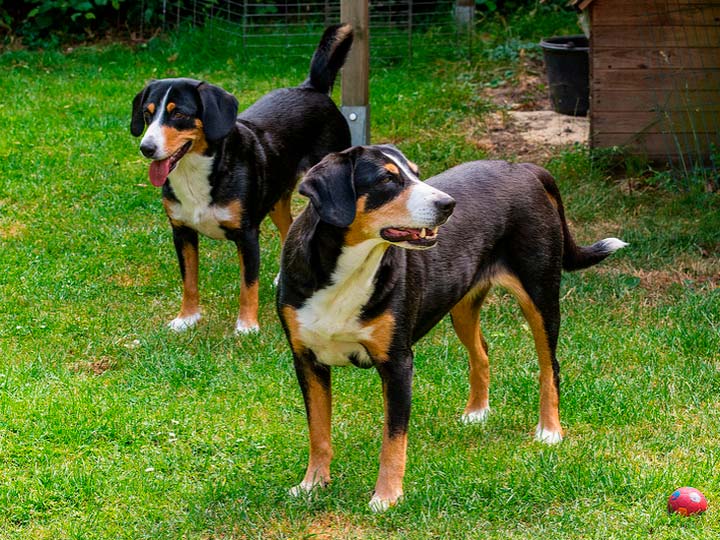
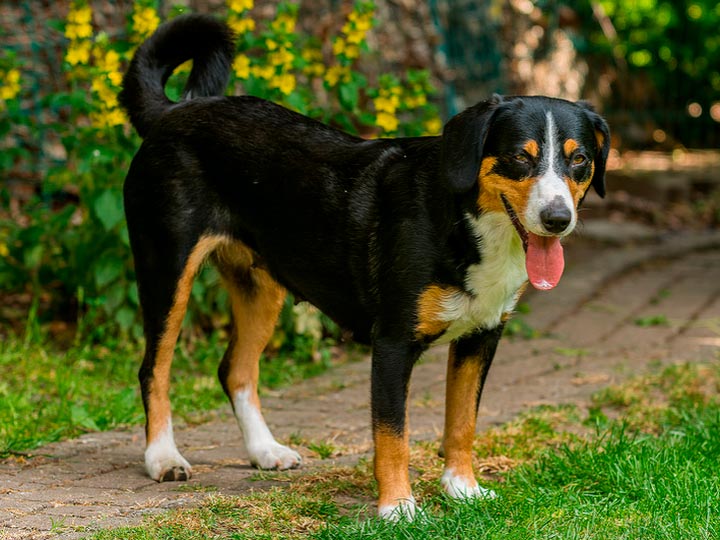
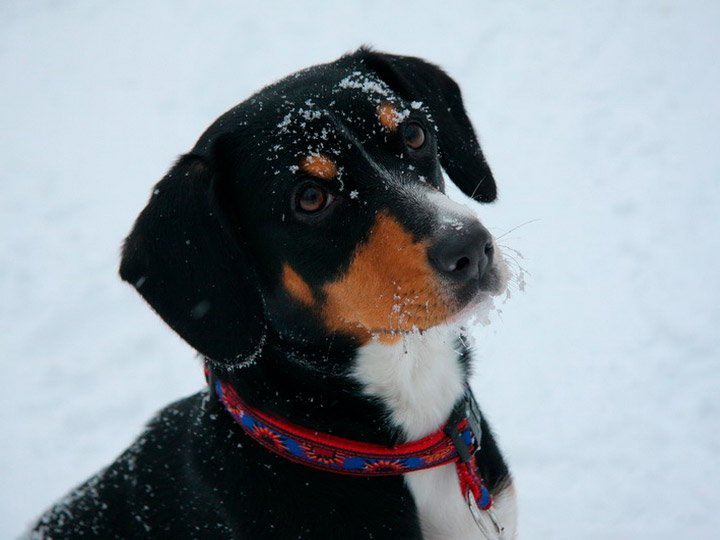
The coat consists of a short, close-lying, harsh topcoat and a dense undercoat. The outer coat may be slightly wavy on the withers and back. The typical Bernese Mountain Dog coat is tricolor. Symmetrical tan and white markings are scattered on a basic black background. The tan markings are located on the cheeks, above the eyes, on the muzzle, throat, chest, and paws. The tan color should be between the white and black. The undercoat is dark brown.
Character
The Entlebucher Mountain Dog is a spirited dog with a strong character. A courageous and alert guard dog, capable of making independent decisions and assessing situations with lightning speed. Entlebuchers are very sociable and need a companion. They exhibit a moderate desire to dominate, but are also simple-minded and will forgive many training mistakes by an inexperienced owner. This fierce optimist always creates a lively atmosphere around him. His gaze radiates devotion, friendliness, and remarkable intelligence—that's what the Entlebucher is all about. He loves being the center of attention and forms a strong bond with his owner and other family members, whom he treats with affection and care.
The Entlebucher Mountain Dog is a successful combination of an incorruptible, courageous guard dog and an affectionate companion.
They are wary of strangers, but only become active when there's a clear threat. Entlebuchers are often not considered aggressive dogs. They don't bark unnecessarily, but they are a fairly talkative breed and will bark more enthusiastically if encouraged.
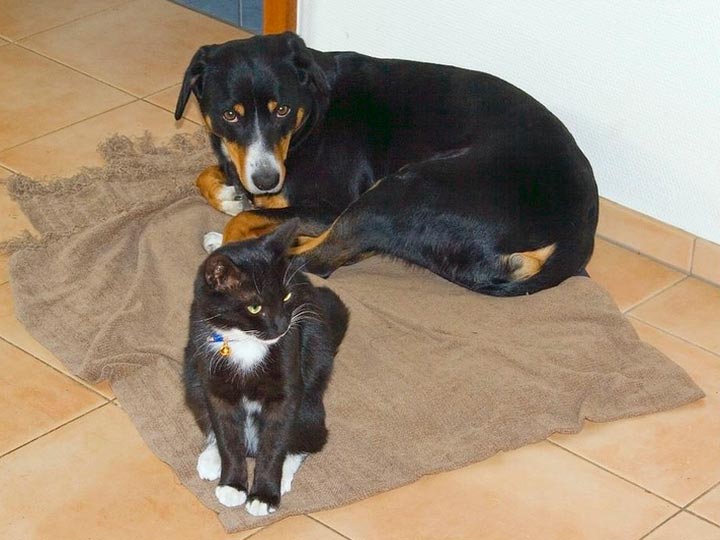
Entlebuchers generally get along well with other dogs, but conflicts with dominant breeds can occur. When properly trained, they are calm toward cats, birds, small animals, and farm animals, protecting them as if they were their owner's property. On walks, they often show little interest in other dogs, though they may occasionally play when the mood strikes. They won't initiate conflict. However, some individuals are categorically opposed to interaction and invasion of their personal space.
The Entlebucher has a strong territorial instinct. While the dog is very responsible in its guarding and protection duties, it can also be possessive of toys or food. In this case, it's important to show the dog that any treats are only available from the owner's hand and only at their discretion. It's tolerant of children and gets along better with older children.
Education and training
The Entlebucher Mountain Dog is an intelligent and quick-witted dog, people-oriented, and highly trainable. When training, it's best to use a "lowering the dog's status" approach, meaning the owner should be the pack leader and leader. Behavior should be moderately strict and consistent. The Entlebucher's irrepressible ardor will quickly give way to calm obedience if it sees its owner is serious. Entlebuchers need love and cuddles, but avoid overindulging. If a serious working dog is treated like a child, unquestioning obedience is out of the question. Puppy training can begin at 4-5 months. At this age, they begin their General Training (OKD) course. It's recommended to begin guard dog training courses no earlier than 1.5 years of age and only after passing the obedience exam with flying colors.
In the hassle of growing socialization Often fades into the background. This results in major behavioral problems in the adult dog. A puppy is taught to interact with other dogs and meet different people. It must get used to loud noises, car rides, new environments, and so on. If the puppy becomes afraid at any point, it needs to be reassured and praised for appropriate behavior.
Content Features
The Entlebucher Mountain Dog will thrive even in a small apartment, provided it's well-maintained. It's suitable for outdoor living, but it should be accustomed to indoors and require constant human contact. It easily adapts to family life.
Entlebuchers sometimes snore while sleeping, but this is usually normal. Puppies and young dogs may chew on things and damage furniture. This behavior subsides with age. During adulthood, the only solution is to purchase a spacious crate in which the puppy can be kept when the owners are away.
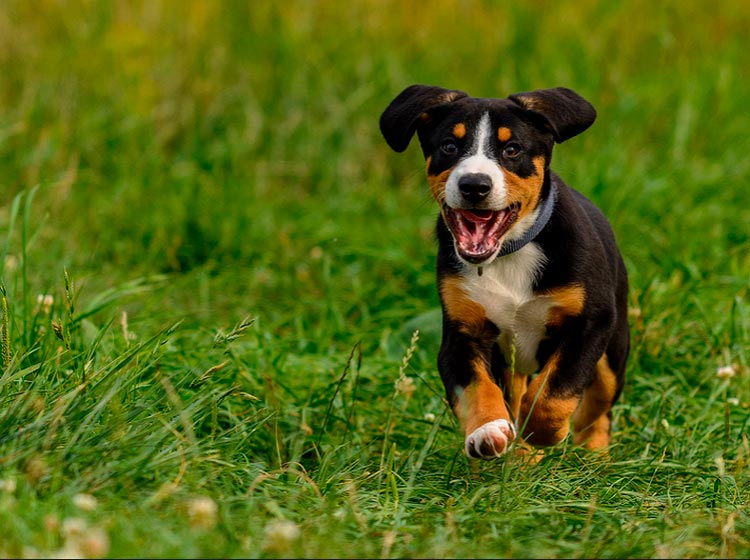
Entlebuchers are very active, energetic, and cheerful. They require regular, long walks, supplemented with mental stimulation, such as games and exercise. This is the only way to tire them out. For this reason, the breed is not suitable for people accustomed to a sedentary, leisurely lifestyle. Entlebuchers need at least 2-3 hours of active exercise per day. Most Entlebuchers enjoy swimming, even in cold water. Thanks to their high trainability and energy, they excel in agility competitions and other sports.
Care
Entlebucher Mountain Dogs don't require a lot of grooming. They shed moderately. Their coat should be brushed regularly with a special brush or mitten for short-haired breeds. Bathe as needed, usually every 3-4 weeks. With sufficient exercise, their nails wear down on their own, but in some cases they may need to be trimmed. Their ears should be cleaned once a week. The breed isn't prone to dental problems, but it's best to accustom your puppy to having their teeth brushed at least once a week from an early age.
Nutrition
Whether a dog will be a picky eater depends largely on how the puppy is accustomed to eating from puppyhood. Two types of feeding are acceptable: dry commercial food and super premium class or "natural"The diet is prepared according to standard rules for all dogs. Choosing the right food may be challenging if the dog has allergies.
The Entlebucher Mountain Dog is prone to gaining excess weight, so it is important to monitor the calorie content and composition of the food.
Health and life expectancy
The Entlebucher Mountain Dog is strong and resilient. With proper care and nutrition, illness is rare. The breed is susceptible to several genetically inherited diseases:
- Progressive retinal atrophy and some other eye diseases;
- Elbow dysplasia;
- Ectopia of ureters;
- Allergy.
Important components of care include veterinary preventative measures, including timely vaccinations and regular treatment for external and internal parasites. Life expectancy is typically 10-12 years.
Choosing and pricing a puppy
The Entlebucher Mountain Dog is an excellent choice for active people, preferably experienced owners, who need a small working dog with clear guard qualities. It's best to buy an Entlebucher puppy from a breeder. It should always be possible to see the parents, or at least the mother, in person. Assess their appearance and personality. It's also important to consider the puppies' living conditions and their level of socialization. Puppies should be playful, active, non-aggressive, and undeterred, with a healthy appearance, strong bones, free movement, and an upright stance. As early as 1.5 to 2 months, puppies can be compared to the breed standard in many respects and their conformation to the ideal breed.
Reduced exterior requirements apply to dogs that are not planned for exhibition or breeding, but even they must have pedigrees confirming their breed.It's a good idea to decide on the gender in advance. While there aren't any clear differences in temperament between males and females, there is a clear trend. Females are typically more resourceful and cunning than males, who are, in turn, more active, energetic, and have a strong personality.
The average price for an Entlebucher puppy in a breeder is 50,000 rubles. Some promising puppies can cost significantly more. If a small bush puppy costs less than 30,000 rubles, this should raise concerns. It's almost impossible to find this breed at a pet market, but you can see ads online for puppies without a pedigree, usually selling for 15,000-20,000 rubles.
Photos
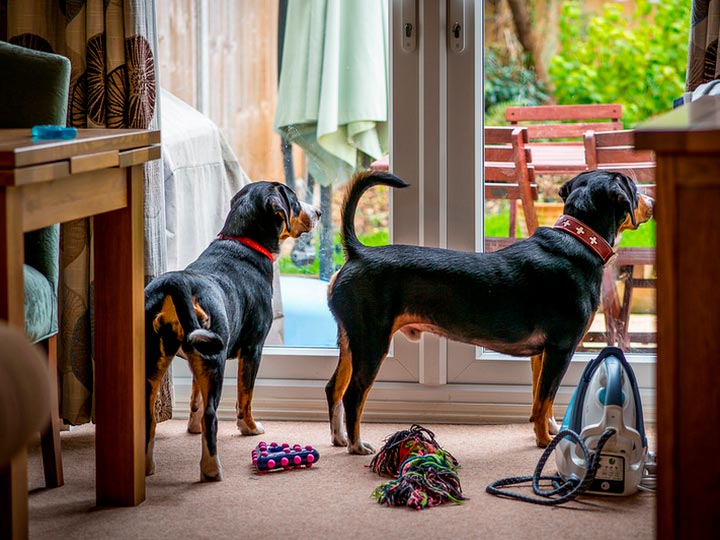
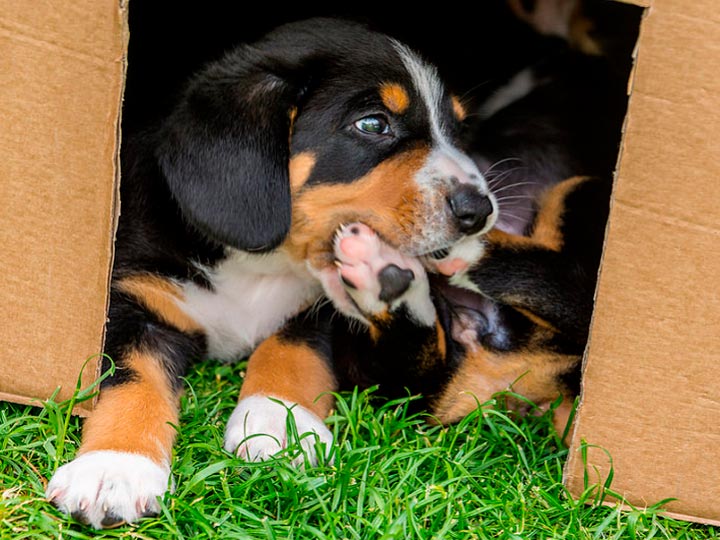
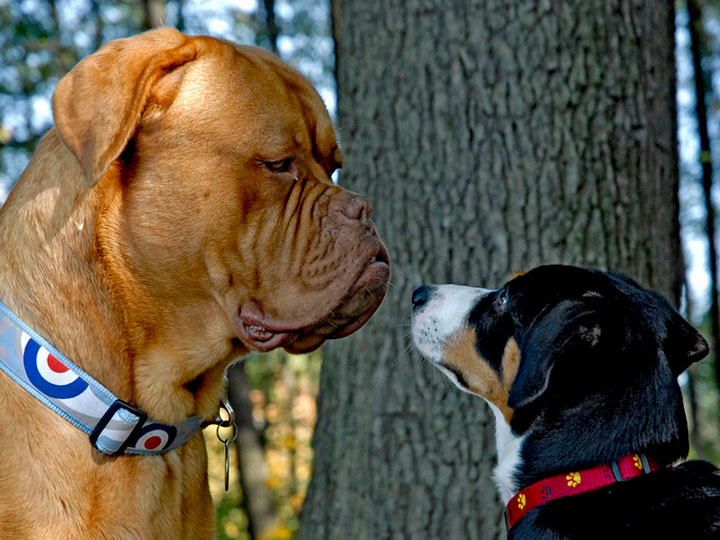
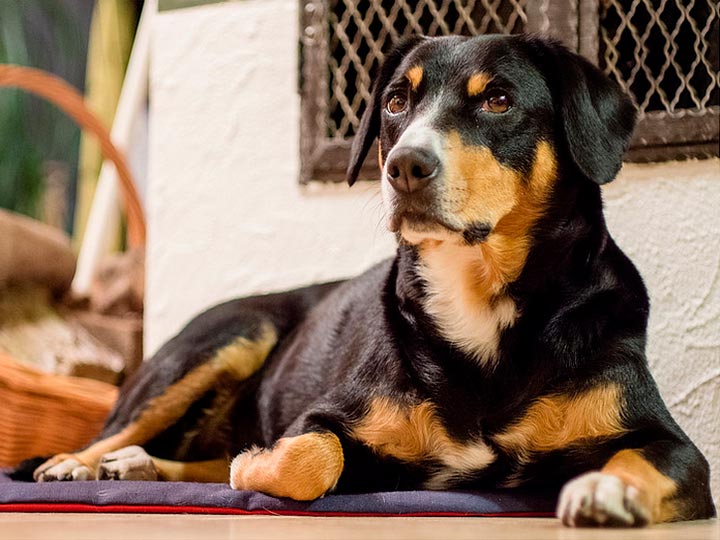
The gallery contains photos of adult Entlebucher Mountain Dogs and puppies:
Read also:
- Miniature Dachshund
- White Swiss Shepherd (American-Canadian Shepherd)
- Estrela Mountain Dog (Estrela Mountain Dog)


Add a comment